

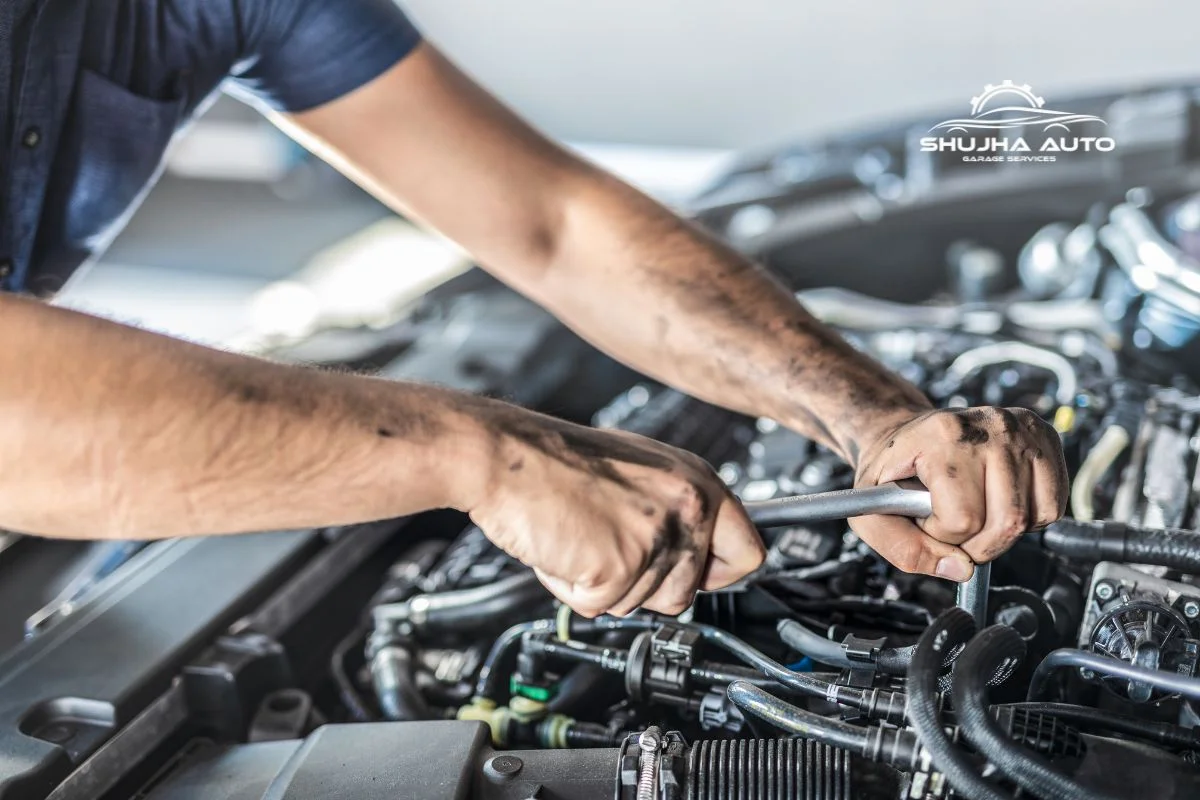
Oil and Filter Change: Learn why regular oil and filter change is essential for engine health, performance, and longer vehicle life.
If you have just bought your first car, or if you have been driving for years but always left the scary stuff under the hood to someone else, you have come to the right place. There is a lot of information out there about car maintenance, and it can feel overwhelming. But here is the truth: taking care of your car doesn’t have to be complicated. In fact, it starts with one of the simplest, most important tasks you can do: the oil and filter change.
Think of engine oil as the lifeblood of your vehicle. Just like your body needs clean blood to function, your engine needs clean oil to run smoothly. Skipping this basic maintenance is the fastest way to turn a healthy engine into a very expensive paperweight.
At Shujha Auto Garage Services, we believe in empowering drivers with knowledge. We don’t want you to just hand over your keys; we want you to understand why we do what we do. In this guide, we are going to walk you through everything you need to know about changing your oil and filter. We will use simple, easy words so that by the time you finish reading, you will feel confident talking to a mechanic—or even attempting the job yourself.
Let’s pop the hood and get started.
Why Is an Oil and Filter Change So Important?
Before we talk about how to change the oil, we need to talk about why it matters. Car engines are violent places. Inside that metal block, tiny explosions are happening thousands of times per minute. Pistons are sliding against cylinder walls. Gears are grinding (in a controlled way) against each other.
Without oil, that metal-on-metal contact would create so much heat that the engine would literally weld itself together in a matter of minutes. The oil provides a thin layer of lubrication that keeps everything sliding smoothly.
However, oil doesn’t last forever. As you drive, the oil breaks down from the heat. It collects dirt, dust, and tiny metal shavings from the engine. This turns the oil from a clear, slick fluid into a dark, gritty sludge. When that happens, the oil stops lubricating and starts acting like sandpaper.
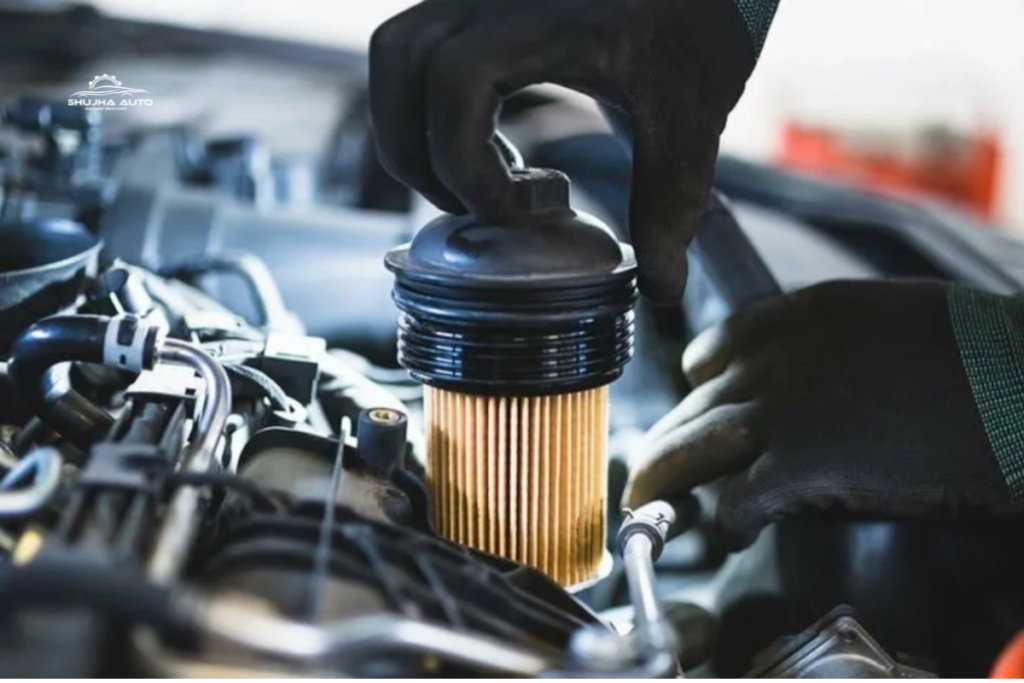
That is where the oil filter comes in. The filter’s job is to catch the dirt and debris so that only clean oil circulates through the engine. But eventually, the filter gets clogged. If you change the oil but leave the old filter on, you are essentially taking a shower and putting your dirty clothes back on.
That is why we always recommend a full engine oil change service. It isn’t just about swapping out liquid; it is about resetting the health of your engine.
Understanding the Basics: Conventional vs. Synthetic
When you walk into a garage or an auto parts store, you will notice there are different types of oil. The two main categories are conventional (regular) oil and synthetic oil.
Conventional Oil is the standard, refined natural oil that has been used for decades. It works fine for older vehicles or cars that are driven lightly. However, it breaks down faster and doesn’t handle extreme temperatures as well.
Synthetic Oil is a man-made product designed to be superior. It flows better in freezing cold weather, resists breaking down in high heat, and generally lasts longer between changes. Many modern cars actually require synthetic oil to keep the engine warranty valid.
If you opt for the higher quality product, we often recommend a synthetic oil change service. While it costs a bit more upfront, it usually allows you to go longer between intervals (sometimes 7,500 to 10,000 miles versus 3,000 for conventional), and it provides better protection for the engine in the long run.
At Shujha Auto Garage Services, we help you choose the right oil based on your car’s make, model, and your driving habits.
When Should You Change Your Oil?
This is the million-dollar question. The old rule was every 3,000 miles or three months. While that is still a safe rule to follow, modern technology has changed the game.
Today, you should look at two things:
- Your Owner’s Manual: This is the ultimate authority. The engineers who built your car know exactly how often it needs service.
- Your Car’s Oil Life Monitor: Most cars built in the last decade have a computer system that calculates oil life based on your driving style, engine temperature, and RPMs. When that light comes on that says “Oil Change Required,” listen to it.
However, there are signs you should look out for that indicate you need a car oil and filter replacement immediately:
- The Check Engine Light: Sometimes this light comes on because the oil is too dirty to lubricate the engine properly.
- Ticking or Knocking Noises: If you hear a metallic sound coming from the engine, it means the metal parts are not getting enough lubrication.
- Dark, Gritty Oil: If you check the dipstick and the oil looks like black tar instead of amber honey, it is time.
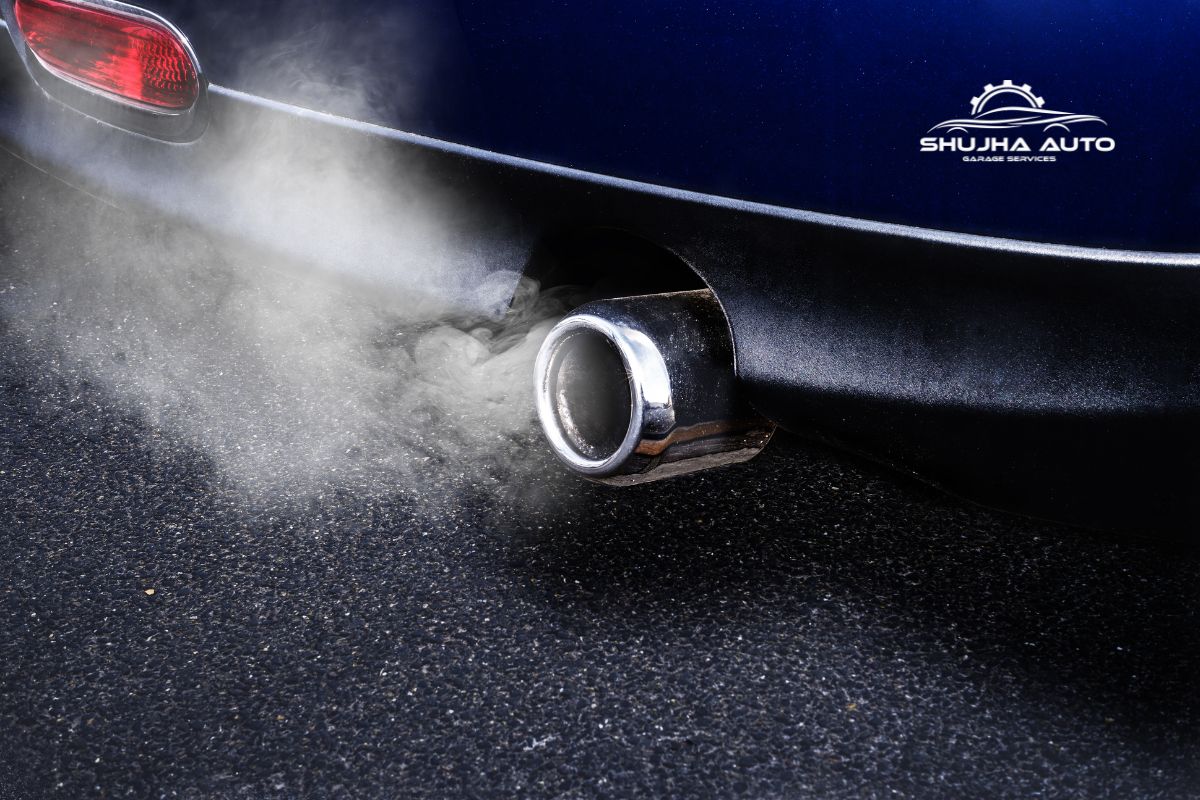
- Exhaust Smoke: If you see blue-tinted smoke coming from the tailpipe, it could be an oil leak inside the engine.
The Tools You Need to Do It Yourself
If you are a beginner and want to try changing your oil at home, it is important to have the right tools. Doing a job with the wrong tools can lead to stripped bolts or, worse, a hot oil burn. Here is what you need:
- New Oil: Check your owner’s manual for the type (e.g., 5W-30) and the amount (usually 4 to 8 quarts).
- New Oil Filter: Make sure it fits your specific vehicle.
- Wrench or Socket Set: To remove the drain plug.
- Oil Filter Wrench: Sometimes filters are on so tight that you need a specialized tool to grip them.
- Oil Drain Pan: To catch the old oil. This is crucial; you cannot let oil spill on the ground—it is bad for the environment and illegal in most places.
- Funnel: To pour the new oil without making a mess.
- Jack and Jack Stands: Never rely on a car jack alone to hold the car up while you are underneath it. Jack stands are safety devices that prevent the car from crushing you.
- Gloves and Rags: Oil is messy and can irritate the skin.
If this list looks intimidating, or if you don’t have a safe place to lift your car, that is okay. That is why garages like Shujha Auto Garage Services exist. We have the lifts, the tools, and the expertise to get the job done safely and quickly.
Location: Please Visit Our Shujha Auto Garage
Step-by-Step: How to Change Your Oil and Filter
For those curious about the process, here is a basic breakdown of how a professional does a engine oil change service. Even if you don’t plan to do it yourself, knowing the steps helps you understand what you are paying for.
Step 1: Prepare the Vehicle
The engine should be warm, but not hot. Warm oil flows out faster and carries more dirt with it. The car needs to be parked on a level surface. If you are at home, you will use the jack to lift the front of the car and secure it with jack stands. You must engage the parking brake and put blocks behind the rear wheels for safety.
Step 2: Drain the Old Oil
Locate the oil drain plug underneath the engine. Place the drain pan directly under it. Using the correct size wrench, loosen the plug. Caution: The oil may still be hot. Remove the plug by hand, quickly pulling it away so it doesn’t fall into the pan. Let the oil drain completely. This can take 10 to 15 minutes to ensure you get all the sludge out.
Step 3: Remove the Old Filter
While the oil is draining, locate the oil filter. Depending on your car, it might be on the side of the engine or underneath. Use the oil filter wrench to loosen it. Again, be ready for a bit of oil to spill out. Once it is off, take a rag and wipe the mounting surface where the filter sits. You want this surface to be clean to ensure a good seal.
Step 4: Install the New Filter
Before you screw the new filter on, take some of your new oil and dip your finger in it. Smear a thin layer of oil on the rubber gasket (the rubber ring) on the top of the new filter. This is a critical step. It ensures the gasket seals properly and prevents it from sticking or tearing the next time you change the filter. Screw the new filter on by hand until it makes contact, then tighten it about three-quarters of a turn. Do not use the wrench to over-tighten it.
Step 5: Replace the Drain Plug
Once the old oil has finished draining, clean the drain plug with a rag. Replace the washer (if it is a crush washer, you should replace it with a new one to prevent leaks). Screw the drain plug back in by hand to avoid cross-threading, then tighten it with the wrench. Be firm, but do not over-torque it. Overtightening can strip the threads in your oil pan, which is a very expensive repair.
Step 6: Add New Oil
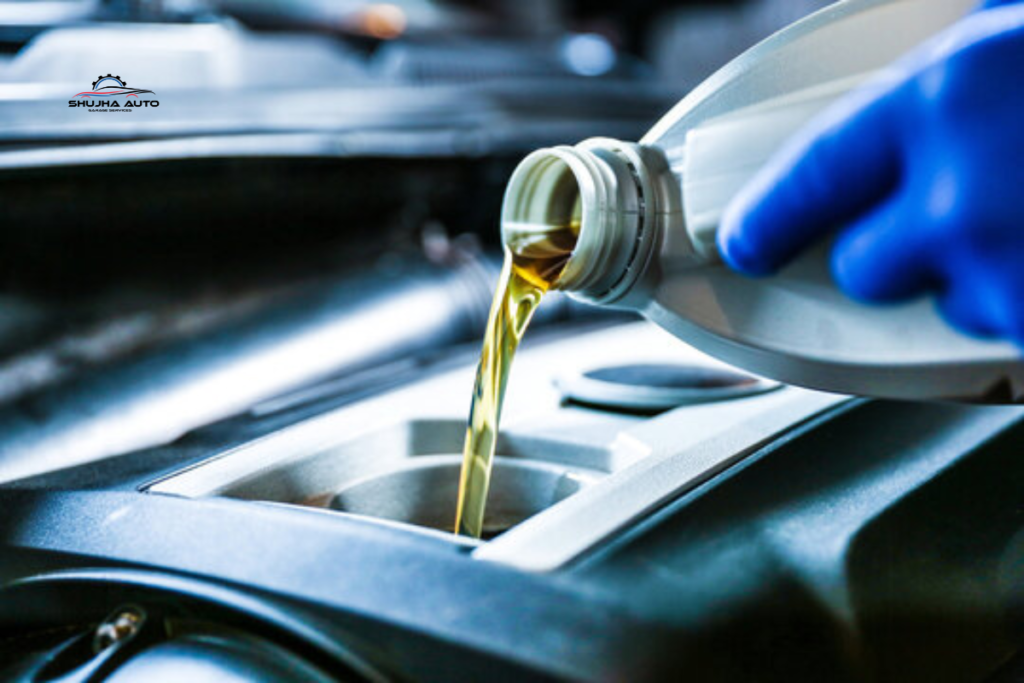
Now for the fun part. Place the funnel into the oil fill cap on top of the engine. Pour in the new oil. Refer to your owner’s manual for how many quarts you need. It is usually a good idea to add a little less than the capacity first. For example, if the capacity is 5 quarts, add 4.5. Then, replace the oil cap and start the engine.
Step 7: Check for Leaks
Let the engine run for about 30 seconds. Look underneath the car (without getting under it if you can help it) to see if oil is dripping from the drain plug or the filter. If you see a leak, turn off the engine immediately and tighten the plug or filter slightly.
Step 8: Check the Level
Turn off the engine and wait a minute for the oil to settle back into the pan. Pull out the dipstick, wipe it clean, insert it fully, and pull it out again. The level should be between the Min and Max marks. Add more oil if necessary.
Step 9: Dispose of the Old Oil
This is non-negotiable. You cannot throw oil in the trash or pour it down the drain. It pollutes groundwater. Take the old oil in the sealed drain pan to an auto parts store or a recycling center. Most places accept used oil for free.
Common Mistakes Beginners Make
If you are doing this yourself, watch out for these pitfalls:
- Double Gasketing: This happens when you forget to check if the old filter’s rubber gasket stuck to the engine. If you screw a new filter on top of an old gasket, it will cause a massive oil leak and could destroy the engine.
- Overtightening: Whether it’s the drain plug or the filter, too much torque can crack the housing or strip threads.
- Using the Wrong Oil: Putting the wrong viscosity (like 20W-50 in a car that needs 0W-20) can make the engine sluggish or cause premature wear.
Why Professional Service is Often the Best Choice
We at Shujha Auto Garage Services love helping people learn about their cars. But we also know that not everyone has the time, space, or physical ability to do this job safely.
Lifting a car on jack stands is dangerous if done incorrectly. Hundreds of people are injured every year by cars falling off jacks. Additionally, disposing of oil properly is a hassle. When you bring your car to a professional, you are paying for peace of mind.
A professional car oil and filter replacement includes more than just the physical swap. It includes:
- Proper disposal of hazardous materials.
- Torque wrench usage to ensure the drain plug is tightened to the exact manufacturer specification.
- A comprehensive inspection of the undercarriage while the car is in the air.
What Happens During a Professional Oil Change?
When you come to Shujha Auto Garage Services, we don’t just drain and fill. We treat every vehicle as if it belongs to our family. Here is what you can expect when you book an engine oil change service with us.
First, we will consult with you about your vehicle’s history. We will ask if you have noticed any strange noises, smells, or leaks. Then, we get the car in the air.
While the oil is draining, we perform what we call a visual inspection. This is where our experience pays off. We look at:
- Tires: We check tire pressure and tread depth. Properly inflated tires save you gas money.
- Brakes: We look at brake pads and rotors to see if they are wearing thin.
- Belts and Hoses: We inspect for cracks, frays, or soft spots that could burst soon.
- Battery: We test the battery to ensure it has enough cranking amps to start your car on a cold morning.
- Fluids: We top off brake fluid, power steering fluid, windshield washer fluid, and coolant.
This brings us to an important question we hear often:
What’s included in the free diagnostic check?
This is one of the best parts of choosing a reputable local garage over a quick-lube chain. At Shujha Auto Garage Services, we don’t believe in just doing the job you came in for and sending you on your way. We believe in partnership.
When we perform an oil change, what’s included in the free diagnostic check is a thorough safety inspection. We don’t just look at the oil; we look at the whole vehicle. Our technicians perform a digital or written inspection that covers:
- Engine Health: We check for leaks, listen for knocks, and review the condition of the air filter.
- Suspension: We check for worn ball joints or tie rod ends that could cause a dangerous loss of steering control.
- Exhaust System: We look for rust or holes that could lead to carbon monoxide entering the cabin.
- Fluid Analysis: We even look at the color and smell of your transmission fluid and coolant to catch potential failures before they leave you stranded.
We provide you with this report so you know the true condition of your car. We will show you what looks good and what might need attention in the future. There is no pressure to fix anything immediately; we simply believe that an informed driver is a safe driver.
What happens if an issue is found?
Let’s say during that free diagnostic check, we notice that your brake pads are down to 2mm, or we spot a small coolant leak starting to form. You might feel a moment of panic. “Oh no, how much is this going to cost?”
We want you to relax. What happens if an issue is found? We handle it with transparency and respect.
First, we document the issue. If possible, we will show you a photo of the problem. For example, if we see a leaking strut, we can show you the oil dripping down the side. We believe in visual evidence.
Second, we explain the urgency. We will tell you if the issue is critical and needs to be addressed immediately for safety, or if it is a “watch list” item that can wait until your next visit. We never want you to feel pressured to spend money you aren’t ready to spend.
Third, we provide a clear, written estimate. This estimate breaks down the cost of parts and labor. We answer all your questions so you know exactly what you are approving.
Are there any hidden fees or charges?
In today’s world, everyone is worried about getting a bill that is double what they expected. We understand that fear completely. It is frustrating when a garage advertises a low price and then adds on “shop supplies,” “environmental fees,” or “fluid disposal” charges at the register.
At Shujha Auto Garage Services, we operate on a policy of honesty. So, when we give you a price for a synthetic oil change service, we mean it.
Are there any hidden fees or charges? No. We believe that trust is the most valuable currency in the auto repair industry. When we quote you a price for a car oil and filter replacement, that price includes the oil, the new filter, the labor, the inspection, and the disposal of your old oil. What you see is what you pay.
Of course, if you ask us to fix an issue that we found during the inspection, that is a separate service with its own quote. But we will never surprise you with a disposal fee on your bill after we told you the oil change was a specific price.
Synthetic vs. Conventional: Which is Right for You?
Since we mentioned synthetic oil change service a few times, let’s dive deeper into why you might choose this option.
If you drive a high-performance vehicle, a turbocharged engine, or a newer model, synthetic oil is often mandatory. It resists thermal breakdown. Turbochargers spin at tens of thousands of RPMs and get red hot; they need the superior film strength of synthetic oil.
Even if you drive an older car, switching to synthetic can have benefits. It flows faster during cold starts. Most engine wear happens in the first few seconds after you start a cold engine, because the oil is thick and hasn’t reached all the parts yet. Synthetic oil stays fluid in cold weather, protecting your engine instantly.
However, if your older car has existing leaks, synthetic oil’s thinner molecular structure might seep through seals that conventional oil was too thick to pass. In that case, we might recommend a high-mileage conventional blend.
The best way to know is to ask us. When you come in for an engine oil change service, we look at your mileage, your engine’s condition, and the manufacturer’s recommendation to help you pick the perfect oil.
How to Choose the Right Garage
Not all garages are created equal. When you are looking for a place to trust with your vehicle, keep these tips in mind:
- Look for Transparency: Do they explain the work before they do it? Do they show you the old parts?
- Check Reviews: Look for patterns in reviews. Are people saying the staff is honest? Do they mention that the garage didn’t try to upsell unnecessary services?
- Cleanliness: A clean shop usually indicates attention to detail. If the garage is a disaster zone, they might be careless with your car.
- Ask Questions: A good mechanic loves to answer questions. If you ask, “Why do I need this?” and they give you a condescending look, walk away. If they explain it to you in simple words, you’ve found a keeper.
At Shujha Auto Garage Services, we pride ourselves on being that keeper. We are a family-owned business, and we treat our customers like neighbors. We know that you have a choice of where to take your car, and we work hard every day to earn your trust.
Frequently Asked Questions by Beginners
Let’s wrap up the technical section with some common questions we hear from beginners.
Q: How long does an oil change take?
A: If you are doing it yourself for the first time, set aside two hours to be safe. At a professional garage like ours, a standard engine oil change service typically takes 30 to 45 minutes. If we are performing a full synthetic change with a thorough inspection, it might be closer to an hour.
Q: Can I mix synthetic oil with conventional oil?
A: In an emergency, mixing is better than running out of oil. However, it dilutes the benefits of the synthetic oil. You won’t cause damage, but you should return to a consistent oil type on your next change.
Q: My oil is black. Is that bad?
A: Not necessarily. In diesel engines, oil turns black almost immediately. In gasoline engines, it darkens as it cleans the engine. However, if it looks like thick sludge or feels gritty between your fingers, it is time for a car oil and filter replacement.
Q: Do I really need to change the filter every time?
A: Yes, absolutely. As we mentioned earlier, leaving the old filter on is like putting dirty underwear back on after a shower. The filter holds about a quart of dirty oil. When you pour new oil in, that dirty oil mixes with it immediately. Always change the filter.
Q: What happens if I overfill the oil?
A: Overfilling is bad. If the oil level is too high, the crankshaft can whip the oil into a foam. Foam doesn’t lubricate. If you overfill, you need to drain the excess immediately. If you aren’t sure, bring it to us, and we will set it right.
A Personal Note from Shujha Auto Garage Services
I started this garage because I loved cars, but more importantly, I loved helping people. I remember what it felt like to be a new driver, staring at the dashboard warning lights and feeling helpless.
I wanted to create a place where you don’t have to feel that way. When you walk into Shujha Auto Garage Services, you aren’t just a work order number. You are a person who needs a reliable car to get to work, pick up the kids, or go on a road trip.
We take the time to walk you around your car. We point to the parts we are talking about. We explain why something failed. If we find an issue, we show you. If we recommend a synthetic oil change service for your vehicle, we explain why it’s better for your specific engine.
Our mission is to take the stress out of car maintenance. We want you to drive away feeling confident, not confused.
Conclusion: Take the First Step
Your car is likely the second biggest investment you will make (after your home). Protecting that investment starts with the basics. Whether you decide to lay down a tarp in your driveway and try it yourself, or you decide to trust the professionals, the most important thing is that you do it.
Don’t wait for the knocking sound. Don’t wait for the check engine light to start flashing. Be proactive.
If you are looking for a reliable, honest, and professional team to handle your engine oil change service, look no further. We invite you to visit Shujha Auto Garage Services.
We will take care of your vehicle, perform that thorough inspection, and answer every question you have. And remember, we never charge hidden fees. The price we quote is the price you pay.
Your engine is waiting for that fresh, clean oil. Give it the care it deserves. Give us a call or stop by today. Let’s keep your car running smoothly, safely, and reliably for miles to come.