

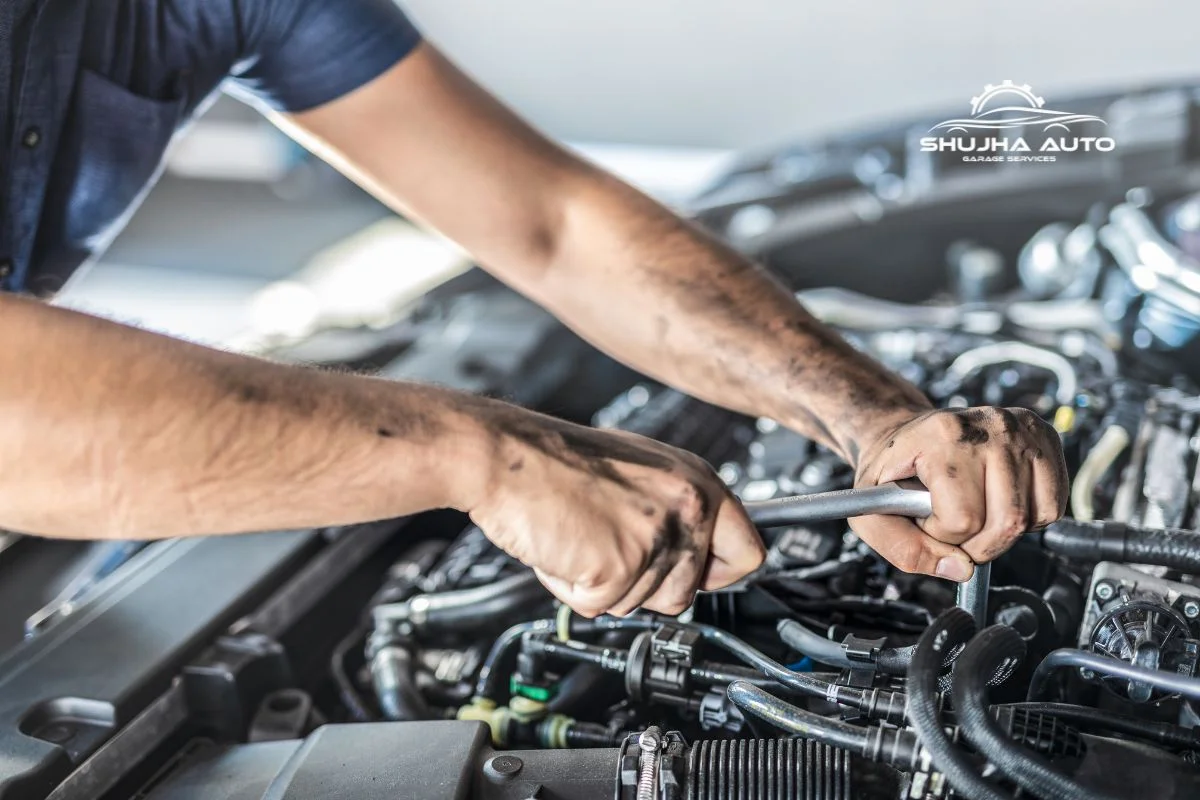
How car cooling system works: Learn how car cooling system works to regulate engine temperature, prevent overheating, and ensure smooth performance.
Have you ever opened the hood of your car right after a long drive and felt that wave of intense heat hit your face? It feels like the engine could melt anything inside. But it doesn’t. Why?
Because your car has a brilliant, silent hero working behind the scenes: the cooling system.
For a new driver or someone who just wants to understand their vehicle better, the car cooling system explained in simple terms is actually fascinating. Think of it like your body sweating on a summer day. If you couldn’t sweat, you would overheat very quickly. Your car is the same. Without a cooling system, the metal parts inside your engine would get so hot that they would actually weld themselves together. That means a broken engine and a very expensive repair.
We will walk through every part of the system, how it works, why it matters, and most importantly, how to spot small problems before they become big disasters.
At Shujha Auto Garage Services, we have helped thousands of drivers understand their cars better. We believe knowledge is power. When you know how something works, you are less likely to be scared by strange noises or dashboard warning lights.
So, let’s pop the hood and dive in.
The Basic Idea – Too Much Heat is Dangerous
Before we talk about parts like radiators or water pumps, let us understand the basic problem.
Your car engine works by burning fuel (gasoline or diesel). Inside the engine cylinders, tiny explosions happen thousands of times every minute. These explosions push pistons, which turn the wheels. This is great for moving the car. But those explosions also create massive heat.
We are talking about temperatures high enough to melt aluminum or warp steel. If all that heat stayed inside the engine, the metal would expand, parts would seize up, and the engine would stop working forever.
So, the cooling system has one simple job: take heat away from the engine and release it into the outside air.
It does this quietly, automatically, every second you drive. And it uses a special liquid called coolant (often green, pink, or orange) to do it.
The Heart of the System – The Car Radiator Working Process
When most people think of cooling, they think of the radiator. And they are right to do so. The radiator is like the cooling station of your car.
Let us look at the car radiator working process in simple steps.
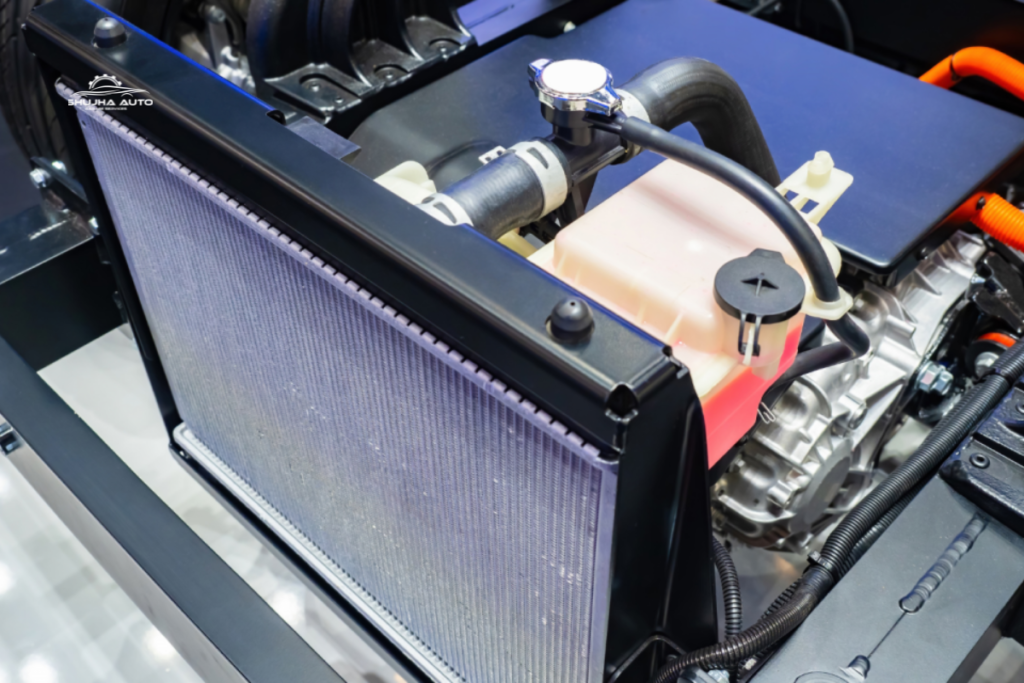
Imagine a metal box made of many small tubes and thin metal fins. Hot coolant comes into the radiator from the engine. As the coolant passes through these tiny tubes, air flows over the fins (both from driving and from a fan). The heat from the coolant transfers into the metal and then into the air.
By the time the coolant leaves the radiator, it is much cooler. It then goes back to the engine to pick up more heat.
You can think of the radiator like a water cooler for your engine. You go to the water cooler when you are hot, drink cold water, and feel refreshed. The engine sends its hot blood (coolant) to the radiator to cool down before going back to work.
Here is a simple breakdown of the car radiator working process:
- Hot coolant enters the radiator from the top hose.
- It spreads into many small tubes to increase surface area.
- Air passes over the tubes and fins (thanks to your car moving and a fan).
- Heat leaves the coolant and goes into the air.
- Cool coolant exits the radiator from the bottom hose.
- The cycle repeats thousands of times during your drive.
Without a working radiator, your engine would overheat in less than 10 minutes of driving, even on a cold day.
The Path of Coolant – How Coolant Flows in Engine
Now that we know about the radiator, let us follow the liquid itself. Understanding how coolant flows in engine is the key to understanding the whole system.
Think of the engine as a hot maze of metal passages. Coolant does not just sit there; it is pushed through these passages by a pump.
Let me walk you through the journey, step by step.
Step 1: The Cold Start
When you first start your car in the morning, the engine is cold. The coolant is sitting in the engine block and the radiator. But here is a smart trick: the engine needs to warm up to run efficiently. So, the coolant does not go to the radiator yet. A device called the thermostat stays closed. This forces the coolant to circulate only inside the engine, warming up quickly.
Step 2: The Pump Pushes
Once the engine reaches its ideal temperature (usually around 90°C or 195°F), the thermostat opens. Now, the water pump (which is driven by a belt or chain from the engine) starts pushing coolant through the engine’s internal water jackets. These are like tunnels cast into the metal of the engine block and cylinder head.
Step 3: Absorbing Heat
As the coolant flows past the cylinders (where the explosions happen), it absorbs heat. The hot coolant then flows out of the engine and toward the radiator.
Step 4: Cooling Down
The hot coolant enters the radiator, where it is cooled down by air (as we discussed earlier).
Step 5: The Return Trip
The now-cooled coolant leaves the radiator and goes back to the engine to repeat the process.
So, in short, how coolant flows in engine is a continuous loop: Engine Radiator Engine. It never stops while the engine is running. This constant flow keeps the engine temperature stable, no matter if you are stuck in city traffic or driving at high speed on a highway.
Location: Please Visit Our Shujha Auto Garage
The Main Parts of Your Cooling System (In Plain English)
A cooling system is more than just a radiator and some liquid. It is a team of parts working together. Let me introduce you to the team.
1. Radiator
We already met this star player. It is the heat exchanger. It sits at the front of your car behind the grille.
2. Coolant (Antifreeze)
This is the special liquid. It is not just water. Water freezes in winter and boils in summer. Coolant has a higher boiling point and a lower freezing point. It also has chemicals that prevent rust and corrosion inside your engine.
3. Water Pump
This is the heart of the system. It pumps coolant through the engine and radiator. If this fails, no coolant flows, and your engine will overheat in minutes.
4. Thermostat
This is a temperature-controlled valve. It stays closed when the engine is cold to help it warm up faster. It opens when the engine is hot to send coolant to the radiator. A stuck thermostat (open or closed) is a common problem.
5. Radiator Fan
When you are driving fast, air naturally flows through the radiator. But when you are stopped in traffic, there is no natural airflow. That is when the electric radiator fan kicks in to pull air through the radiator.
6. Hoses
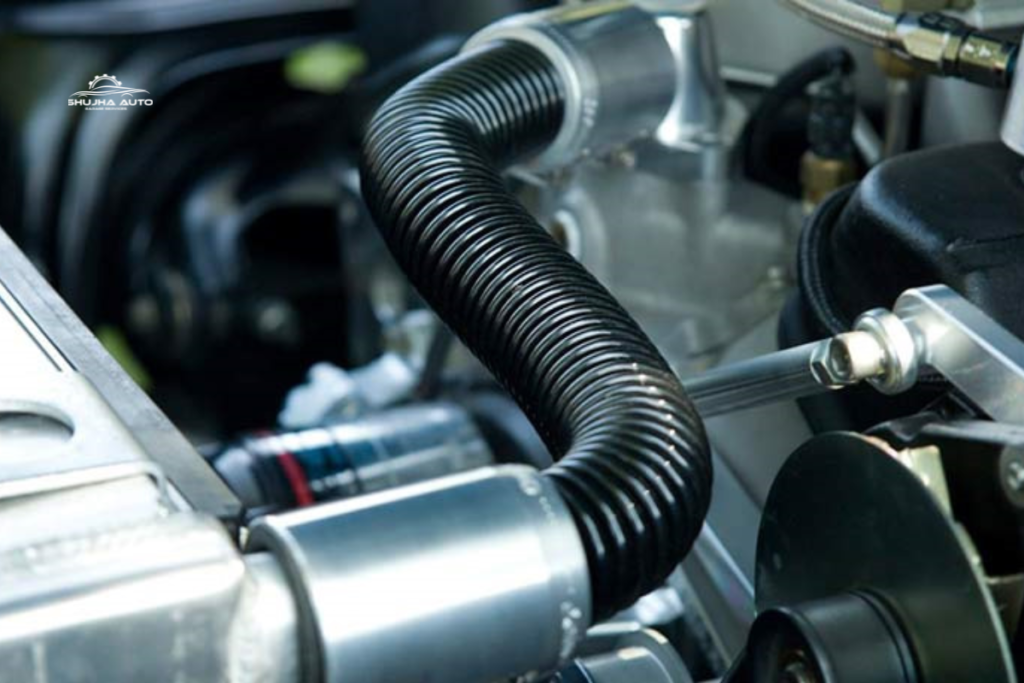
These are rubber pipes that carry coolant between the engine, radiator, and other parts. Over time, they can crack, leak, or become soft.
7. Heater Core
This is like a small radiator inside your dashboard. When you turn on the heater in your car, hot coolant flows through the heater core, and a fan blows air over it to warm the cabin. If your heater is not working well, it could mean low coolant or a problem with the cooling system.
8. Expansion Tank (Overflow Tank)
As coolant gets hot, it expands. This tank catches the extra coolant. When the engine cools down, the coolant contracts and is sucked back into the radiator. This keeps the system full at all times.
Why Coolant is So Important (And Water is Not Enough)
Some new car owners think, My coolant is low. I will just add some tap water. Please do not do this. Let me explain why.
Coolant (also called antifreeze) is a mixture of ethylene glycol or propylene glycol and water. But it is the additives that matter most.
Here is what coolant does that water cannot:
- Prevents freezing: In winter, plain water turns to ice. Ice expands and can crack your engine block or radiator. That is a huge repair.
- Prevents boiling: Water boils at 100°C (212°F). Your engine often runs hotter than that. Coolant boils at a much higher temperature (over 125°C or 260°F).
- Prevents rust: Your engine has steel, aluminum, copper, and rubber parts. Plain water will cause rust and corrosion. Coolant has special chemicals that protect all these different metals.
- Lubricates the water pump: The water pump seal needs lubrication. Coolant provides that. Water alone will dry out the seal and cause leaks.
Always use the correct type of coolant for your car. Check your owner’s manual or ask the experts at Shujha Auto Garage Services. We can tell you exactly what your car needs.
Signs Your Cooling System is in Trouble
Your car usually gives you warnings before a full breakdown. Learning these signs can save you thousands of rupees (or dollars).
Sign 1: Temperature Gauge in the Red
This is the most obvious sign. If your dashboard temperature gauge is climbing into the red zone or a warning light says Engine Hot, pull over safely and turn off the engine immediately.
Sign 2: Sweet Smell
Coolant has a sweet smell. If you smell candy or syrup inside or outside your car, you likely have a coolant leak.
Sign 3: Puddles Under Your Car
After you park, look for puddles. Coolant can be green, pink, yellow, or orange. It feels slippery like oil but is water-based. If you see a colorful puddle, you have a leak.
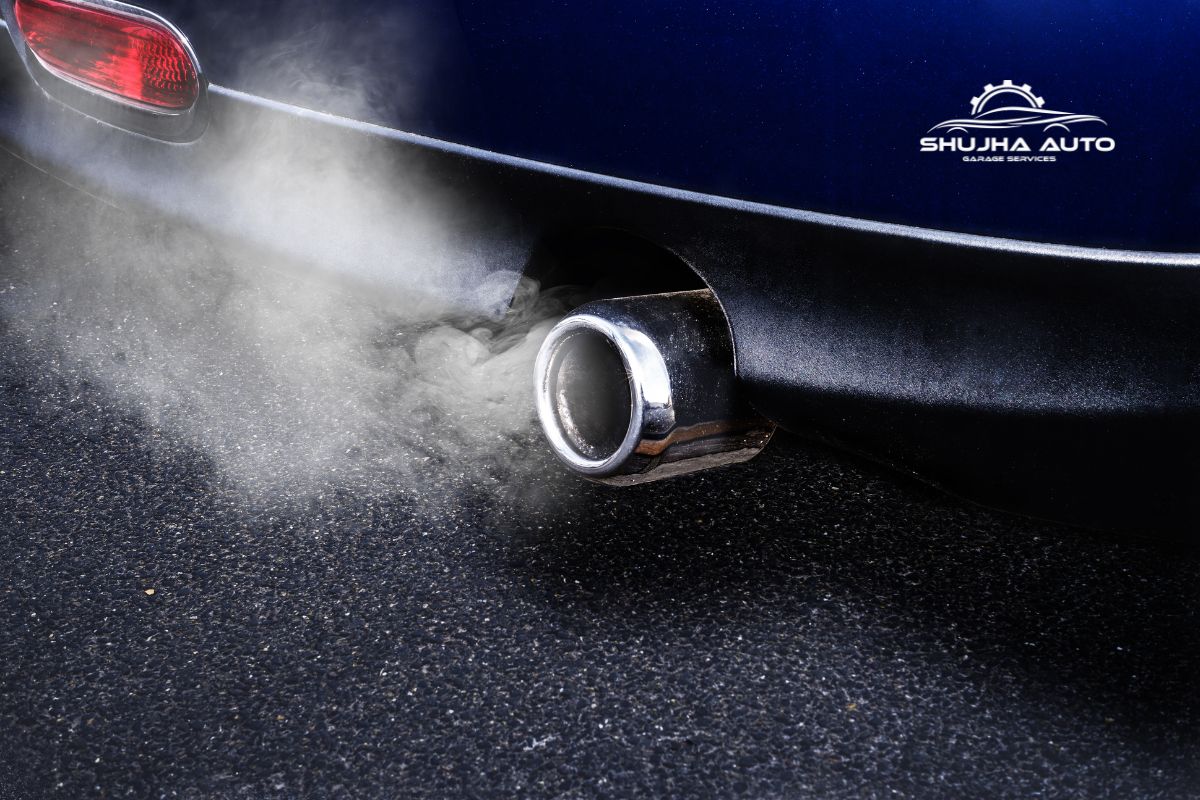
Sign 4: White Smoke from Exhaust
If you see thick, white smoke (not the thin vapor on a cold morning), it could mean coolant is leaking into the engine cylinders. This is a serious problem called a blown head gasket.
Sign 5: Low Coolant Light
Many modern cars have a low coolant warning light. Never ignore this. It means your system is losing fluid somewhere.
Sign 6: Heater Not Working
If your heater blows cold air when the engine is warm, it often means low coolant. There is not enough hot coolant to reach the heater core.
What Happens If an Issue Is Found?
Let us talk about a common worry. You bring your car to a garage because you see a puddle or a warning light. The mechanic does some checks and finds a problem.
What happens if an issue is found?
First, do not panic. At Shujha Auto Garage Services, we believe in complete honesty. When we find an issue, we do not just say, You need this repair. We follow a clear, respectful process.
Here is exactly what happens if an issue is found during your visit:
- We Document the Problem: We take notes, photos, or videos if possible. For example, if we see a crack in a radiator hose or a leak from the water pump, we will show you.
- We Explain in Simple Words: We never use confusing mechanic jargon. We will sit with you and say something like, Your water pump has a small leak. The water pump is like the heart of your cooling system. If we do not fix it, the leak will get worse, and your engine will overheat.
- We Explain the Risk of Delay: We will tell you what could happen if you postpone the repair. For a cooling system issue, delaying could lead to a blown head gasket or a cracked engine block – which can cost more than the value of an old car.
- We Give a Written Estimate: You will receive a clear, written estimate showing the cost of parts, labor, and any taxes. No surprises.
- We Offer Options: Sometimes, there is more than one way to fix a problem. For example, a leaking radiator might be repairable, but we may recommend replacement for long-term reliability. We will explain both options and let you decide.
- We Get Your Approval First: We never start work without your permission. You are in control.
- We Complete the Repair and Test: After the repair, we test the system thoroughly to make sure the problem is solved and there are no new leaks.
So, what happens if an issue is found? You get an honest conversation, a fair price, and the power to make an informed decision. No pressure. No tricks.
Are There Any Hidden Fees or Charges?
This is a question every smart customer asks. And it is a fair one. Many people have had bad experiences where a garage gave a low price over the phone and then added mysterious fees at the end.
Let me give you a straight answer.
At Shujha Auto Garage Services, we do not believe in hidden fees. Our philosophy is simple: treat every customer the way we would want our own family treated.
Here is our promise to you:
- No diagnostic fees if you approve the repair: Some garages charge you a fee to look at the car, then another fee to fix it, and then extra for shop supplies. We do not do that.
- Transparent labor rates: Our hourly labor rate is clearly posted. We do not change it based on the car or the customer.
- Parts pricing is clear: We show you the cost of the part and our markup (if any). We can also offer you choices: original parts (OEM), high-quality aftermarket parts, or budget parts. Each has a different price. You choose.
- No surprise disposal fees: Some garages add a fee to throw away your old coolant or old parts. We include that in our quoted price.
- We ask before adding anything: If we open your cooling system and see that your hoses are also cracked (even if you came for a different problem), we will stop, call you, show you the issue, and give a new quote. We never add work without asking.
So, are there any hidden fees or charges? No. Not at our garage. The price we quote is the price you pay, unless you approve additional work. We put everything in writing. You can read it, ask questions, and then decide.
The Power of a Free Diagnostic Check
You might be wondering, My car seems fine. Should I still get it checked? The answer is yes, especially if you have never had your cooling system serviced.
A small leak or a weak radiator cap can cost you pennies to fix today. But if ignored for months, that same small issue can destroy your engine.
That is why we offer a very special service: What’s included in the free diagnostic check at Shujha Auto Garage Services? Let me list every single item.
What’s included in the free diagnostic check of your cooling system?
- Visual Inspection of All Hoses: We check every rubber hose for cracks, bulges, soft spots, or leaks. Hoses are a common failure point, especially on older cars.
- Radiator Cap Test: The radiator cap is a pressure release valve. If it fails, coolant can boil at a lower temperature. We test it to make sure it holds the correct pressure.
- Coolant Level and Condition Check: We look at how much coolant you have and what it looks like. Clean coolant is bright green, pink, or orange. Dirty coolant looks brown or rusty. That means contamination.
- External Leak Check: We use a bright light and a mirror to look for dried white or colored stains on the radiator, water pump, engine block, and heater core pipes. These stains are signs of slow leaks.
- Coolant Pressure Test: We attach a special pump to your radiator or expansion tank and pressurize the system to see if it holds pressure. If the pressure drops, you have a leak somewhere – even if you cannot see it.
- Thermostat Operation Check: We feel the radiator hoses after your engine warms up. If the top hose is hot and the bottom hose is cold, the thermostat may be stuck closed.
- Fan Operation Test: We let your car idle until it reaches operating temperature and make sure the electric fan turns on. If it does not, your car could overheat in traffic.
- Water Pump Check: We look for the telltale sign of a failing water pump: a small wet drip from a weep hole on the pump body.
- Coolant for Combustion Gases: In some cases, we can test your coolant for exhaust gases. If exhaust is getting into the coolant, it means a serious internal engine problem (head gasket failure).
- Written Report: After the check, we give you a simple, written report that says Pass or Fail for each item. If something needs attention, we explain why and give you a no-pressure quote.
All of this is completely free. No purchase necessary. No hidden catch. Why do we do it? Because we want to earn your trust. We want to be your garage for life. And the best way to do that is to help you before you have a crisis on the side of the road.
Common Cooling System Problems and Their Fixes
Let me walk you through the most common issues we see at Shujha Auto Garage Services and what it typically takes to fix them.
Problem 1: Leaking Radiator
- Symptoms: Puddle of coolant under the front of the car, sweet smell, overheating.
- Fix: In some cases, we can repair small leaks with a sealant or by welding. But usually, replacement is the best long-term solution. A new radiator is not as expensive as most people think.
Problem 2: Broken Water Pump
- Symptoms: Coolant leaking from the front of the engine, a whining or growling noise from the engine, overheating.
- Fix: The water pump must be replaced. While we are in there, we often recommend changing the drive belt and the thermostat at the same time to save labor costs later.
Problem 3: Stuck Thermostat
- Symptoms: If stuck closed: engine overheats very quickly. If stuck open: engine takes too long to warm up, and your heater blows lukewarm air.
- Fix: Replace the thermostat. It is a small, cheap part that can cause big problems.
Problem 4: Blown Head Gasket
- Symptoms: White smoke from exhaust, milky oil (looks like a chocolate milkshake on the dipstick), coolant loss with no visible leak, engine overheating.
- Fix: This is a major repair. The cylinder head must be removed, machined flat, and a new head gasket installed. It costs more, but it is still cheaper than a new engine.
Problem 5: Collapsed or Swollen Hose
- Symptoms: Soft hose that feels mushy, or a hose that has swollen like a balloon. You might see a sudden drop in coolant.
- Fix: Replace the hose. Always replace both radiator hoses (upper and lower) at the same time.
How to Maintain Your Cooling System (Simple Tips)
You do not need to be a mechanic to take care of your cooling system. Just follow these easy habits.
Tip 1: Check Coolant Level Monthly
When the engine is completely cold (never open a hot radiator!), look at the expansion tank. There are Min and Max marks. The coolant should be between them.
Tip 2: Look Under Your Car
Once a week, when you leave for work, glance at the ground where you parked. Any colorful puddles? If yes, you know what to do.
Tip 3: Watch Your Temperature Gauge
Get to know where your gauge normally sits (usually right in the middle). If it ever climbs higher than normal, even a little, pay attention.
Tip 4: Flush Your Coolant Every 2-3 Years
Over time, coolant becomes acidic and stops protecting your engine. A coolant flush means draining the old fluid, cleaning the system with a special chemical, and filling with fresh coolant. This is one of the cheapest ways to prevent expensive repairs.
Tip 5: Replace Hoses and Belts on Schedule
Rubber does not last forever. Most manufacturers recommend replacing coolant hoses every 5-7 years, even if they look fine.
Why Choose Shujha Auto Garage Services?
You have many choices when it comes to car repair. So why should you trust us with your cooling system?
We Teach, We Do Not Scare
Many garages use fear to sell repairs. They say things like, Your car could explode tomorrow! We do not do that. We explain the real risks honestly, but we never exaggerate.
We Have the Right Tools
Cooling systems are simple in idea but tricky in practice. We have pressure testers, coolant refractometers, borescopes (tiny cameras to look inside engines), and diagnostic scanners to find hidden problems.
We Stand Behind Our Work
Every cooling system repair we do comes with a warranty. If your new water pump leaks in six months, we fix it at no charge. No arguments.
We Respect Your Time
We know you are busy. We give realistic time estimates and call you if anything changes. We also offer a clean waiting area with Wi-Fi and coffee.
We Are Local and Fair
Shujha Auto Garage Services is not a big corporate chain. We are a local garage. We know our customers by name. We have served this community for years, and we plan to be here for many more.
Conclusion: Stay Cool, Drive Safe
Your car’s cooling system is easy to ignore – until it fails. And when it fails, it often fails dramatically. A cloud of steam, a flashing red light, and a very unhappy engine.
But now you know better. You understand the car cooling system explained in simple terms. You know the car radiator working process. You can picture how coolant flows in engine from the pump through the block, to the radiator, and back again.
You also know what happens if an issue is found (honest conversation and a clear quote). You know are there any hidden fees or charges (no, never at our garage). And you know exactly what’s included in the free diagnostic check (a 10-point inspection, completely free).
So here is my request to you: Do not wait for steam to come out of your hood. If you have never had your cooling system checked, or if it has been more than two years since your last coolant flush, come see us.
At Shujha Auto Garage Services, we make cooling system maintenance simple, affordable, and honest. We will check everything, explain everything, and only fix what needs fixing.
Your engine works hard for you every day. Give it the care it deserves. Stay cool. Drive safe. And we will see you at the garage.
Shujha Auto Garage Services – Your Cooling System Experts.