

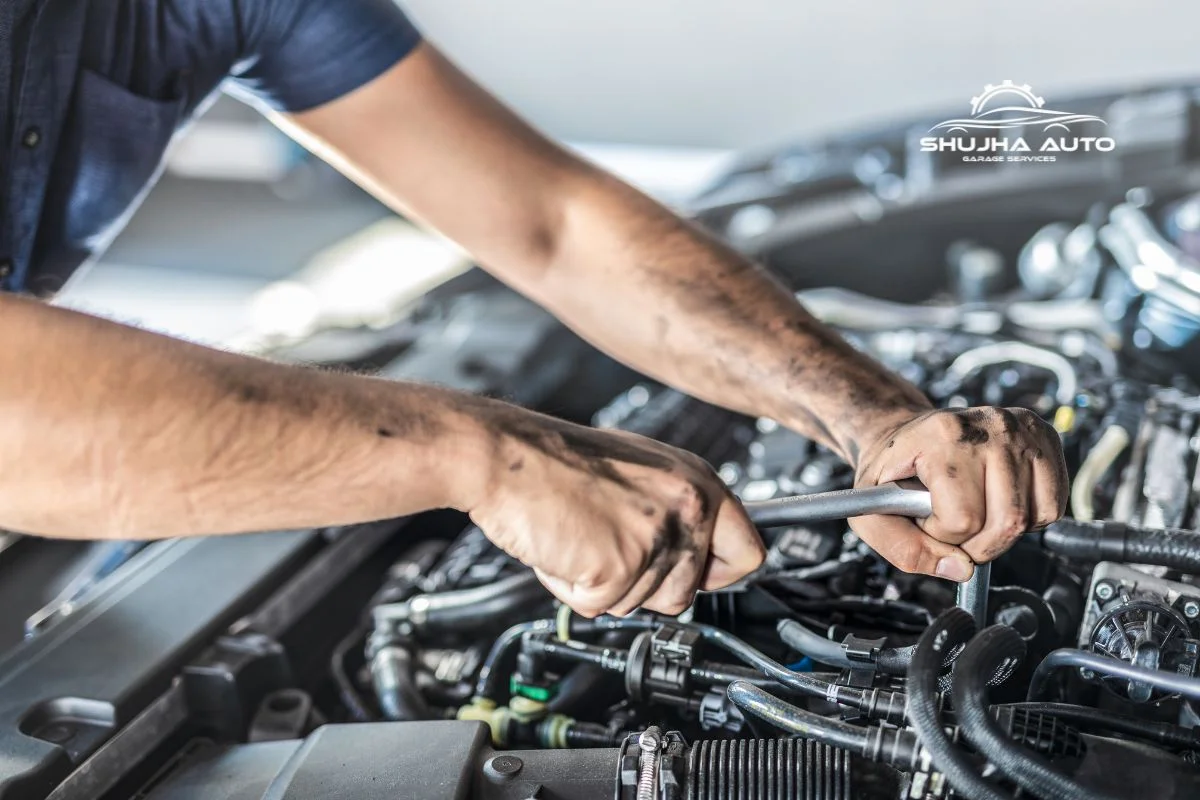
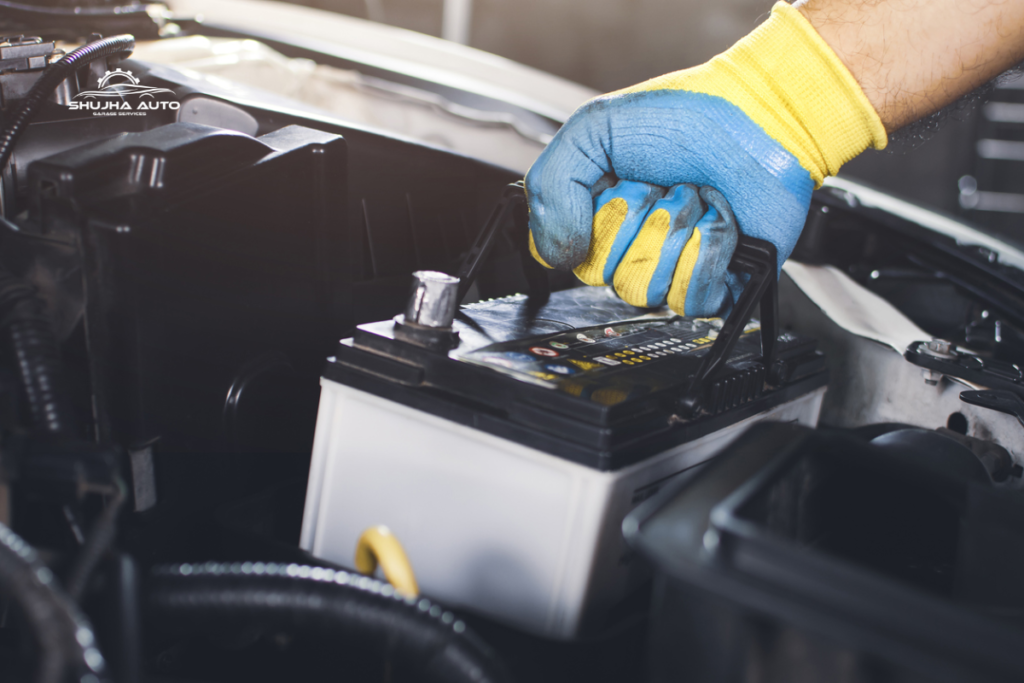
Car battery maintenance: check & clean terminals/corrosion, test voltage, secure hold-down, inspect electrolyte, and test alternator to extend battery life.
Let’s talk about your car’s battery. It’s easy to forget about it, isn’t it? Tucked away under the hood, it doesn’t ask for much—until one chilly morning when you turn the key and nothing happens. That dreaded click-click-click is a sound no driver wants to hear. The truth is, your car battery is the heart of your vehicle’s electrical system. Without it, you’re going nowhere.
The good news? With a little basic knowledge and some simple habits, you can dramatically extend the life of your battery, ensure reliable starts, and avoid those inconvenient and stressful breakdowns. This guide is here to walk you through everything you need to know, using easy, simple words. And remember, if any of this feels too hands-on, or if you find an issue, the team at Shujha Auto Garage Services is always here to help.
Why Battery Care Matters So Much
Think of your battery as a small, hardworking reservoir of power. Every time you start your car, it unleashes a huge surge of energy to crank the engine. Once the engine is running, the alternator refills this reservoir. But over time, with constant charging and discharging, heat, cold, and vibration, its capacity to hold a charge diminishes.
A well-maintained battery can last 4-6 years, sometimes longer. A neglected one might fail in just 2 or 3. Regular maintenance is about more than just longevity; it’s about reliability for your daily commute, school runs, and road trips. It’s peace of mind.
Car Battery Maintenance
Your First and Easiest Line of Defense: The Visual Battery Inspection
Before you touch anything, just look. A visual battery inspection is the simplest, most powerful tool you have. Pop your hood (make sure the engine is off and cool!) and locate the battery. Here’s what you’re looking for:
- The Case: Look for any obvious cracks, bulges, or warping. A swollen battery case is a sure sign of internal failure, often from overheating.
- Leaks: Check for any wetness, drips, or a crusty buildup on the top or around the base. Battery acid is corrosive and can damage the metal parts of your car.
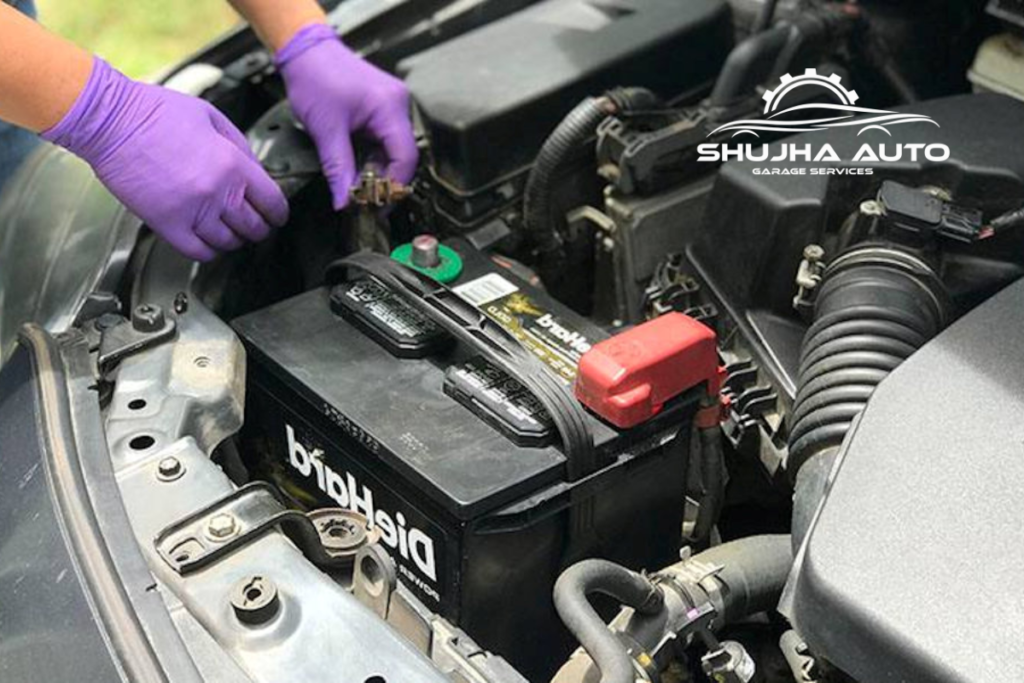
- Corrosion: This is the big one. Look at the battery terminals (the metal posts on top where the cables connect). Do you see a white, bluish, or greenish crunchy or powdery substance? That’s corrosion. It acts as an insulator, blocking the flow of electricity from your battery to your car. How to clean battery corrosion is a skill we’ll cover in a moment.
- Connections: Give the cable clamps a gentle wiggle (don’t use metal tools yet!). They should be snug and secure. A loose connection can cause intermittent electrical problems and prevent your battery from charging properly.
Make this visual battery inspection a habit every time you check your engine oil or windshield washer fluid—once a month is a perfect routine.
Location: Please Visit Our Shujha Auto Garage
The Golden Rule: Keeping It Clean (Battery Terminal Cleaning)
Corrosion is a battery’s natural enemy. It happens as hydrogen gas released from the battery acid reacts with the metal terminals. The result is poor conductivity, difficulty starting, and parasitic drain. Battery terminal cleaning is arguably the most impactful Maintenance you can do yourself.
Here’s a simple, safe guide on how to clean battery corrosion:
What you’ll need:
- Safety glasses and gloves (Battery acid is nasty stuff!)
- A wrench (usually 10mm) to loosen the terminal bolts.
- A wire brush or dedicated battery terminal brush.
- A simple cleaning solution. You can use a commercial battery cleaner, or make a DIY paste from baking soda and water (about a tablespoon of baking soda to a cup of water).
- A small cup or spray bottle for the solution.
- Clean rags or paper towels.
- A tiny bit of petroleum jelly or dielectric grease (this is the pro tip!).
Step-by-Step Process:
- Safety First: Park in a well-ventilated area, turn the car completely off, and remove the keys. Put on your glasses and gloves.
- Disconnect: Always disconnect the NEGATIVE (black, marked with a -) terminal first. Loosen the nut and gently twist the clamp until it comes off. Tuck it safely away from the terminal. Then, disconnect the POSITIVE (red, +) terminal.
- Inspect & Clean: Now you can safely inspect the terminals and clamps up close. Dip your brush in the baking soda solution and scrub the terminals and the inside of the cable clamps vigorously. The solution will fizz as it neutralizes the acid. You’ll see the corrosion disappear.
- Rinse & Dry: Wipe everything down with a clean water-dampened rag to remove any residue. Then, dry everything thoroughly with a clean, dry rag.
- The Secret Step: Apply a very thin coat of petroleum jelly or dielectric grease to the clean battery terminals. This creates a protective barrier that dramatically slows down the return of corrosion.
- Reconnect: This is crucial: Reconnect the POSITIVE (red) terminal first. Tighten it firmly so it can’t move. Then, reconnect the NEGATIVE (black) terminal last. Tighten both securely.
That’s it! A 15-minute job that can add years to your battery’s life and ensure a solid electrical connection. If you’re ever unsure about doing this yourself, or if the corrosion looks severe, just bring it to us at Shujha Auto Garage Services. Our technicians can handle a full battery terminal cleaning service quickly and safely.
Beyond the Basics: Proactive Habits for Battery Health
Cleaning is vital, but these habits will keep your battery in top shape between cleanings:
- Drive It Regularly: Your battery’s worst enemy is sitting. Short trips (under 20 minutes) don’t allow the alternator enough time to fully recharge the battery used to start the car. If you have a vehicle you don’t drive often, take it for a good 30-minute highway drive each week.
- Secure It Tightly: A loose battery bounces around as you drive. This can cause internal damage, short circuits, and even a cracked case. Make sure the hold-down clamp or bracket is tight so the battery doesn’t move.
- Mind the Heat: Extreme heat is actually harder on batteries than extreme cold. It accelerates the chemical reaction inside and causes fluid to evaporate. Whenever possible, park in a garage or in the shade.
- Turn Off All Lights & Accessories: Make it a ritual when you exit the car: check that interior lights, headlights (especially modern daytime running lights), and accessories like phone chargers are unplugged. A dome light left on overnight is often all it takes to drain a battery dead.
- Check Fluid Levels (If Applicable): Some batteries have removable caps that allow you to check the fluid (electrolyte) level. If the plates inside are exposed to air, they sulfate and die. If your battery has caps, you can carefully peek inside. The fluid should just cover the plates. If it’s low, top it off with only distilled water. If this seems daunting, just ask a professional.
The Power of Professional Insight: When to Seek Help
Even with perfect care, batteries wear out. They are consumable parts. So, how do you know when it’s more than just a cleaning issue?
Common Warning Signs:
- The engine cranks slower than usual when starting.
- Your headlights or interior lights appear dimmer, especially when idling.
- The battery warning light on your dashboard illuminates.
- You need to press the gas pedal to get the car to start.
- You’ve had to jump-start the battery multiple times.
- An odd smell, like rotten eggs, comes from under the hood (this is sulfur from an overcharging or failing battery).
What happens if an issue is found?
This is the critical question. During a professional inspection, like the one we offer at Shujha Auto Garage Services, we don’t just look for corrosion. We perform a load test. This test puts a simulated demand on the battery, like starting a car on a cold day, and measures its ability to hold voltage under pressure. It tells us the battery’s real-world strength, not just its surface voltage.
If an issue is found, here’s what a trustworthy garage will do:
- Explain Clearly: We will show you the test results, explain what they mean in simple terms, and point out any physical problems (cracks, leaks, loose alternator belts).
- Check the Charging System: A dead battery is sometimes just a symptom. We’ll test your alternator and starter to ensure they are working correctly. Replacing a battery when the alternator is faulty will just lead to another dead battery in a week.
- Give You Options: We’ll tell you if the battery can be saved (sometimes with a full recharge) or if it needs replacement. If replacement is needed, we’ll help you choose the right battery for your car, your climate, and your budget.
- Get Your Consent: No reputable service should proceed with any repair or replacement without your clear, informed approval.
Demystifying Garage Services: Transparency and Trust
We understand that taking your car to a garage can cause anxiety. You might worry about being sold services you don’t need or getting hit with surprise costs. At Shujha Auto Garage Services, we believe in total transparency. Let’s clear up two of the most common questions right now.
What’s included in the free diagnostic check?
Many garages, including ours, offer a free battery check to build trust and help customers. Our free diagnostic check isn’t just a quick glance. It typically includes:
- A comprehensive visual battery inspection (checking for corrosion, leaks, and damage).
- A voltage test with a multimeter to measure the battery’s resting state-of-charge.
- A load test to assess the battery’s health under simulated starting conditions.
- A check of the battery terminals and cable connections for security and corrosion.
- A test of the alternator’s output to ensure it’s properly charging the battery.
- A test of the starter’s current draw.
- A review of your vehicle’s computer for any related trouble codes.
- A clear, jargon-free explanation of our findings and a written report.
This check gives us a complete picture of your starting and charging system, so we can give you accurate advice.
Are there any hidden fees or charges?
This is the heart of the trust issue. The answer should be a clear and honest NO. At a reputable garage like Shujha Auto Garage Services, our philosophy is simple:
- The Diagnostic Check is Free: If you come in concerned about your battery, the initial inspection and testing to diagnose the problem are free. You will know the issue and the recommended solution before any work begins.
- Upfront Quotes: If a repair or replacement is needed, we will provide a written, itemized estimate. This quote will include the cost of the part (e.g., a new battery), the labor, any shop supplies (like terminal protectant), and all taxes. There are no hidden fees.
- Approval is Key: We will never start paid work without your explicit go-ahead. If, during a repair, we discover an unexpected, related issue, we will stop and contact you immediately with an explanation and an updated quote for your approval before proceeding.
Our goal is to be your long-term automotive partner. That only works if you trust us completely.
Your Seasonal Battery Maintenance Checklist
Spring/Summer:
- Perform a visual battery inspection and clean any early signs of corrosion.
- Ensure the battery is secure after the bumps of winter roads.
- Check fluid levels if applicable (heat causes evaporation).
Fall:
- This is the most important time! Get a free professional diagnostic check at Shujha Auto Garage Services. Cold weather exposes a weak battery.
- Complete a thorough battery terminal cleaning.
- If your battery is over 3 years old, consider a professional load test.
Winter:
- Keep the battery terminals clean and dry.
- If parked outside for long periods in extreme cold, consider a battery blanket or trickle charger.
- After a jump-start, drive for at least 30 minutes to recharge, and get the battery tested as soon as possible.
Conclusion: Empowerment Through Simple Care
Your car’s battery doesn’t have to be a mystery or a source of stress. By incorporating a simple visual battery inspection into your monthly routine, learning how to clean battery corrosion, and practicing good driving habits, you take control of your vehicle’s reliability.
Think of this maintenance as a form of insurance. A small investment of time and attention pays off in the confidence of a car that starts every single time you need it to.
And when in doubt, or when you want the assurance of a professional eye and advanced testing equipment, that’s where we come in. At Shujha Auto Garage Services, we’re not just here to fix problems; we’re here to help you prevent them. We offer the knowledge, the transparent service, and the peace of mind that lets you get back on the road with confidence.
So, the next time you pop the hood to check your oil, take that extra 30 seconds for a visual battery inspection. Your future self—especially on the next frosty morning—will thank you for it. And remember, our doors (and our free diagnostic checks) are always open. Let’s work together to keep you moving reliably.