



Professional car AC service & repair. Get cool air again with expert AC maintenance, recharge, & leak repair. Schedule your car AC service today.
There’s nothing quite like the feeling of turning on your car’s air conditioning on a scorching summer day and being greeted by a powerful blast of cool, fresh air. It’s a simple luxury that transforms your drive from a sweaty ordeal into a comfortable journey. But what happens when you turn the knob to blue, and instead of that refreshing chill, you’re met with a disappointing puff of warm air? Suddenly, your car feels more like a mobile sauna.
If your car’s AC isn’t performing like it used to, you’re not alone. AC systems are complex, and like any other part of your vehicle, they require attention and care. At Shujha Auto Garage Services, we believe every driver deserves a cool, comfortable, and healthy cabin environment. This comprehensive guide will walk you through everything you need to know about professional car AC service—from understanding common problems to the full repair and recharge process—all explained in simple, easy-to-understand words.
The Heart of the Matter: How Your Car’s AC System Works
Before we dive into problems and solutions, let’s quickly cover the basics. Think of your car’s AC system as a refrigerator on wheels. It doesn’t create cold air; it removes heat and moisture from the air inside your cabin. Here’s the super-simple version of the cycle:
- The Refrigerant: This is the special fluid (often called Freon or by its proper name, R-134a or the newer R-1234yf) that circulates through the system. It’s the magic substance that absorbs and releases heat.
- The Compressor: Powered by your engine’s serpentine belt, this is the pump that pressurizes the refrigerant and pushes it through the system. It’s often called the heart of the AC.
- The Condenser: Located in front of your car’s radiator, this looks like a small radiator itself. Here, the hot, pressurized refrigerant releases its heat to the outside air and becomes a liquid.
- The Expansion Valve/Orifice Tube: This tiny part creates a drastic pressure drop, causing the liquid refrigerant to cool down immensely as it enters the next component.
- The Evaporator: Hidden deep inside your dashboard, this is where the magic happens. The now super-cooled refrigerant absorbs heat from the air blown over it. This cools the air and, crucially, removes humidity (which is why water often drips under your car when the AC is on). This is the source of your cool air.
- The Blower Fan: This fan pushes air over the cold evaporator and out through your car’s vents.
When all these parts work in harmony, you get that beautiful, cold air. When one part fails, the whole system suffers.
Location: Please Visit Our Shujha Auto Garage
Warning Signs: Is Your Car’s AC Crying for Help?
Your car usually gives you plenty of notice before the AC quits completely. Ignoring these signs can lead to more expensive repairs down the line. Here are the most common cries for help:
- Car Blowing Hot Air
This is the most obvious and frustrating symptom. You turn the AC to max, but the air from the vents is no cooler than the outside air. This could be caused by:
- Low Refrigerant: The most common cause. Refrigerant doesn’t get used up; if it’s low, there’s a leak. Simply adding more (recharging) is a temporary fix if the leak isn’t found and sealed.
- A Failed Compressor: If the compressor clutch isn’t engaging or the compressor itself is seized, the refrigerant can’t circulate.
- Electrical Issues: Blown fuses, faulty relays, or wiring problems can prevent the AC system from getting the signal to turn on.
- A Blockage: Debris or moisture can clog the system, stopping the flow of refrigerant.
- Weak Airflow from Vents
You can hear the blower fan working, but only a gentle breeze comes out, even on the highest setting. The air might be cold, but it’s not reaching you. This points to issues *before* the air gets cooled:
- A Clogged Cabin Air Filter: This is the #1 cause of weak airflow from vents. This filter, usually located behind the glovebox, traps dust, pollen, and debris. When it’s clogged, it chokes off the air supply. Replacing it is often an easy, inexpensive fix.
- A Failing Blower Motor: The motor that powers the fan can wear out or its resistors can fail, limiting fan speeds.
- Blocked Evaporator or Ducts: Mold, leaves, or other obstructions inside the air ducts can physically block the air.
- AC Smells Musty/Moldy
That unpleasant, damp-sock odor when you first turn on the AC isn’t just a nuisance—it’s a health concern. This smell happens because:
- The evaporator coil gets cold and wet during operation.
- When you turn off the car, moisture remains on it, and in the dark, damp environment of your HVAC housing, mold and mildew can grow.
- The next time you turn on the fan, it blows those spores into your cabin. This can trigger allergies and asthma.
Fixing this usually involves using a special disinfectant treatment to kill the mold and clean the evaporator core and ducts.
Other common signs include:
- Unusual Noises: Squealing (often a slipping compressor belt), grinding (a failing compressor), or clicking sounds.
- Water Inside the Car: A clogged drain tube from the evaporator housing can cause water to leak onto your passenger-side floorboards.
- The AC Only Cools Sometimes: This could be an electrical issue, like a failing pressure switch or a compressor clutch on its last legs.
The Professional AC Service Process: What Really Happens at the Garage?
So, you’ve noticed a problem and driven to a professional garage like Shujha Auto Garage Services. What can you expect? A proper AC Service is a systematic process, not just a quick gas top-up.
Step 1: The Free Diagnostic Check – Your Roadmap to Repair
This is the most critical step. A guesswork repair wastes your time and money. At Shujha Auto Garage Services, our free diagnostic check is a comprehensive evaluation designed to find the root cause of your AC problem.
What’s included in the free diagnostic check?
- Visual Inspection: We check for obvious signs of damage, oil stains indicating leaks at hose connections, the compressor, and the condenser.
- Performance Test: We measure the temperature of the air coming from the vents and compare it to ambient temperature to gauge system performance.
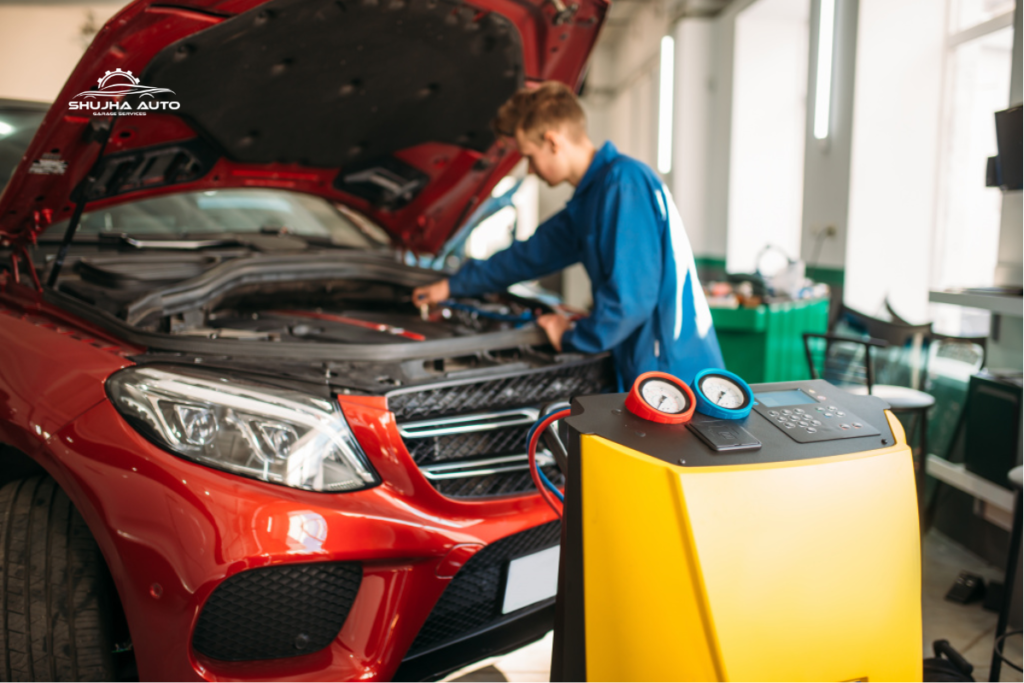
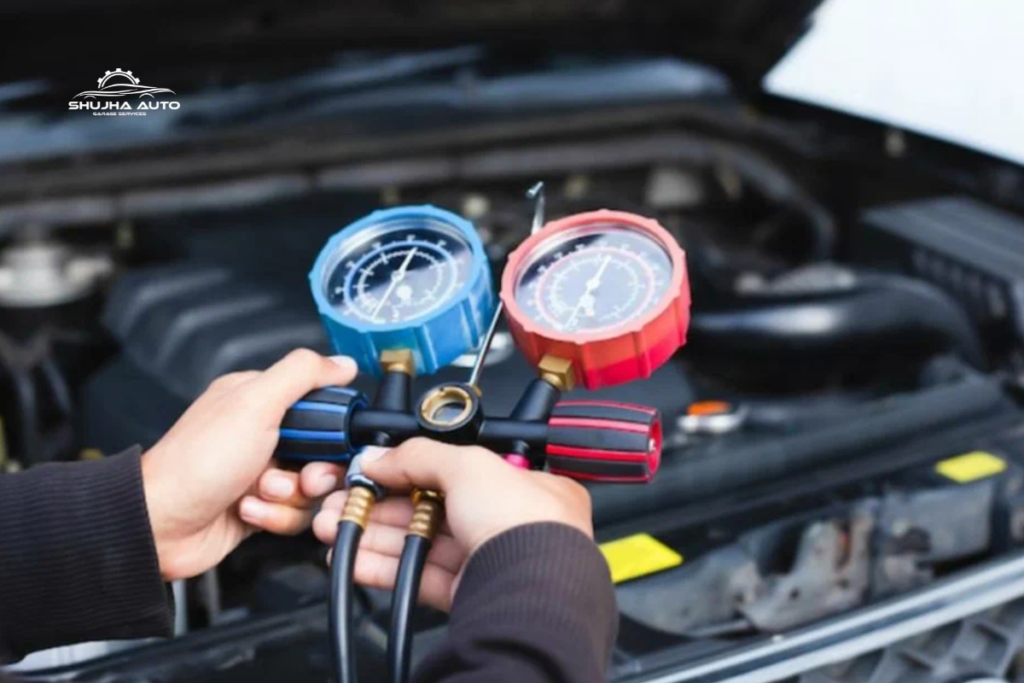
- Pressure Test: Using high and low-side gauges, we check the system’s refrigerant pressure. This tells us if the system is correctly charged, overcharged, or undercharged.
- Leak Detection: If pressure is low, we use electronic leak detectors or UV dye (injected into the system) to pinpoint the exact source of any leak. This is crucial for a lasting repair.
- Electrical System Check: We verify that fuses, relays, the compressor clutch, and control switches are receiving power and functioning correctly.
- Belt and Component Inspection: We check the condition of the serpentine belt that drives the compressor and the operation of fans that cool the condenser.
This check gives us a clear picture. We don’t just treat the symptom (car blowing hot air); we diagnose the disease (e.g., a leaking Schrader valve on the low-pressure port).
Step 2: The Consultation – What Happens If an Issue Is Found?
This is where transparent communication is key. Our technician will sit down with you (or give you a call) and explain, in plain language:
- The Exact Problem: We found a small leak in the condenser due to a rock impact.
- Why It’s Causing Your Symptom: This leak has let most of the refrigerant escape, so there’s nothing left in the system to absorb heat, which is why your car is blowing hot air.
- The Repair Options: We’ll outline the necessary repair, the parts needed, and why they are required.
- The Estimate: You will receive a detailed, written estimate that breaks down the cost of parts and labor. There are no hidden fees or charges at Shujha Auto Garage Services. The price we quote is the price you pay, guaranteed. We will never begin work without your explicit approval.
- The Consequences of Not Fixing It: We might explain that running a compressor with low refrigerant can cause it to burn out, turning a small leak repair into a much more costly compressor replacement.
You are in complete control. Our goal is to inform you so you can make the best decision for your car and your budget.
Step 3: The Repair & Service
Once you approve the estimate, our certified technicians get to work. A full professional service may include:
- Evacuation: Using a specialized recovery machine, we safely remove any remaining refrigerant and oil from the system for proper disposal (it’s illegal and harmful to vent it to the atmosphere).
Repair: We fix the identified issue. This could be:
- Replacing a leaking hose, seal, or valve.
- Installing a new cabin air filter to cure weak airflow from vents.
- Replacing a faulty compressor, condenser, or expansion valve.
- Performing an anti-mold treatment to eliminate the source of an AC [that] smells musty/moldy.
- Vacuuming: We hook the system to a powerful vacuum pump for a minimum of 30-45 minutes. This removes all air and moisture (which turns to ice and can damage the system). It also confirms the system is now leak-free (a vacuum should hold steady).
- Recharging: We weigh in the exact amount of clean, new refrigerant specified by your vehicle’s manufacturer. We also add the correct type and amount of special oil to lubricate the compressor.
- Performance Verification: We run the system again, checking vent temperatures, pressures, and ensuring everything is operating optimally.
Step 4: The Final Check and Peace of Mind
Before you even pick up your car, we do a final road test to ensure the cabin is cooling quickly and effectively. We’ll explain what work was done and provide you with a detailed invoice. Our work is backed by a warranty for your peace of mind.
The Cost of Comfort: Investing in Your AC System
Many people ask, Why is AC repair sometimes expensive? The answer lies in the complexity of the system and the cost of quality parts. A compressor, for instance, is a precision mechanical pump. However, investing in a professional repair using proper parts and procedures is almost always cheaper in the long run than repeated cheap recharges that don’t fix the leak, or a DIY attempt that leads to bigger damage.
Remember: Are there any hidden fees or charges? With a reputable garage like ours, the answer should be a clear NO. A trustworthy shop will provide a clear, upfront estimate and communicate immediately if they discover an unexpected, additional issue that requires your approval to proceed.
DIY vs. Professional Service: Understanding the Risks
The auto parts store shelves are lined with DIY AC recharge kits. While tempting, they come with significant risks:
- Misdiagnosis: If your problem isn’t just low refrigerant (e.g., a bad compressor), the kit is a waste of money and can cause harm.
- Overcharging: Too much refrigerant can cause excessive pressure, leading to catastrophic system failure. The kits have crude gauges at best.
- Missing the Leak: You’ll be back to square one in a few weeks when the refrigerant leaks out again, having wasted money and added to environmental harm.
- Contamination: DIY kits can introduce moisture and air into the system, and using the wrong type of refrigerant can ruin expensive components.
- Safety: Refrigerant can cause severe frostbite if it contacts skin. The system is under high pressure.
A professional service is an investment in a correct, lasting, and safe repair.
Proactive Care: How to Keep Your Car’s AC Running Strong
Prevention is always better than cure. Here are simple habits to extend the life of your AC:
- Run it Regularly: Even in winter, run your AC for at least 10 minutes once a week. This circulates the refrigerant and oil, keeping the seals lubricated and preventing them from drying out and leaking.
- Change the Cabin Air Filter Annually: This simple, inexpensive filter protects your entire HVAC system, ensures strong airflow, and improves cabin air quality. It’s your first defense against weak airflow from vents.
- Use the Max AC or Recirculate Mode: On very hot days, this setting cools the already-cooled cabin air faster and puts less strain on the system than trying to constantly cool fresh, hot outside air.
- Get a Pre-Summer Check-Up: Bring your car to Shujha Auto Garage Services every spring for a basic AC performance check. We can often spot small issues before they leave you stranded in the summer heat.
- Park in the Shade: It reduces the initial heat load your AC has to fight when you start the car.
Your Trusted Partner for Cool, Clean Air
A malfunctioning car AC is more than an inconvenience. It’s a safety issue—driving while overheated and uncomfortable can be a distraction. It’s a health issue—breathing in mold spores from a system that smells musty/moldy is bad for you and your passengers. And it’s a value issue—a well-maintained car is a more enjoyable and valuable asset.
At Shujha Auto Garage Services, we combine technical expertise with old-fashioned honesty. We understand that your car is essential to your daily life, and your comfort matters. Our team of certified technicians uses state-of-the-art diagnostic tools and high-quality parts to ensure your AC repair is done right the first time.
We stand by our free, no-obligation diagnostic check to give you clarity. We stand by our transparent, upfront pricing with no hidden fees or charges. And we stand by our workmanship with a solid warranty.
Don’t spend another day dreading your drive. If your car is blowing hot air, if the airflow feels weak, or if a strange odor greets you when you start the AC, it’s time for a professional assessment.
Contact Shujha Auto Garage Services today to schedule your free AC diagnostic check. Let us restore your cool, clean, and comfortable drive.