Modern vehicles are equipped with dozens of dashboard warning lights designed to alert drivers about potential issues before they become serious problems. While some dashboard symbols indicate simple reminders, others warn of critical mechanical or safety concerns that require immediate attention.
Understanding these warning lights can help you prevent costly repairs, improve vehicle safety, and avoid unexpected breakdowns. Whether you’re a new driver or an experienced car owner, knowing what each dashboard warning light means is essential for proper vehicle maintenance.
In this comprehensive guide, we’ll explain the most common car dashboard warning lights, what causes them to appear, and the appropriate actions you should take when they illuminate.
What Are Car Dashboard Warning Lights?
Car dashboard warning lights are visual indicators displayed on your vehicle’s instrument panel. They communicate information about your car’s systems, performance, and safety features.
These lights are connected to sensors and onboard computer systems that continuously monitor various vehicle components. When a sensor detects a problem or abnormal condition, the corresponding warning light appears on the dashboard.
Dashboard warning lights generally fall into three categories:
Red Warning Lights
Red lights indicate serious issues that require immediate attention. Continuing to drive could result in severe damage or safety risks.
Yellow or Orange Warning Lights
Yellow or orange lights indicate a problem that should be inspected soon. While the vehicle may still be drivable, delaying repairs could worsen the issue.
Green, Blue, or White Indicator Lights
These lights provide information about active systems or features and usually do not indicate a problem.
Why Understanding Dashboard Warning Lights Matters
Many drivers ignore warning lights until the vehicle develops noticeable problems. This can lead to:
- Expensive repair bills
- Reduced fuel efficiency
- Engine damage
- Brake failures
- Increased safety risks
- Unexpected roadside breakdowns
Recognizing dashboard warning symbols early allows you to address issues before they become major concerns.
Most Common Car Dashboard Warning Lights Explained
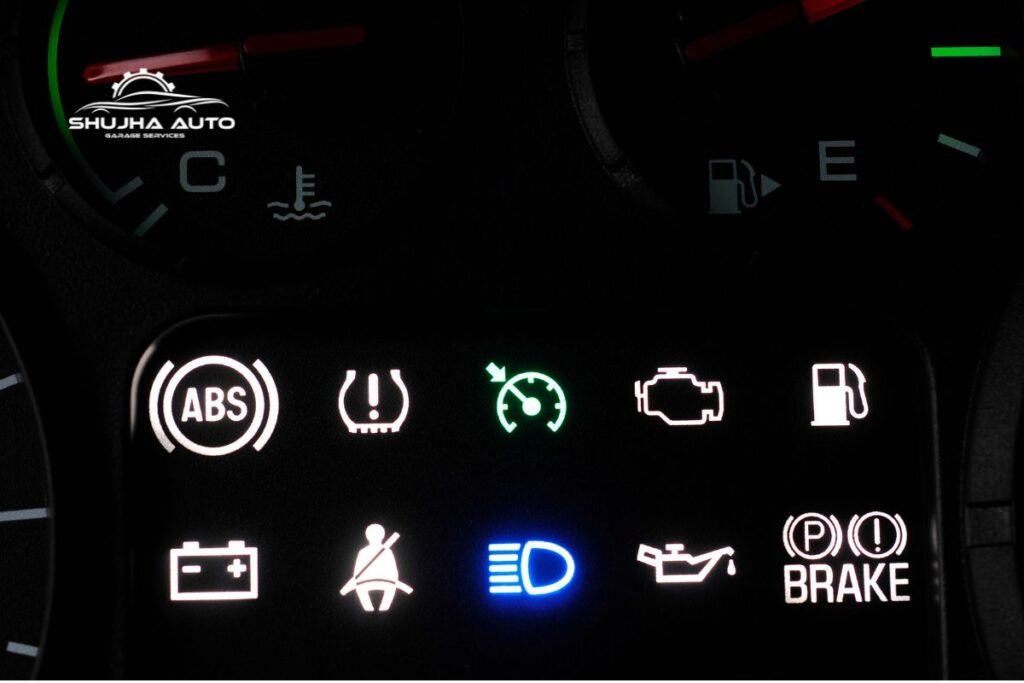
1. Check Engine Light
Symbol
Engine-shaped icon, usually yellow or orange.
What It Means
The check engine light indicates that the vehicle’s Engine Control Unit (ECU) has detected a problem affecting engine performance, emissions, or fuel efficiency.
Common Causes
- Loose fuel cap
- Faulty oxygen sensor
- Mass airflow sensor failure
- Spark plug issues
- Catalytic converter problems
- Ignition system faults
What To Do
If the light is solid:
- Check the fuel cap
- Monitor vehicle performance
- Schedule diagnostic testing
If the light is flashing:
- Stop driving immediately
- Seek professional assistance
- Avoid engine damage
2. Oil Pressure Warning Light
Symbol
Oil can with a dripping drop.
What It Means
This warning light indicates low engine oil pressure. Without proper lubrication, engine components can wear rapidly and suffer catastrophic damage.
Common Causes
- Low oil level
- Oil pump failure
- Oil leaks
- Clogged oil filter
- Worn engine bearings
What To Do
- Pull over safely
- Turn off the engine
- Check oil level
- Add oil if necessary
- Seek professional inspection
Never ignore this warning light.
3. Battery Warning Light
Symbol
Battery icon with positive and negative terminals.
What It Means
The battery warning light signals a charging system issue rather than a battery problem alone.
Common Causes
- Failing alternator
- Loose battery cables
- Corroded terminals
- Damaged serpentine belt
- Electrical system malfunction
What To Do
- Reduce electrical usage
- Avoid long trips
- Have the charging system tested immediately
If ignored, the vehicle may eventually stall.
4. Brake System Warning Light
Symbol
Circle with an exclamation mark or the word “BRAKE.”
What It Means
This light indicates a problem with the braking system.
Common Causes
- Low brake fluid
- Worn brake pads
- Hydraulic system leaks
- Parking brake engaged
- Master cylinder failure
What To Do
- Check parking brake
- Inspect brake fluid level
- Drive cautiously
- Arrange immediate inspection
Brake-related issues should never be delayed.
5. ABS Warning Light
Symbol
ABS letters enclosed in a circle.
What It Means
The Anti-lock Braking System (ABS) may not function properly during emergency braking.
Common Causes
- Faulty wheel speed sensors
- Damaged ABS module
- Wiring issues
- Hydraulic pump failure
What To Do
Normal braking usually remains functional, but anti-lock protection may be unavailable. Schedule repairs promptly.
6. Engine Temperature Warning Light
Symbol
Thermometer above waves.
What It Means
The engine is overheating.
Common Causes
- Low coolant
- Coolant leaks
- Faulty thermostat
- Broken radiator fan
- Water pump failure
What To Do
- Stop safely
- Turn off the engine
- Allow cooling time
- Check coolant level
Never open a hot radiator cap.
7. Tire Pressure Monitoring System (TPMS) Light
Symbol
Horseshoe-shaped tire with an exclamation mark.
What It Means
One or more tires are underinflated.
Common Causes
- Natural pressure loss
- Temperature changes
- Tire puncture
- Faulty TPMS sensor
What To Do
- Check all tire pressures
- Inflate to manufacturer specifications
- Inspect for punctures
Proper tire pressure improves safety and fuel economy.
8. Traction Control Warning Light
Symbol
Vehicle with skid marks.
What It Means
The traction control system is actively preventing wheel slip.
Common Causes
- Slippery road conditions
- Wheel sensor issues
- Faulty traction control module
What To Do
If flashing briefly, the system is working correctly. If constantly illuminated, inspection may be needed.
9. Airbag Warning Light
Symbol
Person seated with a circle representing an airbag.
What It Means
A fault exists within the Supplemental Restraint System (SRS).
Common Causes
- Sensor failure
- Wiring problems
- Seat belt pretensioner faults
- Airbag module malfunction
What To Do
Have the system inspected as soon as possible because airbags may not deploy correctly during an accident.
10. Power Steering Warning Light
Symbol
Steering wheel with an exclamation mark.
What It Means
The power steering system has detected a malfunction.
Common Causes
- Low power steering fluid
- Electric steering motor failure
- Sensor issues
- Steering rack problems
What To Do
Steering may become significantly harder. Seek service promptly.
Dashboard Warning Light On? Let Auto Garage Services Help
Seeing a warning light on your dashboard can be confusing, but ignoring it may lead to costly repairs and safety risks. Whether it’s the check engine light, ABS warning, battery light, oil pressure warning, or transmission alert, our expert technicians at Auto Garage Services can quickly diagnose and fix the issue.
We provide professional vehicle diagnostics, engine repairs, electrical system troubleshooting, brake repairs, battery replacement, and complete maintenance services for all major car brands. Our advanced diagnostic tools help identify the root cause of dashboard warning lights, ensuring accurate and reliable repairs.
Don’t wait until a minor warning becomes a major breakdown. Contact Auto Garage Services today for a professional inspection and keep your vehicle running safely and efficiently.
Dashboard Indicator Lights That Are Usually Normal
Not every dashboard light indicates a problem.
High Beam Indicator
Blue light indicating high beams are active.
Turn Signal Indicators
Green arrows flashing during signaling.
Cruise Control Indicator
Shows cruise control is active.
Eco Mode Indicator
Indicates fuel-saving mode is enabled.
Fog Light Indicator
Shows front or rear fog lights are activated.
What To Do When a Dashboard Warning Light Appears
Following the proper response can prevent additional vehicle damage.
Step 1: Identify the Warning Light
Consult your vehicle owner’s manual or dashboard guide.
Step 2: Determine the Severity
- Red = Immediate action required
- Yellow = Schedule service soon
- Green/Blue = Informational only
Step 3: Monitor Vehicle Performance
Watch for:
- Strange noises
- Reduced power
- Overheating
- Fluid leaks
- Unusual vibrations
Step 4: Use Diagnostic Tools
An OBD-II scanner can retrieve trouble codes and identify specific problems.
Step 5: Seek Professional Assistance
Certified technicians can perform accurate diagnostics and repairs.
Can You Drive With Dashboard Warning Lights On?
The answer depends on the warning light.
Generally Safe to Drive Short Distances
- TPMS light
- Check engine light (solid)
- ABS light
- Traction control light
Stop Driving Immediately
- Oil pressure warning
- Engine overheating
- Brake warning light
- Flashing check engine light
Ignoring critical warnings can lead to severe mechanical damage and dangerous driving conditions.
Preventing Dashboard Warning Lights
Routine maintenance significantly reduces unexpected warning lights.
Follow Scheduled Maintenance
Regularly replace:
- Engine oil
- Filters
- Spark plugs
- Fluids
Inspect Tires Frequently
Maintain proper inflation and tread depth.
Monitor Battery Health
Replace aging batteries before failure occurs.
Check Fluid Levels
Inspect:
- Engine oil
- Coolant
- Brake fluid
- Transmission fluid
- Power steering fluid
Address Minor Issues Early
Small problems often trigger warning lights before major damage develops.
Frequently Asked Questions
What is the most serious dashboard warning light?
The oil pressure warning light, brake warning light, and engine temperature warning light are among the most critical because they can indicate immediate risks to safety or engine health.
Why is my check engine light on but the car runs fine?
Many emissions-related issues can trigger the check engine light without noticeable performance changes. Diagnostic scanning is recommended to identify the cause.
Can a low battery trigger multiple warning lights?
Yes. A weak battery or failing alternator can cause numerous electronic systems to display warning lights simultaneously.
How much does it cost to diagnose dashboard warning lights?
Diagnostic costs vary depending on the vehicle and repair facility but are generally less expensive than repairing damage caused by ignoring warning indicators.
Should I reset a warning light myself?
Resetting a warning light without fixing the underlying issue is not recommended. The root cause should always be identified and repaired first.
Conclusion
Understanding dashboard warning lights is one of the most important aspects of responsible vehicle ownership. These indicators serve as your car’s communication system, alerting you to maintenance needs, safety concerns, and mechanical problems before they become severe.
By learning what each symbol means and responding appropriately, you can improve vehicle reliability, reduce repair costs, and enhance road safety. Whether it’s a simple tire pressure alert or a serious oil pressure warning, paying attention to dashboard lights can save you time, money, and potential headaches.
The next time a warning light appears on your dashboard, you’ll know exactly what it means and what steps to take to keep your vehicle running safely and efficiently.