Car smoke is one of the clearest warning signs that something may be wrong with your vehicle. Sometimes it is harmless, like light white vapor on a cold morning. But in many cases, smoke from your car can point to engine oil burning, coolant leakage, too much fuel, overheating, electrical problems, or exhaust system issues.
The color, smell, location, and timing of the smoke can help you understand what is happening. For example, blue smoke usually means oil is burning, black smoke often means the engine is using too much fuel, and thick white smoke may point to coolant entering the engine. Smoke from the exhaust and smoke from the engine bay can also mean different things.
In this guide, we will explain the main types of car smoke and what they mean, common causes, warning signs, repair options, and when to visit Auto Garage Services for engine diagnostic service, exhaust inspection, oil leak inspection, cooling system repair, fuel system inspection, or car maintenance service.
Quick Answer: What Do Different Car Smoke Colors Mean?
Different car smoke colors usually point to different problems.
- White smoke can mean normal water vapor, but thick white smoke may indicate coolant leakage or engine overheating.
- Blue smoke usually means the engine is burning oil.
- Black smoke often means too much fuel is being burned.
- Grey smoke can point to oil burning, transmission fluid burning, turbo problems, or fuel mixture issues.
- Smoke from the engine bay may mean oil leakage, coolant leakage, overheating, burning wiring, or belt problems.
If the smoke is thick, has a strong smell, appears suddenly, or comes with warning lights, overheating, power loss, or unusual noise, you should get the car inspected quickly.
Why Car Smoke Should Not Be Ignored
Smoke is not something you should ignore. Even if the car is still driving, smoke can be an early sign of a bigger problem. A small oil leak, coolant leak, faulty injector, bad turbo seal, or overheating issue can turn into expensive engine repair if left unchecked.
Ignoring car smoke can lead to:
- Engine overheating
- Engine oil burning
- Low oil level
- Coolant loss
- Poor fuel economy
- Damage to catalytic converter
- Turbocharger damage
- Engine misfire
- Electrical fire risk
- Major engine repair
The safest approach is to understand the type of smoke and get a proper inspection before the issue becomes worse.
White Smoke From Car Exhaust
White smoke from the exhaust is one of the most common types of smoke drivers notice. But not all white smoke means danger.
Light White Vapor
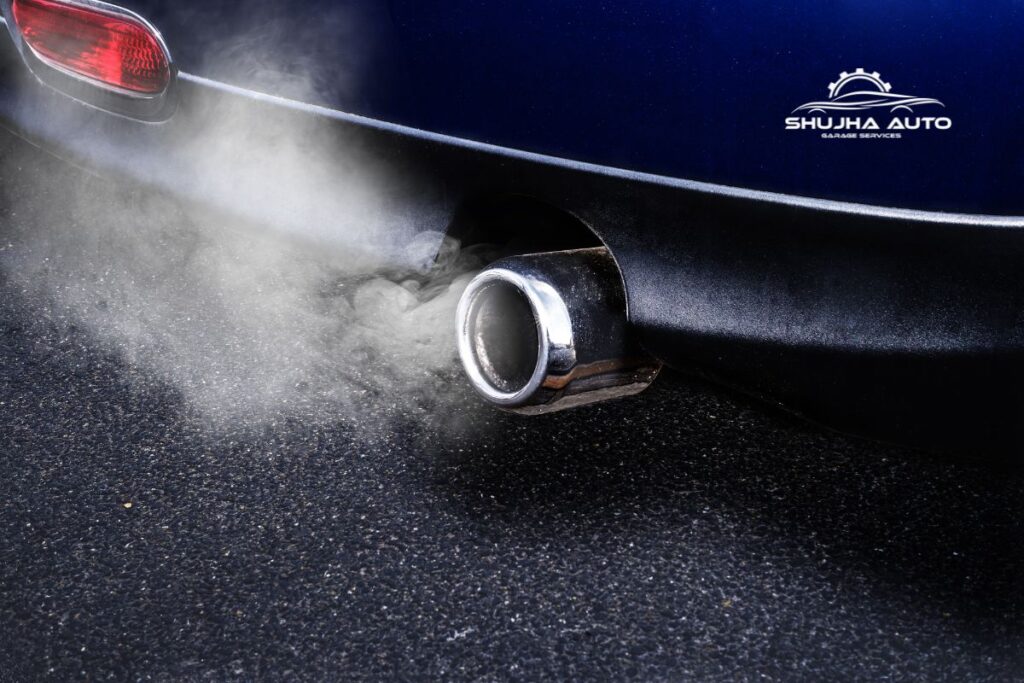
Light white vapor during a cold start can be normal. It is usually condensation inside the exhaust system turning into steam. This should disappear after the engine warms up.
If the white vapor is thin, does not smell sweet, and goes away quickly, it is usually not a major issue.
Thick White Smoke
Thick white smoke is more serious, especially if it continues after the engine warms up. It may mean coolant is entering the combustion chamber and burning with fuel.
Common causes of thick white smoke include:
- Coolant leak into the engine
- Blown head gasket
- Cracked cylinder head
- Damaged engine block
- Intake manifold gasket issue
- Engine overheating
A sweet smell from the exhaust, low coolant level, overheating, or white smoke that does not stop should be checked immediately.
Blue Smoke From Car Exhaust
Blue smoke usually means the engine is burning oil. Engine oil should not enter the combustion chamber. If it does, it burns with fuel and creates blue or bluish-grey smoke.
Common causes of blue smoke include:
- Worn piston rings
- Worn valve seals
- Turbocharger seal failure
- PCV valve problem
- Overfilled engine oil
- Internal engine wear
- Poor oil maintenance
Blue smoke may appear during startup, acceleration, idling, or after long driving. The timing of the smoke can help identify the cause.
Blue Smoke on Startup
Blue smoke when starting the car may mean worn valve seals. Oil can leak into the combustion chamber while the car is parked and then burn when the engine starts.
Blue Smoke While Accelerating
Blue smoke during acceleration may point to worn piston rings, turbo problems, or engine wear. This should be inspected because oil burning can reduce engine life.
Blue Smoke After Oil Change
If blue smoke starts after an oil change, the engine may have been overfilled, or the wrong oil grade may have been used. The oil level and oil type should be checked.
Black Smoke From Car Exhaust
Black smoke usually means the engine is burning too much fuel or not getting enough air. This is called a rich fuel mixture. It can happen in petrol and diesel vehicles, although black smoke is more commonly noticed in diesel cars.
Common causes of black smoke include:
- Dirty air filter
- Faulty fuel injectors
- Bad oxygen sensor
- Faulty mass airflow sensor
- Fuel pressure problem
- Turbo boost leak
- Blocked intake system
- ECU or sensor issue
Black smoke can also increase fuel consumption and damage the catalytic converter over time.
If your car is producing black smoke, you may also notice poor acceleration, fuel smell, rough idle, engine hesitation, or check engine light.
Grey Smoke From Car Exhaust
Grey smoke can be slightly harder to diagnose because it may come from different systems. It can sometimes look like blue smoke or black smoke depending on lighting and engine condition.
Common causes of grey smoke include:
- Engine oil burning
- Turbocharger problem
- Transmission fluid burning
- Faulty PCV valve
- Rich fuel mixture
- Exhaust system issue
If grey smoke has an oily smell, the engine may be burning oil. If it happens in a turbocharged car, the turbo seals should be inspected. If it appears with gear shifting problems or burning smell, transmission inspection may also be needed.
Smoke From the Engine Bay
Smoke from the engine bay is different from smoke from the exhaust. It usually means something is burning or overheating under the bonnet.
Common causes include:
- Engine oil leaking onto hot parts
- Coolant leaking onto hot engine components
- Overheating engine
- Burning electrical wiring
- Slipping belt
- Brake fluid or power steering fluid leak
- Plastic or rubber part touching hot surfaces
Smoke from the engine bay should be taken seriously. If you see smoke from under the bonnet, stop safely, switch off the engine, and avoid opening the bonnet immediately if there is heavy smoke or fire risk.
Smoke With Burning Oil Smell
If the smoke smells like burning oil, it may mean oil is leaking onto hot engine parts or being burned inside the engine.
Possible causes include:
- Valve cover gasket leak
- Oil filter leak
- Oil pan gasket leak
- Engine seal leakage
- Turbo oil leak
- Worn piston rings
- Worn valve seals
Burning oil smell should not be ignored because low oil level can damage the engine. An oil leak inspection can help find the source.
Smoke With Sweet Smell
A sweet smell with white smoke usually points to coolant burning or leaking onto hot parts. Coolant has a distinct sweet smell, and this can be a sign of cooling system trouble.
Possible causes include:
- Coolant leak
- Radiator hose leak
- Heater core leak
- Head gasket issue
- Engine overheating
- Cracked cylinder head
If coolant level keeps dropping or the engine temperature rises, the car should be checked quickly.
Smoke With Fuel Smell
If the smoke smells like petrol or diesel, the engine may be burning too much fuel. This can happen because of faulty fuel injectors, sensor problems, poor combustion, or fuel pressure issues.
You may also notice:
- High fuel consumption
- Black smoke
- Rough idle
- Hard starting
- Check engine light
- Poor acceleration
Fuel system inspection and diagnostic scanning can help identify the real cause.
Smoke During Acceleration
Smoke during acceleration usually means the engine is under load and a hidden problem becomes visible.
Possible causes include:
- Oil burning
- Turbocharger fault
- Rich fuel mixture
- Dirty air filter
- Faulty injectors
- Worn piston rings
- Boost leak
- Sensor problems
If the smoke appears only when you press the accelerator, the engine, turbo, fuel system, and air intake should be inspected.
Smoke When Starting the Car
Smoke during startup can be normal or serious depending on the color and how long it lasts.
Light white vapor that disappears quickly is usually condensation. Blue smoke on startup may mean oil is leaking past valve seals. Thick white smoke may point to coolant entering the engine.
If smoke appears every morning or gets worse over time, it is better to inspect the car instead of waiting.
Smoke While Idling
Smoke while idling can point to oil burning, fuel mixture problems, injector issues, cooling system problems, or engine wear.
If the car also shakes, smells bad, overheats, or shows a warning light, a diagnostic scan is recommended.
Smoke After Driving in Traffic
In UAE traffic, heat can make small problems more noticeable. Smoke after traffic may happen because of overheating, oil leaks, coolant leaks, weak cooling fan, or AC load.
If smoke appears after long idling or stop-and-go driving, the cooling system, engine bay, radiator fan, coolant level, and oil leaks should be checked.
What Should You Do If Your Car Starts Smoking?
If your car starts smoking, do not panic. Follow safe steps.
- Reduce speed and move to a safe place
- Turn off the engine if smoke is heavy
- Check dashboard warning lights
- Do not open the radiator cap when the engine is hot
- Avoid driving if the temperature gauge is high
- Do not continue if oil warning light is on
- Call for professional help if smoke is thick or sudden
If the smoke is light and disappears quickly, it may not be urgent. But if it continues, smells strong, or comes with performance issues, you should get it inspected.
Can You Drive a Smoking Car?
It depends on the type of smoke. Light white vapor during cold start may be normal. But thick white smoke, blue smoke, black smoke, grey smoke, or smoke from the engine bay should not be ignored.
You should avoid driving if:
- The engine is overheating
- Oil warning light is on
- Check engine light is flashing
- Smoke is thick
- Smoke comes from the engine bay
- The car loses power
- There is a burning smell
- Coolant level is low
- Oil level is low
Driving with smoke can cause more damage and may become unsafe.
How Mechanics Diagnose Car Smoke
A proper diagnosis is important because smoke can come from different systems. Guessing the cause can lead to wrong repairs.
At Auto Garage Services, smoke inspection may include:
- Checking smoke color and smell
- Engine diagnostic scan
- Checking oil level and oil condition
- Inspecting coolant level
- Checking for oil leaks
- Inspecting coolant leaks
- Testing fuel system
- Checking spark plugs
- Inspecting air filter
- Checking turbo system
- Inspecting exhaust system
- Checking engine compression if needed
- Inspecting transmission if grey smoke suggests fluid burning
This helps identify whether the smoke is caused by oil, coolant, fuel, turbo, exhaust, or engine wear.
Common Repairs for Car Smoke Problems
The correct repair depends on the smoke type and diagnosis.
Oil Leak Repair
If oil is leaking onto hot engine parts, the leak source should be repaired. Common areas include valve cover gasket, oil filter, oil pan, and engine seals.
Cooling System Repair
If white smoke is caused by coolant leakage or overheating, the radiator, hoses, thermostat, water pump, fan, and head gasket may need inspection.
Fuel System Repair
If black smoke is caused by too much fuel, the injectors, fuel pressure, air filter, oxygen sensor, MAF sensor, and ECU data should be checked.
Turbo Inspection and Repair
Turbocharged cars may produce blue, grey, or black smoke if the turbo seals, boost pipes, or oil lines are faulty.
Engine Repair
If smoke is caused by worn piston rings, valve seals, head gasket failure, or low compression, engine repair service may be needed.
Transmission Inspection
In some cases, grey smoke with burning smell may be linked to transmission fluid issues. A transmission inspection can help confirm the problem.
How to Prevent Car Smoke Problems
Regular maintenance can prevent many smoke-related issues.
Change Engine Oil on Time
Old oil can cause sludge, poor lubrication, and engine wear. Timely oil change service helps protect the engine.
Check Oil and Coolant Levels
Low oil or low coolant can cause serious damage. Check levels regularly, especially before long drives.
Replace Air Filter
A dirty air filter can cause black smoke and poor fuel economy.
Service Fuel Injectors
Dirty injectors can cause poor combustion and smoke.
Maintain the Cooling System
Radiator, coolant, thermostat, fan, and water pump should be inspected regularly, especially in UAE heat.
Do Not Ignore Warning Lights
Dashboard warning lights can help detect problems before smoke appears.
Fix Leaks Early
Oil and coolant leaks should be repaired early to prevent burning smells, smoke, overheating, and engine damage.
Is Car Smoke Repair Expensive?
The cost depends on the cause. A dirty air filter, minor oil leak, or sensor issue may be simple to repair. But a blown head gasket, worn piston rings, turbo failure, or internal engine damage can be expensive.
This is why early inspection is important. The sooner you find the cause, the better chance you have of avoiding major repair costs.
Are There Any Hidden Fees or Charges?
A trusted garage should explain the inspection result clearly before repair. You should know what type of smoke was found, what caused it, what repair is needed, and whether the issue is urgent.
Auto Garage Services focuses on clear diagnosis and honest repair guidance, so customers can understand the problem before approving any repair.
Free Diagnostic Check for Car Smoke
If your car is smoking, a diagnostic check can help find the real reason. Smoke may come from oil burning, coolant leakage, fuel system problems, turbo faults, exhaust blockage, overheating, or engine wear.
Auto Garage Services can inspect engine oil, coolant level, leaks, fuel system, turbocharger, exhaust system, sensors, and engine condition to find the cause of smoke.
This is helpful if your car has white smoke, blue smoke, black smoke, grey smoke, burning smell, overheating, power loss, or warning lights.
Why Choose Auto Garage Services?
Auto Garage Services provides engine diagnostic service, oil leak inspection, cooling system repair, fuel system inspection, exhaust inspection, turbo inspection, transmission inspection, oil change service, and complete car maintenance service.
If your car is smoking from the exhaust or engine bay, the team can inspect the issue properly, explain the cause in simple words, and recommend the right repair. This helps avoid guesswork and unnecessary part replacement.
Drivers choose Auto Garage Services because of experienced technicians, proper diagnostic tools, clear communication, practical repair advice, and customer-focused service.
When Should You Visit Auto Garage Services?
You should visit Auto Garage Services if your car is producing white, blue, black, or grey smoke from the exhaust, or if smoke is coming from the engine bay.
You should also visit if smoke comes with:
- Burning oil smell
- Sweet coolant smell
- Fuel smell
- Engine overheating
- Low oil level
- Low coolant level
- Check engine light
- Oil warning light
- Loss of power
- Rough idle
- Poor acceleration
- Smoke during acceleration
Early inspection can protect your engine, turbo, exhaust system, cooling system, and fuel system from bigger damage.
FAQs
1. What do different car smoke colors mean?
Different smoke colors point to different issues. White smoke may mean condensation or coolant leakage, blue smoke usually means oil burning, black smoke often means too much fuel, and grey smoke may point to oil, turbo, fuel, or transmission-related issues.
2. Is white smoke from car exhaust normal?
Light white vapor during cold start can be normal and should disappear quickly. Thick white smoke that continues after the engine warms up may indicate coolant leakage, head gasket problems, or overheating.
3. What does blue smoke from my car mean?
Blue smoke usually means the engine is burning oil. This may happen because of worn piston rings, valve seals, turbo seal failure, PCV valve problems, or internal engine wear.
4. Why is black smoke coming from my car exhaust?
Black smoke usually means the engine is burning too much fuel or not getting enough air. Common causes include dirty air filter, faulty injectors, oxygen sensor problems, MAF sensor issues, or fuel pressure problems.
5. What does grey smoke from a car mean?
Grey smoke can mean oil burning, turbo problems, fuel mixture issues, PCV valve faults, or in some cases transmission fluid burning. A proper inspection is needed to confirm the cause.
6. Is smoke from the engine bay dangerous?
Yes, smoke from the engine bay can be dangerous. It may come from oil leaks, coolant leaks, overheating, burning wiring, or belt problems. Stop safely and avoid driving if smoke is heavy.
7. Can low oil cause smoke from a car?
Low oil itself may not always create smoke, but oil leaks or oil burning can cause smoke. Low oil can also damage the engine, so the oil level should be checked immediately.
8. Can coolant leak cause white smoke?
Yes, coolant entering the engine can create thick white smoke from the exhaust. Coolant leaking onto hot engine parts can also create steam or smoke from the engine bay.
9. Can I drive if my car is smoking?
You should avoid driving if smoke is thick, has a strong smell, comes from the engine bay, or appears with overheating, oil warning light, check engine light, power loss, low coolant, or low oil level.
10. Does Auto Garage Services inspect car smoke problems?
Yes, Auto Garage Services can inspect smoke from exhaust or engine bay. The team can check oil leaks, coolant leaks, fuel system, turbocharger, exhaust system, sensors, engine condition, and related car maintenance issues.
Final Words
Car smoke should never be ignored. The color and smell of the smoke can help identify the possible issue. White smoke may point to condensation or coolant problems, blue smoke usually means oil burning, black smoke often means excess fuel, and grey smoke can come from oil, turbo, fuel, or transmission-related problems.
If your car is smoking from the exhaust or engine bay, the safest step is to inspect it early. Waiting too long can turn a small leak, dirty filter, faulty sensor, or cooling issue into major engine repair.
For engine diagnostic service, oil leak inspection, cooling system repair, fuel system inspection, exhaust inspection, turbo inspection, transmission inspection, oil change service, or car maintenance service, visit Auto Garage Services and get your car smoke problem checked before it becomes serious.