A car engine knocking sound is one of the most worrying noises a driver can hear. It may start as a light tapping, pinging, ticking, or knocking sound, but over time it can become louder and more serious. Many drivers ignore it at first because the car still runs, but engine knocking can be a warning sign of poor lubrication, bad fuel combustion, worn engine parts, overheating, or internal engine damage.
Your engine has many moving metal parts working at high speed. These parts need clean oil, correct fuel, proper timing, and smooth combustion. If something goes wrong, the engine may start making knocking noises. Some knocking sounds are minor and easy to fix, while others can lead to major engine repair if ignored.
In this guide, we will explain common car engine knocking sound causes and fixes, warning signs, what you should check, when to stop driving, and when to visit Auto Garage Services for engine diagnostic service, engine repair service, oil change service, spark plug inspection, fuel system inspection, cooling system inspection, or car maintenance service.
Quick Answer: Why Is My Car Engine Making a Knocking Sound?
Your car engine may make a knocking sound because of low engine oil, dirty oil, poor fuel quality, wrong fuel octane, bad spark plugs, carbon buildup, engine overheating, faulty knock sensor, incorrect ignition timing, worn bearings, loose engine parts, or internal engine damage.
A light knocking or pinging sound during acceleration may be related to fuel combustion issues. A deep knocking sound from inside the engine may be more serious and can indicate worn bearings or low oil pressure. If the knocking sound is loud, continuous, or comes with an oil warning light, overheating, smoke, or power loss, you should stop driving and get the car inspected quickly.
Why Engine Knocking Should Not Be Ignored
Engine knocking should never be ignored because it can become worse very quickly. The engine depends on proper lubrication and controlled combustion. If the knocking is caused by low oil pressure, worn bearings, overheating, or internal damage, continuing to drive can increase repair costs.
Ignoring engine knocking can lead to:
- Engine bearing damage
- Piston or cylinder damage
- Low oil pressure problems
- Engine overheating
- Poor fuel economy
- Loss of power
- Misfiring
- Complete engine failure
- Expensive engine repair
A small sound can sometimes be fixed with an oil change, spark plug replacement, or fuel system cleaning. But if the sound is ignored, it may turn into major internal engine damage.
Common Types of Engine Knocking Sounds
Not every engine noise is the same. The type of sound can help identify the possible cause.
Light Pinging Sound
A light pinging or rattling sound usually happens during acceleration or climbing hills. This may be caused by poor fuel quality, wrong octane fuel, carbon buildup, overheating, or ignition timing issues.
This type of sound is often related to abnormal combustion inside the engine.
Ticking Sound
A ticking sound may come from the top of the engine. It can be caused by low oil level, dirty oil, valve lifter noise, worn valve train parts, or poor lubrication.
Some ticking sounds are minor, but if the sound becomes louder, it should be checked.
Deep Knocking Sound
A deep knocking sound from the lower engine area can be serious. It may be caused by worn engine bearings, low oil pressure, damaged connecting rods, or internal engine wear.
This type of knocking should be inspected immediately.
Knocking During Acceleration
If the engine knocks when accelerating, the problem may be related to fuel quality, spark plugs, carbon buildup, sensor faults, or combustion timing.
Knocking at Idle
If the engine knocks while idling, it may be caused by low oil pressure, worn bearings, loose components, engine mounts, or internal wear.
Common Causes of Car Engine Knocking Sound
There are many possible reasons for engine knocking. Some are simple maintenance issues, while others need professional diagnosis.
Low Engine Oil Level
Low engine oil is one of the most common and dangerous causes of engine knocking. Engine oil lubricates moving parts and reduces friction. If the oil level is low, metal parts may start rubbing together.
Low oil can cause:
- Ticking noise
- Knocking sound
- Oil warning light
- Engine overheating
- Rough performance
- Internal engine wear
If your engine is knocking and the oil level is low, do not continue driving for long. The oil level should be checked immediately, and the reason for low oil should be found. There may be an oil leak or oil consumption issue.
Dirty or Old Engine Oil
Engine oil becomes dirty over time. Old oil loses its ability to lubricate and protect the engine. It may become thick, contaminated, or full of sludge.
Dirty oil can cause poor lubrication, ticking noise, overheating, and engine wear. If oil change service is delayed, engine parts may not receive proper protection.
Regular oil change service is one of the simplest ways to prevent engine knocking caused by poor lubrication.
Wrong Engine Oil Grade
Using the wrong engine oil grade can also cause noise. If the oil is too thin or not suitable for your engine, it may not protect moving parts properly. If it is too thick, it may not flow quickly enough during cold starts.
Always use the oil grade recommended for your vehicle. Auto Garage Services can help check the correct oil type and inspect the engine if noise appears after an oil change.
Poor Fuel Quality
Poor fuel quality can cause knocking or pinging during combustion. The fuel may not burn smoothly, which can create a sharp knocking sound inside the engine.
This is more noticeable when accelerating, driving uphill, or carrying extra load.
If the sound started after refueling from a different station, poor fuel quality may be one possible reason.
Wrong Fuel Octane
Some engines need higher-octane fuel. If you use fuel with lower octane than recommended, the fuel-air mixture may ignite too early or unevenly. This can cause engine knocking.
This is especially common in turbocharged, high-compression, or performance engines. Always follow the fuel recommendation in your vehicle manual.
Bad Spark Plugs
Spark plugs ignite the air-fuel mixture inside the engine. If they are worn, dirty, incorrect, or weak, combustion may not happen properly.
Bad spark plugs can cause:
- Engine knocking
- Misfire
- Rough idle
- Poor acceleration
- High fuel consumption
- Check engine light
Spark plug inspection is important if your car is knocking, jerking, or losing power.
Incorrect Spark Plug Type
Not all spark plugs are the same. If the wrong spark plug type or heat range is installed, it can affect combustion and cause knocking or misfiring.
This can happen after poor-quality service or using unsuitable parts. Correct spark plugs should always be used according to manufacturer specifications.
Carbon Buildup
Carbon buildup forms inside the engine over time. It can collect on pistons, valves, combustion chambers, and intake areas. This buildup can increase compression hot spots and cause knocking.
Carbon buildup may cause:
- Pinging noise
- Rough idle
- Poor fuel economy
- Weak acceleration
- Engine hesitation
- Check engine light
Fuel system cleaning, intake cleaning, or deeper engine inspection may be needed depending on the condition.
Engine Overheating
Overheating can cause engine knocking because heat affects combustion and lubrication. When the engine is too hot, fuel may ignite at the wrong time, and engine oil may lose protection.
Common causes of overheating include:
- Low coolant
- Radiator blockage
- Faulty thermostat
- Cooling fan failure
- Water pump problem
- Coolant leak
- Bad radiator cap
If knocking happens with a rising temperature gauge, stop driving safely and get the cooling system inspected.
Faulty Knock Sensor
The knock sensor detects abnormal combustion and sends information to the ECU. The ECU then adjusts timing to protect the engine. If the knock sensor is faulty, the engine may not correct knocking properly.
A faulty knock sensor may cause check engine light, poor performance, high fuel consumption, or continued pinging under load.
A diagnostic scan can help confirm whether the knock sensor or related wiring is faulty.
Incorrect Ignition Timing
Ignition timing controls when the spark plug fires. If the timing is too advanced or incorrect, combustion can happen at the wrong moment, causing knocking.
Modern cars usually control timing through the ECU, but sensor faults, software issues, or mechanical timing problems can affect it.
Timing-related knocking should be diagnosed properly because it can damage the engine if ignored.
Worn Engine Bearings
Engine bearings support moving parts such as the crankshaft and connecting rods. If bearings wear out, the engine may produce a deep knocking sound.
Bearing knock is serious. It may become louder with acceleration and can lead to complete engine failure if the car continues to run.
Possible causes include low oil pressure, poor maintenance, dirty oil, high mileage, or internal engine wear.
Loose or Damaged Engine Components
Sometimes knocking may come from loose or damaged parts around the engine, not necessarily from deep inside the engine. Loose pulleys, belts, brackets, engine mounts, or accessories can create knocking or rattling noises.
A technician should inspect the engine bay to confirm whether the sound is internal or external.
Fuel Injector Problems
Fuel injectors spray fuel into the engine. If they become dirty, blocked, or faulty, the fuel spray may become uneven. This can affect combustion and cause knocking, misfire, hesitation, or poor performance.
Fuel injector cleaning or replacement may be required depending on the issue.
Low Engine Compression
Low compression can cause poor engine performance, rough running, and unusual noises. It may be caused by worn piston rings, damaged valves, head gasket problems, or internal engine wear.
Compression-related problems need proper engine diagnostic service because they are usually more serious than basic maintenance issues.
Engine Knock vs Normal Engine Noise
Some engine sounds are normal, especially during cold starts or in older cars. But knocking should be taken seriously when it is loud, repetitive, or getting worse.
Normal Sounds May Include
Some normal engine sounds may include light injector ticking, fan noise, belt movement, or mild cold-start noise that disappears quickly.
Warning Sounds Include
You should be careful if you hear:
- Loud knocking
- Deep metal sound
- Knocking that gets faster with RPM
- Knocking with oil warning light
- Knocking with overheating
- Knocking with smoke
- Knocking with power loss
- Knocking after oil level drops
If you are unsure whether the sound is normal, a professional inspection is safer than guessing.
Is Engine Knocking Dangerous?
Engine knocking can be dangerous depending on the cause. Light pinging from fuel quality may be less serious if fixed early. But deep knocking from low oil pressure or worn bearings can be very serious.
You should treat engine knocking as urgent if:
- The sound is loud
- The oil warning light is on
- The engine is overheating
- The car loses power
- Smoke appears
- The sound increases with acceleration
- The engine feels rough
- The knocking continues after warm-up
In these cases, continuing to drive can damage the engine.
Can You Drive With an Engine Knocking Sound?
It depends on the sound. If the knock is light and appears only under acceleration, you may drive carefully to a nearby garage. But if the knocking is loud, deep, continuous, or comes with warning lights, stop driving.
Do not continue driving if the engine has low oil pressure, overheating, smoke, or strong knocking. A small repair can become a full engine repair if you keep driving.
The safest option is to check the oil level first and get the car inspected quickly.
What Should You Check First?
Before assuming major engine damage, you can do a few safe checks.
Check Engine Oil Level
Park on a flat surface and check the dipstick when the engine is cool. If the oil level is low, do not drive long distances.
Check Oil Condition
If the oil is very dark, thick, dirty, or smells burnt, it may need replacement.
Check Temperature Gauge
If the engine is overheating, stop driving and let it cool. Do not open the radiator cap when hot.
Notice When the Sound Happens
Try to observe whether the knocking happens at idle, during acceleration, uphill, cold start, or all the time. This helps diagnosis.
Check Warning Lights
If check engine light, oil light, or temperature warning appears, get a diagnostic scan.
What Happens During Engine Knocking Diagnosis?
A proper diagnosis is important because engine knocking can come from fuel, oil, sensors, cooling system, ignition system, or internal parts.
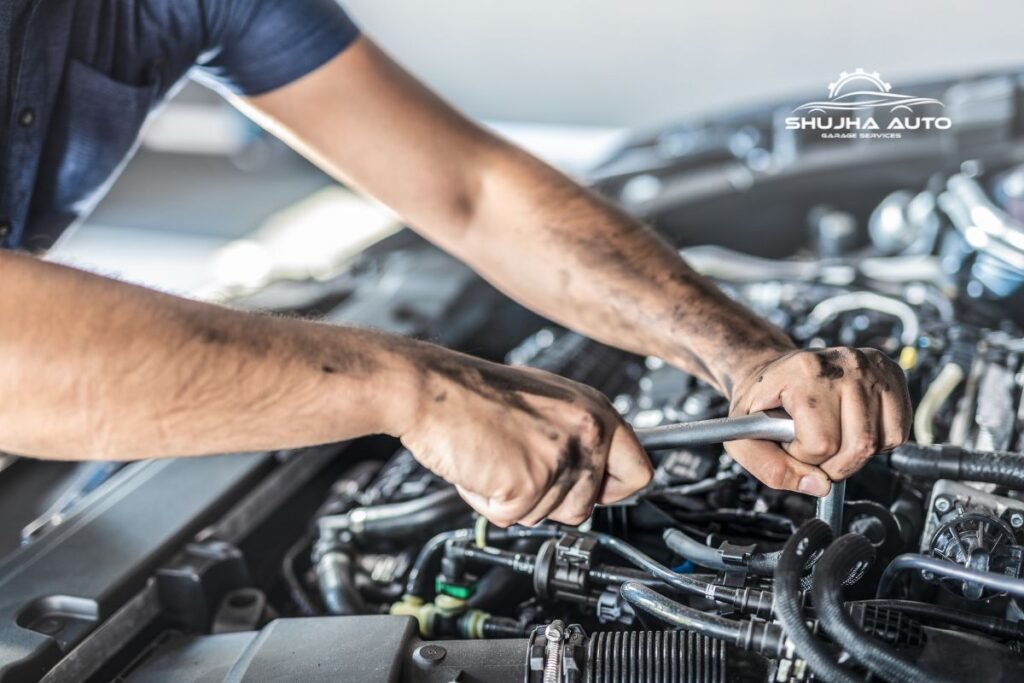
At Auto Garage Services, engine knocking inspection may include:
- Checking engine oil level
- Inspecting oil condition
- Checking for oil leaks
- Scanning engine fault codes
- Inspecting spark plugs
- Checking ignition coils
- Inspecting fuel system
- Checking knock sensor data
- Inspecting cooling system
- Listening to engine noise
- Checking belts and pulleys
- Compression test if required
- Road test if safe
This helps identify whether the problem is minor, serious, combustion-related, oil-related, or internal engine damage.
Common Fixes for Car Engine Knocking Sound
The correct fix depends on the cause of the knocking sound.
Oil Change Service
If the knocking is caused by old or dirty oil, oil change service with the correct oil grade may help. The oil filter should also be replaced.
Oil Leak Repair
If the oil level is low because of leakage, the leak should be repaired. Common leak areas include valve cover gasket, oil pan, oil filter, drain plug, and engine seals.
Spark Plug Replacement
If spark plugs are worn or incorrect, replacing them with the correct type can improve combustion and reduce knocking.
Fuel System Cleaning
If carbon buildup or dirty injectors are causing knocking, fuel system cleaning or injector service may help.
Cooling System Repair
If overheating is causing knock, the radiator, thermostat, water pump, coolant level, hoses, and cooling fan should be inspected.
Knock Sensor Replacement
If the knock sensor is faulty, it may need replacement after diagnostic confirmation.
Engine Timing Repair
If ignition or mechanical timing is incorrect, timing inspection and repair may be required.
Internal Engine Repair
If the knock is caused by worn bearings, damaged pistons, or internal wear, engine repair service may be needed. This should be diagnosed carefully before starting work.
How to Prevent Engine Knocking
Good maintenance can reduce the risk of engine knocking and protect your engine.
Change Oil on Time
Regular oil change service keeps the engine lubricated and reduces wear.
Use Correct Engine Oil
Always use the correct oil grade recommended for your vehicle.
Use Good Quality Fuel
Poor fuel can cause knocking, especially in engines that need higher octane.
Replace Spark Plugs on Time
Worn spark plugs can affect combustion and engine performance.
Keep the Cooling System Healthy
Overheating can cause knocking and engine damage. Check coolant level, radiator, thermostat, fan, and hoses regularly.
Fix Warning Lights Early
A check engine light can reveal sensor or ignition problems before they become serious.
Service the Car Regularly
Regular car maintenance service helps detect oil, fuel, ignition, cooling, and engine problems early.
Is Engine Knocking Repair Expensive?
The repair cost depends on the cause. If the problem is old oil, wrong fuel, bad spark plugs, or dirty injectors, the repair may be simple. But if the knocking is caused by worn bearings, low oil pressure, overheating damage, or internal engine wear, the repair can be expensive.
This is why early inspection is important. The earlier you diagnose the sound, the better chance you have of avoiding major engine repair.
Are There Any Hidden Fees or Charges?
A trusted garage should explain the problem before starting repair. You should know what is causing the knocking sound, whether the issue is minor or serious, what repair is needed, and what the estimated cost will be.
Auto Garage Services focuses on clear diagnosis and honest repair guidance. The goal is to explain the issue in simple words so customers can make the right repair decision.
Free Diagnostic Check for Engine Knocking
If your engine is making a knocking sound, a diagnostic check can help find the real cause. Knocking can come from many areas, so guessing can waste money.
Auto Garage Services can inspect engine oil level, oil leaks, spark plugs, ignition coils, fuel injectors, fuel quality issues, knock sensor faults, cooling system problems, and internal engine condition.
This is helpful if your car has knocking noise, ticking sound, pinging, power loss, overheating, oil warning light, check engine light, or poor acceleration.
Why Choose Auto Garage Services?
Auto Garage Services provides engine diagnostic service, engine repair service, oil change service, spark plug inspection, fuel system inspection, cooling system inspection, oil leak inspection, and car maintenance service.
If your car engine is knocking, the team can inspect the issue properly, explain the cause clearly, and recommend the right solution. This helps avoid guesswork and unnecessary part replacement.
Drivers choose Auto Garage Services because of experienced technicians, proper diagnostic tools, clear communication, practical repair advice, and customer-focused service.
When Should You Visit Auto Garage Services?
You should visit Auto Garage Services if your car engine is making a knocking, ticking, pinging, rattling, or deep metal sound.
You should also visit if the knocking comes with:
- Oil warning light
- Check engine light
- Overheating
- Engine smoke
- Power loss
- Rough idle
- Poor acceleration
- Burning smell
- Low oil level
- High fuel consumption
Early inspection can protect your engine and save you from expensive repairs.
FAQs
1. Why is my car engine making a knocking sound?
Your car engine may be making a knocking sound because of low engine oil, dirty oil, poor fuel quality, wrong fuel octane, bad spark plugs, carbon buildup, overheating, faulty knock sensor, worn bearings, timing problems, or internal engine damage.
2. Is engine knocking dangerous?
Yes, engine knocking can be dangerous depending on the cause. Light pinging may be less serious if fixed early, but deep knocking from low oil pressure or worn bearings can cause major engine damage.
3. Can low oil cause engine knocking?
Yes, low engine oil can cause knocking because engine parts are not getting proper lubrication. If the oil level is low and the engine is knocking, avoid driving and get the car checked quickly.
4. Can bad fuel cause knocking sound?
Yes, poor fuel quality or low-octane fuel can cause knocking or pinging during acceleration. Some engines need higher-octane fuel to run smoothly.
5. Why does my engine knock when accelerating?
Engine knock during acceleration may be caused by poor fuel quality, wrong octane, carbon buildup, bad spark plugs, faulty sensors, overheating, or ignition timing problems.
6. Can spark plugs cause engine knocking?
Yes, worn, dirty, or incorrect spark plugs can cause poor combustion, misfire, and knocking sound. Spark plug inspection can help confirm the issue.
7. What should I do first if my engine is knocking?
First, check the engine oil level and temperature gauge. If the oil is low, the engine is overheating, or warning lights are on, stop driving and get professional inspection.
8. Can engine knocking be fixed?
Yes, engine knocking can often be fixed if diagnosed early. Repairs may include oil change, correct fuel, spark plug replacement, fuel system cleaning, cooling system repair, knock sensor replacement, or engine repair.
9. How much does engine knocking repair cost?
The cost depends on the cause. Simple issues like oil change or spark plugs may cost less, while worn bearings, low oil pressure, or internal engine damage can be expensive. Inspection is needed before giving an accurate estimate.
10. Does Auto Garage Services inspect engine knocking sounds?
Yes, Auto Garage Services can inspect engine knocking sounds. The team can check engine oil, spark plugs, ignition system, fuel system, cooling system, knock sensor, fault codes, and internal engine condition.
Final Words
A car engine knocking sound should never be ignored. It may be caused by low oil, dirty oil, wrong fuel, bad spark plugs, carbon buildup, overheating, faulty sensors, worn bearings, or internal engine damage. Some causes are simple, but others can become serious very quickly.
If your engine is making a knocking, ticking, pinging, or deep metal sound, the safest step is to inspect it early. Continuing to drive with a loud or serious knock can damage the engine and increase repair costs.
For engine diagnostic service, engine repair service, oil change service, spark plug inspection, fuel system inspection, cooling system inspection, oil leak inspection, or car maintenance service, visit Auto Garage Services and get the knocking sound checked before it becomes a major problem.