
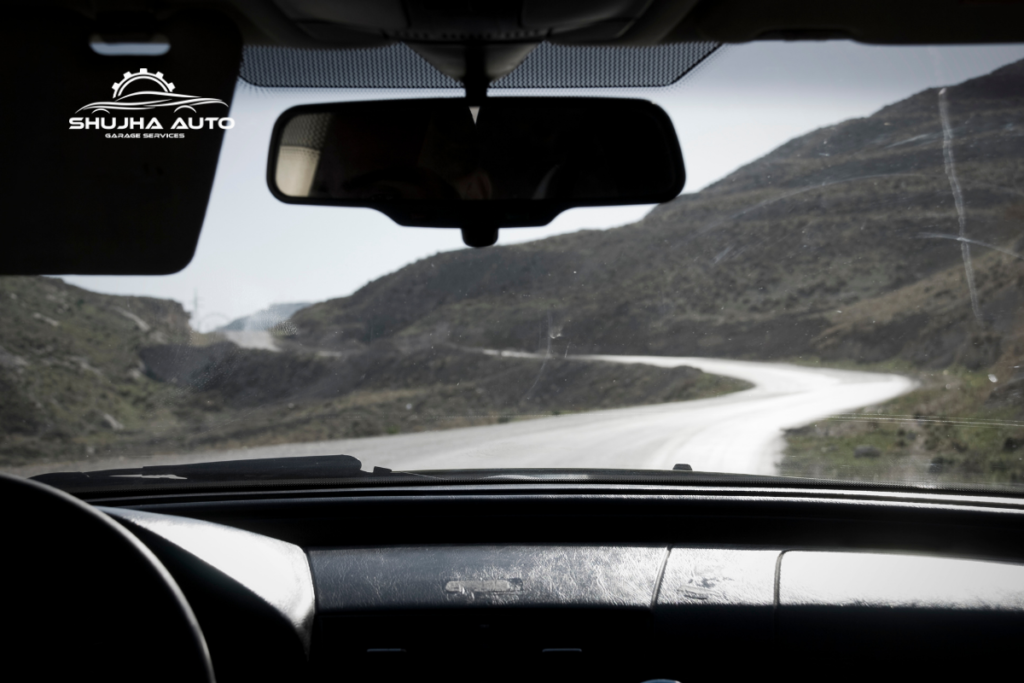
Car losing power while driving uphill is a common problem that many drivers notice during daily driving, highway trips, mountain roads, or when the car is loaded with passengers. You press the accelerator, but the car feels slow, heavy, or weak. The engine may make more noise, RPM may rise, but the car does not climb the hill properly. Sometimes the issue happens only with the AC on, while other times it becomes worse every time you drive uphill.
Driving uphill puts extra load on the engine, transmission, fuel system, and cooling system. A car needs more power to climb compared to driving on a flat road. If any system is weak, the problem becomes more noticeable on hills.
In this guide, we will explain why your car loses power while driving uphill, common causes, warning signs, possible solutions, and when to visit Auto Garage Services for engine diagnostic service, fuel system inspection, spark plug inspection, turbo inspection, transmission inspection, exhaust inspection, or car maintenance service.
Quick Answer: Why Is My Car Losing Power While Driving Uphill?
Your car may lose power while driving uphill because the engine is not getting enough air, fuel, spark, compression, or exhaust flow. Common causes include a dirty air filter, clogged fuel filter, weak fuel pump, bad spark plugs, faulty ignition coils, dirty fuel injectors, turbo boost leak, blocked catalytic converter, transmission slipping, overheating, or sensor problems.
Uphill driving requires more engine power. If the car performs normally on flat roads but struggles on hills, it usually means one or more systems are weak under load. A proper diagnostic check is needed to find the exact cause before the problem becomes worse.
Why Cars Need More Power Uphill
When your car drives uphill, the engine has to work harder against gravity. The vehicle needs more torque to keep moving. If the engine, fuel system, transmission, or turbo system is not working properly, the car may struggle.
A healthy car should climb smoothly without heavy hesitation, jerking, overheating, or warning lights. A slight drop in speed can be normal on steep hills, especially in small engines, but major power loss is not normal.
Power loss uphill can be caused by:
- Poor fuel delivery
- Blocked airflow
- Weak ignition
- Transmission slipping
- Turbo pressure loss
- Exhaust restriction
- Overheating
- Sensor or ECU problems
Because many systems are involved, guessing the problem can lead to unnecessary part replacement.
Common Signs of Power Loss While Driving Uphill
Power loss uphill can appear in different ways. Understanding the symptoms helps identify the possible cause.
Slow Acceleration
The car may take too long to gain speed while climbing. You may press the accelerator harder, but the response feels weak. This often points to fuel system, air intake, ignition, turbo, or transmission issues.
Engine RPM Goes Up but Speed Does Not
If RPM rises but the car does not move faster, the issue may be transmission slipping, clutch slipping in manual cars, or CVT gearbox problems.
Jerking or Hesitation
If the car jerks while climbing, the engine may be misfiring or struggling to get proper fuel. Bad spark plugs, ignition coils, dirty injectors, or weak fuel pressure can cause this.
Check Engine Light
A check engine light with power loss should always be scanned. It may point to sensor faults, misfire, turbo boost issues, fuel mixture problems, or exhaust system restrictions.
Burning Smell
A burning smell while climbing may come from a slipping clutch, overheated transmission, oil leak, or overheating engine. This should not be ignored.
Overheating
If the temperature gauge rises while driving uphill, the cooling system may be weak. Overheating can reduce power and damage the engine.
Common Causes of Car Losing Power While Driving Uphill
There are several reasons why a car may feel weak on hills. Some are simple maintenance issues, while others need detailed diagnosis.
Dirty Air Filter
The engine needs clean air to burn fuel properly. If the air filter is dirty or blocked, the engine cannot breathe well. This becomes more noticeable uphill because the engine needs more air under load.
A dirty air filter can cause:
- Weak acceleration
- Poor fuel economy
- Engine hesitation
- Black smoke in some cases
- Reduced power uphill
Replacing the air filter is a simple but important maintenance step. In dusty conditions, the air filter may need replacement earlier than usual.
Clogged Fuel Filter
The fuel filter removes dirt from the fuel before it reaches the engine. If it becomes blocked, the engine may not get enough fuel when extra power is needed.
A clogged fuel filter can cause:
- Power loss uphill
- Poor acceleration
- Hard starting
- Engine hesitation
- Stalling
- Weak high-speed performance
The car may feel normal at low speed but struggle when climbing because fuel demand increases.
Weak Fuel Pump
The fuel pump sends fuel from the tank to the engine. If the pump is weak, it may not provide enough pressure during uphill driving.
Signs of a weak fuel pump include:
- Car losing power under load
- Difficulty starting
- Engine stalling
- Jerking while accelerating
- Poor high-speed performance
- Whining noise from fuel tank area
A fuel pressure test can help confirm whether the pump is working properly.
Dirty Fuel Injectors
Fuel injectors spray fuel into the engine. If they are dirty or blocked, the engine may not receive the right amount of fuel. This affects combustion and reduces power.
Dirty injectors can cause rough idle, hesitation, misfire, high fuel consumption, and weak uphill performance.
Depending on the condition, fuel injector cleaning or replacement may be needed.
Bad Spark Plugs
Spark plugs ignite the fuel-air mixture inside the engine. If they are worn, dirty, or weak, the engine may misfire under load.
Uphill driving puts pressure on the engine, so weak spark plugs often show symptoms during climbing.
Bad spark plugs can cause:
- Engine misfire
- Jerking uphill
- Poor acceleration
- Rough idle
- High fuel consumption
- Check engine light
Spark plugs should be replaced according to the service schedule.
Faulty Ignition Coils
Ignition coils supply power to the spark plugs. If one coil is weak, the engine may misfire, especially when extra power is needed.
A faulty ignition coil may cause shaking, jerking, check engine light, poor acceleration, and loss of power uphill.
A diagnostic scan can help identify cylinder misfire codes and guide the repair.
Faulty Mass Airflow Sensor
The mass airflow sensor measures the amount of air entering the engine. The ECU uses this information to adjust fuel injection. If the sensor gives wrong readings, the engine may run too rich or too lean.
A faulty mass airflow sensor can cause:
- Poor acceleration
- Engine hesitation
- Rough idle
- High fuel consumption
- Check engine light
- Power loss uphill
Cleaning or replacing the sensor may be required depending on the fault.
Faulty Oxygen Sensor
The oxygen sensor monitors exhaust gases and helps the ECU control the fuel mixture. If it fails, the engine may not burn fuel efficiently.
A bad oxygen sensor can cause weak performance, poor fuel economy, rough running, and warning lights.
Turbo Boost Leak
If your car has a turbo engine, a boost leak can make the car lose power uphill. The turbocharger pushes extra air into the engine. If compressed air escapes through a cracked hose, loose clamp, or damaged intercooler, the engine will not get enough boost.
Signs of a boost leak include:
- Weak acceleration
- Hissing or whistling sound
- Black smoke
- High fuel consumption
- Check engine light
- Poor uphill performance
Auto Garage Services can inspect boost pipes, intercooler, turbo pressure, and related sensors to find the leak.
Faulty Turbocharger
A weak or failing turbocharger can also cause power loss uphill. If the turbo does not create proper boost, the engine may feel slow and heavy.
Turbo problems may cause:
- Loss of boost
- Blue or black smoke
- Loud turbo noise
- Oil leak
- Limp mode
- Poor acceleration
Turbo problems should be checked early because a failing turbo can damage the engine if ignored.
Blocked Catalytic Converter
The catalytic converter is part of the exhaust system. If it becomes blocked, exhaust gases cannot flow out properly. This creates back pressure and reduces engine power.
A blocked catalytic converter often becomes noticeable uphill because the engine works harder.
Signs may include:
- Car feels weak at high speed
- Power loss uphill
- Engine overheating
- Rotten egg smell
- Check engine light
- Poor fuel economy
An exhaust inspection can help confirm if the catalytic converter is restricted.
Transmission Slipping
Sometimes the engine is producing power, but the transmission is not transferring it properly to the wheels. This can make the car feel weak uphill.
Transmission slipping may show signs like:
- RPM increases but speed does not
- Delayed gear shifting
- Jerking
- Burning smell
- Transmission warning light
- Poor uphill response
Automatic, CVT, and manual vehicles can all have transmission-related power loss. A proper transmission inspection is needed to confirm the cause.
Clutch Slipping in Manual Cars
In manual cars, a worn clutch can cause power loss uphill. The engine may rev, but the car does not accelerate properly. This is because the clutch is not fully transferring power to the gearbox.
Signs of clutch slipping include:
- Burning smell
- High RPM with low speed
- Weak uphill performance
- High clutch biting point
- Poor acceleration
- Difficulty climbing slopes
A slipping clutch should be repaired before it damages related parts.
Engine Overheating
If the engine overheats while climbing, the ECU may reduce power to protect the engine. Overheating can happen because of low coolant, radiator blockage, faulty thermostat, weak cooling fan, or water pump issues.
If the temperature gauge rises while driving uphill, stop safely and get the cooling system inspected.
Low Engine Compression
Engine compression is required for strong power. If compression is low because of worn piston rings, damaged valves, or head gasket problems, the car may struggle uphill.
Low compression is usually a more serious issue and needs engine diagnostic service.
ECU or Sensor Problems
Modern cars depend on many sensors and control modules. If a sensor sends wrong data, the ECU may reduce power or enter limp mode.
Sensor-related causes may include:
- Throttle position sensor fault
- Crankshaft sensor fault
- Camshaft sensor fault
- MAP sensor fault
- MAF sensor fault
- Oxygen sensor fault
- ECU software issue
- Wiring problem
A diagnostic scan is important because electronic faults are difficult to confirm by guessing.
Why Power Loss Happens More With AC On
If your car loses power uphill with the AC on, the AC compressor may be adding extra load to an already weak engine. A small power drop with AC is normal in some cars, but heavy power loss is not normal.
Possible causes include:
- Weak engine performance
- Dirty air filter
- Bad spark plugs
- Fuel system weakness
- Weak AC compressor
- Sensor faults
- Overheating
- Transmission issues
In hot UAE conditions, AC load can make power loss more noticeable, especially in small engines or older vehicles.
Can You Drive if Your Car Loses Power Uphill?
It depends on how serious the issue is. If the car only feels slightly weak but has no warning lights, you may drive carefully to a garage. But if the car is jerking, overheating, showing warning lights, smoking, entering limp mode, or losing power suddenly, it is safer to stop and get professional help.
Driving with power loss can be unsafe because the car may not accelerate when needed. It can also make the original problem worse.
What Happens During Power Loss Diagnosis?
A proper diagnosis helps find the exact reason your car loses power uphill. Replacing parts without testing can waste money.
At Auto Garage Services, uphill power loss inspection may include:
- Full diagnostic scan
- Engine fault code reading
- Air filter inspection
- Fuel pressure test
- Spark plug inspection
- Ignition coil testing
- Fuel injector inspection
- Sensor data check
- Turbo boost inspection
- Exhaust restriction check
- Transmission inspection
- Cooling system check
- Road test if safe
This helps identify whether the issue is engine-related, fuel-related, ignition-related, turbo-related, transmission-related, or sensor-related.
Common Solutions for Car Losing Power Uphill
The correct solution depends on the diagnosis. Not every power loss issue needs major repair.
Air Filter Replacement
If airflow is restricted, replacing the air filter can improve engine breathing and acceleration.
Fuel System Repair
If fuel pressure is low or injectors are dirty, the fuel system may need filter replacement, fuel pump testing, injector cleaning, or injector repair.
Spark Plug or Ignition Coil Replacement
If the engine is misfiring, spark plugs or ignition coils may need replacement.
Sensor Replacement
Faulty sensors such as MAF, MAP, oxygen, or throttle position sensors may need cleaning, calibration, or replacement.
Turbo System Repair
Turbo vehicles may need boost leak repair, hose replacement, intercooler inspection, wastegate repair, or turbocharger repair.
Exhaust Repair
If the catalytic converter or exhaust system is blocked, the restriction should be diagnosed and repaired properly.
Transmission or Clutch Repair
If RPM rises but the car does not accelerate, the transmission or clutch system may need repair.
Cooling System Repair
If overheating causes power loss, the radiator, coolant level, thermostat, cooling fan, water pump, and hoses should be inspected.
How to Prevent Power Loss While Driving Uphill
Regular maintenance can prevent many uphill power loss problems.
Replace Filters on Time
Air filters and fuel filters should be replaced according to service schedule. Dusty conditions may require earlier replacement.
Change Engine Oil Regularly
Clean engine oil protects the engine and helps it perform smoothly under load.
Service Spark Plugs
Worn spark plugs can cause misfire and poor acceleration, especially uphill.
Check Fuel System
Fuel pump, fuel injectors, and fuel filter should be inspected if performance drops.
Inspect Turbo System
Turbocharged vehicles should be checked for boost leaks, oil leaks, and unusual turbo sounds.
Watch Engine Temperature
Do not ignore overheating. A hot engine may lose power and suffer damage.
Service the Car Regularly
Regular car maintenance service helps detect small problems before they affect performance.
Is Repair Expensive for Uphill Power Loss?
The cost depends on the cause. A dirty air filter, spark plug issue, or sensor fault may be simple to fix. A weak fuel pump, turbocharger issue, blocked catalytic converter, transmission slipping, or low compression problem may cost more.
This is why early diagnosis is important. If the issue is found early, the repair may be smaller and more affordable.
Are There Any Hidden Fees or Charges?
A trusted garage should explain the inspection result before starting repair. You should know what caused the power loss, what repair is needed, how urgent it is, and what the estimated cost will be.
Auto Garage Services focuses on clear diagnosis and honest repair guidance, so customers can understand the issue before approving any repair.
Free Diagnostic Check for Uphill Power Loss
If your car loses power while driving uphill, a diagnostic check can help find the real cause. Power loss under load can come from several systems, so proper inspection is important.
Auto Garage Services can inspect engine codes, air intake, fuel system, ignition system, turbo system, exhaust restriction, transmission behavior, cooling system, and related sensors.
This helps avoid guesswork and unnecessary part replacement.
Why Choose Auto Garage Services?
Auto Garage Services provides engine diagnostic service, fuel system inspection, spark plug inspection, ignition coil testing, turbo inspection, exhaust inspection, transmission inspection, cooling system inspection, and car maintenance service.
If your car feels weak uphill, struggles while accelerating, loses power with AC on, or shows warning lights, the team can inspect the issue and explain the cause in simple words.
Drivers choose Auto Garage Services because of experienced technicians, proper diagnostic tools, clear communication, practical repair advice, and customer-focused service.
When Should You Visit Auto Garage Services?
You should visit Auto Garage Services if your car loses power while driving uphill, accelerating, overtaking, or using the AC.
You should also visit if you notice:
- Check engine light
- Jerking uphill
- Poor acceleration
- Engine misfire
- High fuel consumption
- Overheating
- Turbo noise
- Smoke from exhaust
- Transmission slipping
- Burning smell
- Limp mode
Early inspection can help protect your engine, transmission, turbo, and fuel system from bigger damage.
FAQs
1. Why is my car losing power while driving uphill?
Your car may lose power uphill because of a dirty air filter, clogged fuel filter, weak fuel pump, bad spark plugs, faulty ignition coils, dirty injectors, turbo boost leak, blocked catalytic converter, transmission slipping, overheating, or sensor problems.
2. Why does my car struggle only on hills?
Hills put extra load on the engine and transmission. If any system is weak, the problem becomes more noticeable uphill. The car may seem normal on flat roads but struggle when more power is required.
3. Can a dirty air filter cause power loss uphill?
Yes, a dirty air filter can reduce airflow into the engine. When the engine does not get enough air, it may feel weak while accelerating or driving uphill.
4. Can bad spark plugs make my car weak uphill?
Yes, bad spark plugs can cause misfire, jerking, poor acceleration, and weak uphill performance. Spark plugs work harder when the engine is under load.
5. Why does RPM go up but the car does not climb properly?
If RPM rises but speed does not increase, the problem may be transmission slipping, clutch slipping in manual cars, or CVT gearbox issues. The engine may be producing power, but it is not reaching the wheels properly.
6. Can a weak fuel pump cause uphill power loss?
Yes, a weak fuel pump may not supply enough fuel pressure when the engine needs more power. This can cause hesitation, jerking, stalling, or weak acceleration uphill.
7. Can a blocked catalytic converter cause power loss on hills?
Yes, a blocked catalytic converter can restrict exhaust flow and reduce engine power. It may become more noticeable uphill or at higher speeds.
8. Is it safe to drive when my car loses power uphill?
If the power loss is minor, you may drive carefully to a nearby garage. But if the car overheats, jerks badly, enters limp mode, shows warning lights, or loses power suddenly, it is safer to stop and get help.
9. How do mechanics diagnose uphill power loss?
Mechanics diagnose uphill power loss by scanning fault codes, checking air intake, fuel pressure, spark plugs, ignition coils, sensors, turbo boost, exhaust restriction, cooling system, and transmission behavior.
10. Does Auto Garage Services inspect cars losing power uphill?
Yes, Auto Garage Services can inspect cars losing power uphill. The team can check engine faults, fuel system, air intake, ignition system, turbo system, exhaust restriction, transmission, cooling system, and related sensors.
Final Words
Car losing power while driving uphill is a warning sign that should not be ignored. Uphill driving demands more power from the engine and transmission, so hidden problems become more noticeable under load.
Common causes include dirty air filter, clogged fuel filter, weak fuel pump, bad spark plugs, faulty ignition coils, dirty injectors, turbo boost leak, blocked catalytic converter, transmission slipping, overheating, low compression, or sensor problems.
If your car feels weak uphill, struggles with AC on, jerks, overheats, smokes, or shows warning lights, visit Auto Garage Services for engine diagnostic service, fuel system inspection, spark plug inspection, turbo inspection, exhaust inspection, transmission inspection, cooling system inspection, and car maintenance service.