


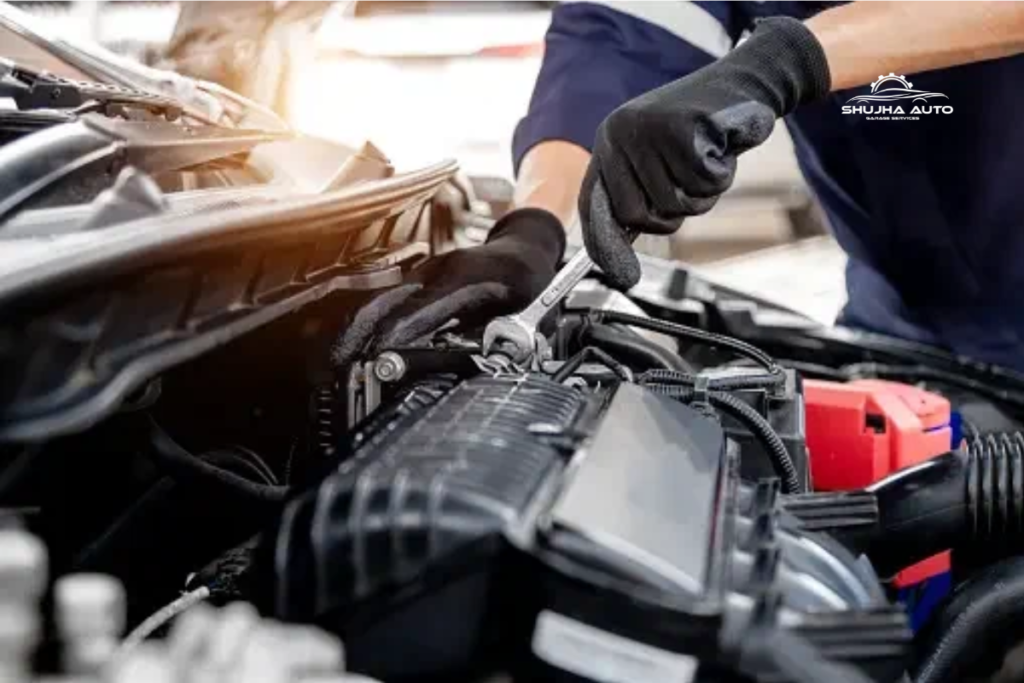
How often should you service your car? Learn the recommended service intervals to improve performance, safety, and extend your vehicle’s lifespan.
Welcome to the world of car ownership! That feeling of freedom on the open road is incredible, but it comes with a little responsibility: taking care of your vehicle. If you’ve ever found yourself wondering, How often should I actually service my car? you’re not alone. It’s one of the most common questions we hear at Shujha Auto Garage Services.
We’ll use simple words to explain car service intervals, why they matter, and how to create a stress-free car maintenance schedule. Think of it as a friendly chat about keeping your car happy, healthy, and safe for years to come.
Why Servicing Isn’t Just an Optional Extra
Let’s start with a simple idea: your car is a team of thousands of parts working together. Just like you need regular check-ups to stay healthy, your car needs them to run smoothly. Regular servicing is preventative healthcare for your vehicle. It catches small issues before they become big, expensive problems. It keeps you safe on the road, improves your fuel efficiency (saving you money on gas!), and protects the value of your car if you ever decide to sell it.
Ignoring service is a bit like ignoring a slight toothache—eventually, you’ll face a much more painful and costly procedure.
The Golden Rule: Your Car’s Manual is Your Best Friend
Before we dive into general rules, here’s the most important tip of all: Grab your car’s owner’s manual. It’s that book in your glove compartment you’ve probably never opened. The engineers who built your car spent thousands of hours testing it and created the perfect Car Maintenance schedule just for your specific model. It’s your personalized guidebook.
Can’t find it? A quick online search for [Your Car Make, Model, and Year] owner’s manual will usually find you a digital copy.
Understanding Car Service Intervals: Time vs. Distance
There are two main ways car servicing frequency is measured:
- By Mileage: This is the most common. Your manual will say something like service every 10,000 miles or 12 months, whichever comes first.
- By Time: This is crucial for people who don’t drive much. Fluids break down over time, rubber parts can dry out, and batteries can die. So even if you’ve only driven 3,000 miles in a year, your car likely still needs a check-up.
Location: Please Visit Our Shujha Auto Garage
A Simple Beginner’s Timeline
While your manual has the final say, here’s a general look at a typical **car service interval** structure:
Every 3,000 – 5,000 Miles (or Every 6 Months) – The Basic Check & Change
- Engine Oil & Filter Change: This is the lifeblood of your engine. Fresh oil lubricates parts and prevents wear. This is the most frequent and critical task.
- Tire Check: Pressure and tread depth inspection for safety and better mileage.
- Fluid Top-Ups: Windshield washer fluid, coolant level, brake fluid level.
- Lights & Wipers: Making sure you can see and be seen.
Every 10,000 – 15,000 Miles (or Every 12 Months) – The Standard Service
This usually includes everything from the basic service, plus:
- In-depth Tire Inspection & Rotation: Rotating tires helps them wear evenly so they last longer.
- Air Filter Replacement: A clean filter helps your engine breathe easily and perform better.
- Brake Inspection: Pads, rotors, and fluid are checked for wear.
- Battery Test: Ensuring it has a strong charge and clean connections.
- Comprehensive Safety Check: A trained technician will look under the car, check the suspension, steering, and exhaust system.
Every 30,000 – 60,000 Miles – The Major Service
At these milestones, more significant items come due:
- Brake Fluid Flush: Brake fluid absorbs moisture over time, which can lower its effectiveness.
- Coolant (Antifreeze) Flush: Prevents overheating in summer and freezing in winter.
- Transmission Fluid Service: Keeps your gears shifting smoothly.
- Spark Plug Replacement: Essential for a efficient engine start and run.
- Serpentine Belt Inspection: This belt powers many important parts like the alternator and power steering pump.
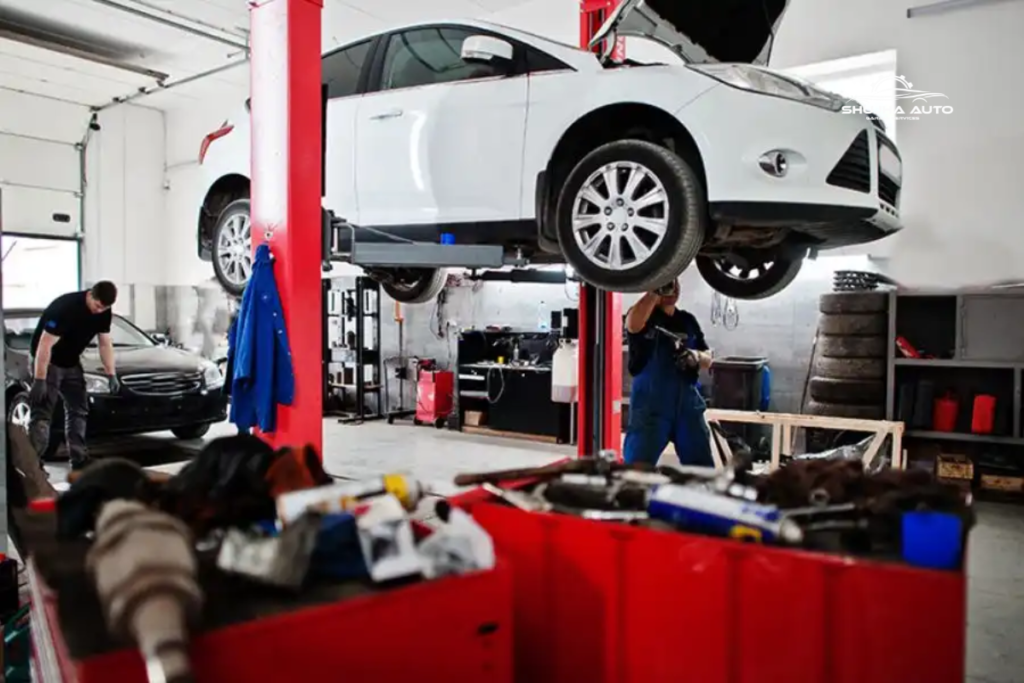
Factors That Change Your Car Servicing Frequency
Your driving style and environment act like your car’s lifestyle. They can mean you need service more often.
- Stop-and-Go City Driving: Causes more wear on brakes and engine than smooth highway miles.
- Extreme Weather: Very hot or very cold climates are tough on batteries and fluids.
- Dusty or Dirty Roads: Can clog air filters faster.
- Short, Frequent Trips: The engine doesn’t always get fully warm, which can lead to moisture buildup and faster oil degradation.
- Heavy Loads: Regularly towing or carrying lots of weight puts extra stress on the engine, brakes, and transmission.
If any of these sound like you, consider shortening your service interval by 20-30%. At Shujha Auto Garage Services, we always ask about your driving habits to recommend the best schedule for you, not just a generic one.
The Service Experience: What to Expect
Walking into a garage can feel intimidating. Let’s demystify the process.
- The Check-In & Conversation
A good garage will start by listening. They’ll note your mileage, ask if you’ve noticed any unusual sounds, vibrations, or warning lights, and discuss the service level recommended for your car’s mileage or time interval.
- The Inspection
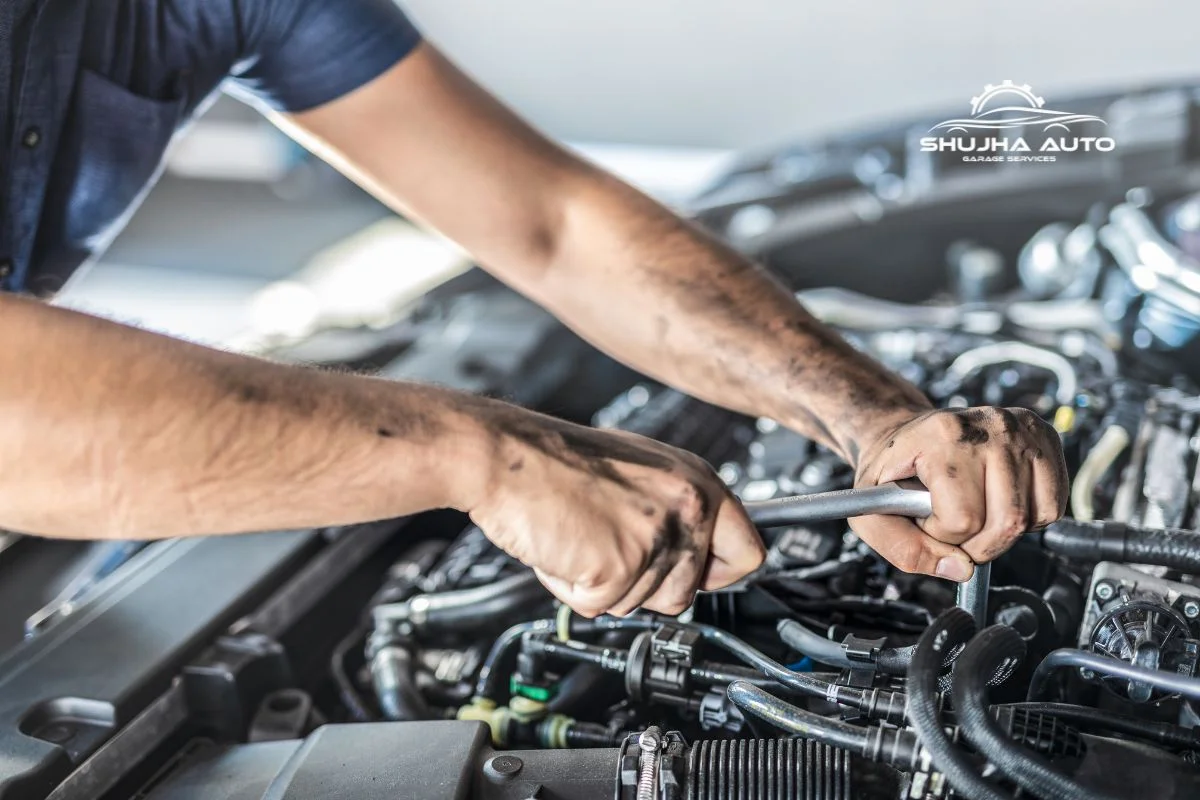
This is where the magic happens. A technician will perform the checks listed on your service package. Many garages, including ours at Shujha Auto Garage Services, also perform a multi-point visual inspection as a standard part of any service. We believe in being proactive.
- The Big Question: What happens if an issue is found?
This is a common worry. Here’s the professional process:
- Verification: The technician will show you the issue. For example, they might bring you to your car on the lift to see worn brake pads for yourself.
- Explanation: They will explain why it needs attention and what could happen if it’s left alone (e.g., Your brake pads are very thin. If they wear out completely, you could damage the rotors, which is a much more expensive repair, and your braking power will be reduced.).
- Options & Consent: You will always be given a clear estimate for the repair and asked for your approval before any extra work is done. You should never receive a bill for unexpected repairs you didn’t agree to.
- The Work & Final Check
Once you approve, the work is done with care. Afterward, the car is often test-driven to ensure everything feels right before it’s returned to you.
- The Handover
You should receive a clear report of what was done, what parts were replaced, and a note on when your next service is due. All your old parts should be available for you to see if you wish.
Transparency Matters: Are there any hidden fees or charges?
Fear of hidden fees is a major reason people delay service. A trustworthy garage operates on transparency. Here’s how to spot one:
- Upfront Quotes: The service package price should be clear. Ask, Is this the total price, or are there likely to be any additional fees for disposal, shop supplies, or environmental charges?
- Phone Approval for Extras: As mentioned, you should always be contacted for approval if work outside the original quote is needed.
- No Pressure: You should never feel pressured into unnecessary services. A good technician educates you and lets you decide.
At Shujha Auto Garage Services, our philosophy is built on No Surprises. We provide detailed, upfront quotes for all our standard service packages. If our inspection reveals something that needs urgent attention, we pause, call you, explain it in simple terms, and provide a written estimate. You are always in the driver’s seat when it comes to approving work on your car.
The Power of a Free Diagnostic Check
You might see garages advertising a free diagnostic check. This is a fantastic tool for you, especially if your car is showing a warning light or behaving oddly. But it’s important to know what it typically includes.
What’s included in the free diagnostic check?
Usually, it means:
- Connecting a Scan Tool: They will plug a computer scanner into your car’s port to read the error codes stored in the engine computer. This tells them which system is reporting a problem (e.g., the emissions system, oxygen sensor, etc.).
- Basic Interpretation: They will tell you what the code means in simple language (e.g., The code is for a faulty oxygen sensor, which can affect fuel economy).
- Visual Inspection: A quick look for obvious issues related to the code, like a loose wire or damaged sensor.
What it usually does NOT include:
- In-depth Repair Diagnosis: The scan code points to a system, but not always the exact root cause. Finding that root cause (e.g., why the sensor failed) might require further testing, which may involve a fee.
- The Repair Work Itself: The check is free, but the actual repair is not.
Think of it like a doctor. The free check is like the initial consultation where they identify the symptoms. The further tests and treatment are the next steps. A trustworthy garage will be completely clear about this process from the start.
Creating Your Own Simple Car Maintenance Schedule
Let’s make this practical. Here’s your action plan:
- Read Your Manual: Find the recommended schedule. Mark the next due date/mileage in your calendar.
- Choose a Trusted Garage: Find a local garage with good reviews, transparent pricing, and certified technicians. Build a relationship with them. We’d be honored if you considered Shujha Auto Garage Services for that role.
- Keep a Log: A small notebook in your glove compartment or a note on your phone. Write down the date, mileage, service done, and any notes. It’s incredibly helpful.
- Do Mini-Checks Yourself: Once a month, get in the habit of:
- Checking your tire pressure (the sticker inside your driver’s door has the correct PSI).
- Looking at your tire tread for excessive wear.
- Checking engine oil level with the dipstick (when the engine is cold).
- Topping up windshield washer fluid.
- Listen to Your Car: It talks to you! A new squeak, rattle, pull, or change in how it drives is its way of asking for help. Don’t ignore it.
Conclusion: Consistency is Key
Regular car servicing isn’t a cost; it’s an investment. It invests in your safety, your wallet (by avoiding huge repairs), and your peace of mind. The key is not to be overwhelmed but to be consistent. Find a schedule, find a garage you trust, and stick to it.
Remember, the goal is to enjoy the drive for years to come. A well-maintained car is a reliable, safe, and enjoyable partner on all your journeys.
Ready to Simplify Your Car Care?
If you’re looking for a garage that believes in clear communication, honest advice, and professional work, the team at Shujha Auto Garage Services is here to help. We’re passionate about taking the worry out of car maintenance for beginners and experienced owners alike. Feel free to give us a call or stop by for a chat. Let’s work together to create a simple, effective Car Maintenance schedule that keeps your car—and you—running smoothly.
Disclaimer: This guide provides general advice. Always refer to your vehicle’s specific owner’s manual for the manufacturer’s recommended service intervals and procedures.