


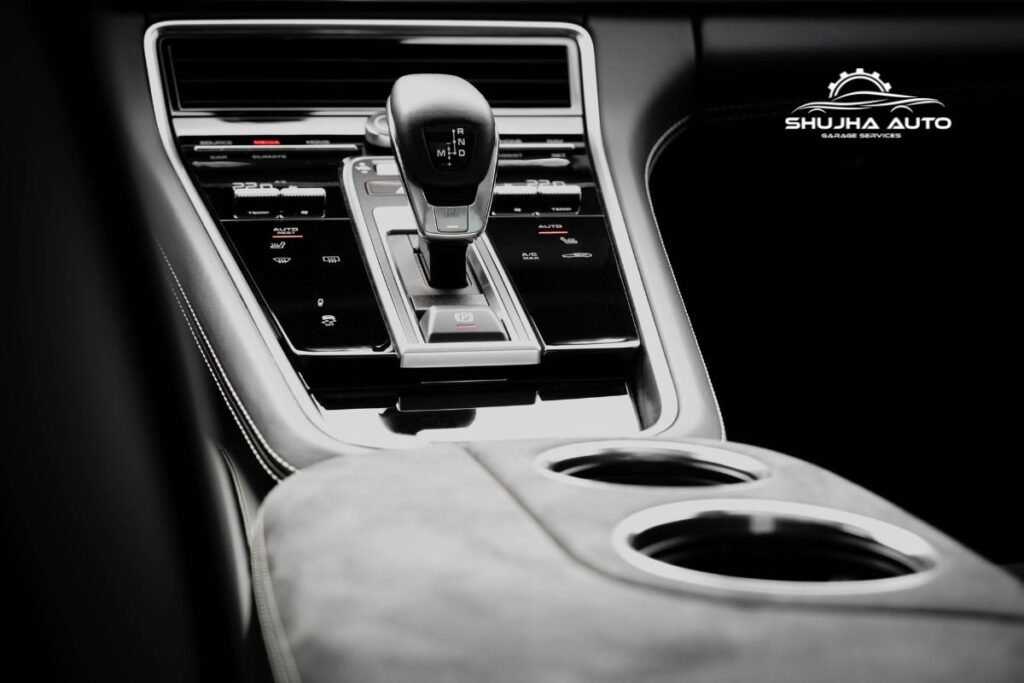
Choosing between CVT and automatic transmission can be confusing for many car buyers and drivers. Both systems are designed to make driving easier because you do not need to change gears manually. But the way they work, feel, perform, and cost to maintain can be very different.
Some drivers prefer CVT because it is smooth and fuel-efficient. Others prefer a traditional automatic transmission because it feels stronger, more responsive, and more familiar. The better option depends on your driving style, car type, budget, maintenance habits, and long-term expectations.
In this guide, we will explain CVT vs automatic transmission in simple words, compare their performance, fuel economy, reliability, maintenance, repair cost, and driving feel, and help you understand which option may be better for your car. If your car has shifting problems, slipping, jerking, delay, noise, or warning lights, Auto Garage Services can help with transmission inspection, gearbox diagnostic service, CVT inspection, automatic transmission service, and transmission repair service.
Quick Answer: Is CVT Better Than Automatic Transmission?
CVT is better if you want smoother driving, better fuel economy, and comfortable city driving. A traditional automatic transmission is better if you want stronger acceleration feel, better towing ability, more familiar gear shifts, and often better durability in high-power vehicles.
For daily city driving, CVT can be a good choice. For performance, heavy driving, long-term strength, and more natural driving feel, a traditional automatic transmission is often preferred. The best choice depends on the vehicle and how you drive it.
What Is a CVT Transmission?
CVT stands for continuously variable transmission. Unlike a traditional automatic transmission, a CVT does not use fixed gears in the same way. Instead, it uses a belt or chain system with pulleys to create smooth and continuous gear ratio changes.
This means the car does not shift from first gear to second gear or third gear like a normal automatic. Instead, the CVT adjusts continuously to keep the engine running at the most efficient speed.
How CVT Feels While Driving
A CVT usually feels very smooth because there are no clear gear changes. When you accelerate, the engine speed may rise and stay steady while the car gradually increases speed.
Some drivers like this smooth feeling. Others feel that the car sounds like it is revving too much without changing gears. This is normal for many CVT cars, but it can feel unusual if you are used to traditional automatic transmission.
Common Benefits of CVT
CVT is popular in many modern cars because it offers:
- Smooth acceleration
- Better fuel economy
- Comfortable city driving
- Fewer noticeable gear shifts
- Efficient engine performance
- Lighter driving feel
CVT is commonly found in compact cars, sedans, hybrid vehicles, and fuel-efficient family cars.
What Is a Traditional Automatic Transmission?
A traditional automatic transmission uses fixed gears. The gearbox shifts from one gear to another depending on speed, engine load, and driving conditions. Older automatic transmissions had fewer gears, while many modern automatic cars now come with 6-speed, 8-speed, 9-speed, or even 10-speed gearboxes.
This type of transmission gives a more familiar driving feel because you can feel the car shifting gears during acceleration.
How Automatic Transmission Feels While Driving
A traditional automatic usually feels more direct and responsive. When you accelerate, the car changes gears in steps. Many drivers like this because it feels stronger and more controlled.
In powerful cars, SUVs, luxury vehicles, and towing vehicles, traditional automatic transmission is often preferred because it can handle more torque and heavier driving conditions.
Common Benefits of Automatic Transmission
Traditional automatic transmission is popular because it offers:
- Strong acceleration feel
- Better towing ability
- More natural gear changes
- Good durability in many vehicles
- Better performance in high-power cars
- Familiar driving experience
It is commonly found in sedans, SUVs, pickup trucks, luxury vehicles, and performance cars.
CVT vs Automatic Transmission: Main Difference
The main difference between CVT and automatic transmission is how they change gear ratios.
A CVT changes gear ratios continuously without fixed gear steps. A traditional automatic transmission uses fixed gears and shifts from one gear to another.
This difference affects fuel economy, acceleration feel, repair cost, durability, driving comfort, and long-term maintenance.
Simple Comparison
Here is an easy way to understand it:
- CVT focuses more on smoothness and fuel saving
- Automatic transmission focuses more on power feel and driving response
- CVT has no traditional gear shift feeling
- Automatic transmission has noticeable gear changes
- CVT works best in daily city driving
- Automatic works better for stronger performance and heavy use
Both can be good, but they are designed for different driving priorities.
Which Is Better for Fuel Economy?
CVT is usually better for fuel economy. Because it can continuously adjust the gear ratio, it helps the engine stay in an efficient RPM range. This is one reason many fuel-efficient cars and hybrid vehicles use CVT.
For city driving, stop-and-go traffic, and daily commuting, CVT can help save fuel. The car does not need to shift through fixed gears, so the engine can work more efficiently.
However, fuel economy also depends on:
- Car model
- Engine size
- Driving style
- Traffic conditions
- Tire condition
- Maintenance quality
- Transmission health
A poorly maintained CVT may not deliver good fuel economy. Similarly, a modern automatic transmission with many gears can also be very fuel-efficient.
Which Feels Better to Drive?
This depends on the driver.
CVT feels smoother because there are no clear gear shifts. It is comfortable in traffic and daily driving. If you like relaxed driving, CVT may feel better.
Traditional automatic transmission feels more natural and responsive. You can feel the car shifting gears, and acceleration often feels stronger. If you like a more powerful driving feel, automatic transmission may feel better.
CVT Driving Feel
CVT is best for drivers who want:
- Smooth acceleration
- Quiet city driving
- Less shifting feel
- Better comfort in traffic
- Fuel-saving performance
But some drivers do not like the high engine sound during acceleration. The car may feel like it is taking time to build speed, even when it is working normally.
Automatic Driving Feel
Automatic transmission is best for drivers who want:
- Stronger pickup feel
- Clear gear changes
- Better highway response
- More control while accelerating
- More traditional driving experience
For many drivers, traditional automatic transmission feels more confident, especially in larger vehicles.
Which Is Better for City Driving?
CVT is usually better for city driving. In traffic, the smooth operation of a CVT can make driving more comfortable. It adjusts continuously and avoids frequent gear changes.
If you drive mostly in Sharjah, Dubai, or heavy traffic areas, CVT can be a practical option because it focuses on comfort and fuel efficiency.
However, regular maintenance is important. Stop-and-go traffic creates heat, and heat is one of the biggest enemies of any transmission. CVT fluid should be checked and serviced according to the manufacturer’s recommendation.
Which Is Better for Highway Driving?
Traditional automatic transmission is often better for highway driving, especially if you want stronger acceleration, overtaking confidence, and a more stable driving feel.
Modern automatic transmissions with more gears can keep the engine relaxed at highway speeds while still offering good response when needed.
CVT can also perform well on highways, especially in smaller cars, but some drivers may not like the engine sound during sudden acceleration.
Which Is More Reliable?
Reliability depends more on the car model, transmission design, service history, and driving habits than the transmission type alone.
A well-maintained CVT can last a long time. A poorly maintained automatic transmission can fail early. But generally, traditional automatic transmissions are often considered stronger for high-power vehicles, heavy use, and long-term durability.
CVT systems can be sensitive to heat, wrong fluid, aggressive driving, and delayed maintenance. If the CVT belt, pulley, or internal components wear out, repairs can be costly.
Factors That Affect Reliability
Transmission reliability depends on:
- Correct fluid type
- Timely fluid service
- Avoiding overheating
- Driving style
- Car model
- Load and towing habits
- Quality of previous repairs
- Early diagnosis of warning signs
If your car shows jerking, slipping, delay, noise, or warning lights, Auto Garage Services can inspect the transmission and help identify whether the issue is fluid-related, electronic, mechanical, or internal.
Which Costs More to Repair?
CVT repair can sometimes be more expensive than traditional automatic repair because CVT systems have specialized components. In many cases, if major internal CVT parts fail, repair options may be limited depending on the vehicle.
Traditional automatic transmissions can also be expensive to repair, especially in modern cars, but parts and repair experience may be more widely available for many models.
Common CVT Repair Concerns
CVT problems may involve:
- Belt or chain wear
- Pulley issues
- CVT fluid problems
- Valve body issues
- Stepper motor faults
- Overheating
- Internal slipping
Common Automatic Repair Concerns
Automatic transmission problems may involve:
- Low fluid
- Dirty fluid
- Solenoid faults
- Torque converter problems
- Valve body issues
- Worn clutch plates
- Sensor faults
- Transmission control module issues
The best way to avoid expensive repair is early inspection. Small transmission problems are usually easier to fix than complete gearbox failure.
Which Needs More Maintenance?
Both CVT and automatic transmission need maintenance, but CVT can be more sensitive to fluid quality and service timing.
CVT requires the correct CVT fluid. You should never use regular automatic transmission fluid in a CVT unless the manufacturer specifically allows it. Wrong fluid can damage the transmission.
Traditional automatic transmission also needs the correct fluid, but many automatic gearboxes can handle a wider range of driving conditions depending on design.
Maintenance Tips for Both Types
To protect your transmission:
- Use the correct transmission fluid
- Change fluid on time
- Fix leaks early
- Avoid overheating
- Do not ignore jerking or slipping
- Avoid aggressive driving when symptoms appear
- Get warning lights scanned quickly
- Service the car regularly
Auto Garage Services can help with transmission fluid service, gearbox diagnostic service, automatic transmission inspection, CVT inspection, and related car maintenance service.
CVT vs Automatic: Pros and Cons
Both transmission types have advantages and disadvantages. Understanding them can help you choose the right car or identify what to expect from your current vehicle.
CVT Pros
CVT advantages include:
- Better fuel economy
- Very smooth driving
- Comfortable in traffic
- Good for small and midsize cars
- Efficient engine performance
- Suitable for daily commuting
CVT Cons
CVT disadvantages include:
- Less sporty driving feel
- Engine may sound loud during acceleration
- Can be sensitive to overheating
- Requires correct CVT fluid
- Major repairs may be expensive
- Not ideal for heavy towing
Automatic Transmission Pros
Traditional automatic advantages include:
- Stronger acceleration feel
- Better for larger vehicles
- More natural gear shifting
- Often better for towing
- Good highway performance
- Familiar driving experience
Automatic Transmission Cons
Traditional automatic disadvantages include:
- May use more fuel than CVT in some cars
- Gear shifts can feel rough if there is a problem
- Repairs can still be expensive
- Needs regular fluid service
- More moving internal parts
Which Is Better for Long-Term Use?
For long-term use, traditional automatic transmission is often preferred by drivers who want strength, better performance, and confidence in heavier vehicles. It is especially suitable for SUVs, luxury cars, and cars with larger engines.
CVT can also be good for long-term use if the car is maintained properly and driven normally. It is a good choice for daily commuting, fuel savings, and smooth city driving.
The important point is maintenance. A CVT with poor maintenance can fail early. An automatic transmission with dirty fluid, leaks, or overheating can also fail early.
Which Is Better in UAE Driving Conditions?
In UAE driving conditions, both CVT and automatic transmission can work well, but heat and traffic should be considered.
High temperatures, long traffic jams, highway driving, and stop-and-go conditions can put pressure on the transmission. This makes regular maintenance more important.
For city driving and fuel saving, CVT can be a good option. For stronger performance, highway driving, SUVs, and heavier vehicles, automatic transmission may be better.
If you drive daily in hot weather, make sure your transmission fluid is in good condition and the cooling system is working properly.
Warning Signs in CVT and Automatic Transmission
Whether your car has CVT or automatic transmission, warning signs should not be ignored.
Common Warning Signs
You should get your car checked if you notice:
- Jerking while driving
- Gear slipping
- Delayed movement
- Burning smell
- Transmission warning light
- Check engine light
- Fluid leak under the car
- Whining or humming noise
- Poor acceleration
- Overheating
- Vibration during acceleration
These symptoms can become serious if ignored. Early diagnosis can prevent bigger transmission damage.
Visit Shujha Auto Garage for Expert Car Care
What Happens During Transmission Inspection?
A proper transmission inspection helps find the real cause of the problem. Guessing can lead to unnecessary repairs.
At Auto Garage Services, transmission inspection may include:
- Checking transmission fluid level
- Inspecting fluid color and smell
- Checking for leaks
- Scanning fault codes
- Testing gear shifting
- Checking transmission temperature
- Inspecting sensors and solenoids
- Road testing if safe
- Explaining repair options clearly
This helps identify whether the issue is related to fluid, electronics, overheating, mechanical wear, or internal gearbox damage.
Which One Should You Choose?
Choose CVT if you want fuel economy, smooth driving, and comfort in traffic. It is a practical option for daily use, small cars, family sedans, and hybrid vehicles.
Choose traditional automatic transmission if you want stronger acceleration feel, better highway response, better towing ability, and a more familiar driving experience. It is often better for SUVs, larger cars, luxury vehicles, and performance-focused driving.
Simple Buying Advice
CVT may be better for you if:
- You drive mostly in the city
- You want better fuel economy
- You prefer smooth driving
- You do not drive aggressively
- You follow regular maintenance
Automatic transmission may be better for you if:
- You want stronger performance
- You drive on highways often
- You own a larger vehicle
- You need better towing ability
- You prefer traditional gear shifting feel
Why Choose Auto Garage Services?
Auto Garage Services provides CVT inspection, automatic transmission inspection, gearbox diagnostic service, transmission fluid service, car maintenance service, and transmission repair service.
If your car has transmission slipping, delayed shifting, jerking, warning lights, overheating, noise, or fluid leaks, the team can inspect the issue and explain the problem in simple words. This helps you understand whether the problem is small, serious, fluid-related, electronic, or internal.
Drivers choose Auto Garage Services because of experienced technicians, proper diagnostic tools, clear repair guidance, and customer-focused service.
When Should You Visit Auto Garage Services?
You should visit Auto Garage Services if your CVT or automatic transmission is not shifting smoothly, slipping, jerking, making noise, showing warning lights, overheating, or leaking fluid.
You should also get the car checked if the transmission feels different after a recent service or if the fluid smells burnt. Early inspection can save you from expensive gearbox repair.
FAQs
1. Which is better, CVT or automatic transmission?
CVT is better for smooth city driving and fuel economy, while traditional automatic transmission is better for stronger acceleration, highway driving, towing, and a more natural driving feel. The better choice depends on your driving style and vehicle type.
2. Is CVT more fuel-efficient than automatic transmission?
Yes, CVT is usually more fuel-efficient because it continuously adjusts the gear ratio and keeps the engine in an efficient range. However, fuel economy also depends on driving style, car model, maintenance, and road conditions.
3. Is automatic transmission more reliable than CVT?
Traditional automatic transmission is often considered stronger in high-power vehicles and heavy-use conditions. However, both CVT and automatic transmission can be reliable if maintained properly and serviced on time.
4. Does CVT feel different from automatic transmission?
Yes, CVT feels smoother because it does not shift through fixed gears. Some drivers like the smoothness, while others feel the engine sound is unusual during acceleration. Traditional automatic transmission feels more familiar because it shifts through fixed gears.
5. Is CVT expensive to repair?
CVT repair can be expensive if major internal parts fail, such as the belt, chain, pulley, or valve body. Regular fluid service, correct CVT fluid, and early diagnosis can reduce the risk of costly repair.
6. Which transmission is better for UAE driving?
For UAE city traffic and fuel saving, CVT can be a good option. For highway driving, SUVs, larger vehicles, and stronger performance, traditional automatic transmission may be better. Heat and maintenance are important for both types.
7. Can I use automatic transmission fluid in a CVT?
No, most CVT systems require specific CVT fluid. Using the wrong fluid can damage the transmission. Always use the fluid recommended by the vehicle manufacturer.
8. What are the signs of CVT or automatic transmission problems?
Common signs include jerking, slipping, delayed movement, burning smell, warning lights, fluid leaks, whining noise, poor acceleration, overheating, and vibration during driving.
9. Which transmission is better for resale value?
Resale value depends on the car model, brand reputation, service history, mileage, and market demand. Some buyers prefer traditional automatic transmission because it feels more familiar, while others prefer CVT for fuel savings.
10. Does Auto Garage Services inspect CVT and automatic transmission problems?
Yes, Auto Garage Services can inspect CVT and automatic transmission problems. The team can check fluid condition, leaks, fault codes, shifting behavior, overheating, sensors, and related gearbox issues.
Final Words
CVT and automatic transmission both have their own benefits. CVT is better for smooth driving, fuel economy, and city use. Traditional automatic transmission is better for stronger acceleration feel, highway performance, towing, and heavier vehicles.
The best choice depends on your car, driving habits, and maintenance routine. No transmission is perfect, and both can develop problems if fluid service is ignored or early warning signs are not checked.
If your car has jerking, slipping, delayed shifting, warning lights, noise, overheating, or fluid leakage, visit Auto Garage Services for CVT inspection, automatic transmission inspection, gearbox diagnostic service, transmission fluid service, car maintenance service, or transmission repair service.