
Car vibrates when brakes applied? Learn the common causes like warped rotors, worn brake pads, and suspension issues, plus simple fixes to stop vibration while braking.
Have you ever been driving calmly, and the moment you press the brake pedal, your entire car starts to shake? It feels like something is terribly wrong, and it can be pretty scary. If your car vibration when braking is happening, you are not alone. It’s one of the most common concerns drivers bring to us here at Shujha Auto Garage Services.
That shaking or pulsing feeling is your car’s way of telling you that something in the braking system—or a related part—is not working perfectly. The good news? Most of the causes are completely fixable. In some cases, they can even be easy fixes.
We’ll break down exactly why your car might be shaking, what you can do about it, and how we at Shujha Auto Garage Services can help you get back to a smooth, safe ride.
Why Does My Car Shake When I Brake?
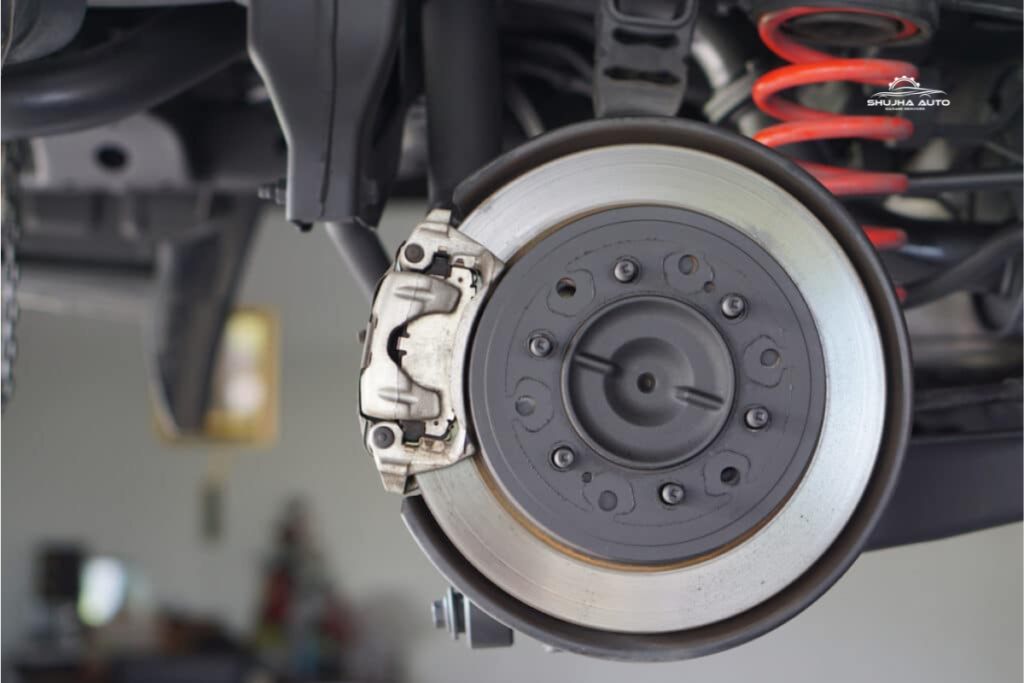
To understand the shake, you have to understand the basics of stopping. When you hit the brake pedal, you activate a system designed to create massive friction to stop your car. Brake pads squeeze against metal discs called rotors (or drums at the back in some older cars). For you to stop smoothly, the contact between the pads and rotors needs to be perfectly even .
If something interrupts that even contact, you get vibration. This is often referred to as a brake vibration problem. Depending on where the issue is, you might feel it in the steering wheel, through the brake pedal itself, or even in your seat.
Let’s look at the most common culprits.
Location: Please Visit Our Shujha Auto Garage
The Main Culprits: Why Your Car is Shaking
Here are the most likely reasons your car is vibrating when you hit the brakes.
1. The Usual Suspect: Warped or Worn Brake Rotors
This is by far the most common cause we see at the garage. Your brake rotors are large metal discs. Over time, the intense heat and pressure from braking can cause them to become warped, meaning they are no longer perfectly flat . They might develop uneven wear, thin spots, or hard spots from heat damage .
Imagine trying to stop a bicycle wheel that is slightly bent. It wouldn’t grab smoothly, right? That’s what’s happening here. As the uneven rotor spins through the brake pads, it pushes back against them, causing a pulse. You will often feel this as a brake pedal vibration—a rhythmic pulsing under your foot. If the front rotors are warped, you’ll usually feel it in the steering wheel . This is a classic sign of a brake vibration problem originating at the front.
2. Sticky Brake Calipers
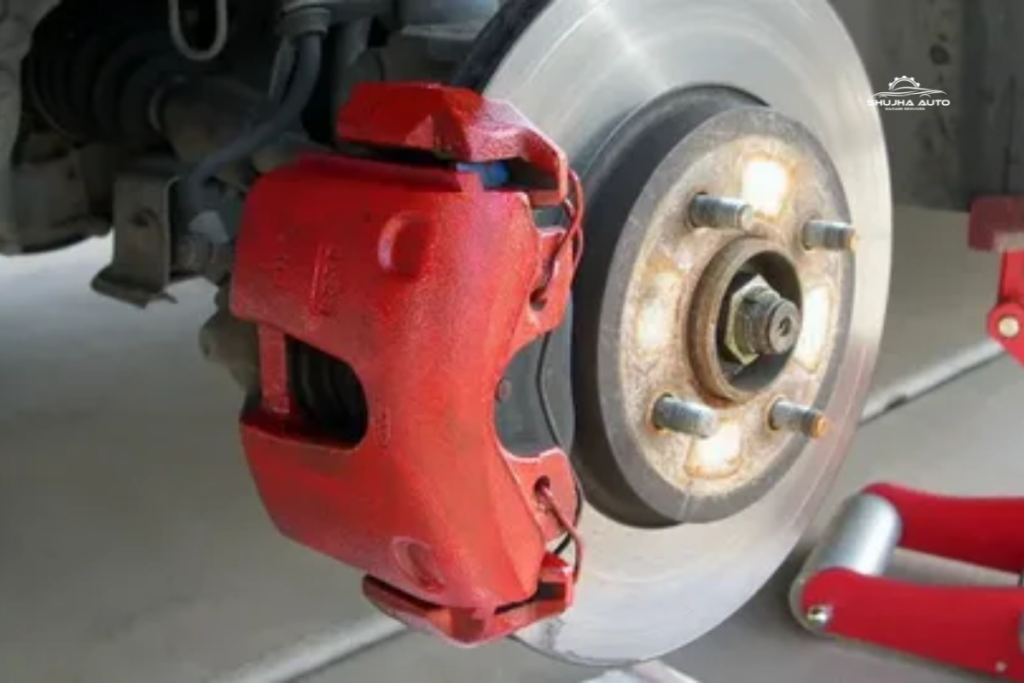
Your brake calipers are the clamps that hold the brake pads. When you press the pedal, they squeeze the pads against the rotor. Sometimes, a caliper can stick or seize . This means it doesn’t release properly, keeping the brake pad pressed against the rotor even when you’re not braking.
This constant friction generates excessive heat, which can warp the rotor and cause vibration. You might also notice your car pulling to one side when you brake, or you might smell a burning odor after a long drive . This is a serious issue that needs immediate attention.
3. Worn or Poor Quality Brake Pads
While brake pads are designed to wear out, they need to wear evenly. If they wear down unevenly or if they are contaminated with dirt or oil, they won’t make proper contact with the rotor . This uneven grip can cause a grabbing and releasing sensation, leading to vibration . Sometimes, this vibration is accompanied by a high-pitched squealing noise .
4. Problems That Aren’t the Brakes: Tires, Alignment, and Suspension
Sometimes, the brakes are innocent! The vibration you feel when stopping can actually be caused by other parts of the car.
- Tire Issues: If your tires are out of balance, have uneven wear, or are damaged, the vibration will often get worse when you brake because the weight of the car shifts forward . If your car shakes at highway speeds even when you’re not braking, the tires are a likely suspect .
- Wheel Alignment: If your wheels aren’t aligned properly, they are fighting each other for direction. When you brake, this fight becomes more violent, sending vibrations through the steering wheel .
- Suspension Wear: Worn-out parts like ball joints, control arms, or shocks can create play or looseness in your wheel assembly. When the force of braking is applied, these loose parts allow the wheel to move slightly, causing a bad shimmy .
How to Tell What’s Wrong (A Simple Guide)
You don’t need to be a mechanic to give us a good clue. Pay attention to where you feel the vibration and when it happens. Before you bring your car in for a free check, think about these points:
- Vibration in the Steering Wheel: This almost always points to a problem at the front of the car. Likely causes are warped front rotors or out-of-balance front tires .
- Vibration in the Brake Pedal: This is a classic sign of a rotor issue. A pulsing pedal usually means the rotor surface is uneven, causing the brake pad to bounce slightly . This is a specific brake pedal vibration that points directly to the braking system.
- Vibration in the Seat or the Whole Car: This often indicates a problem with the rear brakes or rear tires .
- Pulling to One Side: If the car veers left or right when you brake, you likely have a sticky caliper or a collapsed brake hose on that side .
- Vibration Only at High Speeds: If you only feel the shake when braking hard from 60 mph or 70 mph, it’s highly likely you have the beginnings of warped rotors .
What Happens If an Issue Is Found? (Your Next Steps)
So, you’ve felt the vibration, read this guide, and decided to get it checked out. You bring your car to Shujha Auto Garage Services, and our technician confirms the issue. What happens next?
First, don’t worry. We believe in transparent communication. Our technician will walk you through exactly what we found. We won’t just hand you a bill; we’ll show you the problem.
- If it’s the Rotors: Depending on how severe the wear is, we have two options. We can either resurface (or turn) the rotors, which machines a thin layer off to create a fresh, flat surface . Or, if they are too thin or damaged, we will recommend replacing the rotors entirely. For safety, we always recommend replacing them in pairs (both front or both rear) .
- If it’s the Brake Pads: We will show you the old pads compared to new ones. Worn pads are simply replaced. We offer a range of quality pads to suit your driving style and budget.
- If it’s a Sticky Caliper: This is critical. We will recommend replacing the faulty caliper. Ignoring it can lead to uneven brake wear, reduced fuel economy, and even brake failure.
- If it’s Tires or Suspension: We’ll give you a full report on the condition of your tires, alignment, and suspension parts. You can then decide whether to proceed with a tire replacement, wheel balancing, or suspension repair.
No matter what the issue, our goal is to get you back on the road safely. We will provide a clear, detailed estimate for the work before any repairs begin.
Don’t Ignore the Shake!
We get it. Car troubles are annoying and often come at the worst time. But ignoring a vibration when braking is a bad idea. Here’s why:
- Safety First: That shake means your stopping power is compromised. Your car might take longer to stop, or it might not handle predictably in an emergency .
- Small Problems Become Big (Expensive) Problems: A slightly warped rotor that is left unchecked can wear out your brake pads unevenly and fast. A sticking caliper can destroy a brand new rotor and pad in a matter of months. What could have been a simple, low-cost fix turns into a major brake system overhaul .
The Shujha Auto Garage Services Promise: Free Diagnostic Check
We want to make it easy for you to be safe. That’s why at Shujha Auto Garage Services, we offer a comprehensive free diagnostic check for brake vibrations.
You might be wondering, What’s included in the free diagnostic check? We’re glad you asked! When you bring your car in for the car vibration when braking issue, our expert technicians will:
- Take a Test Drive: We will ride with you, or drive the car ourselves, to feel the vibration firsthand and confirm the symptoms.
- Perform a Visual Brake Inspection: We will safely lift your car and remove the wheels to get a clear view of the brakes. We inspect the thickness of the brake pads, the condition of the rotors (checking for grooves, cracks, or warping), and the health of the calipers.
- Inspect Tires and Suspension: We will check your tire pressure, tread depth, and look for uneven wear patterns. We’ll also inspect key suspension components like ball joints and tie rods for any looseness that could be causing the shake.
- Provide a Clear Explanation: We will show you exactly what we found, explain what it means, and answer any questions you have.
And a very important question we always get: Are there any hidden fees or charges? The answer is a firm NO. The diagnostic check is genuinely free. There is no fine print. We believe that understanding what’s wrong with your car is your right, and it shouldn’t cost you anything to find out.
Easy Fixes and Smooth Stops Await You
A shaking car is a stressful experience, but it’s almost always a solvable problem. Whether it’s a simple pad replacement or a rotor resurface, the fix is usually straightforward. The key is to act fast.
Don’t let a small brake vibration problem turn into a major headache. If your car is shaking, pulsing, or vibrating when you apply the brakes, we are here to help.
At Shujha Auto Garage Services, we treat every car like it’s our own. We use quality parts, employ skilled technicians, and believe in honest, upfront communication.
Stop by Shujha Auto Garage Services today or give us a call to schedule your free brake diagnostic check. Let us find the cause of that annoying shake and get you back to enjoying a smooth, safe, and comfortable drive. You deserve peace of mind every time you hit the road.