



Car vibrates at 120 km h? Discover common causes like tire imbalance, alignment issues, and fixes to ensure a smooth and safe drive.
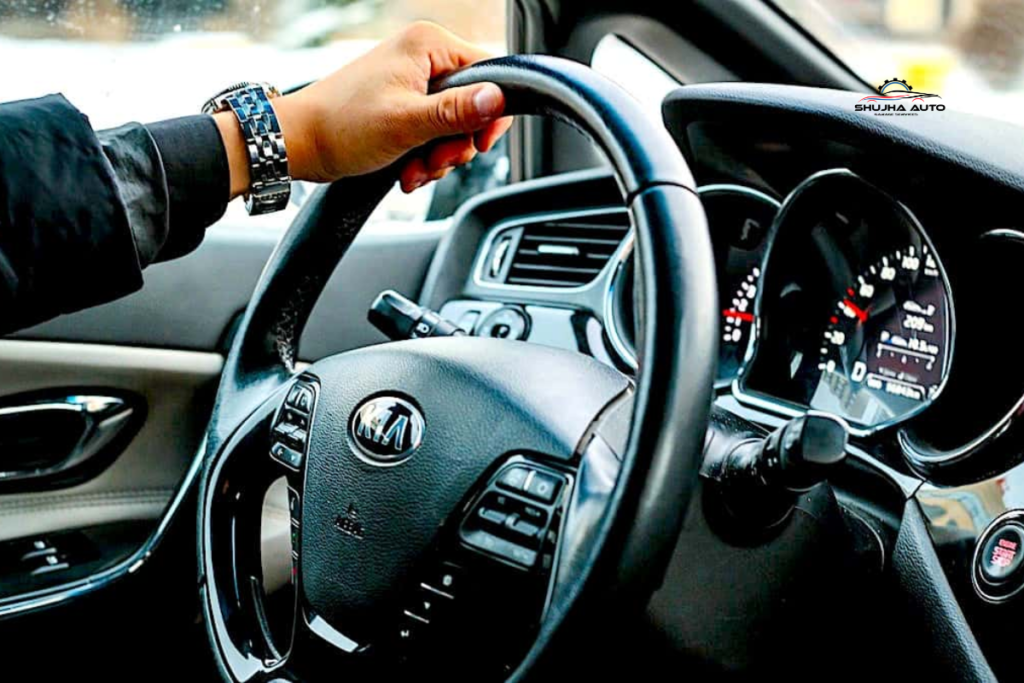
There is nothing quite as unsettling as cruising down the highway, enjoying the drive, when suddenly you feel it. A shake. A rumble. A tremor that travels from the steering wheel through your seat. You glance at the speedometer, and sure enough, you are hitting that familiar mark: 120 km/h.
If your car vibrates at 120 km h, you are not alone. This is one of the most common complaints we hear from drivers. It is a frustrating problem because at lower speeds, the car might feel perfectly fine. But the moment you need to merge onto a fast-moving highway or take a long road trip, the shaking returns.
At Shujha Auto Garage Services, we see vehicles with this issue every single day. The good news? Most of the time, the cause is simple, fixable, and—if caught early—affordable. Ignoring it, however, can lead to more expensive repairs down the road.
We are going to walk you through the most common reasons for car vibration at high speed. We will explain why your car shakes at 120 km h specifically, and what you can do about it. We will also answer some of the most common questions we get, like what happens if an issue is found, whether there are hidden fees, and what’s included in the free diagnostic check we offer.
Let’s get your ride back to smooth and safe.
Why Does Speed Matter?
Before we dive into the specific parts of your car, it helps to understand why speed matters so much. Imagine spinning a bicycle wheel slowly. You can see it wobble a little, but it still feels stable. Now, imagine spinning that same wheel at 100 km/h. A tiny imbalance becomes a massive force.
Physics is the culprit here. When a car vibrates at high speed, it is usually because a rotating part—like a wheel, tire, or driveshaft—is out of balance or out of alignment. At lower speeds, the centrifugal force isn’t strong enough to make the vibration noticeable. But at 120 km/h, that force is immense, magnifying any small imperfection into a violent shake.
So, if your car shakes at 120 km h, you are essentially feeling a mechanical scream telling you that something is not rotating as smoothly as it should.
Common Reason #1: Unbalanced Wheels and Tires
This is the number one cause of car vibration at high speed. In fact, it is so common that when a customer comes to Shujha Auto Garage Services complaining of a car wobble at high speed, wheel balancing is the first thing our mechanics check.
What are Wheel Weights?
When a tire is mounted onto a wheel, the combination is rarely perfectly balanced. One side is usually slightly heavier than the other. To fix this, mechanics attach small lead or zinc weights to the rim. These weights ensure that the entire wheel assembly spins evenly.
What Goes Wrong?
Over time, these weights can fall off. You might hit a large pothole, scrape a curb, or simply wear them down. When a weight goes missing, the wheel becomes unbalanced.
The Symptoms
If the vibration is coming from the front wheels, you will feel the shaking primarily in the steering wheel. If the vibration is coming from the rear wheels, you will feel it in your seat or the floorboard.
The Fix
A wheel balance service. This is a quick, affordable procedure where we spin your wheels on a specialized machine to find the heavy spot and attach new weights to correct it. After this service, the car wobble at high speed usually disappears immediately.
Location: Please Visit Our Shujha Auto Garage
Common Reason #2: Misaligned Wheels
While unbalanced wheels cause a vibration, misaligned wheels cause a pull or uneven wear—but they can also contribute to a shake.
What is Alignment?
Wheel alignment refers to the angle of your wheels relative to the road and to each other. There are three main angles: camber, caster, and toe. When these are out of spec, your tires fight against the road.
The Symptoms
A misalignment usually causes the car to drift to one side. However, if the misalignment is severe, it can cause a vibration that feels like the car is tramlining or wobbling, especially at high speeds. You might also notice that your steering wheel is crooked even when you are driving straight.
The Fix
A four-wheel alignment service. At Shujha Auto Garage Services, we use laser-guided alignment machines to adjust your suspension geometry back to the manufacturer’s specifications. Not only does this fix the potential wobble, but it also saves your tires from premature wear.
Common Reason #3: Tire Issues (Bulges, Separations, and Pressure)
Your tires are the only part of the car that touches the road. If they are damaged, you will feel it.
Bulges and Bubbles
If you have ever hit a deep pothole or a sharp curb, you may have damaged the internal structure of the tire. This creates a bulge or bubble on the sidewall. When this damaged area rotates at high speed, it creates a rhythmic thumping or vibration. If you see a bubble, the tire is dangerous and needs immediate replacement.
Tire Separation
Sometimes, the tread separates from the body of the tire internally. You won’t always see this from the outside, but you will feel a violent car wobble at high speed that often gets worse the faster you go.
Improper Tire Pressure
Low tire pressure increases rolling resistance and can cause the tire to deform slightly at high speeds, leading to vibration. Conversely, over-inflated tires are stiff and transmit every imperfection in the road to the cabin.
The Fix
A thorough tire inspection. We check for bulges, measure tread depth, and ensure pressure is at the recommended PSI. Sometimes, a simple rotation and pressure adjustment solves the problem. Other times, a replacement is necessary for safety.
Common Reason #4: Brake Rotor Warping
This is a tricky one because brake-related vibrations often feel similar to wheel balance issues, but they occur under different conditions.
How Rotors Work
Brake rotors are the metal discs that your brake calipers squeeze to stop the car. When you brake, friction generates heat. If the rotors cool unevenly (like driving through a puddle after heavy braking), they can warp.
The Symptoms
If your car vibrates at high speed specifically when you apply the brakes, you likely have warped rotors. You will feel a pulsation in the brake pedal and a shaking sensation in the steering wheel. If the vibration is constant regardless of braking, the issue is likely tires or wheels.
The Fix
Depending on the severity, we either “machine” the rotors (resurface them to make them flat again) or replace them entirely. At Shujha Auto Garage Services, we always measure the rotor thickness to determine the safest and most cost-effective solution.
Common Reason #5: Suspension System Wear and Tear
Your suspension system is designed to absorb bumps and keep your tires planted on the road. When parts wear out, they allow movement that shouldn’t be there.
Shocks and Struts
If your shocks are blown, your tires might bounce instead of staying firmly on the road. At high speeds, this bounce can turn into a floaty, wobbly feeling.
Ball Joints and Tie Rod Ends
These are the pivot points of your steering and suspension. If they are loose or have play, they allow the wheel to move slightly. At 120 km/h, that slight movement translates into a dangerous shake.
Control Arm Bushings
These are rubber cushions that isolate the suspension from the chassis. When they crack or dry out, metal starts rubbing against metal, causing vibrations and clunking noises.
The Fix
A suspension inspection is required. Because these parts are safety-critical, we recommend addressing them immediately. A worn ball joint, for example, can fail completely, causing the wheel to collapse while driving.
Common Reason #6: Driveshaft and CV Joint Issues
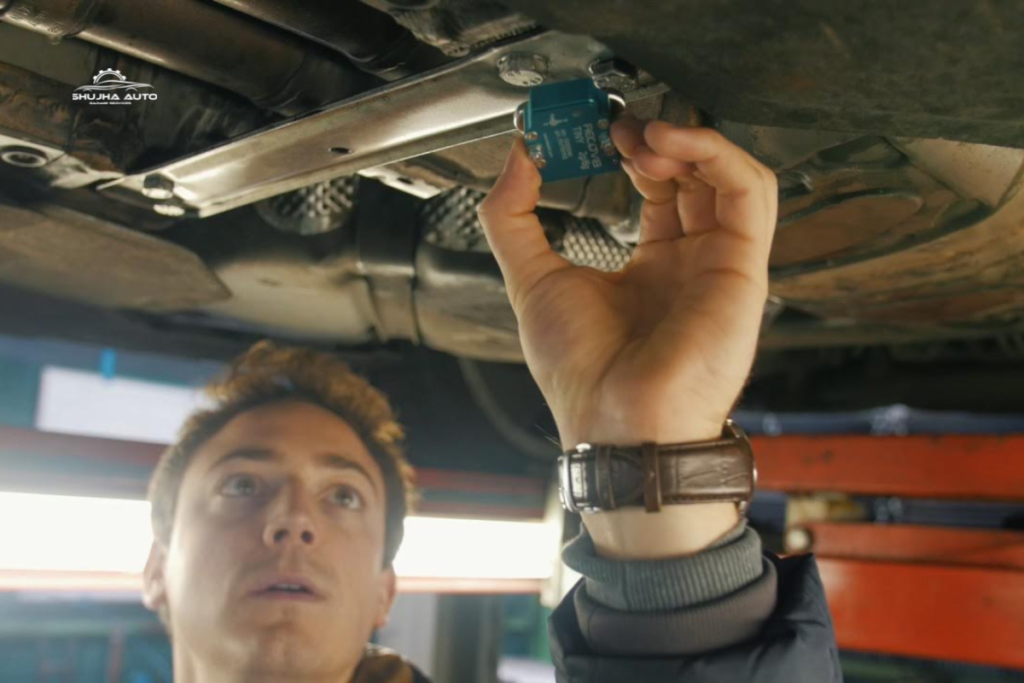
If you drive a rear-wheel-drive or all-wheel-drive vehicle, the driveshaft is the long metal tube that transmits power from the transmission to the rear axle. If this becomes unbalanced or bent, it causes a distinct type of vibration.
The Symptoms
A driveshaft issue usually causes a vibration that is felt more under acceleration. It might also be accompanied by a humming or clunking noise. If a CV joint (Constant Velocity joint) is failing, you might hear a clicking sound when turning.
The Fix
Often, the driveshaft needs to be re-balanced or the universal joints (U-joints) need to be replaced. At Shujha Auto Garage Services, we have the equipment to diagnose driveline vibrations accurately, ensuring we don’t waste your time guessing.
Common Reason #7: Engine and Transmission Mounts
The engine and transmission are heavy chunks of metal. They are attached to the car’s frame via rubber mounts that absorb vibration.
What Goes Wrong?
When these mounts wear out, crack, or collapse, the engine is no longer isolated from the chassis. You might feel a vibration at idle, but it can also become pronounced at highway speeds if the drivetrain is shifting under load.
The Symptoms
You might feel a judder or shake when accelerating, or a heavy vibration at specific speeds. Sometimes, you can even see the engine move excessively if you open the hood and have someone rev the engine.
The Fix
Replacing the worn mounts. This restores the isolation, making the cabin feel calm and quiet again.
Common Reason #8: Stuck Brake Caliper
A less common but serious cause of car vibration at high speed is a stuck brake caliper.
How it Happens
If a caliper gets stuck, it keeps the brake pad pressed against the rotor even when you aren’t touching the brake pedal. This creates constant friction.
The Symptoms
You might notice a burning smell, excessive heat coming from one wheel, and a vibration that feels like a rhythmic drag. It can also pull the car to one side.
The Fix
We inspect the caliper, lubricate the slide pins, and if necessary, replace the caliper to ensure it releases properly.
The Dangers of Ignoring High-Speed Vibrations
We understand that life gets busy. Sometimes, drivers try to ignore the shake, hoping it will go away on its own. But when your car shakes at 120 km h, it is a safety issue.
- Tire Blowout: An unbalanced or damaged tire generates excessive heat. At high speeds, this heat can cause a tire blowout, which is extremely dangerous.
- Loss of Control: A severe car wobble at high speed can affect your ability to steer precisely. In an emergency maneuver, you need full control.
- Expensive Damage: A small issue like a loose wheel weight is cheap to fix. If ignored, it can lead to uneven tire wear (requiring new tires early), damaged suspension components, and even transmission issues in severe cases.
What to Expect at Shujha Auto Garage Services
When you bring your car to us with a vibration issue, we don’t just guess. We follow a systematic diagnostic process to find the root cause.
Step 1: The Free Diagnostic Check
We believe in transparency. That is why we offer a comprehensive diagnostic check for vibration issues. You might be wondering, What’s included in the free diagnostic check?
When you visit Shujha Auto Garage Services, our free diagnostic check includes:
- Visual Tire Inspection: We look for bulges, cuts, uneven wear patterns, and proper inflation.
- Wheel Balance Test: We spin your wheels to check for balance issues.
- Suspension Inspection: We check ball joints, tie rods, and control arms for play.
- Brake Inspection: We look at rotor condition and caliper function.
- Test Drive: One of our experienced technicians will drive your car to replicate the car vibration at high speed and feel exactly what you feel.
This check is completely free. There is no obligation to proceed with repairs. Our goal is to give you a clear understanding of what is wrong.
Step 2: The Diagnosis
After the check, we will sit down with you and explain:
- What is causing the car wobble at high speed.
- Why it is happening.
- What the repair involves.
- How urgent the repair is (is it safe to drive?).
Step 3: The Repair
If you decide to move forward, we provide a detailed estimate. We use high-quality parts and state-of-the-art equipment to ensure the repair lasts.
Addressing Your Concerns: Costs and Fees
We know that car repairs can be stressful, especially when you are worried about the cost. We want to be upfront about how we operate.
What happens if an issue is found?
If our free diagnostic check identifies the cause of your car vibration at high speed, we will provide you with a written estimate. The estimate will outline:
- The parts required.
- The labor time needed.
- The total cost.
If you approve the repair, we get to work immediately. If you choose to get a second opinion or need to schedule the repair for a later date, there is no pressure. We simply provide the information so you can make an informed decision.
Are there any hidden fees or charges?
This is a question we get asked frequently, and we understand why. Many people have had bad experiences with shops that add on shop supplies, disposal fees, or “environmental” charges after the fact.
At Shujha Auto Garage Services, we pride ourselves on honesty.
- No Hidden Fees: The price we quote is the price you pay. There are no surprise charges added to your final bill.
- Approval First: We never perform work without your authorization. If we open up a repair and discover an additional issue (for example, if we find a broken bolt or an unexpected complication), we stop work and call you immediately to explain the situation and get your approval before proceeding.
- Transparent Pricing: Our labor rates are clearly displayed, and we use parts that are either OEM (Original Equipment Manufacturer) or high-quality aftermarket alternatives, which we discuss with you beforehand.
Preventing Future Vibrations
Once we have fixed your car wobble at high speed, you will want to keep it that way. Here are a few tips to prevent vibrations from returning:
- Regular Tire Balancing: We recommend balancing your tires every 8,000 to 10,000 kilometers or whenever you rotate your tires.
- Avoid Potholes: This is easier said than done, but whenever possible, avoid deep potholes. They are the number one cause of lost wheel weights and bent rims.
- Check Tire Pressure Monthly: Keeping your tires at the correct pressure prevents uneven wear and reduces stress on the sidewalls.
- Seasonal Check-ups: If you switch between summer and winter tires, have a professional balance them before installation.
- Listen to Your Car: If you notice a new vibration, don’t wait for it to get worse. A minor balance issue today is a cheap fix. A torn tire or damaged suspension component next month is an expensive one.
Why Choose Shujha Auto Garage Services?
With so many garages out there, why should you trust us with your vehicle?
- Specialized Knowledge: We don’t just change oil. We specialize in diagnostics. Our technicians are trained to identify the subtle differences between a tire balance issue and a driveshaft issue.
- Customer Education: We believe in empowering our customers. We don’t use confusing jargon. We explain everything in simple, easy words so you understand exactly what is happening under your car.
- Quality Equipment: We use the latest wheel balancers, alignment machines, and diagnostic tools to ensure precision.
- Community Trust: We have built our reputation on honesty. We treat every car as if it were our own family member’s vehicle.
Conclusion
If your car vibrates at high speed, don’t panic. While it can be alarming, the causes are usually straightforward. Whether it is a simple wheel balance, a tire issue, or a worn suspension component, the most important step is to get it checked.
Ignoring a car shakes at 120 km h issue is like ignoring a warning light on your dashboard. The problem will not go away on its own; it will only get worse, potentially leading to unsafe driving conditions and more expensive repairs.
At Shujha Auto Garage Services, we are here to help you drive safely and comfortably. We take the guesswork out of auto repair.
If you are experiencing a car wobble at high speed, or if you just want peace of mind before your next road trip, come visit us.
Stop by Shujha Auto Garage Services today.
Remember, we offer a free diagnostic check to identify the cause of your vibration. You will know exactly what is wrong before any work begins. No hidden fees. No pressure. Just honest, professional service.
Let’s get your car running smooth and steady again.
Frequently Asked Questions
Q: Can I drive my car if it vibrates at 120 km/h?
A: It depends on the severity. If the vibration is mild, you can drive cautiously to a garage. If the vibration is violent or accompanied by noises, it is safer to have the vehicle towed to avoid a blowout or loss of control.
Q: How much does it cost to fix a car vibration?
A: The cost varies widely. A wheel balance is very affordable. Replacing a CV axle or driveshaft is more expensive. During our free diagnostic check, we provide a specific estimate for your vehicle.
Q: Why does my car only vibrate at 120 km/h and not at lower speeds?
A: This is classic symptom of a rotating assembly imbalance. The centrifugal force at high speeds amplifies the imbalance. Lower speeds do not generate enough force to make the vibration noticeable.
Q: Can bad fuel cause a vibration?
A: No. Bad fuel usually causes engine misfires, sputtering, or poor acceleration. It does not typically cause a physical shake or car wobble at high speed. That is almost always mechanical.Q: What’s included in the free diagnostic check?
A: At Shujha Auto Garage Services, our free diagnostic check includes a full visual inspection of tires, suspension, brakes, and a test drive to replicate the car vibration at high speed. We then provide you with a detailed report of our findings.