



Car suspension arm improves vehicle stability, handling and ride comfort. Learn how a car suspension arm works, signs of wear and replacement tips.
If you have ever driven down a road and felt a strange clunking noise from under your car, or if your steering wheel seems to have a mind of its own, you might be dealing with an issue related to your car’s suspension. For most drivers, the parts under the car remain a mystery until something goes wrong. One of the most critical components of this system is the suspension control arm.
As the owner of Shujha Auto Garage Services, I have spent years helping drivers understand what is happening beneath their vehicles. I know that words like suspension and control arm can sound intimidating. But trust me, understanding these parts is the first step to staying safe on the road and avoiding expensive repairs down the line.
We are going to break down everything you need to know about the suspension control arm. We will talk about what it does, how to tell when it is failing, what the replacement process looks like, and most importantly, how to choose a trustworthy garage to handle the job.
Let’s get started.
What is a Suspension Control Arm?
To put it in the simplest terms, the suspension control arm is the link between your car’s body and the wheels. Imagine your car’s body is a boat, and the wheels are the oars. The control arm is the oar lock—the sturdy connection that keeps everything moving together, but allows for flexibility.
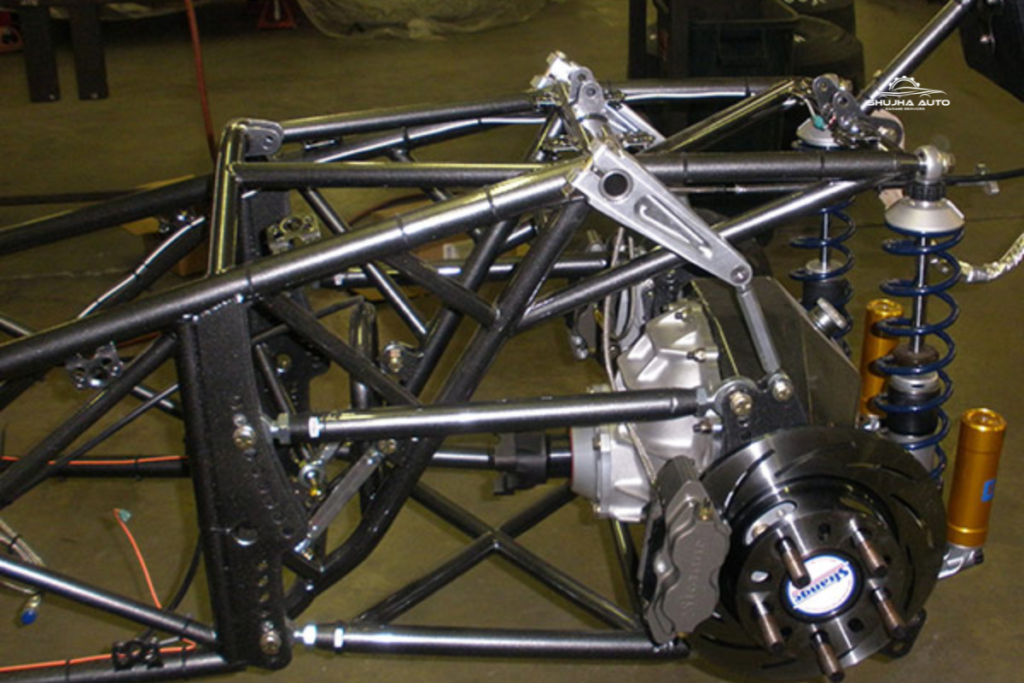
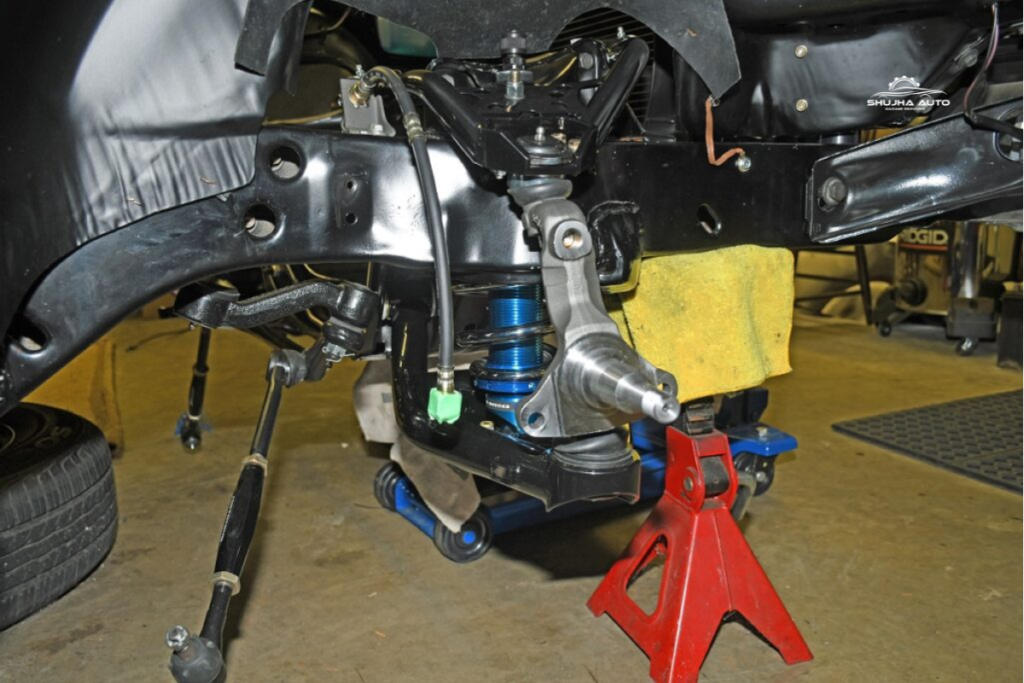
In technical terms, the control arm (sometimes called an A-arm because of its shape) is a hinged suspension link. It attaches the wheel hub and steering knuckle to the chassis or subframe of the vehicle. One end connects via a rubber or polyurethane bushing to the frame, allowing the arm to move up and down. The other end connects to the wheel assembly via a ball joint, which allows the wheel to turn left and right.
Most modern cars have two control arms per wheel: an upper and a lower suspension arm. However, many standard passenger vehicles rely primarily on the lower suspension arm to handle the bulk of the work. This arm carries the weight of the vehicle and absorbs all the shocks from potholes, speed bumps, and uneven roads.
Why is it so important?
Without a healthy suspension control arm, your tires would not stay aligned. You would lose steering control, and the ride would become unbearably bumpy. It is a safety-critical component. When a control arm fails while driving, the wheel can literally collapse or shift out of position, leading to a serious accident.
How the Suspension Control Arm Works
To truly appreciate the importance of this part, you need to understand how it interacts with the rest of the car. The suspension system is a symphony of parts working together. The control arm is like the conductor.
When you drive over a pothole, the wheel moves upward. The lower suspension arm pivots on its bushings to allow that upward motion without transferring all the violent force directly into the cabin of the car. The bushings act as cushions. Meanwhile, the ball joint at the other end allows the wheel to turn when you steer.
If the control arm is bent, the bushings are cracked, or the ball joint is loose, the entire geometry of the wheel changes. Your tires will start to wear unevenly, the car will pull to one side, and your fuel efficiency will drop because the engine is working harder to push a misaligned wheel down the road.
Location: Please Visit Our Shujha Auto Garage
Common Signs of a Failing Suspension Control Arm
As a driver, you don’t need to be a mechanic to know when something is wrong. Your car will almost always give you warning signs. Ignoring these signs is dangerous. If you notice any of the following symptoms, it is time to bring your vehicle to a professional—preferably here at Shujha Auto Garage Services—for a thorough inspection.
1. Clunking or Knocking Noises
This is the most common symptom. If you hear a loud clunk, knock, or rattle when driving over bumps, turning corners, or even braking suddenly, it is often a sign that the control arm bushings are worn out or that the ball joint has excessive play. Because the metal is hitting against metal, the sound is usually unmistakable.
2. Steering Wheel Vibration
If your steering wheel shakes or vibrates, especially when accelerating or braking, it could be due to a worn suspension control arm. When the arm is loose, the wheel cannot maintain a fixed position, causing a vibration that travels up the steering column.
3. Uneven Tire Wear
Take a look at your front tires. If you notice that the inside edge of the tire is worn down significantly more than the outside, or if the tread looks choppy or scalloped, your control arm might be failing. A bad arm prevents the wheel from staying perpendicular to the road, causing it to drag slightly.
4. Pulling to One Side
If you are driving on a straight, flat road and you have to constantly hold the steering wheel to the left or right to stay in your lane, your alignment is off. While alignment issues can be caused by several factors, a bent or broken control arm is a frequent culprit.
5. Poor Handling
Does your car feel loose or floaty? Does it sway excessively when you take a turn? A healthy control arm keeps the vehicle stable. When it fails, the car feels unstable, especially at highway speeds.
The Anatomy of a Car Control Arm Replacement
If you have been told that you need a car control arm replacement, you might be worried about what that entails. Let me walk you through the process. At Shujha Auto Garage Services, we believe in transparency. We want you to know exactly what we are doing to your vehicle.
A car control arm replacement is not just about unbolting the old part and bolting on a new one. It is a precise job that affects the safety and alignment of your vehicle.
Step 1: Inspection and Diagnosis
Before any work begins, we lift the vehicle and perform a full suspension inspection. We check the bushings for cracks or tears, inspect the ball joint for play, and look for any signs of bending or rust damage. We also check the surrounding components, like the tie rods and sway bar links, because if the control arm has failed, it often puts extra stress on these parts.
Step 2: Removing the Wheel and Components
We remove the wheel to access the suspension assembly. Depending on the vehicle, we may need to disconnect the stabilizer bar link, the steering knuckle, and the ball joint. We also have to remove the bolts holding the control arm to the chassis.
Step 3: Removing the Old Suspension Control Arm
Sometimes, the bolts are rusted or seized. This is common in areas where roads are salted in the winter. We use specialized tools to remove these bolts without damaging the subframe of the car. Patience is key here. Rushing this step can lead to damage that costs more to fix.
Step 4: Installing the New Lower Suspension Arm
We install the new lower suspension arm using manufacturer-grade parts. We never use cheap, low-quality arms because they wear out quickly and compromise safety. We ensure all bushings are properly seated and torque all bolts to the manufacturer’s exact specifications. Over-tightening or under-tightening can lead to premature failure.
Step 5: Reassembly and Wheel Alignment
Once the new arm is in place, we reassemble the suspension and install the wheel. However, the job is not complete yet. Whenever you replace a suspension control arm, the alignment of your wheels changes. You absolutely must get a wheel alignment after this repair. If you skip the alignment, you will experience uneven tire wear and poor handling, negating the benefits of the new part.
What Happens if an Issue is Found?
This is one of the most common questions we get at Shujha Auto Garage Services. You bring your car in for a routine oil change or a strange noise, and we find an issue with your suspension control arm. Naturally, you might feel worried or anxious about the cost and the safety implications.
Let me explain what happens if an issue is found during an inspection.
First, we stop working on any other aspect of the vehicle to ensure we have your full attention regarding the safety concern. We believe that communication is key. We will bring you into the workshop (if you are comfortable) or show you a video or photo of the problem. We want you to see exactly what we see.
If we find that the lower suspension arm is damaged or the bushings are failing, we will explain three things to you:
- The Severity: Is this a critical safety issue that needs immediate attention, or is it something that you can monitor for a few more weeks? Usually, if the ball joint is loose or the arm is bent, it is a safety hazard that should be addressed immediately.
- The Solution: We will outline exactly what needs to be replaced. Sometimes only one arm is damaged. However, we often recommend replacing control arms in pairs (both front left and front right) if the vehicle has high mileage. This ensures balanced handling and safety.
- The Timeline: We will tell you how long the repair will take. Typically, a car control arm replacement can be completed within a few hours, depending on the vehicle make and model.
We never pressure you into a repair. Our job is to inform you of the risks so you can make an educated decision. If you decide to proceed, we get to work immediately. If you need time to think about it, we will safely reassemble your vehicle and advise you on how to drive safely in the meantime (such as avoiding highways or potholes).
Addressing the Financial Side: Are There Any Hidden Fees or Charges?
I understand that money is a concern for everyone. When you bring your car to a garage, you want to know exactly what you are paying for. There is nothing worse than receiving a final bill that is significantly higher than the initial quote.
At Shujha Auto Garage Services, we pride ourselves on honesty and transparency. But let’s talk about the industry as a whole so you know what to look for.
Are there any hidden fees or charges?
In a reputable garage, there should not be. However, there are legitimate reasons why a final cost might differ from the initial estimate. Here is how we handle it to ensure no surprises.
The Cost of Parts
When we quote you for a lower suspension arm replacement, we quote based on the parts we intend to use. However, sometimes when we disassemble the suspension, we discover that other parts are also worn out. For example, if the control arm bushings are shot, the bolt that holds them in place might be rusted and seized. In some cases, we cannot remove the old arm without damaging the bolt or the subframe bracket.
If we encounter this, we do not simply proceed and add it to the bill. We stop, call you, and explain the situation. We show you the problem. We then give you a new estimate for the additional part (like a new bolt or a repair kit) and ask for your approval before continuing. You will never be charged for a repair you did not authorize.
Alignment Fees
As mentioned earlier, a wheel alignment is mandatory after a car control arm replacement. Sometimes, newer drivers are unaware of this. When we provide a quote for the suspension work, we always include the alignment in the quote so you see the full picture upfront. There is no “surprise” alignment fee added after the work is done, unless you specifically ask us to hold off on it (which we do not recommend).
Shop Supplies and Disposal
Some garages add small fees for shop supplies (like rags, lubricants, and cleaning agents) or for the disposal of old parts and fluids. We believe in keeping things simple. Our pricing is straightforward. The price we agree on is the price you pay, plus the appropriate taxes. We do not add extra percentage-based “shop fees” to inflate the bill.
To directly answer the question: No, there are no hidden fees or charges at Shujha Auto Garage Services. We believe that trust is the most important currency in the auto repair business. If a problem arises during the repair that adds cost, we communicate with you before moving forward.
The Free Diagnostic Check: What’s Included?
One of the services we are most proud of at Shujha Auto Garage Services is our comprehensive diagnostic check. We offer this to help drivers understand the health of their vehicle without any financial risk.
If you suspect an issue with your suspension, or if you just want peace of mind, bringing your car in for a diagnostic check is the smartest move. But you might be wondering, what’s included in the free diagnostic check?
It is important to note that a “free diagnostic check” can vary wildly from garage to garage. Some places will simply walk around your car and look at the tires. We do things differently.
When you come to us for a free diagnostic check related to suspension, steering, or handling, here is exactly what we do:
1. Visual Undercarriage Inspection
We lift your vehicle on a professional hoist. Our technicians perform a thorough visual inspection of the entire undercarriage. We look for:
- Leaks: We check the shock absorbers and struts for oil leaks.
- Bushings: We inspect every rubber bushing on the suspension control arm and related components for cracking, splitting, or deterioration.
- Ball Joints: We visually inspect the ball joint boots. If the boot is torn, grease leaks out, and dirt gets in, leading to rapid failure.
- Rust and Damage: We look for bent components or excessive corrosion that could compromise structural integrity.
2. Suspension Stress Test
Visual inspection is only half the story. We use a specialized tool to stress test the suspension. This involves prying on the lower suspension arm and other components to check for movement. If a bushing is loose or a ball joint is worn, this test will reveal the play that you cannot see with the naked eye. We also perform a bounce test to check the condition of the shocks and struts.
3. Tire Wear Analysis
We inspect all four tires for signs of uneven wear. As we discussed earlier, uneven wear is a huge indicator of suspension problems. We measure the tread depth and note any patterns, such as feathering, cupping, or excessive inner-edge wear.
4. Road Test (If Necessary)
Sometimes, a problem only shows up when the car is moving. If you are complaining of a vibration, pull, or noise, one of our technicians will take the vehicle for a short road test. We listen for the clunks and feel for the vibrations to help pinpoint the source of the issue.
5. Digital Report and Recommendations
After the inspection, we do not just tell you, You need a new control arm. We explain why. We provide a detailed report, often with photos or videos taken during the inspection, showing you the worn parts. We then prioritize the repairs. We will tell you what needs to be done immediately for safety, what can wait a few months, and what is simply a recommendation for preventive maintenance.
There is no obligation to get the repair done with us after the free check. Our goal is to educate you so you can make the best decision for your safety and your budget.
Lower Suspension Arm vs. Upper Control Arm
When discussing suspension control arm components, it helps to understand the difference between the upper and lower arms.
Lower Suspension Arm
The lower suspension arm is the heavy lifter. In most modern vehicles, particularly front-wheel-drive cars, the lower arm does the majority of the work. It supports the weight of the engine and the car. It is usually larger and more robust than the upper arm. When people talk about a car control arm replacement, they are often referring to the lower arm because it wears out faster due to the stress it endures.
Upper Control Arm
The upper control arm is more common in trucks, SUVs, and older vehicles. It sits above the wheel and works in conjunction with the lower arm to control the wheel’s camber angle (the vertical tilt of the tire). If your vehicle has upper arms, they are also crucial for alignment. However, they typically do not carry the vehicle’s weight, so they sometimes last longer than the lower arms.
If your vehicle uses both, we will inspect both during your free diagnostic check.
The Risks of Ignoring a Bad Suspension Control Arm
I have seen drivers put off suspension repairs for months, hoping the noise will just go away. Unfortunately, suspension problems do not fix themselves. Ignoring a bad suspension control arm leads to a cascade of problems that end up costing far more than the initial repair.
1. Tire Destruction
A bad control arm causes misalignment. If your tires are misaligned, they will wear out in a matter of weeks or months instead of years. High-quality tires are expensive. By ignoring a repair, you might end up spending on new tires prematurely.
2. Damage to Other Suspension Components
When a control arm bushing fails, the metal arm starts moving in ways it shouldn’t. This puts excessive stress on the stabilizer bar links, tie rod ends, and the steering rack. What started as a single control arm issue can quickly become a full front-end rebuild.
3. Braking Issues
Your suspension and brakes work together. When the control arm is loose, the wheel can shift under hard braking. This increases your stopping distance and can cause the car to pull violently to one side during an emergency stop.
4. Complete Failure
In extreme cases, the ball joint can separate completely from the control arm. If this happens while you are driving, the wheel will collapse outward. The tire will jam into the fender, and you will lose all steering ability. This usually results in a crash, damage to the fender, axle, and brake lines, and a tow truck bill. This is a scenario we want to help you avoid.
Why Choose Shujha Auto Garage Services for Your Car Control Arm Replacement?
You have many choices when it comes to auto repair. You might be tempted by the low price of a chain shop or the convenience of a mobile mechanic. However, when it comes to something as critical as your suspension, quality matters.
At Shujha Auto Garage Services, we approach every repair with a philosophy of precision and care.
Experienced Technicians
Suspension work is not just about changing parts. It requires experience to diagnose the exact source of the noise. A clunk could be a control arm, a sway bar link, or a strut mount. Our technicians have years of experience differentiating between these noises. We ensure that we replace the right part the first time, saving you money and frustration.
Quality Parts
We do not believe in using the cheapest parts available. When we perform a car control arm replacement, we use high-quality, OEM-grade or better aftermarket parts. These arms come with durable bushings and ball joints that are designed to last. A cheap arm might save you today, but you will be back in six months for another replacement.
State-of-the-Art Equipment
We use modern alignment machines and specialized suspension tools. This ensures that when we install your new lower suspension arm, we can get your car’s alignment back to factory specifications. A proper alignment ensures your new tires last long and your car drives straight.
Customer Education
We believe that an informed customer is a happy customer. We take the time to explain what happens if an issue is found during our inspection. We walk you through the process so you feel confident in the repair. We answer your questions about costs, timelines, and what’s included in the free diagnostic check.
Transparent Pricing
We know you want to know are there any hidden fees or charges. With us, the answer is no. We provide upfront estimates. If the scope of work changes, we call you first. No surprises. Just honest work.
Frequently Asked Questions
To wrap up this guide, let me answer some of the most common questions I hear from drivers at Shujha Auto Garage Services.
How long does a suspension control arm last?
There is no set mileage for control arms. They are designed to last a long time, often 100,000 miles or more. However, driving habits and road conditions play a huge role. If you frequently drive on rough roads, dirt roads, or hit potholes often, the bushings and ball joints will wear out faster.
Can I drive with a bad control arm?
Technically, yes, you can drive. But you are taking a significant risk. If the control arm is simply making noise, you might be able to drive for a short while. However, if the ball joint is loose or the arm is bent, you are endangering yourself and others. If you suspect a problem, get it checked immediately.
Should I replace both control arms at the same time?
We usually recommend replacing control arms in pairs (both front left and front right). If one arm has failed due to wear and tear, the other side is likely close to failing as well. Replacing both ensures balanced handling and saves you labor costs in the long run, as you only pay for one alignment instead of two.
Is a wheel alignment really necessary after replacement?
Yes. This is non-negotiable. Replacing a control arm changes the angles of your wheels. If you do not get an alignment, your tires will wear out unevenly, and your car may pull to one side. It is a small investment to protect your new parts and your tires.
How much does a car control arm replacement cost?
The cost varies depending on the make and model of your vehicle. Luxury cars and large SUVs often have more expensive parts and take more labor time. The best way to get an accurate price is to bring your car in for a free diagnostic check. We will inspect the specific issue and provide a firm quote before any work begins.
Conclusion: Take Control of Your Safety
Your car’s suspension is the foundation of your driving experience. It determines how comfortable your ride is, how well you handle emergencies, and how long your tires last. The suspension control arm—specifically the lower suspension arm—is a vital piece of that foundation.
Ignoring the warning signs like clunking noises, uneven tire wear, or steering vibrations is not worth the risk. The cost of a car control arm replacement is a small price to pay compared to the cost of a major accident or a complete suspension collapse.
At Shujha Auto Garage Services, we are here to help you navigate these repairs with confidence. We invite you to experience the difference that honesty, quality, and expertise make.
If you think your vehicle might have a suspension issue, or if you simply want peace of mind, come see us. Take advantage of our comprehensive inspection. Remember, we offer a thorough diagnostic check where we will show you exactly what is happening under your car.
You now know what happens if an issue is found—we will communicate clearly and give you the information you need. You know that with us, there are no hidden fees or charges—just transparent pricing. And you know exactly what’s included in the free diagnostic check—a full undercar inspection, stress test, and digital report.Don’t let a small problem turn into a dangerous, expensive nightmare. Keep your family safe, keep your car handling properly, and keep your tires rolling smoothly. Visit Shujha Auto Garage Services today. Let us take care of your car so you can drive with peace of mind.