


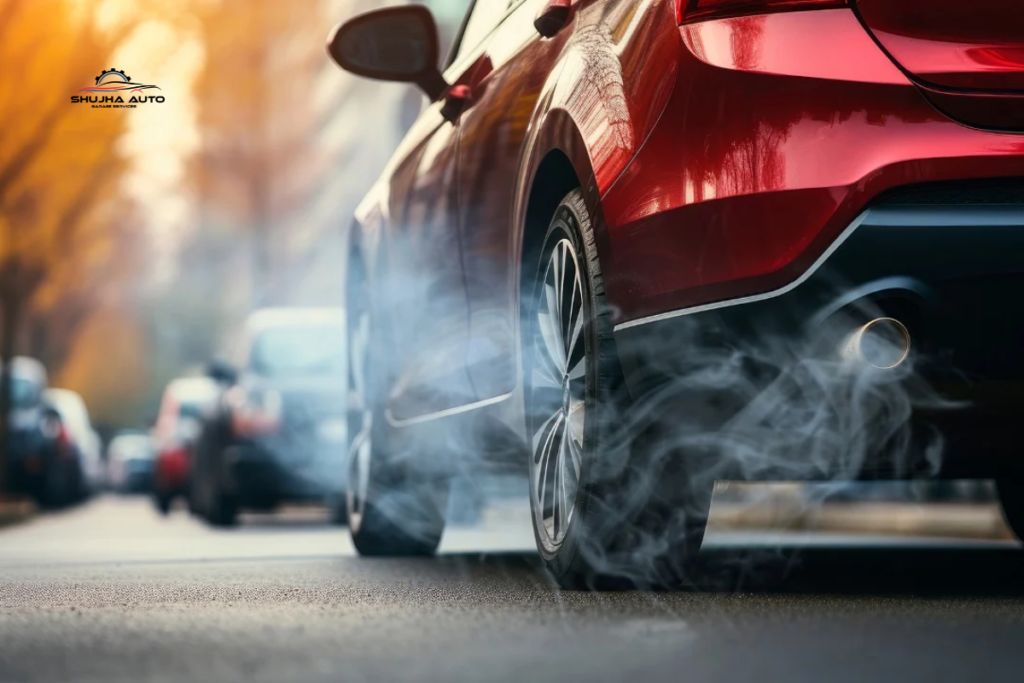
Understand your car emission system: how it works, maintenance tips, and why it’s essential for performance, fuel economy, and reducing pollution.
Let’s face it: for most of us, our car’s emission system is one of those mysterious, unseen networks we only think about when a warning light glares from the dashboard. But this complex system plays a starring role in your vehicle’s health, your wallet’s wellbeing, and our planet’s environment. Understanding it doesn’t require a degree in mechanical engineering—just a little time and a clear explanation. That’s what this guide is for. We’ll walk through the entire system, piece by piece, using simple words and clear examples. And remember, when the jargon gets thick or a warning light shines bright, the friendly, expert team at Shujha Auto Garage Services is always here to translate, diagnose, and help.
Why Should You Care About Emissions?
Before we dive under the hood, let’s talk about the why. Your car’s engine is a powerful machine that burns fuel to create energy. This process, called combustion, produces power—but also byproducts. These byproducts, if released directly into the air, are harmful pollutants. Decades ago, cars did just that, contributing significantly to smog and health problems.
The modern Vehicle Emissions System is a collection of parts and technologies designed to clean up those byproducts before they leave your car. It turns harmful gases into less harmful ones, captures unburned fuel, and ensures your engine runs as cleanly and efficiently as possible. It’s a win for your engine’s performance, a win for your fuel economy, and a win for the air we all breathe.
Location: Please Visit Our Shujha Auto Garage
The Main Players: Parts of Your Car Emission System
Think of the system as a cleanup crew working along your Automotive Exhaust System. Here’s who they are and what they do.
- The Exhaust Manifold & The Exhaust System Itself
The journey begins at the exhaust manifold. This is a set of pipes bolted directly to your engine’s cylinder head. It collects the hot, spent gases from each cylinder and funnels them into one pipe. From there, the gases begin their trip through the rest of the Automotive Exhaust System—a series of pipes and components that will treat and quiet the gases before they exit as Tailpipe Emissions.
- The Oxygen (O2) Sensors
These are the system’s snitches—in a good way! Positioned before and after the catalytic converter, O2 sensors constantly monitor how much oxygen is in the exhaust gas. They send this data to your car’s computer (the Engine Control Unit or ECU). The ECU uses this info to adjust the air-fuel mixture in real-time, making sure it’s just right for efficient combustion and effective cleaning downstream.
- The Catalytic Converter (The Cat)
This is the star of the show, the magic box. It looks like a bulge in your exhaust pipe. Inside, it’s packed with a honeycomb structure coated with precious metals like platinum, palladium, and rhodium. As hot exhaust gases pass over these metals, they trigger chemical reactions.
- They convert harmful carbon monoxide (a poisonous gas) into carbon dioxide.
- They turn unburned hydrocarbons (raw fuel) into water vapor and carbon dioxide.
- They reduce nitrogen oxides (a key component of smog) into harmless nitrogen and oxygen.
A well-functioning cat is crucial for keeping your Tailpipe Emissions clean and legal.
- The Exhaust Gas Recirculation (EGR) Valve
This clever component helps fight a specific pollutant: nitrogen oxides (NOx), which form under extremely high combustion temperatures. The EGR valve takes a small amount of exhaust gas and routes it back into the engine’s intake manifold. This inert gas doesn’t burn, so it lowers the combustion temperature inside the cylinders, dramatically reducing the formation of NOx.
- The Positive Crankcase Ventilation (PCV) Valve
Engines have a small amount of blow-by—where combustion gases sneak past the piston rings into the crankcase (where the oil lives). The PCV valve siphons these unburned fuel vapors and gases from the crankcase and redirects them back into the intake manifold to be burned in the cylinders. This prevents pressure buildup and stops oily, dirty vapors from being released into the atmosphere.
- The Evaporative Emissions Control (EVAP) System
Have you ever smelled gasoline near a parked car? That’s evaporating fuel, which is a pollutant. The EVAP system seals the fuel system to prevent these vapors from escaping. It consists of a charcoal canister (which absorbs and stores fuel vapors from the gas tank), a series of valves, and hoses. When the engine is running, the system purges these stored vapors into the engine to be burned off.
- The Diesel Particulate Filter (DPF) & Selective Catalytic Reduction (SCR)
For diesel owners, there are two extra key players. The DPF traps soot particles from the exhaust. Over time, it goes through a regeneration cycle to burn off this soot. The SCR system injects a fluid (often called Diesel Exhaust Fluid or DEF) into the exhaust stream to break down NOx into harmless nitrogen and water.
How It All Works Together: A Simple Walkthrough
Let’s follow a molecule of exhaust on its journey:
- It’s created in the engine cylinder during combustion.
- It gets collected by the exhaust manifold and sent down the pipe.
- An O2 sensor near the manifold reads its oxygen content and reports to the computer.
- It might be diverted by the EGR valve to be reused for cooling.
- It enters the catalytic converter, where the magic metals transform it into a less harmful gas.
- Another O2 sensor after the cat checks the converter’s work.
- Finally, it flows through a muffler to reduce noise and exits your car as the final Tailpipe Emissions.
Meanwhile, the PCV valve is recycling crankcase gases, and the EVAP system is ensuring zero fuel vapors escape from the tank. It’s a symphony of components working in harmony, all managed by your car’s sophisticated computer.
Common Emission System Problems and Warning Signs
No system lasts forever. Parts wear out, sensors get lazy, and components get clogged. Here’s what to watch (and listen and smell) for:
- The Dreaded Check Engine Light (CEL): This is the most common sign. While the CEL can mean many things, emissions problems are a prime culprit. A solid light suggests a need for investigation soon; a flashing light demands immediate attention.
- Rotten Egg Smell: A strong sulfur smell (like rotten eggs) often points to a failing catalytic converter. The sulfur in fuel isn’t being converted properly.
- Poor Fuel Economy: If your gas mileage suddenly drops, your engine might be running inefficiently due to a faulty O2 sensor, a stuck EGR valve, or another emission component.
- Rough Engine Performance: Rough idling, stalling, hesitation, or loss of power can all be linked to issues like a clogged EGR valve or a bad PCV valve.
- Failed Emissions Test: In areas that require smog checks, a failing grade is a direct message that your Vehicle Emissions Control System needs help.
- Loud Rumbling Noises: A rumbling from under your car could indicate a hole in your exhaust system or a broken-down catalytic converter internals.
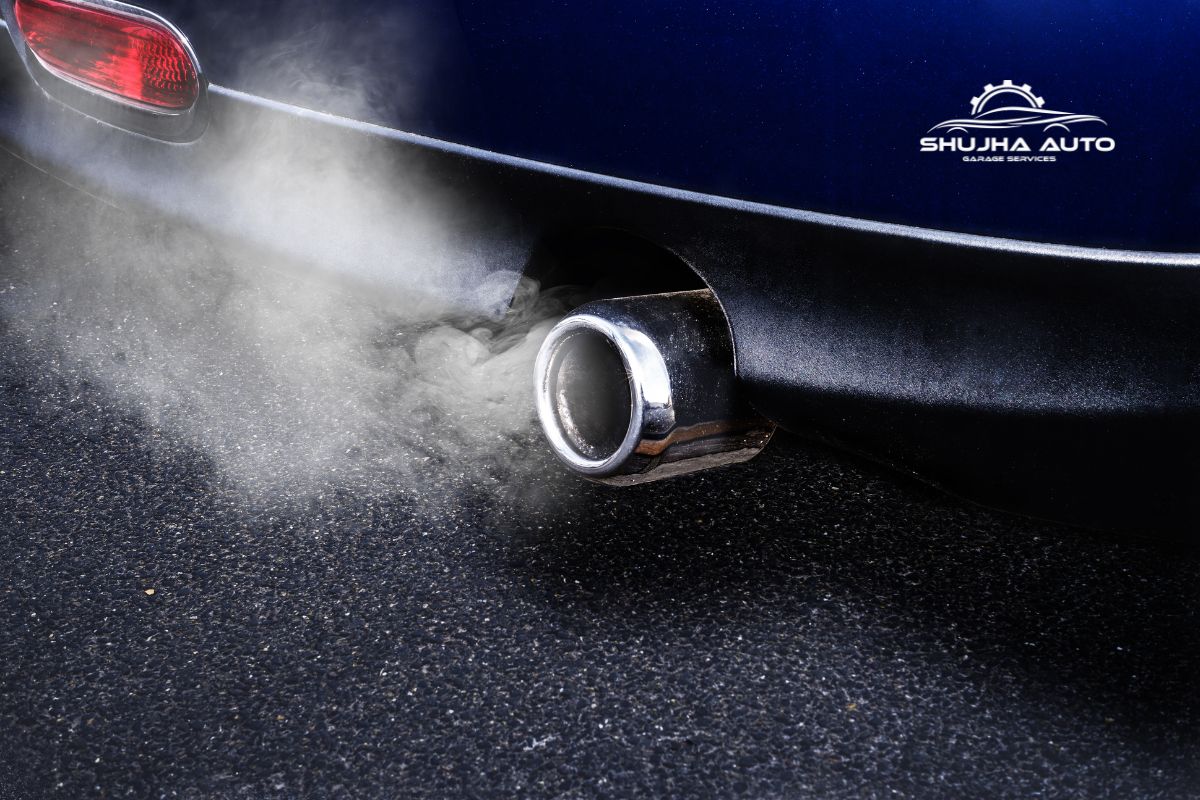
- Excessive Smoke from the Tailpipe: While some vapor is normal, blue smoke (burning oil), black smoke (too much fuel), or white smoke (coolant leak) are serious signs of trouble.
What Happens If an Issue Is Found?
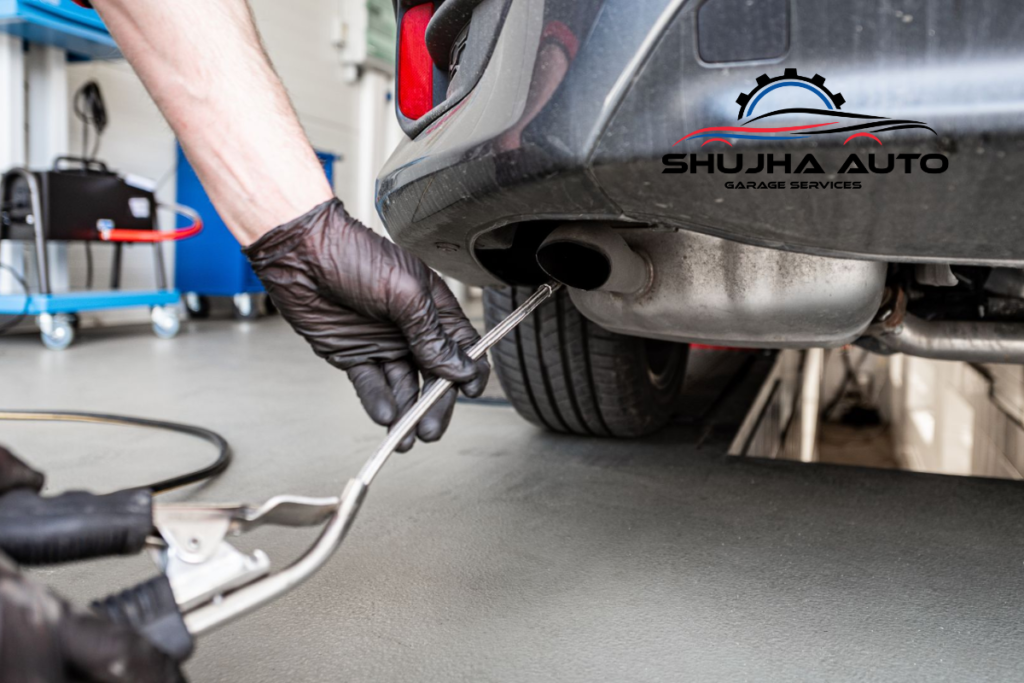
This is where a trusted mechanic becomes your best ally. Let’s say you bring your car to Shujha Auto Garage Services with a Check Engine Light. We’d hook up a professional scanner to read the diagnostic trouble codes (DTCs) stored in your car’s computer. These codes point us in the right direction, like P0420 – Catalyst System Efficiency Below Threshold.
But a code is a starting point, not a verdict. Our technicians don’t just swap parts based on a code. We perform thorough diagnostics. This might include:
- Visual inspection of all hoses, pipes, and connections for leaks or damage.
- Live data monitoring to see what your O2 sensors are reporting in real-time.
- Testing components like the EGR valve or PCV valve for proper function.
- Checking for exhaust backpressure to see if the catalytic converter is clogged.
Once we pinpoint the exact failed component—say, a downstream O2 sensor has died—we explain it to you in plain language. We’ll tell you:
- What the faulty part does.
- Why it needs to be replaced.
- What will happen if you don’t fix it (e.g., worse fuel economy, potential damage to the catalytic converter).
- Your repair options and the associated costs.
We believe an informed customer is a confident customer. There’s no pressure, just clear, honest advice to get your car’s emission system—and your peace of mind—back in top shape.
The Critical Question: Maintenance and Service
Your emission system isn’t really a maintenance-free zone. While many components are designed to last for years, they thrive under a well-maintained car.
- Follow Your Service Schedule: This is the #1 rule. Regular oil changes with the correct oil, timely air filter replacements, and using the right fuel keep your engine running cleanly, putting less stress on the emission system.
- Listen to Your Car: Address small problems before they become big, expensive ones. That strange smell or slight drop in mileage is your car talking to you.
- Don’t Ignore the Check Engine Light: It’s not just a suggestion. Prolonged driving with a faulty emission component can lead to more damage. For example, a bad spark plug (which can trigger an emission code) can cause unburned fuel to overheat and destroy the expensive catalytic converter.
- Use Quality Fuel: Good quality fuel from reputable stations has proper detergents and the right composition, helping keep your fuel injectors and combustion chambers clean.
- Get Regular Inspections: Having a professional eye look over your system during routine service can catch small leaks or aging components.
What’s Included in the Free Diagnostic Check?
At Shujha Auto Garage Services, we know that a Check Engine Light can cause anxiety. That’s why we offer a Free Preliminary Diagnostic Check to give you answers, not guesses. Here’s exactly what’s included:
- Plugging in the Professional Scanner: We’ll read all diagnostic trouble codes from your vehicle’s computer.
- Clear Code Explanation: We’ll translate those codes into simple English, explaining what system or component is reporting a problem.
- Basic Visual Inspection: A quick look under the hood and under the car for obvious issues like disconnected hoses, damaged wires, or exhaust leaks near the reported system.
- Verification of the Light: We’ll ensure the light is on for a current problem and not an old, residual code.
- A Clear, No-Obligation Discussion: We’ll sit down with you, explain our findings, and outline the *next steps* for a full diagnosis if needed. This free check is designed to give you information and a potential path forward, completely free of charge.
Are There Any Hidden Fees or Charges?
We believe transparency is the foundation of trust. There are no hidden fees or charges at Shujha Auto Garage Services. After the free preliminary diagnostic check, if further testing is required to pinpoint the exact faulty part (like live data logging or component-specific tests), we will always provide a clear, upfront estimate for that diagnostic time. You will approve any and all work—and its associated cost—before we pick up a single tool. Whether it’s a simple O2 sensor replacement or a more complex catalytic converter issue, you will see the breakdown: parts, labor, and taxes. No surprises. Ever.
The Bigger Picture: Emissions and the Environment
Your car’s emission system is your personal contribution to cleaner air. Every time you maintain it, you’re:
- Reducing Smog: By controlling hydrocarbons and NOx, you’re fighting the haze that hangs over cities.
- Limiting Greenhouse Gases: A well-tuned system helps your car burn fuel completely, optimizing CO2 output for the distance traveled.
- Protecting Health: Pollutants like carbon monoxide and particulate matter are linked to respiratory and heart problems. A functioning system keeps these in check.
- Conserving Resources: A clean engine is an efficient engine, meaning you use less fuel to go the same distance.
When to Call the Professionals
While this guide aims to educate, the Vehicle Emissions Control System is complex and interconnected. Here’s when you should definitely seek expert help:
- The Check Engine Light is on or flashing.
- You fail an official emissions test.
- You notice any of the warning signs mentioned (smells, smoke, poor performance).
- You hear a new, loud exhaust noise.
- It’s time for your regular service, and you want a comprehensive check-up.
At Shujha Auto Garage Services, we specialize in making the complex simple. Our certified technicians are experts in the intricate dance of the modern emission system. We use the latest tools and genuine or high-quality parts to ensure your repair is done right the first time, restoring your car’s efficiency, performance, and environmental friendliness.
Conclusion: Knowledge is Power (and Cleaner Air)
Understanding your car’s emission system demystifies that Check Engine Light and empowers you to be a better car owner. It’s not just about passing a test; it’s about ensuring your vehicle runs efficiently, saves you money on fuel, and does its part for our community’s air quality. Remember, this system is a network of hard-working components that deserve attention and care.
We hope this guide has been helpful. Bookmark it as a reference. Share it with a friend. And when the time comes that your car needs a knowledgeable, honest, and transparent partner to care for its emission system, you know where to go. The team at Shujha Auto Garage Services is always here, ready to help you breathe easier, knowing your car is running clean and strong.
Drive Smart. Drive Clean. Drive with Confidence.