

Car Braking System Explained in simple terms, covering how brakes work, main components, types, and tips to keep your car safe on the road.
Your car is a symphony of complex parts working in harmony, but if you had to choose the most critical section of that orchestra, it would undoubtedly be the braking system. It’s the silent guardian that transforms a powerful machine into a safe, controllable vehicle with the simple press of your foot. Understanding how car braking system works isn’t just mechanic’s knowledge—it’s essential information for every driver who values safety.
At its heart, braking is about energy conversion. When your car is moving, it has kinetic energy (the energy of motion). The braking system’s sole job is to convert that kinetic energy into thermal energy (heat) through friction, bringing you to a safe and controlled stop. It’s a remarkable process that happens seamlessly hundreds of times a day, yet we rarely give it a second thought… until something feels off.
We’ll explore the key car brake system components, settle the disc brake vs drum brake debate, and explain why regular care is non-negotiable. And because knowledge should lead to action, we’ll also touch on what to do when your brakes need expert attention at a trusted local garage like ours, Shujha Auto Garage Services.
The Basic Principle – How Does Your Car Stop?
Let’s start with the simple physics you experience every time you drive. You press the brake pedal. Your car slows down. But the journey from your foot to the wheel is a masterpiece of hydraulic engineering.
Imagine a closed container full of water with a piston at each end. If you push one piston, the force is transmitted through the fluid and pushes the other piston. Your car’s braking system works exactly on this principle, but instead of water, it uses special brake fluid. This is called a hydraulic system, and it’s powerful because it multiplies force.
When you press the brake pedal, you’re actually pushing a piston in the master cylinder, which is filled with brake fluid. This action creates pressure in the brake lines (strong hoses and metal pipes). That pressure travels instantly to each wheel, where it activates the components that create the friction needed to stop. This design ensures that the force from your foot is evenly distributed to all four wheels, giving you a balanced, stable stop.
Car Brake System Components – Meet the Team
Think of your braking system as a team where every player has a vital role. Here’s a breakdown of the key car brake system components:
- Brake Pedal: The only part you directly interact with. It’s a lever that multiplies your foot’s force before it even reaches the master cylinder.
- Master Cylinder: The heart of the hydraulic system. When you press the pedal, the master cylinder’s pistons push brake fluid into the lines. Most modern cars have a dual-circuit system here—essentially a backup plan. If one circuit fails (say, due to a leak), the other will still provide braking power to at least two wheels.
- Brake Fluid & Lines: The lifeblood and arteries of the system. Brake fluid is specially formulated to withstand high temperatures without boiling (which would create dangerous air bubbles) and to remain effective in cold weather. The lines are a mix of sturdy steel tubing and flexible hoses to connect the fixed chassis parts to the moving wheels.
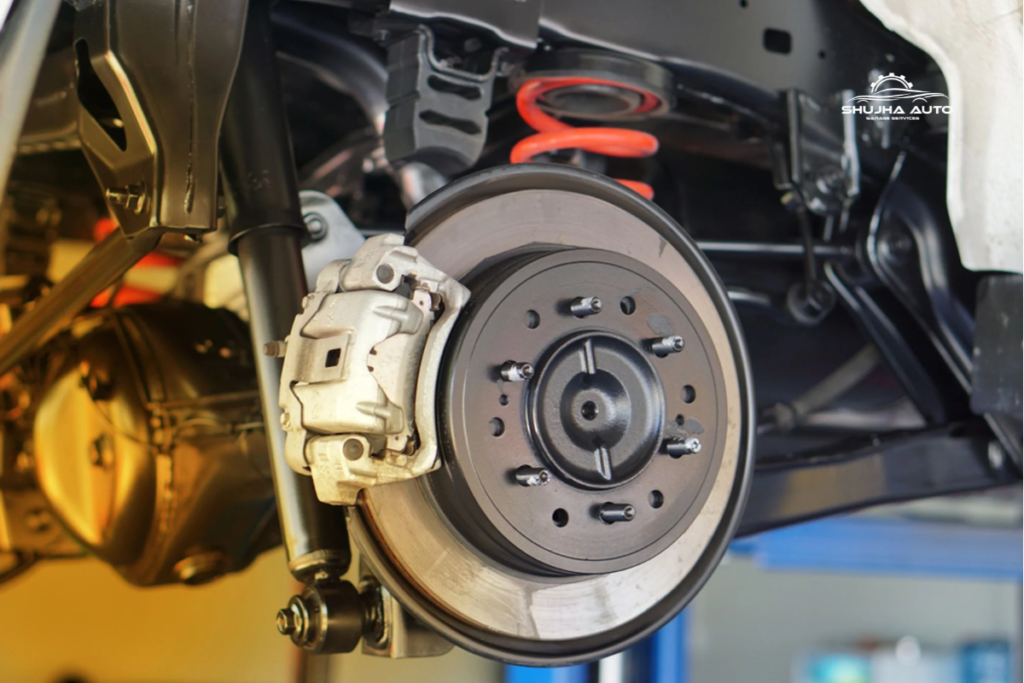
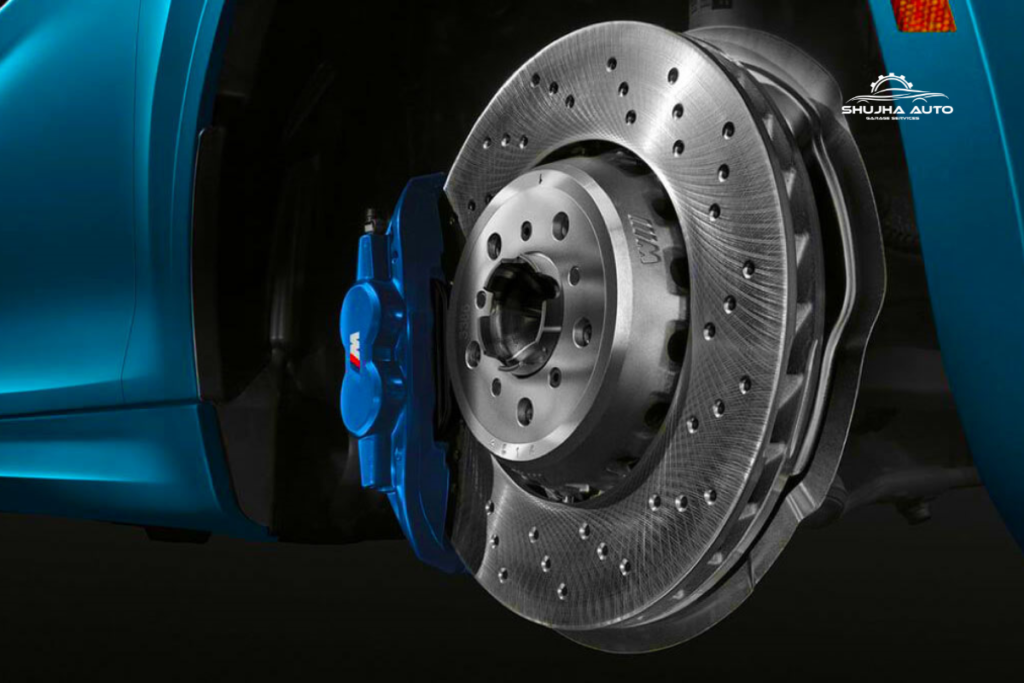
- Brake Calipers, Pistons, and Pads (for Disc Brakes): At each wheel with a disc brake, you’ll find a caliper, which looks like a clamp. The pressurized brake fluid pushes pistons inside the caliper. These pistons then squeeze a pair of brake pads—which have friction material bonded to a metal backing plate—against both sides of a spinning brake disc (or rotor). This squeezing action is what creates the friction to stop your car.
- Brake Wheel Cylinders, Shoes, and Drums (for Drum Brakes): In this older but still reliable design, a hollow brake drum rotates with the wheel. Inside it, curved brake shoes lined with friction material are mounted on a backing plate. When you press the pedal, pressurized fluid pushes wheel cylinders, which press the shoes outward against the inner surface of the drum, creating friction.
- Brake Discs (Rotors) and Drums: These are the rotating surfaces that the friction material presses against. Discs are flat, shiny, and visible behind your wheel. Drums are bowl-shaped and enclose the shoes internally. They must absorb and dissipate massive amounts of heat.
- Anti-lock Braking System (ABS): A crucial electronic safety component. Sensors at each wheel monitor if a wheel is about to lock up and stop rotating during hard braking. If it senses lock-up, the ABS control unit rapidly pulses the brakes (dozens of times per second) to maintain traction and steering control. You’ll feel this as a pulsation or chatter in the brake pedal during emergency stops—this is normal and means the system is working.
- Parking Brake: A separate, usually mechanical system (using cables or a small electronic motor) that locks the rear brakes in place to prevent the car from rolling when parked.
Location: Please Visit Our Shujha Auto Garage
Disc Brake vs Drum Brake – Understanding the Differences
The disc brake vs drum brake discussion is common in automotive circles. Most modern cars use a combination: disc brakes on the front and sometimes drums on the rear. Why? Let’s compare.
Disc Brakes: The Modern Performance Choice
- How they work: As described, a caliper squeezes pads onto a rotor.
Advantages:
- Better Heat Dissipation: The rotor is out in the open air, allowing heat to escape quickly. This reduces brake fade (loss of stopping power due to overheating).
- Superior Stopping Power: Generally provides more consistent and powerful braking.
- Self-Cleaning: Debris and water are more easily thrown off the exposed rotor.
- Easier Inspection: You can often see the pad thickness through the wheel spokes.
- Disadvantages: Typically more expensive to produce and replace. Can be more prone to noise under certain conditions.
Drum Brakes: The Economical and Reliable Workhorse
- How they work: Shoes expand outward to press against the inner surface of a drum.
Advantages:
- Cost-Effective: Cheaper to manufacture and maintain for certain applications.
- Longer-Lining Life: Shoe linings often last longer than disc brake pads.
- Integrated Parking Brake: It’s simpler to build the parking brake mechanism into a drum setup.
- Enclosed Design: Protects components from direct exposure to dirt and rust from road salt.
Disadvantages:
- Heat Trapping: The enclosed design traps heat, leading to faster fade during repeated hard stops.
- Less Effective When Wet: Water can get trapped inside, reducing effectiveness until friction dries it out.
- Complex Servicing: Spring mechanisms inside can be trickier to service than a disc brake caliper.
Why the Mix? During braking, a car’s weight shifts forward. The front brakes handle up to 70-80% of the stopping force, generating tremendous heat. That’s why high-performance disc brakes are almost always used on the front axle. The rear brakes do less work, making cost-effective drum brakes a sensible choice for many economy-oriented vehicles, though many modern cars now feature discs all around for consistent performance and aesthetics.
Why Your Braking System Matters More Than Anything Else
It’s tempting to think of maintenance in terms of what keeps the car running—oil changes, fuel, batteries. But what good is a running car that can’t stop? Your braking system is your primary active safety feature. It’s the difference between a near-miss and a collision, between control and a skid.
- Safety, Plain and Simple: This is the overwhelming reason. A well-maintained system ensures your stopping distance is as short as the manufacturer intended.
- Protecting Your Investment: Ignoring brake wear can lead to costly damage. Worn pads can grind into and destroy expensive rotors. Leaking fluid can damage other components.
- Performance and Confidence: Crisp, responsive braking gives you confidence behind the wheel, making driving less stressful and more enjoyable.
- Cost Savings in the Long Run: Catching a worn pad early avoids the cost of rotor resurfacing or replacement. Fixing a minor leak early prevents a total brake failure.
The Warning Signs – Is Your Brake System Trying to Tell You Something?
Your car communicates brake problems clearly. Never ignore these voices:
- The Squeal or Screech: A high-pitched noise when braking often comes from a tiny metal shim called a wear indicator. It’s designed to touch the rotor and squeal when pads are thin, telling you, Schedule service soon!
- The Grind: A harsh, metal-on-metal grinding or growling sound is an emergency. This means the friction material is completely gone, and the metal backing plate is grinding into the rotor. Immediate repair is critical.
- The Pull: If the car pulls to one side when braking, it could mean a stuck caliper, contaminated brake fluid on one side, or uneven pad wear.
- The Pulse: A vibrating or pulsating brake pedal (not to be confused with ABS activation in a panic stop) often indicates a warped rotor that needs resurfacing or replacement.
- The Soft or Spongy Pedal: If the pedal sinks closer to the floor or feels mushy, you may have air in the brake lines (which compresses) or a problem with the master cylinder.
- The Dashboard Light: The brake warning light can illuminate for two reasons: the parking brake is engaged (check this first!) or there’s a fault in the hydraulic system, like low fluid level. The ABS light indicates a problem with the anti-lock system.
What Happens During a Brake Inspection or Repair?
So, you’ve noticed a sign, or it’s just time for your regular check-up. What happens if an issue is found? The process at a professional shop like Shujha Auto Garage Services is methodical and transparent.
- The Initial Check: A technician will often start with a road test to verify the customer’s concern. Then, the car is lifted, and the wheels are removed for a visual inspection.
- The Assessment: The technician measures the thickness of the brake pads and shoes, examines the rotors and drums for scoring, warping, or rust, checks the calipers and wheel cylinders for leaks or sticking, and inspects all brake lines and hoses for cracks, wear, or corrosion. The brake fluid level and condition are also checked (fluid should be changed every 2-3 years as it absorbs moisture).
- The Recommendation: You’ll be presented with a clear report. A good garage will show you the worn parts (or photos of them) and explain what needs to be done and why. They’ll differentiate between what is urgent (safety-critical) and what is advisory (will need attention soon).
- The Repair: With your approval, skilled technicians will replace the worn components. This involves more than just swapping pads. Proper brake service includes cleaning and lubricating slide pins and contact points, inspecting hardware, and often resurfacing or replacing rotors to ensure a smooth, vibration-free braking surface.
- The Final Steps: After reassembly, the technician will pump the brake pedal to restore proper position before a final road test to ensure everything is working perfectly, silently, and without pulling.
Demystifying Garage Services: Transparency You Can Trust
We know that taking your car in for repairs can be stressful. A big part of that stress is fear of the unknown—especially concerning cost. Let’s clear the air on two common questions we hear at Shujha Auto Garage Services.
Are there any hidden fees or charges?
At a reputable garage, the answer should be a clear no. You should receive a detailed estimate before any work begins. This estimate should list:
- The cost of each part (pads, rotors, fluid, etc.).
- The labor time required for the job.
- Any applicable shop supplies or environmental fees.
The final invoice should match the estimate very closely. The only exception is if the technician discovers an unexpected, additional problem while doing the approved work. In that case, the shop should contact you immediately, explain the new issue, and request authorization before proceeding. Never hesitate to ask for a clear breakdown of costs.
What’s included in the free diagnostic check?
Many garages, including ours, offer a free brake check. It’s a valuable service, but it’s important to understand its scope. Typically, a free diagnostic check for brakes is a visual inspection. It includes:
- Measuring the thickness of your brake pads/shoes.
- A visual inspection of the rotors/drums for obvious damage.
- Checking the brake fluid level in the master cylinder.
- Looking for visible leaks at the wheels or along brake lines.
It’s a fantastic way to get a snapshot of your brake health. However, if the problem is intermittent (like a soft pedal only when the car is warm) or related to the internal hydraulics (like a failing master cylinder), a more in-depth diagnosis that may involve specialized tools or a longer road test might incur a fee. A trustworthy shop will always tell you upfront if a deeper diagnosis will cost anything.
Conclusion: Your Safety is a Journey, Not a Destination
Understanding how car braking system works empowers you as a driver. You can now appreciate the incredible engineering in the car brake system components and understand the practical trade-offs in the disc brake vs drum brake setup. More importantly, you can listen to your car and recognize when it’s asking for help.
Your brakes are the most important conversation your car has with the road. Make sure that conversation remains clear, strong, and reliable.
When it’s time to listen to that conversation with expert ears, remember that Shujha Auto Garage Services is here to help. Our commitment is to provide clear explanations, transparent pricing, and quality workmanship because we believe your safety on the road is paramount. We don’t just service brakes; we give you the confidence to stop safely, every single time.
Don’t wait for the grind. Schedule a complimentary visual brake inspection with us today, and drive with the peace of mind that comes from knowing your first line of defense is in perfect health. Your journey to safer driving starts with a simple, honest check.