
ABS Warning Light Meaning explained: learn what the ABS warning light means, common causes, risks, and when to get your braking system checked.
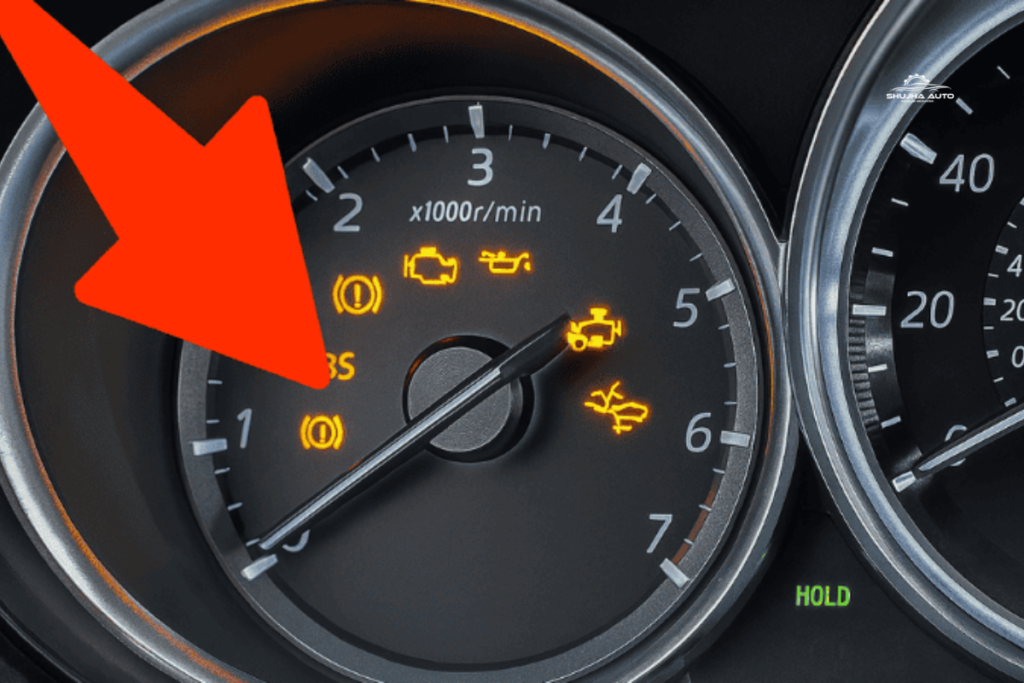
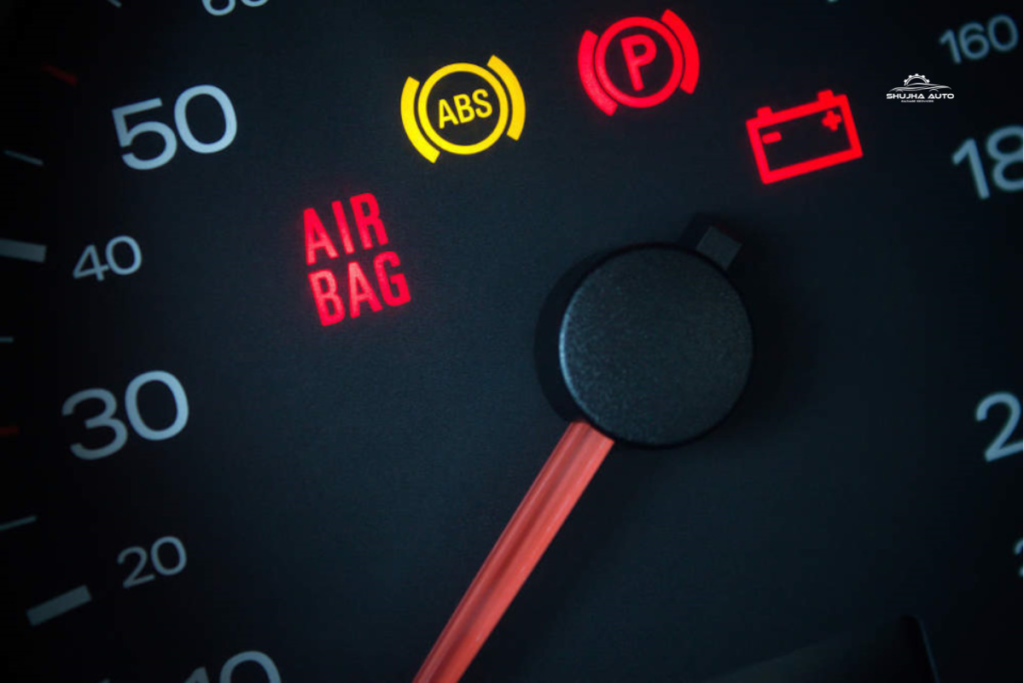
Have you ever been driving along, your mind on the day ahead, when suddenly a little orange or yellow light on your dashboard catches your eye? It looks like the letters ABS inside a circle, often with parentheses around it. Your first thought might be, What does that mean? followed quickly by, Is my car safe to drive?
You’re not alone. The ABS warning light is one of the most common, yet misunderstood, dashboard alerts. At Shujha Auto Garage Services, we believe that an informed driver is a safer, more confident driver. This guide will explain everything in simple, easy-to-understand language. We’ll cover what the ABS system does, why that light comes on, what you should do, and what to expect in terms of repair.
Let’s demystify your dashboard, one light at a time.
What is ABS, Anyway? (The Simple Explanation)
Before we talk about the warning light, we need to understand what it’s monitoring. ABS stands for Anti-lock Braking System.
Think back to a time you slammed on the brakes on a slippery surface, maybe in the rain. In an old car without ABS, the wheels would lock up, stopping completely while the car skids uncontrollably. You lose the ability to steer, and stopping distances can get longer.
The ABS is a brilliant piece of safety technology designed to prevent this. Its sole job is to allow you to steer while you brake hard. It doesn’t necessarily make you stop faster on dry pavement (though it often does on slippery surfaces), but it does give you crucial control.
Here’s how it works in simple terms:
- Sensors at each wheel constantly monitor how fast they are spinning.
- When you brake very hard, a tiny computer (the ABS control module) watches these sensors.
- If it senses a wheel is about to lock up and stop spinning, it instantly pumps the brakes for that specific wheel—hundreds of times per second. You might feel a pulsation or vibration in the brake pedal; that’s normal!
- This rapid pumping prevents lock-up, keeps the wheel turning just enough, and allows you to steer around an obstacle while braking heavily.
So, the ABS warning light is your car’s way of saying, Hey, there’s a problem with this important safety system. It might not work correctly if you need it.
Why Does the ABS Light Come On? The Top Reasons
The light can illuminate in two main ways: briefly at startup, or unexpectedly while driving.
- The Normal Start-Up Sequence:
When you first turn your key to the on position, you’ll see a symphony of lights on your dashboard—the check engine light, airbag light, oil light, and the ABS warning light. This is your car’s computer running a quick self-test. If all systems are a go, all these lights should turn off within a few seconds after you start the engine. This brief illumination is perfectly normal.
- The Light Stays On or Comes On While Driving:
This is the signal that something is wrong. The system has detected a fault. The reasons can range from simple to complex. Let’s break them down from most common to less common.
- A Blown Fuse: Like any electrical system, the ABS has fuses. A simple blown fuse can disable the system and trigger the light. This is often the easiest and cheapest fix.
- Faulty Wheel Speed Sensor: This is arguably the #1 culprit. Each wheel has a sensor that reads its speed. Road grime, metal shavings, or corrosion can damage or clog these sensors. If the ABS module gets a bad or missing signal from even one sensor, it will turn the light on and disable the system.
- Problems with the Tone Ring: Attached to your wheel hub or axle is a notched ring (called a tone ring or reluctor ring) that the speed sensor reads. If this ring becomes cracked, corroded, or clogged with dirt, the sensor can’t get a proper reading.
- Low Brake Fluid Level: Your ABS unit is part of your overall hydraulic brake system. Many cars use the same fluid reservoir. If your brake fluid is low, it can trigger not only the brake warning light but sometimes the ABS light as well. Important: Low brake fluid often means your brake pads are worn down, or there could be a leak. This needs immediate attention.
- Failed ABS Module or Pump: The brain (the module) and the heart (the hydraulic pump) of the system can fail. This is one of the more serious and expensive issues. Sometimes, the module just needs to be reprogrammed or have a poor electrical connection fixed.
- Bad Wiring or Connections: The wires leading to the wheel speed sensors or the module itself can get damaged by road debris, chafed, or corroded. A broken wire means no signal.
- After a Tire Change or Service: If work was recently done on your brakes, wheels, or hubs, a sensor connector might have been accidentally left unplugged or damaged.
Location: Please Visit Our Shujha Auto Garage
What Should You Do If You See the ABS Light?
If the ABS light on while driving appears and stays on, here’s a simple action plan:
- Don’t Panic. Your regular brakes are almost certainly still working. You haven’t lost your ability to stop. You have lost the anti-lock feature and the stability/traction control that often depends on it (if your car has those systems).
- Drive with Extra Caution. Understand that in a hard, panic-stop situation, your wheels could lock up, especially on wet or icy roads. This means you could skid and lose steering control. Drive smoothly, leave more space between you and the car ahead, and anticipate your stops.
- Check the Simple Things. If you feel comfortable, you can:
- Verify your brake fluid level (consult your owner’s manual for the reservoir location).
- Give your brake pedal a firm press to see if it feels unusually soft or sinks to the floor (a sign of a bigger brake system issue).
- Get a Professional Diagnosis. This is the most important step. The ABS light is a request for a check-up. A modern garage like Shujha Auto Garage Services uses specialized scan tools that can communicate directly with your car’s ABS module. This tool reads specific trouble codes that point directly to the problem (e.g., Left Front Wheel Speed Sensor Circuit Fault).
Ignoring the light means driving without a key safety feature and potentially allowing a minor issue to become a major one.
The Diagnosis: What Happens at the Garage?
So, you’ve decided to be a responsible car owner and get the light checked out. What happens next? At Shujha Auto Garage Services, our process is transparent and thorough.
Step 1: The Conversation.
We start by talking with you. When did the light first come on? Does it stay on all the time or flicker? Was there any recent work done on the car? This history gives us valuable clues.
Step 2: The Free Diagnostic Check.
Here’s what’s included in our free diagnostic check for your ABS light:
- Physical Inspection: We’ll visually check the brake fluid level, look for obvious damage to wheel sensor wiring, and check for excessive rust or debris around the wheels.
- Advanced Code Scanning: We connect our professional-grade scanner to your car’s OBD-II port. We don’t just read generic engine codes; we access the specialized ABS module to pull the specific codes stored in that system.
- Basic Data Review: With the scanner, we can often view live data from the wheel speed sensors while the car is on the lift to see if one is reading 0 while the others are spinning.
Step 3: The Explanation and Quote.
This is the critical What happens if an issue is found? moment. We will:
- Show you the codes and explain what they mean in plain English.
- Explain the root cause. Is it a dirty sensor, a broken wire, or a failing module?
- Provide a clear, written estimate. This will outline the necessary parts, labor, and the total ABS light repair cost. We will never proceed with any work without your explicit approval.
ABS Light Repair Cost: What to Expect
Costs can vary widely based on the cause and your car’s make/model. Luxury and European cars typically have more expensive parts. Here’s a rough breakdown to set expectations:
The crucial question many ask: Are there any hidden fees or charges?
At a reputable shop like ours, no. The quote we give you after the free diagnostic is the price you pay. The only exception would be if we discover an additional, unrelated problem while performing the approved repair, and we would always contact you for authorization before doing any extra work. Transparency is the foundation of our service at Shujha Auto Garage Services.
Can You Drive With the ABS Light On?
Technically, yes—but with major caveats. As stated, your primary braking system should function. However:
- You are driving without anti-lock brakes. In an emergency stop, you must practice threshold braking (pumping the brakes yourself) to avoid lock-up, which is a skill many drivers aren’t prepared for.
- In many modern cars, disabling the ABS also disables traction control and electronic stability control (ESC), as these systems rely on the same wheel speed sensors and module. This makes your car more vulnerable to skidding in turns or on loose surfaces.
- The light could be masking a more serious issue with your overall brake system, like a significant fluid leak.
Our strong recommendation is to get it diagnosed as soon as reasonably possible. Don’t delay for weeks.
Getting Your ABS Warning Light Fixed: The Path to Safety
Once you have a diagnosis and approve the repair, the actual ABS warning light fix process is straightforward for a skilled technician. It typically involves:
- Replacing the faulty part (sensor, wiring harness, module, etc.).
- Clearing the trouble codes from the car’s computer.
- Taking the car for a test drive to ensure the light stays off and the system functions correctly. This often involves finding a safe, empty area to perform a hard brake test to activate the ABS and feel the pedal pulsate.
- Providing you with a detailed invoice of the work done and the parts replaced.
Prevention is Key: How to Avoid ABS Problems
While some failures are unpredictable, you can reduce the risk:
- Follow Your Brake Service Schedule: Have your brakes inspected regularly. Worn pads can lead to low fluid.
- Keep it Clean: When having your tires rotated or brakes serviced, ask the technician to gently clean around the wheel speed sensors if there’s a lot of caked-on dirt or grease.
- Address Other Issues Promptly: A wobbly wheel bearing can eventually damage a tone ring or sensor. Fixing strange noises early can prevent cascading problems.
- Use Quality Parts: If a repair is needed, insist on quality, OEM-equivalent parts. A cheap, no-name sensor might fail prematurely.
Conclusion: Let’s Keep You Safe on the Road
That mysterious orange ABS light doesn’t have to be a source of stress or confusion. It’s your car’s guardian angel for braking safety, and it’s simply telling you that its guardian system needs a check-up.
Understanding what it means empowers you to make smart, safe decisions for you and your passengers. From a simple sensor replacement to a more involved module repair, the goal is always the same: restoring a critical layer of your vehicle’s safety systems so you can drive with confidence.
If you’re in the area and that light is glowing on your dashboard, remember that the team at Shujha Auto Garage Services is here to help. We offer the free diagnostic check to accurately identify the issue, provide honest, upfront answers about the ABS light repair cost, and perform the ABS warning light fix with expertise and transparency. Your safety isn’t just our business; it’s our priority.
Don’t ignore the warning. Schedule a diagnostic appointment with us today, and let’s get that light turned off for good.