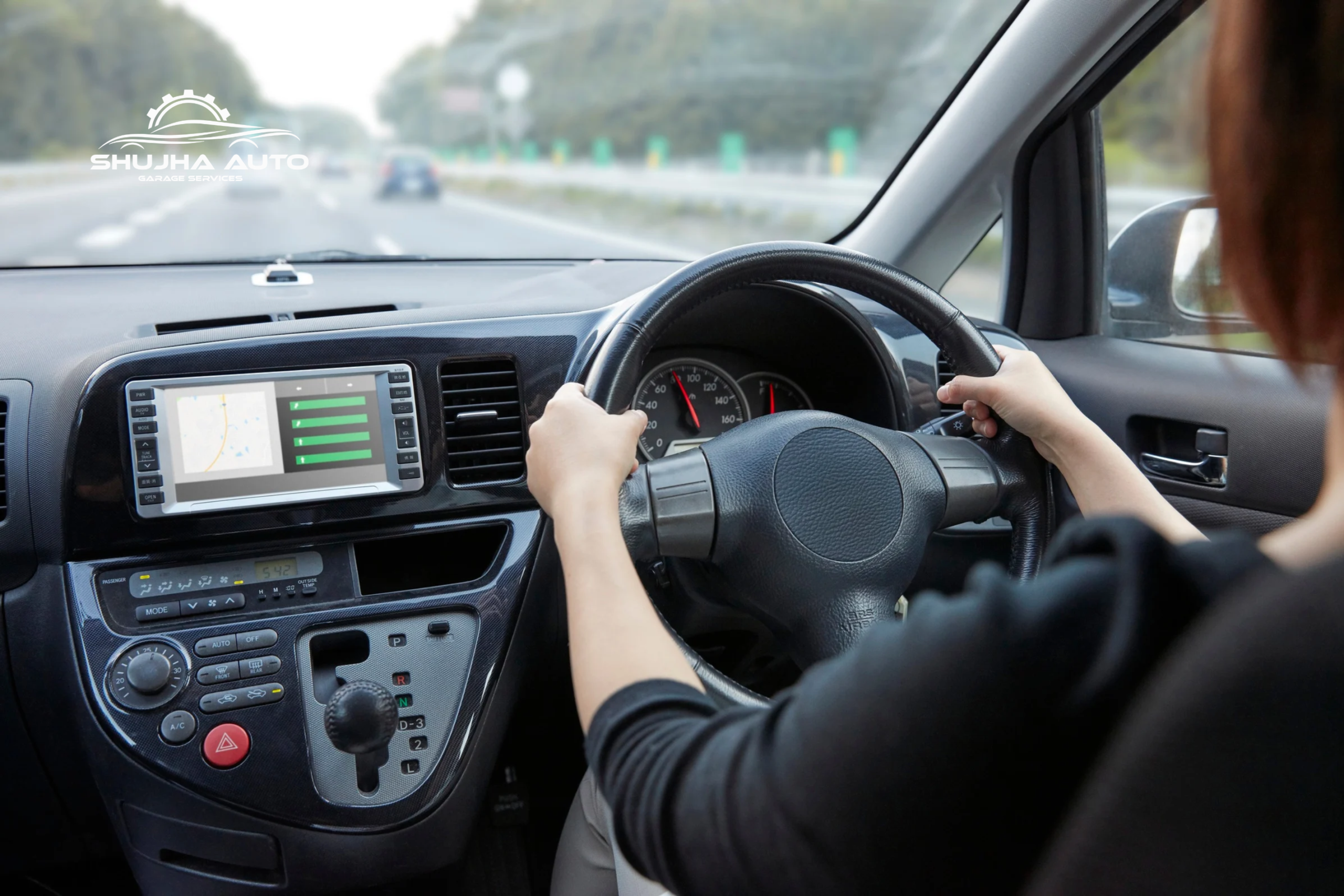
A car pulling to one side while driving can make even a short journey uncomfortable and stressful. You may notice your car drifting toward the left or right, even when you are trying to drive straight. Sometimes the pulling happens at high speed, while other times it becomes noticeable during braking, acceleration, or after hitting a pothole.
Many drivers immediately assume that wheel alignment is the problem. Although incorrect wheel alignment is a common cause, it is not the only reason your car may pull to one side. Uneven tyre pressure, damaged tyres, worn suspension parts, faulty steering components, sticking brake calipers, and previous accident damage can also affect how your vehicle travels.
Some problems are simple to fix, while others require professional inspection to avoid unnecessary repairs and safety risks.
In this guide, we will explain why your car pulls to one side, common causes, warning signs, possible solutions, and when to visit Auto Garage Services in Sharjah for wheel alignment, steering inspection, suspension repair, tyre inspection, brake repair, and car maintenance services.
Quick Answer: Why Is My Car Pulling to One Side?
Your car may pull to one side because of incorrect wheel alignment, uneven tyre pressure, damaged tyres, worn suspension components, steering system problems, or uneven braking force.
The cause often depends on when the pulling occurs.
- Pulling while driving straight: Often caused by wheel alignment, tyre pressure, or tyre condition.
- Pulling when braking: May indicate a sticking brake caliper, uneven braking force, or tyre-related problems.
- Pulling when accelerating: Can involve torque steer, suspension movement, or drivetrain problems.
- Pulling after hitting a pothole: May indicate damaged tyres, bent suspension components, or incorrect wheel alignment.
- Pulling after tyre replacement: May result from tyre pressure differences, tyre construction, or alignment problems.
If the pulling is strong, sudden, or affects steering control, arrange an inspection promptly.
Is It Normal for a Car to Pull Slightly to One Side?
A small amount of drifting does not always mean your car has a mechanical problem.
Many roads are slightly sloped toward the shoulder to allow rainwater to drain away. This slope is called road camber.
Because of road camber, a car may naturally drift slightly toward the lower side of the road.
However, there is a difference between normal drifting and a mechanical pulling problem.
If your car consistently pulls in the same direction on different roads, requires noticeable steering correction, or suddenly begins pulling more strongly, there may be a problem with the tyres, alignment, suspension, steering, or brakes.
A technician can distinguish normal road camber from a vehicle fault through inspection and a controlled road test.
Common Signs Your Car Is Pulling to One Side
Before identifying the cause, pay attention to how your car behaves.
Common warning signs include:
- Car drifting left or right on a straight road
- Steering wheel not centred
- Vehicle requiring constant steering correction
- Uneven tyre wear
- Pulling while braking
- Steering feeling loose or unstable
- Car changing direction during acceleration
- Knocking sounds from suspension
- Tyres wearing faster on one side
- Vehicle feeling unstable at highway speeds
These symptoms can help identify which parts need inspection.
Common Causes of Car Pulling to One Side
There are several reasons why a vehicle may drift or pull toward one side.
1. Incorrect Wheel Alignment
Incorrect wheel alignment is one of the most common causes of a car pulling left or right.
Wheel alignment refers to the angles at which the wheels sit relative to the vehicle and road.
If these angles are outside the manufacturer’s specifications, the tyres may not travel in the intended direction.
Common signs of incorrect alignment include:
- Car pulling left or right
- Steering wheel sitting off-centre
- Uneven tyre wear
- Poor steering response
- Reduced driving stability
Wheel alignment can be affected by potholes, curb impacts, suspension wear, accident damage, or previous repairs.
Solution: A professional wheel alignment inspection can measure the wheel angles and determine whether adjustment is required.
2. Uneven Tyre Pressure
Incorrect tyre pressure is another common reason a car pulls to one side.
If one front tyre has significantly lower pressure than the other, the difference in rolling resistance and tyre behaviour may cause the car to drift.
You may notice the pulling more clearly at moderate or highway speeds.
Other signs include uneven tyre wear, reduced fuel efficiency, and changes in handling.
Solution: Check all tyre pressures when the tyres are cold and inflate them according to the manufacturer’s recommended values, usually found on the driver’s door placard.
If one tyre repeatedly loses air, it should be inspected for punctures or damage.
3. Uneven Tyre Wear
Tyres should wear as evenly as possible.
When one tyre has significantly different tread wear from another, the car may develop a pulling sensation.
Uneven wear can happen because of:
- Incorrect wheel alignment
- Worn suspension components
- Incorrect tyre pressure
- Poor tyre maintenance
- Previous wheel damage
Different tyre sizes, construction types, or unsuitable tyre combinations can also affect handling.
Solution: Inspect tread depth, tyre condition, and tyre specifications. Tyre rotation or replacement may be required, depending on the cause.
4. Damaged or Defective Tyres
Sometimes the car pulls even when the wheel alignment and tyre pressure appear correct.
A tyre may have internal structural damage or a manufacturing variation that affects how it rolls.
One possible condition is tyre conicity, where the tyre generates a directional force while rotating.
Tyre conicity can sometimes become noticeable after installing new tyres.
Other tyre-related problems include internal belt damage, uneven casing construction, or damage after hitting a pothole.
Solution: A technician should inspect the tyres and may reposition them during diagnosis, following vehicle and tyre manufacturer requirements.
A structurally damaged tyre should be replaced.
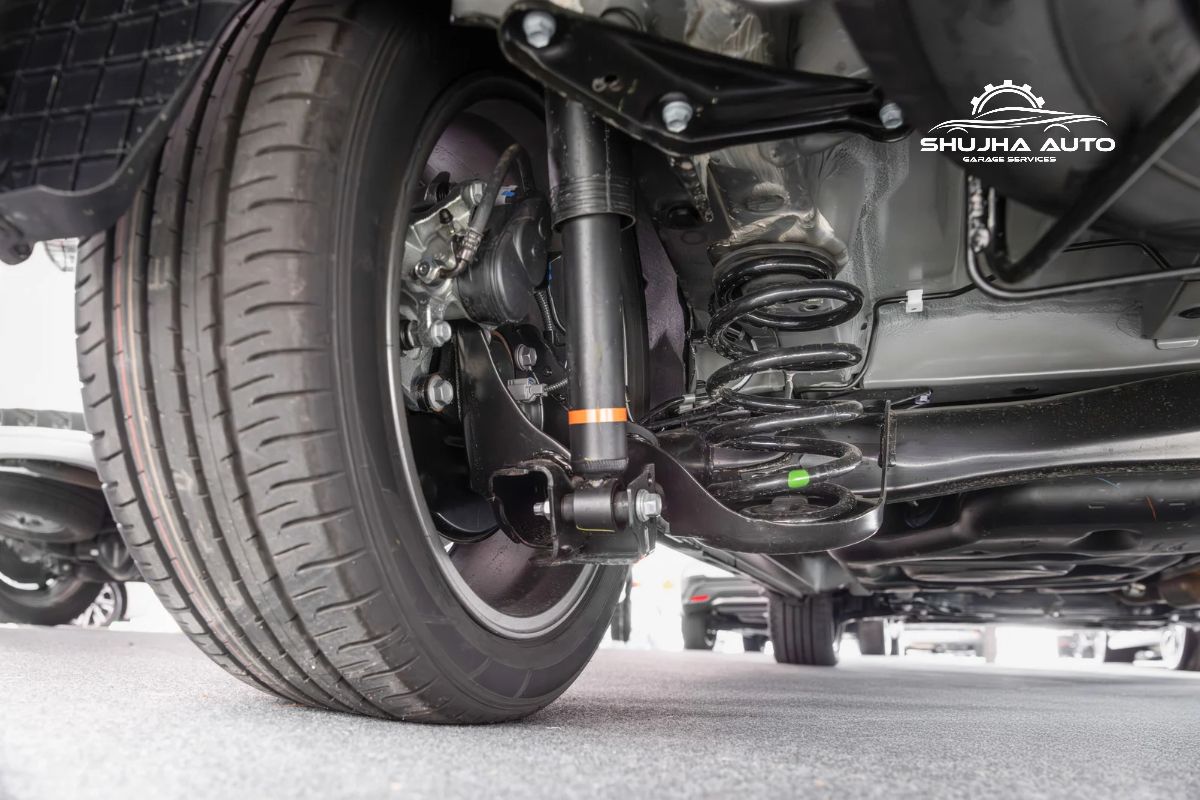
5. Worn Suspension Parts
The suspension system helps maintain wheel position and stability.
If suspension components become worn or damaged, the wheel alignment may change while the vehicle moves.
Common suspension problems include:
- Worn control arm bushings
- Damaged ball joints
- Bent control arms
- Worn suspension mounts
- Damaged struts
- Weak or broken springs
You may also notice knocking sounds, uneven tyre wear, or unstable handling.
Solution: Inspect the suspension before performing wheel alignment. Damaged components must be repaired or replaced first.
6. Faulty Steering Components
The steering system controls the direction of the front wheels.
Worn or loose components can affect steering accuracy and cause wandering, pulling, or inconsistent handling.
Possible causes include:
- Worn tie rod ends
- Steering rack problems
- Loose steering linkages
- Damaged steering joints
- Incorrect steering geometry
Steering problems may also cause unusual noises, excessive steering play, or an off-centre steering wheel.
Solution: A steering system inspection can identify worn or loose components. Repairs may be necessary before wheel alignment.
7. Sticking Brake Caliper
If your car pulls to one side when braking, the braking system should be inspected.
Brake calipers apply pressure to brake pads, allowing the vehicle to slow down.
If a caliper sticks or one wheel receives significantly different braking force, the vehicle may pull during braking.
A dragging brake can also affect driving even when you are not pressing the brake pedal.
Possible signs include:
- Pulling when braking
- Burning smell near a wheel
- Uneven brake pad wear
- Excessive heat from one wheel
- Reduced braking performance
- Vehicle feeling difficult to accelerate
Solution: The brake calipers, pads, discs, hydraulic system, and related components should be inspected.
A sticking brake should be repaired promptly because it can affect vehicle safety.
8. Wheel Bearing Problems
Wheel bearings allow the wheels to rotate smoothly.
A severely worn or damaged wheel bearing may contribute to looseness or abnormal handling.
Other symptoms may include humming noises, grinding sounds, or changes in noise while turning.
However, wheel bearing problems are not the most common cause of a steady directional pull.
Solution: A mechanic should inspect the wheel bearing and hub assembly if unusual noises, wheel play, or related symptoms are present.
9. Bent Suspension Components
Hitting a pothole, curb, or road obstacle can damage suspension components.
A bent control arm, strut, or steering component can change wheel alignment and cause the vehicle to pull.
Possible symptoms include:
- Sudden pulling after an impact
- Steering wheel no longer centred
- Knocking sounds
- Uneven tyre wear
- Poor handling
- Wheel appearing incorrectly positioned
Solution: Inspect the tyres, rims, steering, and suspension before adjusting alignment.
Damaged parts should be repaired or replaced as necessary.
10. Previous Accident Damage
A vehicle that has been involved in an accident may pull to one side if the suspension mounting points, subframe, steering system, or body structure were damaged.
Even after cosmetic repairs, incorrect structural alignment can affect driving.
Warning signs may include repeated alignment problems, unusual tyre wear, or a vehicle that continues pulling despite routine adjustments.
Solution: A detailed suspension and structural inspection may be needed to identify the underlying problem.
Why Is My Car Pulling to the Left?
If your car consistently pulls to the left, possible causes include:
- Incorrect wheel alignment
- Low pressure in a tyre
- Uneven tyre wear
- Damaged suspension components
- Brake drag
- Tyre construction differences
- Road camber
Do not assume that the left wheel is always the problem.
For example, differences in wheel alignment across the front axle or braking forces between wheels can affect the vehicle’s direction.
A complete inspection is more reliable than replacing parts based only on which direction the car pulls.
Why Is My Car Pulling to the Right?
A car pulling to the right can have the same underlying causes as pulling to the left.
Check the tyre pressures, tyre condition, wheel alignment, suspension, steering components, and brakes.
A gentle tendency to drift toward the road shoulder may be normal on certain roads because of road camber.
However, if the pulling is strong or continues on different road surfaces, the vehicle should be inspected.
Why Does My Car Pull to One Side When Braking?
Pulling during braking is an important warning sign because it may indicate uneven braking force.
Possible causes include:
- Sticking brake caliper
- Seized caliper slide pins
- Uneven brake pad performance
- Contaminated brake components
- Brake hydraulic problems
- Significant tyre pressure differences
- Suspension component movement
If the vehicle changes direction noticeably whenever you brake, do not ignore it.
A braking system fault can affect stopping stability, particularly during emergency braking.
Professional brake inspection should be arranged promptly.
Why Does My Car Pull When Accelerating?
If the vehicle pulls mainly when accelerating, the cause may differ from a constant pull.
Some powerful front-wheel-drive cars experience torque steer, where drivetrain forces create a steering sensation during strong acceleration.
A mild amount can be a characteristic of certain vehicles.
However, new or excessive pulling may indicate worn control arm bushings, steering components, drivetrain problems, or unequal tyre conditions.
If the pulling started recently or has become stronger, a professional inspection is recommended.
Why Does My Car Pull After Wheel Alignment?
Wheel alignment does not solve every pulling problem.
If your car still pulls after alignment, possible reasons include:
- Uneven tyre pressure
- Damaged or defective tyres
- Worn suspension parts
- Sticking brake caliper
- Incorrect alignment settings
- Rear-wheel alignment problems
- Bent suspension components
Some vehicles require four-wheel alignment rather than adjustments only to the front wheels.
If the rear wheels are not tracking correctly, the car may still feel unstable.
The technician should check the complete vehicle condition rather than repeatedly adjusting the same alignment settings.
Why Does My Car Pull After Changing Tyres?
If the pulling started immediately after replacing tyres, inspect the tyre installation and condition.
Possible causes include differences in tyre pressure, tyre size, construction, tread pattern, or tyre conicity.
Wheel alignment may also have been incorrect before the new tyres were installed.
A professional tyre inspection can determine whether the problem is related to the tyres or another vehicle component.
What Is the Difference Between Wheel Alignment and Wheel Balancing?
Many drivers confuse wheel alignment with wheel balancing.
Although both services involve wheels, they solve different problems.
Wheel Alignment
Wheel alignment adjusts the wheel angles according to the manufacturer’s specifications.
It helps address directional pulling, uneven tyre wear, off-centre steering, and certain handling problems.
Wheel Balancing
Wheel balancing corrects uneven weight distribution in the wheel and tyre assembly.
It mainly helps reduce vibrations at particular driving speeds.
If your car pulls consistently to one side, balancing alone is unlikely to solve the problem.
A professional inspection can determine which service is necessary.
Is It Safe to Drive a Car Pulling to One Side?
A mild pull may not always indicate an immediate emergency, but it should not be ignored.
A strong or sudden pull can reduce steering control and increase the risk of an accident.
Stop safely and arrange professional assistance if:
- The vehicle suddenly pulls strongly
- Steering becomes difficult
- A tyre appears damaged or deflated
- You notice a burning smell near a wheel
- Braking causes severe directional movement
- The car feels unstable
- There are grinding or loud suspension noises
If the vehicle cannot be controlled safely, arrange recovery rather than continuing to drive.
What Should You Check First?
If your car starts pulling to one side, a few basic checks can help identify obvious problems.
Check Tyre Pressure
Inspect tyre pressures using a reliable gauge when the tyres are cold.
Use the manufacturer’s recommended values rather than the maximum pressure printed on the tyre sidewall.
Inspect Tyres
Look for uneven wear, visible damage, bulges, cuts, or differences between tyres.
Do not drive on a tyre with suspected structural damage.
Notice When the Pulling Happens
Does your car pull all the time, only when braking, or mainly during acceleration?
This information can help the technician narrow down the cause.
Observe Steering Position
An off-centre steering wheel while travelling straight may indicate an alignment or steering issue.
Do not release the steering wheel to test pulling while driving. Keep full control of the vehicle.
Check for Recent Impacts
If the problem began after hitting a pothole or curb, mention this during the inspection.
Suspension or wheel damage may be present even if it is not immediately visible.
What Happens During a Professional Inspection?
A professional inspection is the most effective way to identify why your car pulls left or right.
At Auto Garage Services in Sharjah, a relevant inspection may include:
- Tyre pressure measurement
- Tyre condition assessment
- Wheel alignment measurement
- Steering system inspection
- Suspension component inspection
- Control arm and bushing checks
- Ball joint inspection
- Tie rod inspection
- Brake caliper and pad inspection
- Wheel bearing assessment
- Underbody inspection
- Controlled road testing when safe
The technician can identify which components need adjustment, repair, or replacement.
Checking the tyres and suspension before wheel alignment also helps avoid repeating the same service unnecessarily.
Common Repairs for a Car Pulling to One Side
The correct repair depends on the diagnosis.
Wheel Alignment Adjustment
If wheel angles are outside manufacturer specifications and the components are in good condition, wheel alignment may correct the pulling.
Tyre Pressure Correction
If pressure differences are responsible, correcting them may restore normal handling.
Tyre Replacement
Damaged, structurally defective, or unsuitable tyres may need replacement.
Suspension Repair
Worn control arms, bushings, ball joints, or other suspension components may require repair or replacement.
Steering Repair
Damaged tie rods, steering joints, or steering system components should be repaired to restore safe control.
Brake Repair
If uneven braking or a sticking caliper causes pulling, the braking system needs appropriate servicing.
Structural Inspection and Repair
If the problem results from accident damage or bent components, additional measurements and repairs may be necessary.
How to Prevent Your Car From Pulling to One Side
Regular maintenance helps prevent many steering, tyre, and alignment problems.
Maintain Correct Tyre Pressure
Check tyre pressures regularly, especially before long journeys.
Inspect Tyre Wear
Uneven tread wear may indicate alignment or suspension problems.
Avoid Potholes When Possible
Hard impacts can damage wheels, tyres, and suspension components.
Check Alignment After an Impact
If steering behaviour changes after hitting a pothole or curb, arrange an inspection.
Maintain Suspension Components
Replace worn or damaged suspension parts when necessary.
Inspect Brakes Regularly
Routine brake inspection helps identify uneven wear and sticking components.
Follow Vehicle Maintenance Recommendations
Regular servicing can help detect handling problems before they become serious.
Car Pulling to One Side in UAE Driving Conditions
Driving conditions in Sharjah and other parts of the UAE can affect tyres, suspension, and steering performance.
Long highway journeys, speed bumps, construction areas, road debris, and high temperatures make tyre condition and maintenance particularly important.
Drivers should regularly check tyre pressure, tread condition, alignment, and suspension components.
If your car begins pulling after driving on rough roads or hitting a pothole, inspect it before making another long journey.
Is Wheel Alignment or Steering Repair Expensive?
The cost depends on the underlying problem.
A wheel alignment adjustment or tyre pressure correction may be relatively straightforward.
However, suspension repairs, brake caliper replacement, steering component repairs, or accident-related damage may require more extensive work.
The final cost depends on the vehicle model, damaged components, labour, and parts required.
A proper diagnosis helps prevent unnecessary repairs.
Are There Any Hidden Fees or Charges?
Before approving repairs, ask what is included in the inspection and quotation.
For example, confirm whether wheel alignment, suspension parts, brake repairs, steering components, and additional testing are quoted separately.
Auto Garage Services can assess the vehicle and explain recommended repairs so you can make an informed decision.
Why Choose Auto Garage Services?
Auto Garage Services in Al Sajaah, Sharjah, provides vehicle inspection and repair services for drivers experiencing steering, suspension, brake, or tyre-related problems.
If your car is pulling to the left or right, the team can inspect relevant components and identify whether wheel alignment, tyre condition, suspension wear, steering faults, or brake problems are contributing to the issue.
The focus should always be on identifying the actual problem before replacing components.
When Should You Visit Auto Garage Services?
You should arrange an inspection when your car begins pulling to one side or requires constant steering correction.
Other warning signs include:
- Steering wheel not centred
- Uneven tyre wear
- Pulling while braking
- Pulling after acceleration
- Knocking from suspension
- Loose steering feel
- Car pulling after tyre replacement
- Poor handling after hitting a pothole
- Vehicle still pulling after alignment
Drivers in Sharjah and nearby areas can visit Auto Garage Services for steering inspection, suspension repair, brake inspection, tyre assessment, and related vehicle maintenance services.
FAQs
1. Why is my car pulling to one side?
Your car may pull to one side because of incorrect wheel alignment, uneven tyre pressure, damaged tyres, worn suspension parts, steering faults, or braking system problems. A professional inspection can identify the actual cause.
2. Why does my car pull to the left while driving?
A car pulling left may have alignment problems, uneven tyre pressure, damaged tyres, suspension wear, or brake issues. Road camber can also create a mild directional drift.
3. Why does my car pull to the right?
Pulling right can result from incorrect wheel alignment, tyre pressure differences, uneven tyre wear, damaged suspension components, or braking problems. The exact cause should be confirmed through inspection.
4. Can incorrect wheel alignment cause pulling?
Yes. Incorrect wheel alignment can affect how the tyres contact the road, causing directional pulling, uneven tyre wear, and an off-centre steering wheel.
5. Can low tyre pressure make my car pull to one side?
Yes. A significant tyre pressure difference can create uneven rolling resistance and affect vehicle direction. Always check pressure according to the manufacturer’s recommendations.
6. Why does my car pull when braking?
Pulling while braking may indicate uneven braking force, a sticking brake caliper, hydraulic problems, or tyre-related issues. Because braking affects safety, arrange an inspection promptly.
7. Why is my car still pulling after wheel alignment?
The problem may involve damaged tyres, unequal tyre pressures, worn suspension parts, brake drag, incorrect alignment settings, or rear-wheel alignment issues.
8. Can bad suspension cause a car to pull?
Yes. Worn bushings, damaged control arms, ball joints, or other suspension components can affect wheel position and steering stability.
9. Is it dangerous to drive a car that pulls to one side?
It can be dangerous, especially if the pull is strong, sudden, or occurs during braking. If steering control is affected, stop safely and arrange professional assistance.
10. Does Auto Garage Services inspect cars pulling to one side?
Yes. Auto Garage Services in Sharjah provides vehicle inspections and related repairs for wheel alignment, steering, suspension, brake, and tyre problems.
Final Words
A car pulling to one side is a warning sign that should not be ignored. Although incorrect wheel alignment is a common cause, uneven tyre pressure, damaged tyres, suspension wear, steering problems, and faulty brakes can also affect how your vehicle travels.
The best solution is to identify when the pulling happens and inspect the relevant components before making repairs.
If your car pulls to the left or right, requires constant steering correction, or becomes unstable during braking or acceleration, visit Auto Garage Services in Sharjah for wheel alignment assessment, steering inspection, suspension repair, tyre inspection, brake diagnostics, and related car maintenance services.