Buying a used car can be a smart decision, but only if you inspect it properly before paying. A car may look clean from the outside, but hidden problems can be inside the engine, gearbox, suspension, AC system, electrical system, tyres, brakes, or body structure. Many buyers trust the appearance, mileage, or seller’s words, but a proper used car inspection can save you from expensive repairs later.
A used car inspection helps you understand the real condition of the vehicle before making a decision. It can show whether the car has accident damage, repainting, oil leaks, engine problems, gearbox issues, weak AC, worn suspension, brake problems, or hidden warning codes.
In this guide, we will explain how to inspect a used car before buying it, what to check first, how to test drive the car, what documents to verify, and when to visit Auto Garage Services for pre-purchase car inspection, engine diagnostic service, gearbox inspection, accident inspection, AC inspection, brake inspection, and complete car maintenance service.
Quick Answer: How Do You Inspect a Used Car Before Buying It?
To inspect a used car before buying it, check the car body, paint condition, tyres, engine oil, coolant, leaks, battery, AC cooling, dashboard warning lights, brakes, suspension, gearbox, steering, service history, accident signs, and documents. You should also take the car for a proper test drive and scan it with a diagnostic tool to check hidden fault codes.
The safest option is to get a professional pre-purchase car inspection before final payment. A garage inspection can reveal problems that are not visible during a simple walkaround.
Why Used Car Inspection Is Important
Used cars can have hidden issues. Some problems are easy to see, but others need experience and diagnostic tools. A seller may say the car is “perfect,” but the car may still have old accident repairs, oil leaks, weak transmission, overheating history, or electronic faults.
A proper inspection helps you avoid:
- Buying an accident-damaged car
- Paying too much for a weak vehicle
- Hidden engine repair costs
- Gearbox or transmission problems
- AC repair expenses
- Suspension and brake problems
- Electrical faults
- Odometer or service history concerns
- Poor resale value
A small inspection cost can save you from a big repair bill after purchase.
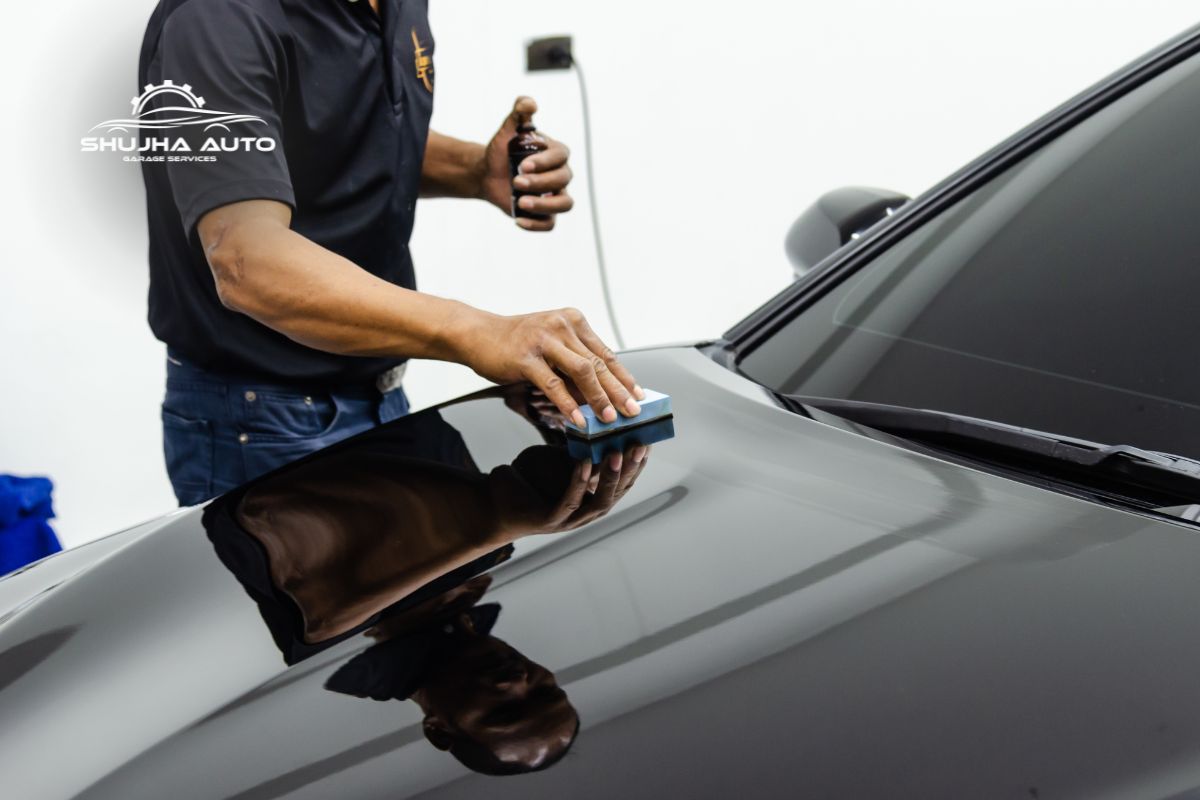
Start With the Car Body and Paint
The exterior condition tells you a lot about the car’s history. Walk around the car slowly and inspect every panel in daylight.
Check for:
- Colour mismatch between panels
- Uneven gaps around doors, bonnet, and boot
- Paint overspray on rubber or plastic trims
- Wavy body panels
- Dents and scratches
- Rust spots
- Cracked bumpers
- Repaired accident areas
- Peeling clear coat
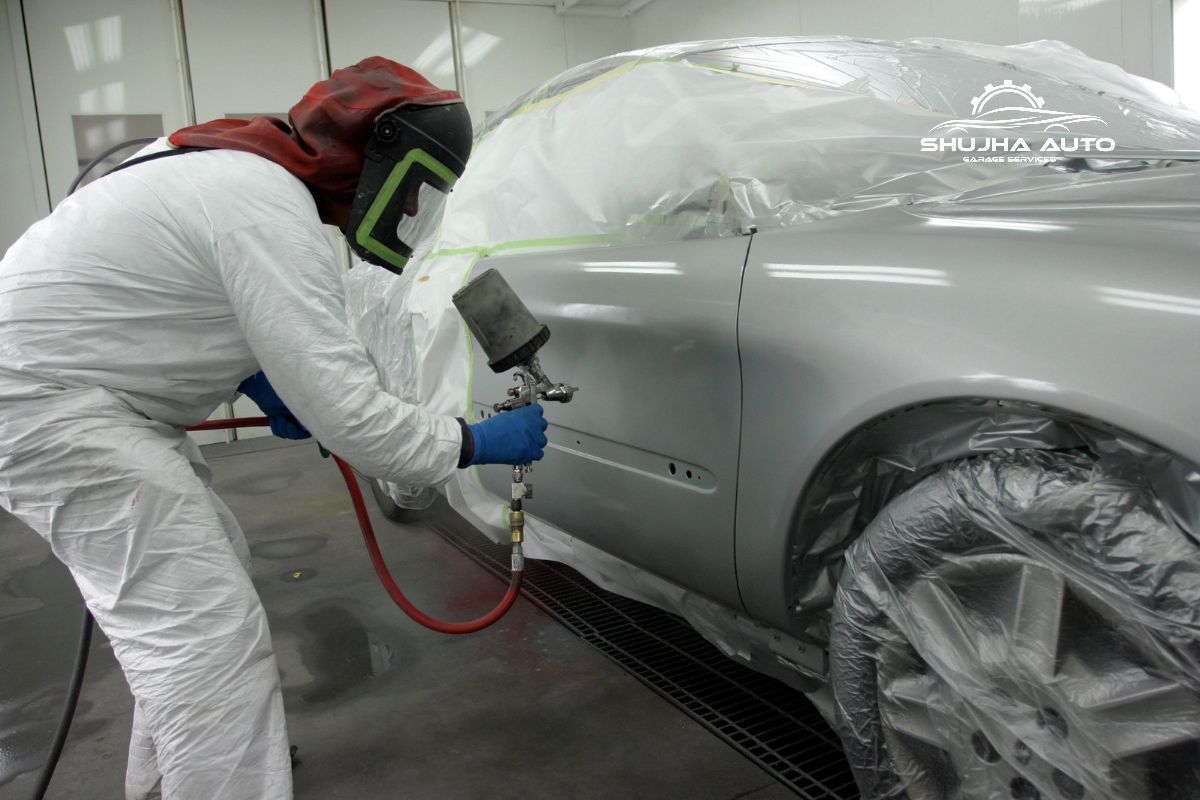
If one panel looks newer or shinier than others, it may have been repainted. Repainting is not always bad, but it can indicate accident repair or previous damage.
Check for Accident Damage
Accident damage is one of the most important things to check before buying a used car. Some accident repairs are cosmetic, while others can affect safety, alignment, and resale value.
Look for signs like:
- Uneven panel gaps
- Repainted panels
- Welding marks
- Bent frame areas
- Misaligned bonnet or boot
- Cracked headlight brackets
- Different paint texture
- Replaced airbags
- Uneven tyre wear
- Car pulling to one side
If the car has structural damage, it may not drive safely even if it looks good from outside. A professional accident inspection is strongly recommended before purchase.
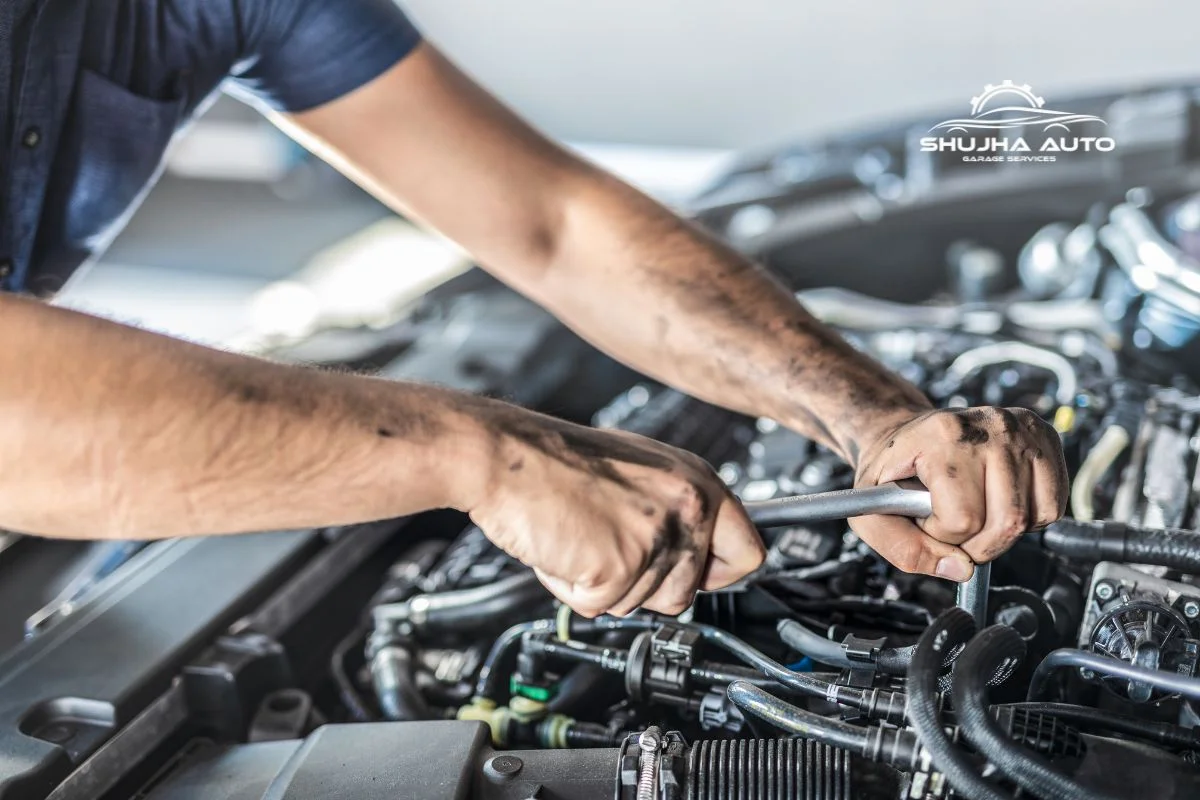
Inspect the Engine Bay
Open the bonnet and check the engine bay carefully. A very clean engine bay can look attractive, but sometimes it is cleaned to hide leaks. A dusty engine bay with no leaks can actually be more honest.
Check for:
- Oil leaks
- Coolant leaks
- Burning smell
- Loose wires
- Broken clips
- Damaged hoses
- Rust around engine bay
- Low fluid levels
- Unusual engine noise
- Signs of overheating
The engine should start smoothly and idle without shaking, knocking, or heavy vibration.
Check Engine Oil Condition
Engine oil can reveal a lot about maintenance. Pull out the dipstick and check the oil level and condition.
Healthy oil should not be extremely thick, burnt-smelling, or full of metal particles. Very dirty oil may mean poor maintenance.
Be careful if you notice:
- Very low oil level
- Thick black sludge
- Burning oil smell
- Milky oil texture
- Oil leaks around engine
- Blue smoke from exhaust
Milky oil can sometimes indicate coolant mixing with oil, which may be a serious engine issue.
Check Coolant and Overheating Signs
The cooling system protects the engine from overheating. A used car with cooling problems can become expensive quickly.
Check the coolant reservoir when the engine is cool. The coolant should not look rusty, oily, or empty.
Warning signs include:
- Low coolant level
- Rusty coolant
- Oil in coolant
- Coolant smell
- Radiator leaks
- Damaged hoses
- Temperature gauge rising
- Cooling fan not working
- White smoke from exhaust
If the car has a history of overheating, get it checked carefully before buying.
Check for Oil Leaks Under the Car
Look under the car for oil drops, wet areas, or fresh leaks. Oil leaks can come from the engine, gearbox, differential, power steering system, or brake system.
Common leak areas include:
- Engine oil pan
- Valve cover gasket
- Oil filter area
- Gearbox area
- Power steering lines
- Radiator area
- Brake fluid lines
Small leaks may be repairable, but major leaks can become costly.
Check Dashboard Warning Lights
When you turn the ignition on, dashboard lights should appear briefly. After starting the car, warning lights should turn off.
Be careful if these lights stay on:
- Check engine light
- ABS light
- Airbag light
- Oil warning light
- Battery warning light
- Temperature warning light
- Transmission warning light
- Traction control light
Some sellers may clear fault codes before showing the car. That is why diagnostic scanning is important.
Scan the Car With a Diagnostic Tool
Modern cars store fault codes in the ECU and other control modules. A diagnostic scan can reveal hidden problems even if there is no warning light on the dashboard.
A scan can help detect:
- Engine faults
- Sensor problems
- Gearbox codes
- ABS faults
- Airbag issues
- AC system faults
- Misfire history
- Electrical problems
- Cleared or pending codes
Auto Garage Services can perform diagnostic scanning as part of a pre-purchase car inspection.
Inspect the Gearbox and Transmission
Gearbox problems can be expensive, especially in automatic and CVT vehicles. During inspection and test drive, check how the transmission behaves.
Warning signs include:
- Delayed gear shifting
- Jerking while shifting
- Gear slipping
- Burning smell
- Whining noise
- RPM rising without speed
- Hard gear engagement
- Transmission warning light
- Shuddering during acceleration
For manual cars, check the clutch feel, gear engagement, and any grinding noise. A weak gearbox should not be ignored before purchase.
Check the Brakes
Brakes are important for safety. During inspection, check both condition and performance.
Look for:
- Brake noise
- Soft brake pedal
- Vibration while braking
- Car pulling to one side
- Worn brake pads
- Deep marks on discs
- Brake warning light
- Brake fluid leakage
During the test drive, braking should feel smooth, stable, and responsive. If the pedal feels soft or the car shakes while braking, the brake system needs inspection.
Inspect Tyres and Wheel Condition
Tyres can show signs of alignment, suspension, and driving problems. Check all four tyres carefully.
Look for:
- Uneven tyre wear
- Cracks on tyre sidewall
- Low tread depth
- Different tyre brands
- Old tyre manufacturing date
- Bulges or cuts
- Bent rims
- Vibration while driving
Uneven tyre wear may indicate alignment issues, worn suspension, accident repair, or poor maintenance.
Check Suspension and Steering
Suspension problems can make the car uncomfortable and unsafe. During the test drive, listen for sounds and feel how the car handles.
Warning signs include:
- Clunking noise
- Knocking over bumps
- Car bouncing too much
- Steering vibration
- Car pulling to one side
- Uneven ride height
- Loose steering feel
- Suspension oil leakage
Suspension repair cost can vary depending on the car model and parts required.
Test the Car AC
In UAE conditions, AC performance is very important. A weak AC can mean low refrigerant, compressor problems, condenser blockage, cabin filter issues, or electrical faults.
Check:
- Cooling speed
- Airflow strength
- Bad smell
- Compressor noise
- AC cooling at idle
- AC cooling while driving
- Water leakage inside cabin
- Fan speed controls
If the AC only cools while driving but becomes weak in traffic, the condenser fan or cooling system may need inspection.
Check Electrical Features
Electrical problems can be difficult to trace, so test all major features before buying.
Check:
- Power windows
- Central locking
- Key remote
- Headlights
- Brake lights
- Indicators
- Wipers
- Horn
- Infotainment system
- Reverse camera
- Parking sensors
- Seat controls
- Sunroof if available
- Dashboard display
Small electrical issues may seem minor, but repairs can become expensive depending on the car.
Inspect the Interior
The interior condition can reveal how the car was used. A well-maintained interior often shows careful ownership, but heavy wear may suggest rough use.
Check:
- Seat condition
- Dashboard cracks
- Steering wear
- Pedal wear
- Carpet condition
- Water stains
- Bad smell
- Roof lining
- Seat belts
- Airbag covers
- Door trims
Water stains or bad smell may indicate water leakage or flood damage. Be careful with cars that smell damp or have moisture under carpets.
Check the Mileage and Service History
Mileage is important, but service history is even more important. A well-maintained high-mileage car may be better than a low-mileage car with poor maintenance.
Ask for:
- Service records
- Oil change history
- Major repair records
- Accident repair invoices
- Battery replacement history
- Tyre replacement history
- Transmission service record
- Agency or garage maintenance receipts
If the seller has no service history, inspect the car more carefully.
Check Documents Before Buying
Before making payment, make sure the documents are clear and match the vehicle.
Check:
- Registration card
- Chassis number
- Engine number if required
- Seller ownership
- Insurance status
- Loan or mortgage status
- Accident history if available
- Service records
- Passing status
- Fine clearance if applicable
Never buy a used car without verifying ownership and documentation properly.
Take a Proper Test Drive
A test drive is one of the most important parts of used car inspection. Do not only drive for two minutes in a parking area. Try to test the car in normal driving conditions if possible.
During the test drive, check:
- Cold start behavior
- Engine response
- Gear shifting
- Brake performance
- Steering feel
- Suspension noise
- AC cooling
- Vibration
- Acceleration
- Highway stability
- Warning lights
- Temperature gauge
The car should drive smoothly without jerking, knocking, overheating, slipping, or unusual noises.
Listen for Unusual Noises
Noises can reveal hidden problems. During the inspection and test drive, listen carefully.
Be careful if you hear:
- Engine knocking
- Ticking noise
- Gearbox whining
- Suspension clunking
- Brake grinding
- Wheel bearing humming
- Belt squealing
- AC compressor noise
- Exhaust rattling
Any repeated or loud noise should be checked before purchase.
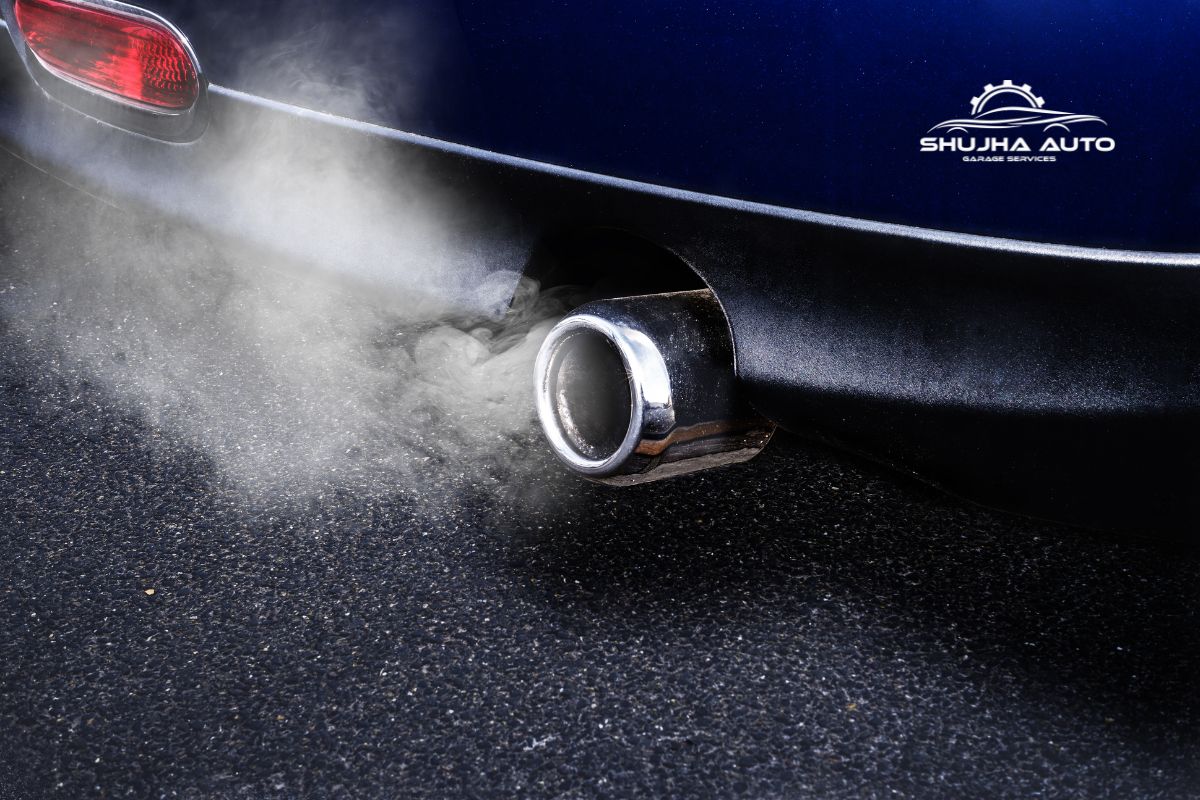
Check Exhaust Smoke
Exhaust smoke can indicate engine problems.
Different smoke colours may mean:
- White smoke: coolant issue or condensation
- Blue smoke: oil burning
- Black smoke: too much fuel
- Grey smoke: oil, turbo, or fuel issue
Light white vapor on cold start may be normal, but thick smoke after warm-up is not normal.
Should You Inspect the Car Yourself or Use a Garage?
You can do a basic inspection yourself, but a professional garage inspection is safer. Many hidden problems cannot be found without tools, experience, and lifting the car.
A professional pre-purchase inspection can check:
- Engine condition
- Gearbox behavior
- Fault codes
- Suspension
- Brakes
- Underbody
- Leaks
- Accident signs
- AC system
- Electrical system
- Test drive performance
This gives you a better idea of the car’s real condition before buying.
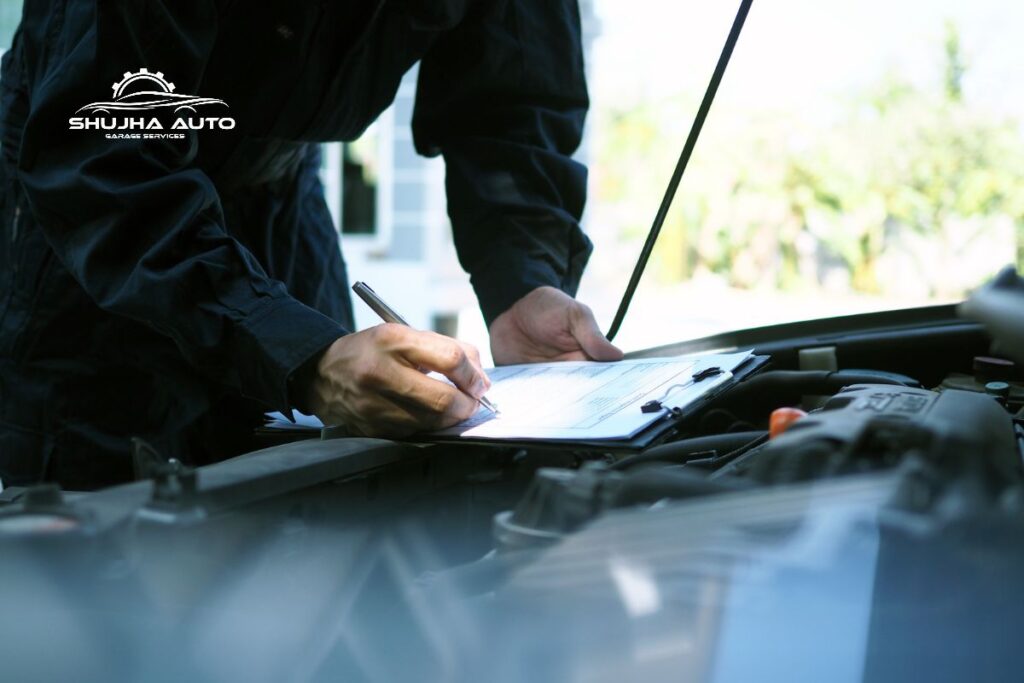
What Happens During Pre-Purchase Car Inspection?
At Auto Garage Services, a pre-purchase car inspection may include a full visual check, diagnostic scan, road test, engine inspection, gearbox inspection, brake inspection, suspension check, AC inspection, tyre check, leak inspection, and accident damage review.
The goal is to help buyers understand whether the car is worth buying, needs repair, or should be avoided.
Red Flags Before Buying a Used Car
Avoid or inspect very carefully if you notice:
- Seller refuses garage inspection
- No service history
- Warning lights on dashboard
- Engine knocking
- Gearbox jerking
- Overheating signs
- Smoke from exhaust
- Heavy accident repair signs
- Flood smell or water stains
- Oil leaks
- Suspiciously low price
- Mileage does not match condition
A cheap car can become expensive if it has hidden problems.
Why Choose Auto Garage Services?
Auto Garage Services provides pre-purchase car inspection, engine diagnostic service, gearbox inspection, brake inspection, suspension inspection, AC inspection, electrical inspection, oil leak inspection, accident inspection, and complete car maintenance service.
If you are planning to buy a used car, the team can inspect the vehicle and explain the condition in simple words. This helps you make a better buying decision and avoid unexpected repair costs.
Drivers choose Auto Garage Services because of experienced technicians, proper diagnostic tools, clear inspection process, practical repair advice, and customer-focused service.
When Should You Visit Auto Garage Services?
You should visit Auto Garage Services before buying any used car, especially if the car has high mileage, no service history, accident signs, warning lights, smoke, gearbox issues, AC weakness, or unusual noises.
You should also visit if you want to confirm:
- Engine condition
- Gearbox condition
- Accident repair signs
- Fault codes
- AC performance
- Brake condition
- Suspension health
- Oil leaks
- Electrical issues
- Overall car condition
A professional inspection before purchase can save you money and stress later.
FAQs
1. How do I inspect a used car before buying it?
Inspect the body, paint, tyres, engine oil, coolant, leaks, brakes, suspension, gearbox, AC, electrical features, dashboard warning lights, documents, and service history. Also take a test drive and get a diagnostic scan.
2. What is the most important thing to check in a used car?
The most important areas are engine condition, gearbox condition, accident history, mileage, service history, oil leaks, warning lights, and overall driving performance.
3. Should I get a used car inspected by a mechanic?
Yes, a mechanic or professional garage can find hidden problems that may not be visible during a basic inspection. A pre-purchase inspection is strongly recommended.
4. How do I know if a used car had an accident?
Look for colour mismatch, uneven panel gaps, welding marks, overspray, replaced headlights, repaired bumpers, uneven tyre wear, and poor alignment. A professional accident inspection is more reliable.
5. What should I check during a used car test drive?
Check engine response, gear shifting, brakes, steering, suspension noise, AC cooling, vibration, acceleration, temperature gauge, and warning lights.
6. Can diagnostic scanning find used car problems?
Yes, diagnostic scanning can reveal hidden fault codes related to engine, gearbox, ABS, airbags, sensors, electrical systems, and other modules.
7. Should I buy a used car with no service history?
It is risky. If the car has no service history, inspect it more carefully and get a professional pre-purchase inspection before making payment.
8. What are red flags when buying a used car?
Red flags include warning lights, engine knocking, smoke, overheating, gearbox jerking, oil leaks, accident repair signs, flood smell, no documents, and refusal of garage inspection.
9. Is mileage more important than condition?
Mileage is important, but condition and maintenance history are more important. A well-maintained higher-mileage car may be better than a neglected low-mileage car.
10. Does Auto Garage Services provide used car inspection?
Yes, Auto Garage Services provides pre-purchase car inspection, engine diagnostic service, gearbox inspection, accident inspection, brake inspection, suspension inspection, AC inspection, and electrical inspection.
Final Words
Inspecting a used car before buying it is one of the smartest steps you can take. A clean exterior does not always mean the car is in good condition. Hidden problems can exist in the engine, gearbox, AC, suspension, brakes, electrical system, or accident repair areas.
Before making payment, check the car carefully, take a proper test drive, verify documents, and get a diagnostic scan. If possible, always choose a professional pre-purchase inspection.
If you are planning to buy a used car, visit Auto Garage Services for pre-purchase car inspection, engine diagnostic service, gearbox inspection, brake inspection, suspension inspection, AC inspection, electrical inspection, oil leak inspection, accident inspection, and complete car condition check.