Nissan Juke is a popular compact SUV because of its unique design, sporty feel, and practical size. But like many vehicles, it can develop gearbox or transmission problems over time. Some drivers notice jerking, delayed shifting, slipping, whining noise, grinding sound, or poor acceleration. Others feel the car hesitates when moving from a stop or loses power while driving.
Gearbox problems should never be ignored because the transmission is one of the most expensive systems in a car. A small issue like low fluid, dirty fluid, weak clutch, or a sensor fault can become a major repair if the car is driven for too long without inspection.
In this guide, we will explain common Nissan Juke gearbox problems and fixes, warning signs, causes, repair options, and when you should visit Auto Garage Services for gearbox diagnostic service, Nissan Juke transmission inspection, CVT service, automatic transmission repair, manual gearbox repair, or car maintenance service.
Quick Answer: What Are Common Nissan Juke Gearbox Problems?
Common Nissan Juke gearbox problems include CVT jerking, gear slipping, delayed acceleration, whining or grinding noise, overheating, transmission fluid issues, faulty sensors, TCM problems, clutch wear in manual models, and low-speed hesitation in some newer models.
Many older Nissan Juke automatic models use a CVT gearbox. CVT issues can show signs like jerky movement, hesitation, whining noise, grinding sound, stalling under acceleration, or poor response. Repair may involve fluid service, leak repair, sensor diagnosis, software/adaptation reset, valve body repair, or gearbox replacement depending on the damage.
Why Nissan Juke Gearbox Problems Should Not Be Ignored
The gearbox controls how engine power reaches the wheels. If the gearbox is not working properly, the car may feel weak, rough, delayed, or unsafe to drive. Many gearbox problems start with small symptoms before becoming serious.
Ignoring gearbox issues can lead to:
- Gear slipping
- Poor acceleration
- Transmission overheating
- Internal gearbox wear
- Clutch damage
- CVT belt or pulley damage
- Warning lights
- Limp mode
- Complete gearbox failure
Early inspection is important because some problems can be solved before the gearbox needs major repair. If your Nissan Juke shows unusual gearbox behavior, it is better to diagnose it quickly instead of waiting for the car to stop moving.
What Type of Gearbox Does a Nissan Juke Have?
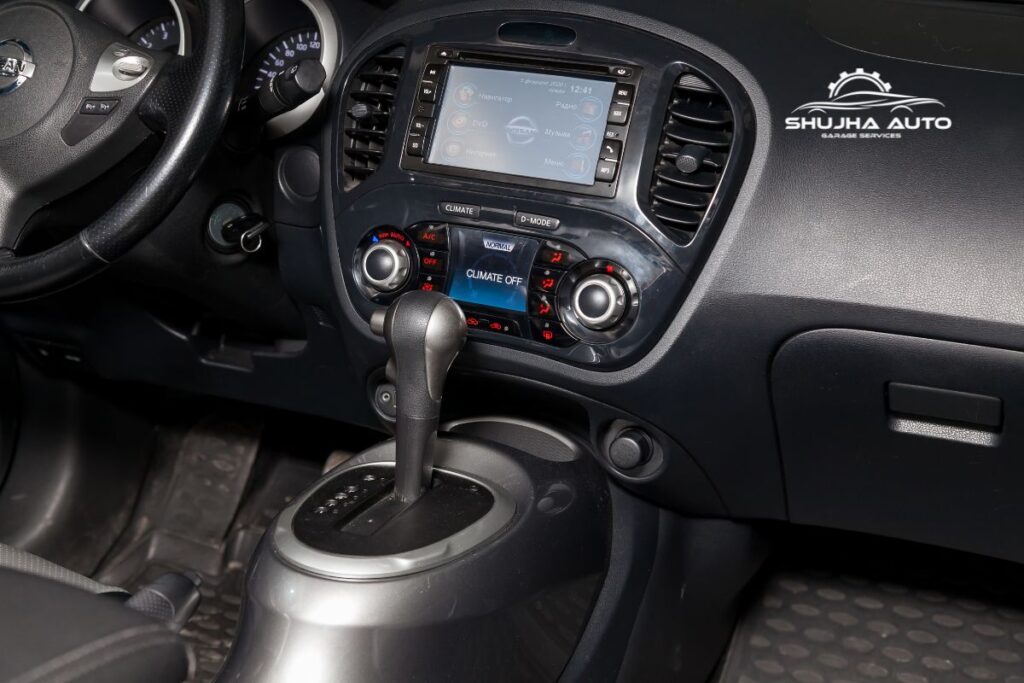
The Nissan Juke may come with different transmission types depending on model year, engine, and market. Many first-generation automatic Nissan Juke models are equipped with CVT, also called Continuously Variable Transmission. Some models may have manual gearbox, and some newer Juke models may use a DCT or automatic-style gearbox depending on the region.
CVT Gearbox
A CVT does not shift through fixed gears like a normal automatic gearbox. It uses a belt or chain and pulley system to change gear ratios smoothly. This can improve fuel economy and comfort, but CVT systems are sensitive to fluid condition, heat, and maintenance.
The Nissan Juke service information warns that the correct Nissan CVT fluid should be used, and using the wrong fluid can affect drivability, durability, and may damage the CVT.
Manual Gearbox
Manual Nissan Juke models can develop clutch wear, grinding during gear changes, difficulty shifting, or bearing noise. These issues may not always mean the gearbox itself has failed. Sometimes the clutch system is the real cause.
Newer Gearbox Systems
Some newer Juke models may show low-speed hesitation or delayed movement. Repair sources commonly recommend starting with diagnosis, software update, or adaptation before assuming major gearbox failure.
Common Signs of Nissan Juke Gearbox Problems
Gearbox problems usually show warning signs before full failure. If you notice any of these symptoms, the car should be inspected.
Jerking While Driving
Jerking is one of the most common Nissan Juke gearbox complaints. The car may jerk when accelerating, slowing down, or moving from a stop. In CVT models, jerking can happen because of old fluid, internal wear, belt or pulley issues, valve body faults, or electronic control problems.
A small jerk may become worse over time, especially in traffic or hot weather.
Gear Slipping
Gear slipping means the engine RPM increases, but the car does not accelerate properly. You may press the accelerator, but the car feels weak or delayed.
In a CVT Nissan Juke, slipping can be caused by:
- Low CVT fluid
- Worn internal parts
- Belt or pulley wear
- Pressure problems
- Overheating
- Faulty valve body
- Transmission control faults
Gear slipping should be checked quickly because it can lead to major gearbox damage.
Delayed Acceleration
Delayed acceleration happens when you press the accelerator, but the car takes time to respond. This can feel dangerous when entering a roundabout, overtaking, or moving in traffic.
Possible causes include CVT pressure issues, dirty fluid, sensor faults, throttle response problems, or transmission control module issues.
Whining Noise
A whining noise from the gearbox area can be a sign of low fluid, worn bearings, CVT belt/pulley wear, or internal gearbox damage. In many cases, the sound becomes louder with speed or acceleration.
If the whining noise is new or getting louder, avoid aggressive driving and get the gearbox checked.
Grinding Noise
Grinding noise is more serious. In manual models, grinding during gear changes may be linked to clutch or synchronizer problems. In automatic or CVT models, grinding can point toward internal wear or damaged components.
Grinding should not be ignored because metal-to-metal contact can increase repair cost.
Transmission Warning Light
Some Nissan Juke models may show a transmission warning, check engine light, or limp mode when the system detects a fault. Warning lights may be caused by fluid temperature, pressure problems, sensor faults, or electronic gearbox control issues.
A diagnostic scan is needed to read fault codes and identify the exact issue.
Burning Smell
A burning smell may mean the transmission fluid is overheating or burnt. The Nissan Juke service manual notes that very dark or burnt-smelling CVT fluid should be checked along with CVT operation.
Burnt fluid is a warning sign because it may mean the transmission has been under stress for too long.
Common Nissan Juke Gearbox Problems and Fixes
Nissan Juke gearbox issues can happen for different reasons. The correct repair depends on proper diagnosis.
Low or Dirty CVT Fluid
CVT fluid is very important for Nissan Juke automatic models. It helps with lubrication, cooling, and hydraulic pressure. If the fluid is low, dirty, or burnt, the gearbox may jerk, slip, overheat, or make noise.
The correct fix is not only topping up the fluid. First, the technician should check for leaks, inspect fluid condition, and confirm the correct fluid type. Nissan service information states that CVT fluid level should be checked at a specific warmed-up temperature range, not randomly when cold.
Possible solutions include:
- CVT fluid inspection
- Correct CVT fluid service
- Leak repair
- Cooler line inspection
- Diagnostic scan
- Gearbox operation test
Using the wrong fluid can damage the CVT, so this service should be done carefully.
CVT Judder or Shaking
CVT judder feels like shaking, vibration, or repeated jerking when accelerating. It may happen at low speed or when the car is under load.
Possible causes include:
- Worn CVT belt or pulley
- Old CVT fluid
- Valve body problem
- Pressure control issue
- Engine mount issue
- Software/adaptation issue
The fix may include CVT fluid service, diagnostic scan, adaptation reset, valve body repair, or internal gearbox repair. If internal damage is severe, gearbox replacement may be required.
Delayed Drive or Reverse Engagement
If your Nissan Juke takes time to move after selecting Drive or Reverse, the gearbox may have a pressure or control issue. This delay may be short at first, but it can become longer over time.
Common causes include:
- Low CVT fluid
- Dirty fluid
- Weak internal pressure
- Valve body issue
- Transmission control fault
- Internal wear
The fix starts with checking fluid level, scanning fault codes, and testing gearbox operation. If the issue is diagnosed early, smaller repairs may be possible.
Whining or Humming From Gearbox
Whining or humming can happen when internal parts are worn or fluid is not circulating properly. In a CVT, noise may come from belt, pulley, bearings, or fluid pressure problems.
Possible fixes include:
- Fluid condition check
- Bearing inspection
- CVT pressure diagnosis
- Road test
- Internal gearbox inspection
- Transmission repair or replacement if needed
Noise should be diagnosed early because a small internal sound can become a larger gearbox failure.
Overheating CVT
CVT gearboxes can overheat when fluid is old, cooling is poor, traffic is heavy, or the car is driven aggressively. Heat is one of the biggest enemies of CVT systems.
Signs of overheating may include:
- Loss of power
- Warning light
- Limp mode
- Delayed acceleration
- Burning smell
- Poor response after long driving
The fix may include fluid service, cooler inspection, radiator/cooler line check, diagnostic scan, and checking whether internal damage has already happened.
Faulty Valve Body
The valve body controls fluid pressure inside the transmission. If it becomes faulty, the gearbox may shift poorly, jerk, slip, or delay engagement.
Valve body issues may feel like complete gearbox failure, but sometimes the gearbox can be repaired without full replacement if diagnosed early.
Possible repair options include valve body cleaning, repair, replacement, or adaptation reset depending on the problem.
Sensor or TCM Problems
Modern gearboxes depend on sensors and electronic control. A faulty speed sensor, pressure sensor, temperature sensor, wiring issue, or transmission control module problem can cause poor shifting or warning lights.
Symptoms may include:
- Check engine light
- Transmission warning
- Limp mode
- Delayed response
- Incorrect gear behavior
- Jerking or hesitation
The fix is diagnostic scanning, live data checking, wiring inspection, sensor replacement, or software-related repair.
Manual Gearbox Clutch Problems
If your Nissan Juke has a manual gearbox, the issue may be clutch-related rather than gearbox-related. Some drivers may notice difficulty shifting, clutch slipping, vibration, high biting point, or grinding noise.
Common clutch-related fixes include:
- Clutch inspection
- Clutch adjustment if applicable
- Clutch kit replacement
- Release bearing replacement
- Gear oil inspection
- Manual gearbox repair if needed
Clutch issues should be repaired early because driving with a slipping clutch can damage related parts.
Transmission Fluid Leak
A fluid leak can cause serious gearbox problems if ignored. CVT and automatic gearboxes need proper fluid level to create pressure and lubrication.
Leak points may include:
- Transmission pan
- Drain plug
- Cooler lines
- Seals
- Gaskets
- CVT housing
- Fluid pipes
The fix is to locate the leak, repair the damaged part, refill with the correct fluid, and test the gearbox.
Can You Drive a Nissan Juke With Gearbox Problems?
You may be able to drive carefully for a short distance if the symptom is minor, but it is risky to keep driving with gearbox problems. If the car is slipping, jerking badly, overheating, making loud noise, or showing warning lights, you should avoid long-distance driving.
Driving with a faulty gearbox can make damage worse. A small leak can become low fluid. Low fluid can cause overheating. Overheating can damage internal CVT parts. Once internal parts fail, repair becomes more expensive.
If your Nissan Juke loses power, enters limp mode, or stops moving properly, it is safer to stop and get the car inspected.
What Happens During Nissan Juke Gearbox Diagnosis?
A proper gearbox diagnosis helps find the real cause before replacing expensive parts. Guessing can waste money and may not solve the problem.
At Auto Garage Services, Nissan Juke gearbox diagnosis may include:
- Checking transmission fluid level
- Inspecting fluid color and smell
- Checking for leaks
- Scanning gearbox fault codes
- Checking CVT temperature data
- Road testing if safe
- Inspecting mounts and drivetrain
- Testing acceleration response
- Checking sensors and wiring
- Inspecting valve body symptoms
- Explaining repair options clearly
This process helps identify whether the problem is fluid-related, electronic, mechanical, clutch-related, or internal gearbox damage.
Nissan Juke Gearbox Repair Options
The correct repair depends on the issue found during inspection. Not every gearbox problem needs replacement.
CVT Fluid Service
If the fluid is old, low, or contaminated, CVT fluid service may improve performance. The correct Nissan-approved CVT fluid should be used.
Leak Repair
If fluid is leaking, the leak source must be repaired before refilling. Otherwise, the problem will return.
Software or Adaptation Reset
Some gearbox behavior issues may improve after software update, reset, or adaptation procedure, especially when the issue is electronic or control-related.
Sensor Replacement
Faulty sensors can cause warning lights and shifting problems. Replacing the correct sensor may solve the issue.
Valve Body Repair
If the valve body is faulty, repair or replacement may improve pressure control and gearbox behavior.
Clutch Repair for Manual Models
Manual Nissan Juke models may need clutch repair if the issue is slipping, grinding, or difficulty shifting.
Gearbox Replacement
If the CVT or gearbox has severe internal damage, replacement may be the best option. Nissan documents related to CVT warranty communication also mention that trained technicians diagnose the root cause and that repair may range up to replacement of the CVT assembly when necessary.
How Much Does Nissan Juke Gearbox Repair Cost?
The cost depends on the problem, model year, gearbox type, parts availability, and damage level. A fluid service or sensor replacement may cost less. A valve body repair may cost more. A complete CVT or gearbox replacement can be expensive.
The best approach is diagnosis first. Without inspection, it is difficult to give an accurate repair estimate because the same symptoms can come from different causes.
For example, jerking may be caused by fluid condition, valve body issue, sensor fault, mount problem, or internal CVT wear. Each repair has a different cost.
How to Prevent Nissan Juke Gearbox Problems
Good maintenance can reduce the risk of gearbox failure. This is especially important for CVT models because they depend heavily on correct fluid and temperature control.
Use the Correct CVT Fluid
Always use the correct CVT fluid for your Nissan Juke. Nissan service information warns that using fluid other than the specified Nissan CVT fluid can damage the CVT.
Service Fluid on Time
Do not wait until the gearbox starts jerking or slipping. CVT fluid condition should be checked as part of regular maintenance.
Fix Leaks Early
Even a small fluid leak can become serious. Low fluid can cause overheating, pressure loss, and internal wear.
Avoid Aggressive Driving When Symptoms Appear
If your gearbox is already jerking, slipping, or overheating, aggressive driving can make the problem worse.
Keep Cooling System Healthy
Transmission temperature matters. A weak cooling system or blocked cooler line can increase gearbox stress.
Do Not Ignore Warning Lights
A warning light should be scanned quickly. Modern transmission faults often need diagnostic tools to identify the real issue.
Are There Any Hidden Fees or Charges?
A trusted garage should explain the problem before starting repair. You should know what was found during diagnosis, what repair is recommended, whether the issue is urgent, and what the estimated cost will be.
Auto Garage Services focuses on clear diagnosis and honest repair guidance. The goal is to explain the issue in simple words and help the customer make the right repair decision.
Free Diagnostic Check for Nissan Juke Gearbox Problems
If your Nissan Juke is jerking, slipping, hesitating, making noise, or showing a warning light, a diagnostic check can help find the cause.
Auto Garage Services can inspect CVT fluid condition, gearbox fault codes, leaks, sensors, transmission mounts, valve body symptoms, clutch condition, and overall gearbox performance.
This helps avoid guesswork and unnecessary replacement. Sometimes the problem is small. Other times, early diagnosis can prevent complete gearbox failure.
Why Choose Auto Garage Services?
Auto Garage Services provides Nissan Juke gearbox diagnostic service, CVT inspection, transmission fluid service, automatic transmission repair, manual gearbox repair, clutch inspection, and car maintenance service.
If your Nissan Juke has gearbox jerking, slipping, delay, whining noise, grinding sound, overheating, warning lights, or poor acceleration, the team can inspect the issue and explain the correct solution.
Drivers choose Auto Garage Services because of experienced technicians, proper diagnostic tools, clear communication, practical repair advice, and customer-focused service.
When Should You Visit Auto Garage Services?
You should visit Auto Garage Services if your Nissan Juke shows any gearbox warning signs, including jerking, delayed shifting, slipping, hesitation, whining, grinding, burning smell, fluid leak, or warning lights.
You should also visit if the car feels weak after driving for some time, enters limp mode, or hesitates when moving from a stop. Early inspection can reduce repair cost and protect the gearbox.
FAQs
1. What are common Nissan Juke gearbox problems?
Common Nissan Juke gearbox problems include CVT jerking, gear slipping, delayed acceleration, whining noise, grinding sound, overheating, transmission fluid issues, faulty sensors, TCM problems, clutch wear in manual models, and low-speed hesitation in some newer models.
2. Why does my Nissan Juke jerk when accelerating?
Your Nissan Juke may jerk during acceleration because of dirty CVT fluid, low fluid, internal CVT wear, valve body problems, sensor faults, engine mount issues, or gearbox pressure problems. A diagnostic scan and fluid inspection can help find the cause.
3. Why is my Nissan Juke gearbox whining?
A whining gearbox may be caused by low fluid, worn bearings, CVT belt or pulley wear, transmission pump issues, or internal gearbox damage. If the noise gets louder with speed, the gearbox should be inspected.
4. Can Nissan Juke CVT problems be fixed?
Some Nissan Juke CVT problems can be fixed with fluid service, leak repair, sensor replacement, software reset, adaptation, or valve body repair. If internal damage is severe, CVT replacement may be required.
5. What fluid does Nissan Juke CVT use?
Many Nissan Juke CVT systems require specific Nissan CVT fluid. The correct fluid type must be used because wrong transmission fluid can affect drivability and may damage the CVT.
6. Is it safe to drive with Nissan Juke gearbox problems?
It depends on the problem. If the symptoms are minor, you may drive carefully to a nearby garage. But if the car is slipping, jerking badly, overheating, making loud noise, or showing warning lights, it is better not to continue driving.
7. Why does my Nissan Juke hesitate before moving?
Hesitation before moving can happen because of low CVT fluid, pressure issues, valve body faults, sensor problems, software adaptation issues, or internal transmission wear. Proper diagnosis is needed before repair.
8. How much does Nissan Juke gearbox repair cost?
The cost depends on the exact fault. Fluid service, sensor replacement, or leak repair may cost less, while valve body repair or complete gearbox replacement can cost more. A proper inspection is needed before giving an accurate estimate.
9. Can a manual Nissan Juke have gearbox problems?
Yes, manual Nissan Juke models can have clutch wear, grinding during gear changes, difficulty shifting, bearing noise, or low gear oil issues. Sometimes the clutch system is the main problem, not the gearbox itself.
10. Does Auto Garage Services repair Nissan Juke gearbox problems?
Yes, Auto Garage Services can inspect and repair Nissan Juke gearbox problems. The team can check CVT fluid, fault codes, leaks, sensors, gearbox noise, clutch condition, transmission mounts, and related gearbox issues.
Final Words
Nissan Juke gearbox problems should not be ignored. Jerking, slipping, delayed acceleration, whining noise, grinding sound, overheating, warning lights, or fluid leaks can all point to transmission issues. In many automatic Juke models, CVT fluid condition, pressure control, sensors, valve body performance, and internal wear are important areas to inspect.
The best solution depends on the exact cause. Some problems can be fixed with fluid service, leak repair, sensor replacement, software reset, or valve body repair. More serious problems may need internal gearbox repair or replacement.
If your Nissan Juke is showing gearbox problems, visit Auto Garage Services for gearbox diagnostic service, CVT inspection, transmission fluid service, automatic transmission repair, manual gearbox repair, clutch inspection, or car maintenance service.