
Car leaking coolant? Discover causes, warning signs, and quick fixes to prevent engine damage and keep your car running smoothly and safely.
Seeing a colorful puddle under your car can be a stressful moment for any driver. You might be rushing to work, heading out on a family road trip, or simply pulling out of your driveway when you notice it—a bright green, pink, yellow, or orange liquid pooling beneath the engine.
If this sounds familiar, you are likely dealing with a coolant leak in car. While it is a common issue, it is not something you should ignore. Coolant (also known as antifreeze) is the lifeblood of your vehicle’s temperature management system. Without it, your engine would overheat within minutes, leading to severe and expensive damage.
At Shujha Auto Garage Services, we understand that car troubles can be intimidating. That is why we have put together this ultimate guide. We will walk you through everything you need to know about car coolant leak causes, how to spot trouble early, and what you can do to prevent it from happening again.
Let’s dive under the hood and demystify the cooling system.
What is Coolant and Why Does Your Car Need It?
Before we discuss the leak, it helps to understand what you are losing. Coolant is a mixture of antifreeze and water. Its primary job is to regulate your engine’s temperature. In the summer, it prevents the engine from boiling over. In the winter, it stops the water in the engine from freezing and cracking the block.
Coolant flows through the engine block, absorbs extreme heat, and travels to the radiator, where it is cooled down by air flowing over the fins. This cycle repeats thousands of times during every drive.
When you have a coolant leak in car, this cycle is disrupted. The system loses pressure, the fluid level drops, and the engine temperature begins to spike.
Recognizing the Problem: Engine Coolant Leak Symptoms
You don’t need to be a mechanic to know something is wrong with your car. Your vehicle often gives you clear warning signs. Recognizing the engine coolant leak symptoms early can save you from a breakdown on the highway.
Here are the most common signs to watch for:
1. The Puddle Under Your Car
This is the most obvious sign. If you move your car in the morning and see a puddle where the engine was sitting, take note. Unlike water from your air conditioner (which is clear and odorless), coolant is usually sticky and smells sweet. The color can vary based on the brand, but it is usually bright and noticeable.
2. Sweet Smell
One of the strangest but most distinctive engine coolant leak symptoms is a sweet, syrupy smell. If you step out of your car after a drive and smell maple syrup or candy, that is the distinct odor of coolant burning off a hot engine component.
3. Overheating Gauge
Your dashboard is your best friend. If the temperature gauge needle climbs higher than the middle mark, or if a warning light flashes “Check Engine” or “Temperature,” your coolant level is likely low due to a leak.
4. Low Coolant Warning Light
Modern cars have sensors in the coolant reservoir. If this light comes on, it means the fluid level has dropped below the recommended minimum. Do not ignore it.
5. Visible Steam
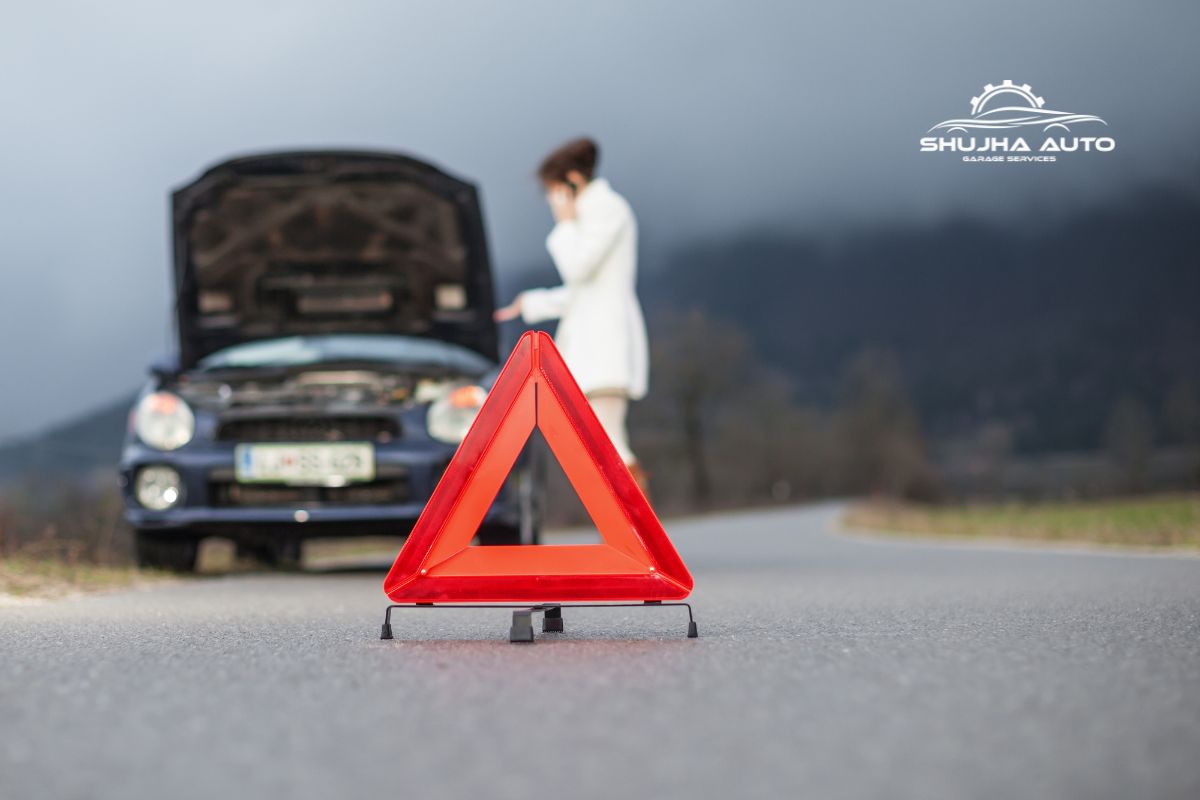
If you see steam coming from under the hood, pull over immediately. This usually means the coolant has leaked so much that the engine is boiling the remaining liquid. Driving while steaming can cause catastrophic engine failure.
6. Poor Heater Performance
Your car’s heater uses hot coolant to warm the cabin. If you notice the heater blowing cold air even when the engine is warm, it often indicates that there isn’t enough coolant circulating because of a leak.
Location: Please Visit Our Shujha Auto Garage
Common Car Coolant Leak Causes
Now that you know what to look for, let’s discuss why this happens. The cooling system is complex, consisting of hoses, clamps, metal, plastic, and rubber components. Over time, heat and pressure take their toll. Understanding car coolant leak causes helps you communicate effectively with your mechanic.
1. Damaged or Loose Radiator Hoses
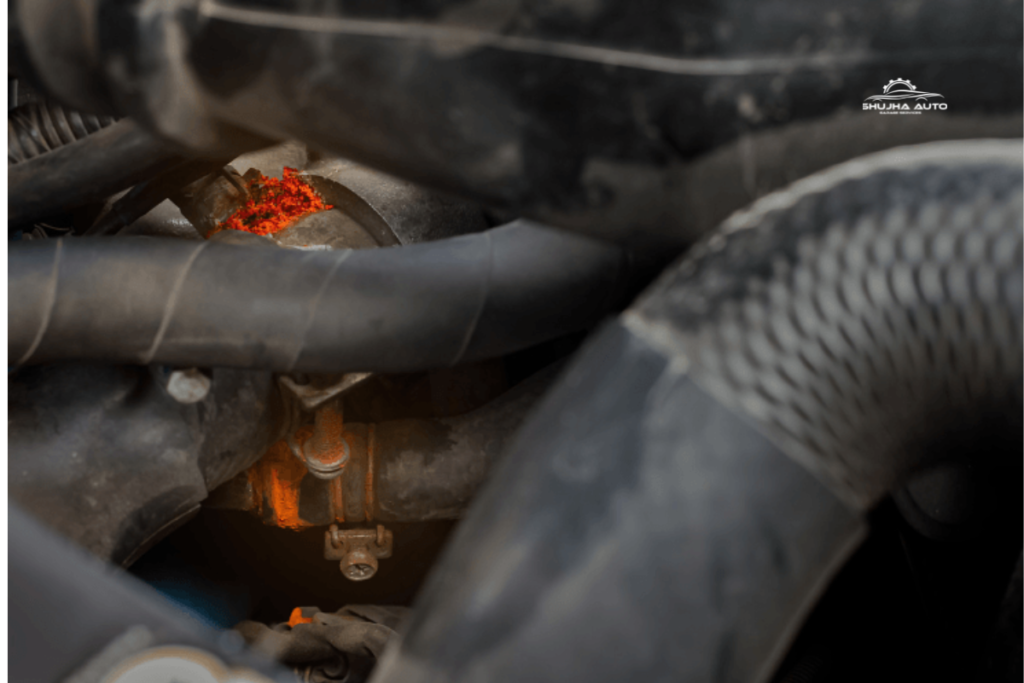
The radiator has two main hoses (upper and lower) that carry coolant to and from the engine. There are also smaller heater hoses. These hoses are made of rubber. Over time, rubber dries out, cracks, or becomes soft and spongy. A small crack can spray coolant onto a hot engine, causing that sweet smell we mentioned earlier. Sometimes, the clamp holding the hose in place simply loosens over time, causing a slow drip.
2. Faulty Radiator Cap
It may seem small, but the radiator cap is a critical component. It is designed to hold pressure in the system. If the cap’s seal wears out, it cannot hold that pressure. When pressure is lost, coolant expands and boils out through the overflow tube. Often, a leaking cap is the culprit behind a coolant leak in car that seems to vanish mysteriously while driving.
3. Cracked or Damaged Radiator
Radiators are usually made of aluminum and plastic. The plastic tanks on the sides (the end tanks) are prone to cracking due to constant heating and cooling cycles. Even a small hairline crack can cause a significant leak. Road debris, such as rocks, can also puncture the radiator fins, leading to a sudden loss of fluid.
4. Water Pump Failure
The water pump is the heart of the cooling system. It pumps coolant throughout the engine. Water pumps have a weep hole—a small vent designed to show when the internal seal is failing. If you notice coolant dripping from the front center of the engine (near the pulleys), the water pump is likely failing. This is one of the most common car coolant leak causes in older vehicles.
5. Blown Head Gasket
This is the most serious cause on our list. The head gasket seals the engine block and the cylinder head. If this gasket fails, coolant can leak into the engine cylinders or mix with the engine oil.
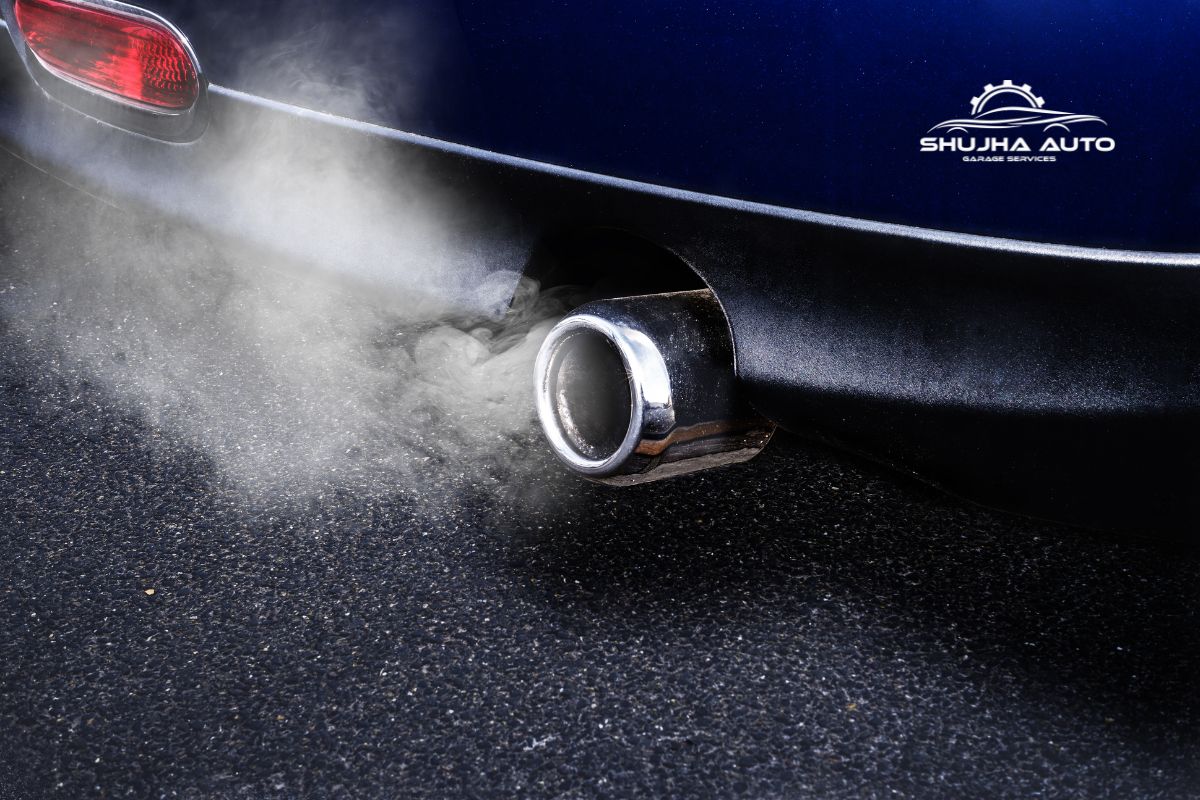
- Symptoms: White smoke from the exhaust (looking like thick fog), milky brown oil (looking like a milkshake), and constant coolant loss with no visible external puddle.
- Why it matters: A blown head gasket is a major repair, but ignoring it can destroy the engine entirely.
6. Heater Core Issues
The heater core is essentially a small radiator located inside your dashboard. If this leaks, you might not see a puddle under the car immediately; instead, you might smell that sweet scent inside the cabin, or find your passenger side floor mats wet with slippery liquid.
7. Freeze Plugs
If you live in an area with cold winters, freeze plugs (also called expansion plugs) can rust out. These are metal discs pressed into the engine block. If one corrodes, it can cause a sudden and massive loss of coolant.
What Happens If an Issue Is Found?
You’ve noticed the signs, you suspect a coolant leak in car, and you’ve brought your vehicle to a professional. What happens next? At Shujha Auto Garage Services, we believe in transparency.
When you bring your car to us with a suspected cooling issue, we don’t just guess. We follow a strict diagnostic process to pinpoint the exact location of the leak.
Step 1: Visual Inspection
Our technicians will pop the hood and perform a thorough visual inspection. We check the radiator, hoses, clamps, water pump area, and the radiator cap. We look for crusty white or colored residue, which indicates dried coolant.
Step 2: Pressure Test
A small leak can be hard to spot. We use a pressure tester that pumps air into the cooling system to simulate the pressure of a running engine. When the system is pressurized, coolant will squirt or drip out of the leak point, revealing the hidden culprit. This is the most effective way to find intermittent leaks.
Step 3: Internal Inspection
If we suspect a blown head gasket or internal leak, we use specialized tools to check for exhaust gases in the coolant or perform a compression test. We also inspect the engine oil and transmission fluid (if applicable) to ensure coolant hasn’t mixed with them.
What happens if an issue is found?
Once we locate the problem, we don’t just hand you a scary bill. We sit down with you and explain exactly what we found.
- We Show You: We often take photos or bring you into the workshop (safely) to show you the cracked hose or the leaking water pump. Seeing the problem helps build trust.
- We Explain the Urgency: We will tell you if the issue is minor (like a loose clamp) or critical (like a failing water pump). We explain the risks of delaying the repair.
- We Provide a Clear Estimate: We provide a detailed quote outlining the cost of parts and labor. There are no surprises.
- We Discuss Options: If multiple issues exist, we prioritize them. We might recommend replacing the timing belt if we are already replacing a water pump, as it saves labor costs down the road.
If the issue is something as severe as a blown head gasket, we will explain the process, the time required, and what you can expect moving forward. Our goal is to ensure you have all the information you need to make a confident decision.
Are There Any Hidden Fees or Charges?
This is a question we hear often, and it is a fair one. The automotive repair industry sometimes has a reputation for unexpected costs. At Shujha Auto Garage Services, we operate on a principle of honesty and upfront communication.
We want to address this directly: No, there are no hidden fees or charges.
When we provide you with a quote for a coolant leak repair, that quote is what you pay—unless you approve additional work beforehand. Here is how we ensure transparency:
- Diagnostic Fee: If we perform extensive diagnostic work (like a pressure test and chemical block test), we inform you of the diagnostic fee upfront. This fee is often waived or credited toward the repair if you choose to proceed with the fix at our garage.
- Approval Before Work: We never start a repair without your explicit approval. If while fixing the leak, we discover a related issue (for example, if the radiator is cracked and we see that the hoses are also about to burst), we will stop, call you, explain the situation, and give you a new estimate. You decide if we proceed.
- Parts Warranty: The price we quote includes the cost of the parts. We use high-quality parts that come with a warranty. If a part we installed fails due to a manufacturing defect, we handle it. You don’t pay for the part again.
- No “Surprise” Labor: Our labor rates are standardized. We use industry-standard flat-rate manuals to estimate repair times. If the repair takes us less time than estimated, you pay the actual time or the quoted price—whichever is less. You never pay for more time than the job actually requires.
We believe that trust is the most important tool in our toolbox. When you ask, Are there any hidden fees or charges? the answer is always a straightforward no.
How to Fix a Coolant Leak
The fix depends entirely on the cause. While some enthusiasts might try a stop leak bottle from the auto parts store, we strongly advise against that. Stop leak products are a temporary bandage that often clogs up your heater core and radiator passages, leading to more expensive repairs later.
Here is how professionals fix the most common issues:
1. Hose and Clamp Replacement
If a hose is cracked or a clamp is loose, the fix is simple. We drain the coolant, replace the damaged hose or tighten the clamp, refill the system with fresh coolant, and bleed the air out of the system (burping). This ensures no air pockets cause overheating.
2. Radiator Replacement
If the radiator tank is cracked or the core is damaged, patching is rarely effective. We replace the entire radiator unit. This involves removing the old radiator, transferring the fans and sensors to the new unit, and ensuring a perfect fit. We then refill the system and test for leaks.
3. Water Pump Replacement
Replacing a water pump can range from simple to complex depending on the car. On some engines, the water pump is driven by the timing belt. In these cases, we often recommend replacing the timing belt and tensioner at the same time, as they are already exposed. This saves you significant labor costs down the road.
4. Head Gasket Repair
This is the most intensive repair. It involves disassembling the top half of the engine. We remove the cylinder head, machine it flat if necessary, clean the surfaces, and install a new high-quality gasket. After reassembly, we flush the oil system and cooling system to ensure no contamination remains.
Prevention Guide: How to Avoid Coolant Leaks
An ounce of prevention is worth a pound of cure. While some leaks are due to age and mileage, you can take steps to reduce the likelihood of a coolant leak in car.
1. Regular Coolant Flushes
Coolant doesn’t last forever. Over time, it becomes acidic and begins to eat away at the rubber seals, gaskets, and metal components from the inside. Following your manufacturer’s recommended coolant flush interval (usually every 30,000 to 50,000 miles or every 2 to 5 years) keeps the fluid fresh and the system protected.
2. Inspect Hoses and Belts
When you pop the hood to check your oil, take a moment to look at the hoses. Squeeze them gently. They should feel firm, not spongy or brittle. Look for cracks near the clamps. If a hose feels soft or looks swollen, it’s time to replace it before it bursts.
3. Check the Radiator Cap
A radiator cap is cheap but vital. If the spring inside weakens, it loses pressure. Replacing the cap every couple of years is a low-cost insurance policy against overheating.
4. Use the Correct Coolant
Not all coolant is the same. Modern vehicles require specific types of coolant (like HOAT, OAT, or silicate-free formulas). Using the wrong type can cause corrosion and sludge buildup. Always check your owner’s manual or ask the experts at Shujha Auto Garage Services to ensure you are using the correct fluid.
5. Listen to Your Car
Don’t ignore the warning signs. If the temperature gauge moves higher than usual, even if it doesn’t hit the red zone, investigate. If you smell that sweet scent, book an inspection immediately. Catching a leak when it’s a “drip” is much cheaper than catching it when it’s a “gush” on the side of the highway.
Why Choose Shujha Auto Garage Services for Your Coolant Repair?
When you are dealing with something as critical as your engine’s cooling system, you need a garage that combines technical skill with honest communication. At Shujha Auto Garage Services, we treat every car as if it were our own.
Here is what sets us apart:
- Experienced Technicians: We have seen every type of car coolant leak causes imaginable. From classic cars to modern hybrids, our team knows the nuances of different cooling systems.
- Modern Equipment: We use advanced diagnostic tools, including pressure testers, thermal imaging (to spot cool spots in radiators), and borescopes to inspect hidden areas without unnecessary disassembly.
- Quality Parts: We refuse to use cheap, no-name parts. We source high-quality OEM (Original Equipment Manufacturer) or equivalent parts to ensure longevity.
- Customer Education: We believe in empowering you. We take the time to explain the why behind the repair. We want you to feel confident that the work done is necessary and done right.
What’s Included in the Free Diagnostic Check
We understand that bringing your car to a garage can feel daunting, especially if you aren’t sure what is wrong. That is why we offer a comprehensive Free Diagnostic Check for specific services to help you get started on the right foot.
When you visit Shujha Auto Garage Services and mention this blog post, we provide a thorough inspection to identify the root cause of your cooling system concerns.
Here is what’s included in the free diagnostic check for coolant leaks:
- Visual Inspection of the Cooling System: We perform a detailed visual inspection of the radiator, radiator hoses, heater hoses, water pump area, and engine block for signs of external leaks, corrosion, or damage.
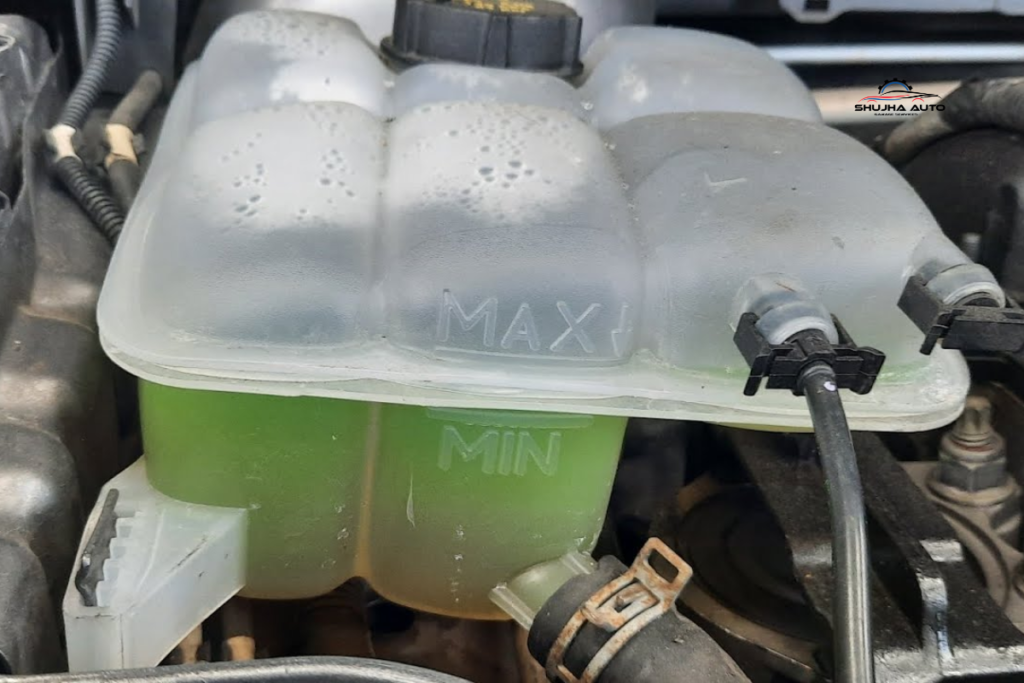
- Coolant Level and Condition Test: We check the coolant reservoir and radiator to see if the fluid is at the correct level. We also inspect the color and consistency of the fluid. If it looks rusty, milky, or smells burnt, we note it as a potential indicator of a deeper issue.
- Radiator Cap Pressure Check: We examine the radiator cap for signs of wear and test the spring pressure to ensure it is holding the proper PSI for your vehicle.
- External Leak Detection: If there are visible signs of a leak, we trace it to the source. If the leak is not visible (intermittent), we prepare a recommended next step, which may include a pressure test (sometimes requiring a nominal fee if extensive time is involved, though we inform you first).
- Roadmap Report: After the check, we provide you with a clear, easy-to-understand report. We tell you what is wrong, what needs immediate attention, what can wait, and what a rough estimate for the repair would be. You leave with knowledge, not just a bill.
This free diagnostic check is our way of building trust. We want you to feel comfortable and informed before any work begins.
Conclusion: Don’t Let a Small Leak Become a Big Problem
A coolant leak in car is rarely a problem that resolves itself. A small drip today can become a catastrophic failure tomorrow. By understanding the car coolant leak causes and recognizing the engine coolant leak symptoms, you put yourself in the driver’s seat regarding your vehicle’s health.
Whether it’s a simple hose replacement or a more complex water pump repair, addressing the issue early saves you money, time, and the stress of an unexpected breakdown.
If you suspect your car is losing coolant, or if it has been a while since your last cooling system service, we invite you to visit Shujha Auto Garage Services.
Let us take the guesswork out of car repair. Our team is ready to provide you with honest answers, quality workmanship, and a stress-free experience. Stop by today for your free diagnostic check, and let’s ensure your engine stays cool and reliable for the miles ahead.