



Why Is My Car Shaking at High Speeds? Learn common causes like tire imbalance, wheel alignment, brakes, and drivetrain issues, plus fixes.
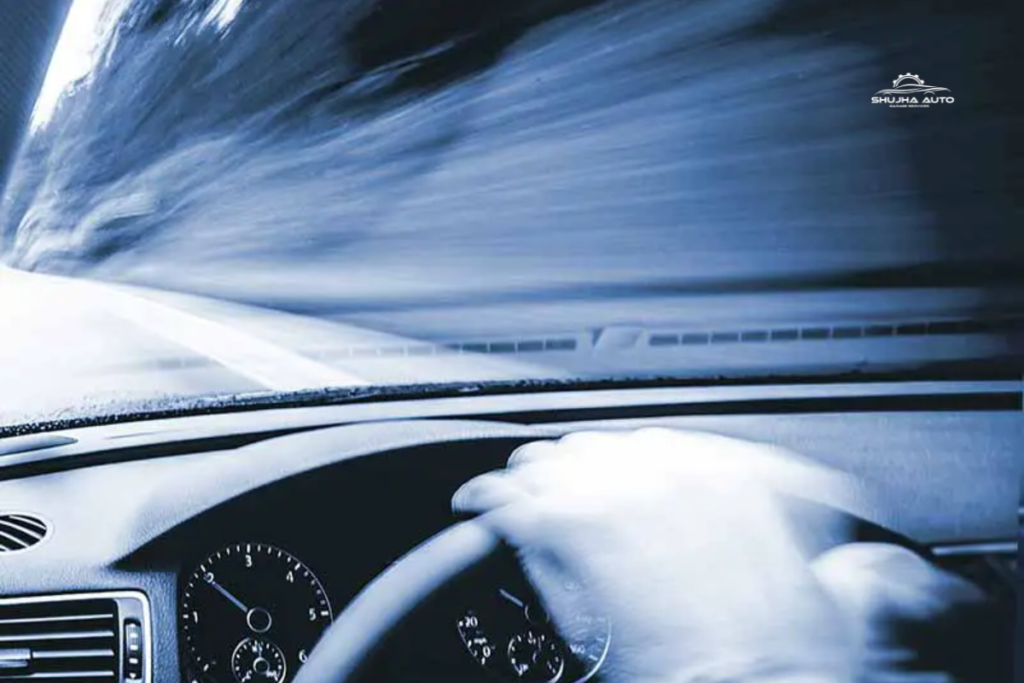
There’s nothing quite like the freedom of the open road. You’re cruising along, maybe on your way to a weekend getaway or just heading home after a long day at work, when suddenly you feel it: a shudder, a wobble, or a violent shake running through the steering wheel and the seats.
If you’ve been searching for answers about car shaking at high speed, you’re not alone. This is one of the most common—and most unsettling—issues drivers face. A shaking car isn’t just annoying; it’s your vehicle’s way of telling you that something is wrong. Ignoring it can turn a minor fix into a major expense or, worse, a safety hazard.
At Shujha Auto Garage Services, we’ve seen hundreds of cars with this exact problem. Some people walk in thinking they need a complete engine overhaul, only to find out the issue was as simple as a wheel weight falling off. Others wait too long, and a small vibration turns into a damaged suspension.
We’ll walk you through the top reasons your vehicle might be vibrating, what you can do about it, and how we at Shujha Auto Garage Services can help you get back to a smooth, safe ride.
Understanding the Shake: Why High Speeds Trigger Vibrations
Before we dive into the why, it helps to understand the where. When you drive at lower speeds, the forces acting on your tires, suspension, and engine are relatively low. But once you hit the highway—specifically around the 60 mph mark—those forces multiply.
This is why many drivers notice their car shakes above 60 mph but feels perfectly fine driving around town. The increased rotational speed of the tires and drivetrain amplifies even the smallest imperfection. A wheel that is just a tiny bit out of balance might feel smooth at 30 mph but will shudder violently at 70 mph.
So, if you’re experiencing car shaking on highway, don’t panic. It’s usually a problem with the rotating bits of your car (wheels, tires, axles) rather than a death sentence for your engine. Let’s look at the usual suspects.
Your Tires Are Out of Balance
This is the most common cause of car shaking at high speed. Your tires and wheels are heavy, and they spin incredibly fast. To ensure they spin smoothly, technicians attach small lead weights to the rim to balance the assembly.
If one of those weights falls off—maybe you hit a pothole or a chunk of ice—the wheel will be out of balance. As it spins, it will hop or wobble slightly. The faster you go, the more violent that wobble becomes.
How to recognize it:
- The shaking usually starts at a specific speed (often around 50-60 mph) and gets worse as you speed up.
- You might feel it mostly in the steering wheel if the front tires are unbalanced, or through the seat if it’s the rear tires.
The Fix:
A simple tire balancing service. At Shujha Auto Garage Services, we can put your car on a balancer, spin the wheels, and identify exactly where weight needs to be added or removed. It’s a quick, affordable procedure that makes a world of difference.
Location: Please Visit Our Shujha Auto Garage
Tires Are Out of Round or Worn Unevenly
Sometimes, the issue isn’t the balance; it’s the tire itself. Tires can develop internal damage (like a broken belt) that causes them to go out of round. Instead of being perfectly round, they develop a flat spot or a bulge.
Similarly, if your suspension isn’t aligned properly, the tires can wear unevenly. You might see cupping or scalloping on the tread. This uneven surface will roar and vibrate as it rolls down the asphalt, leading to car shaking on highway.
How to recognize it:
- A thumping noise that matches the speed of the car.
- Visible uneven wear on the tire tread when you look closely.
- The vibration might change slightly if you turn left or right (loading and unloading the suspect tire).
The Fix:
If the tire is damaged, it usually needs to be replaced. If the wear is due to alignment, we’ll need to fix the suspension angles first, then replace the tire. Our technicians at Shujha Auto Garage Services will measure your tire runout (how much it wobbles as it spins) to confirm this.
Wheel Alignment Issues
While a bad alignment usually causes your car to pull to one side, it can also cause vibrations. If your wheels are pointing in slightly wrong directions (toed in or out too much), they are effectively fighting each other at high speeds. This scrubbing action creates friction and vibration.
How to recognize it:
- Your steering wheel is off-center even when driving straight.
- The car feels wandering or loose on the highway.
- Tires are wearing down quickly on the inside or outside edges.
The Fix:
A precision wheel alignment. We’ll put your car on our alignment rack and adjust the suspension angles back to the manufacturer’s specifications. This ensures the tires roll smoothly and wear evenly.
Bent or Damaged Wheels
In an ideal world, we’d all drive on glass-smooth roads. But in reality, we deal with potholes, construction zones, and rough railroad tracks. Hitting a deep pothole can actually bend the metal or alloy rim of your wheel. Even a slight bend will cause the wheel to wobble as it spins, leading to car shaking at high speed.
How to recognize it:
- This often happens immediately after hitting a large pothole or curb.
- The vibration is usually very consistent and rhythmic.
- A visual inspection might reveal a bent lip on the rim.
The Fix:
Depending on the severity, a bent steel wheel can sometimes be repaired. Alloy wheels are trickier to fix. In many cases, replacement is the safest option. We can help you source a replacement wheel that matches your car.
Brake System Problems (Rotor Warping)
This one is a bit different because it happens when you brake, rather than just cruising. If your car shakes above 60 mph specifically when you apply the brakes, the issue is almost certainly your brake rotors.
Over time, the intense heat generated by braking can warp the rotors (make them uneven). When you press the brake pedal, the brake pads clamp down on this uneven surface, causing a pulsation you can feel through the brake pedal and the steering wheel.
The Fix:
This requires machining (turning) the rotors to make them smooth again, or replacing them entirely. At Shujha Auto Garage Services, we always recommend replacing brake rotors in pairs to ensure even braking force.
Suspension or Steering Component Wear
Your suspension is held together by bushings (rubber cushions) and ball joints (pivoting connections). As your car racks up miles, these parts wear out. They become loose or sloppy. When they are loose, the wheel can wiggle slightly side-to-side or up-and-down, especially when hitting bumps at high speed.
Common culprits include:
- Tie Rod Ends: These connect your steering rack to the wheels. If they are loose, the wheel can shimmy.
- Ball Joints: These allow the control arms to move up and down. Excessive wear here causes instability.
- Wheel Bearings: If these are failing, they can cause a loud roaring noise along with a vibration.
The Fix:
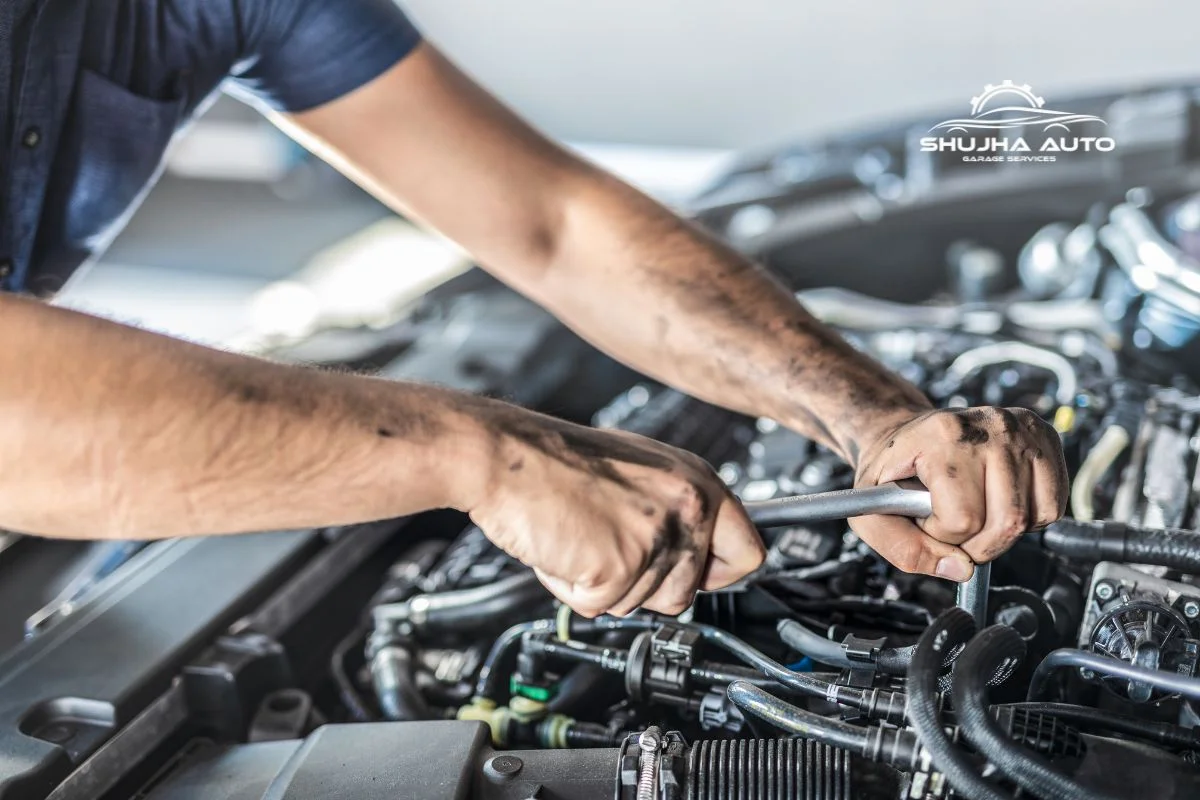
Replacing the worn components. This requires a trained eye to spot the play in the system. Our free health check at Shujha Auto Garage Services is designed to find these exact issues before they become dangerous.
Driveshaft or CV Axle Problems
In many cars, power is transferred from the engine to the wheels via a driveshaft (rear-wheel drive) or CV axles (front-wheel drive). If these components are bent, or if a CV joint is worn out, they will vibrate violently under load.
How to recognize it:
- The vibration gets worse the harder you accelerate.
- You might hear a clicking noise when turning (a classic sign of a bad CV joint).
- The vibration might feel more like a jerking or juddering sensation.
The Fix:
This is a more involved repair. A damaged CV axle or driveshaft usually needs to be replaced. Continuing to drive on a bad CV joint can cause it to break completely, leaving you stranded. Bring your car to Shujha Auto Garage Services immediately if you suspect this.

What Happens If an Issue Is Found?
This is the part where a lot of drivers get nervous. You’ve dropped your car off, we’ve done the diagnostic check, and we’ve found the culprit behind your car shakes above 60 mph. Now what?
At Shujha Auto Garage Services, we believe in transparency and education. Here’s exactly what happens next:
- You Get a Detailed Explanation: We won’t just hand you a bill. A technician will walk you through the findings. We’ll explain what part is worn out, why it failed, and how it’s causing your car shaking on highway. If possible, we’ll even show you the old part or the worn-out component so you can see the issue with your own eyes.
- You Receive a Clear Estimate: You will get a written estimate that breaks down the cost of the parts and the labor required to fix the problem. This estimate is based on the specific issue we found during the diagnostic, not a guess.
- We Discuss Your Options: Sometimes, there are multiple ways to fix a problem. For example, if your brakes are causing the issue, you might have the option of resurfacing the rotors or replacing them with brand new ones. We’ll explain the pros and cons of each option regarding safety, performance, and budget so you can make an informed decision.
- You Approve the Work (Or Not): We never perform any work without your explicit approval. If you need time to think about it or want to compare prices, that’s perfectly fine. We’ll give you the space to decide.
Are There Any Hidden Fees or Charges?
We know this is a major concern for car owners. Nobody likes surprises when it’s time to pay the bill. You might have heard horror stories about shops that quote one price and then tack on a dozen mystery fees at the end.
At Shujha Auto Garage Services, we operate with honesty and integrity. There are no hidden fees or charges. The estimate we give you is the price you pay.
Here’s how we ensure transparency:
- Itemized Estimates: Our estimates are detailed. You’ll see exactly how much the parts cost (and whether they are OEM or high-quality aftermarket parts) and exactly how much labor time is required.
- No Ambiguous Fees: You won’t see vague line items like “shop supplies” padded to pad the bill. If there’s a standard disposal fee for old batteries or tires, it will be clearly stated upfront.
- Approval for Additional Work: Car repairs can sometimes be tricky. Occasionally, once we start a job, we might find an additional issue that wasn’t visible before (for example, a rusted bolt that breaks during removal). If this happens and it affects the cost or the repair process, we will stop and call you immediately. We will explain the new issue, provide a revised estimate, and get your permission before moving forward. We will never surprise you with extra charges on the final invoice.
What’s Included in the Free Diagnostic Check?
So, you’ve felt that terrifying shake, and you’ve decided to bring your car to the experts. You might be wondering what happens during that initial visit. At Shujha Auto Garage Services, we offer a comprehensive free diagnostic check to identify the source of your vibration.
We don’t just plug in a computer and call it a day (though we do use computers!). Our diagnostic check is a multi-point inspection focused on finding the root cause. Here’s what it includes:
Test Drive: Our technician will ride with you, or drive the car themselves, to experience the vibration firsthand. We want to know exactly when it happens—at what speed, during acceleration, or while braking.
Visual Inspection of Tires and Wheels: We’ll put the car on a lift and spin the wheels. We’re looking for:
- Bent wheels or rims.
- Bulges, flat spots, or foreign objects in the tires.
- Missing wheel weights.
Suspension and Steering Check: Using pry bars and our hands, we’ll check every joint and bushing in the front and rear suspension for looseness or wear. This includes:
- Tie Rod Ends
- Ball Joints
- Control Arm Bushings
- Sway Bar Links
- Wheel Bearings
Brake Inspection: We’ll remove the wheels to inspect the brake pads and rotors for uneven wear, grooves, or warping.
Drivetrain Inspection: We’ll check the CV axle boots for tears (which lead to grease loss and joint failure) and inspect the driveshaft and universal joints (U-joints) for play.
Under the Hood Check: We’ll quickly inspect the engine and transmission mounts to see if they are collapsed or broken, which can also cause vibrations.
- Tire Pressure and Tread Depth Check: Ensuring proper inflation and even tread wear.
At the end of this thorough inspection, you’ll have a clear understanding of your car’s health. Whether the issue is a simple tire balance or a worn-out suspension part, you’ll know exactly what needs to be done to stop the car shaking at high speed.
Don’t Let the Shake Ruin Your Ride
A shaking car is a stressed car. Every mile you drive with a vibration, you risk damaging other components. An unbalanced tire can wear out a wheel bearing. A worn ball joint can damage a tire. Small problems grow into big, expensive ones.
If your car has been shaking, don’t wait for it to get worse. Bring it to the team that cares about your safety and your wallet.
At Shujha Auto Garage Services, we take the mystery out of auto repair. With our free diagnostic check, transparent pricing, and expert technicians, we’ll have you back on the road smoothly in no time.
Stop by Shujha Auto Garage Services today or give us a call to schedule your free diagnostic check. Let’s get rid of that shake for good!