How long do brake pads last? Learn average brake pad lifespan, warning signs, and factors that affect brake pad wear for safer driving.
Let’s talk about something every SUV and truck owner thinks about but often worries over: brakes. That pressing feeling when you push the pedal, the quiet confidence of a smooth stop—it’s all thanks to a small but mighty part called the brake pad. But when that peace of mind starts to fade into a high-pitched squeal or a worrying shudder, the big question hits you: How long do these things actually last?
If you drive a hefty SUV, a pickup truck, or any larger vehicle, you know it’s a different beast. It’s not just a bigger cabin and a higher ride; it’s more weight, more power, and more demand on every part that makes you stop. Understanding your brake pad’s life isn’t just about saving money; it’s about the safety of everyone inside and around your vehicle.
So, grab a coffee, get comfortable, and let’s demystify brake pads for your heavy-duty ride. We’ll talk real numbers, real driving habits, and what really happens during a check-up. And yes, we’ll clear up all those nagging questions about costs and diagnostics, too.
The Heart of the Matter: What Are Brake Pads, Anyway?
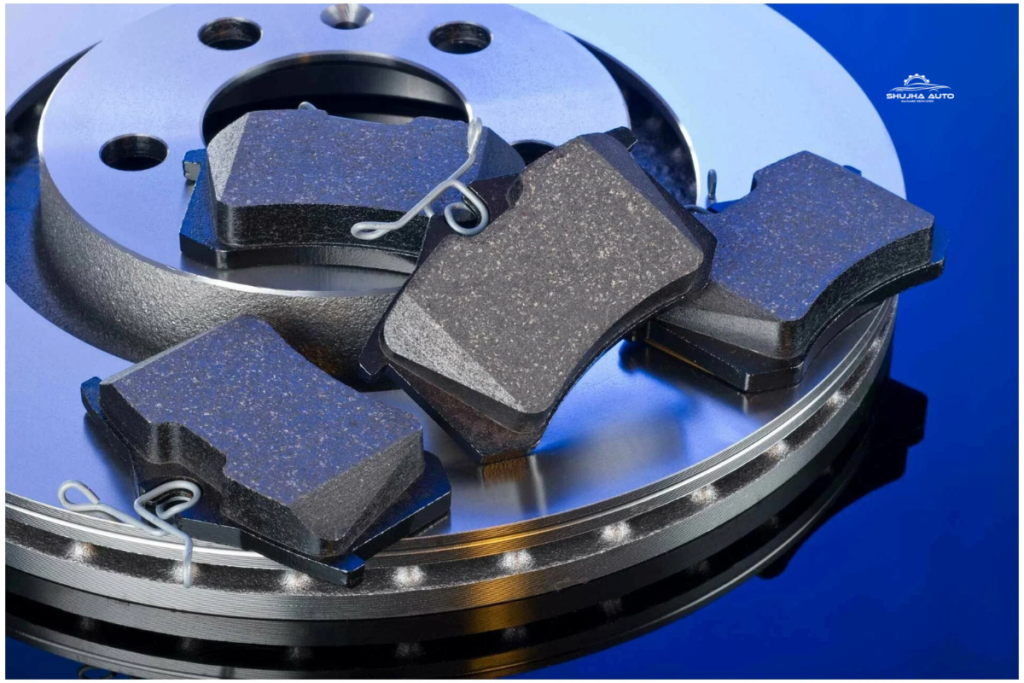
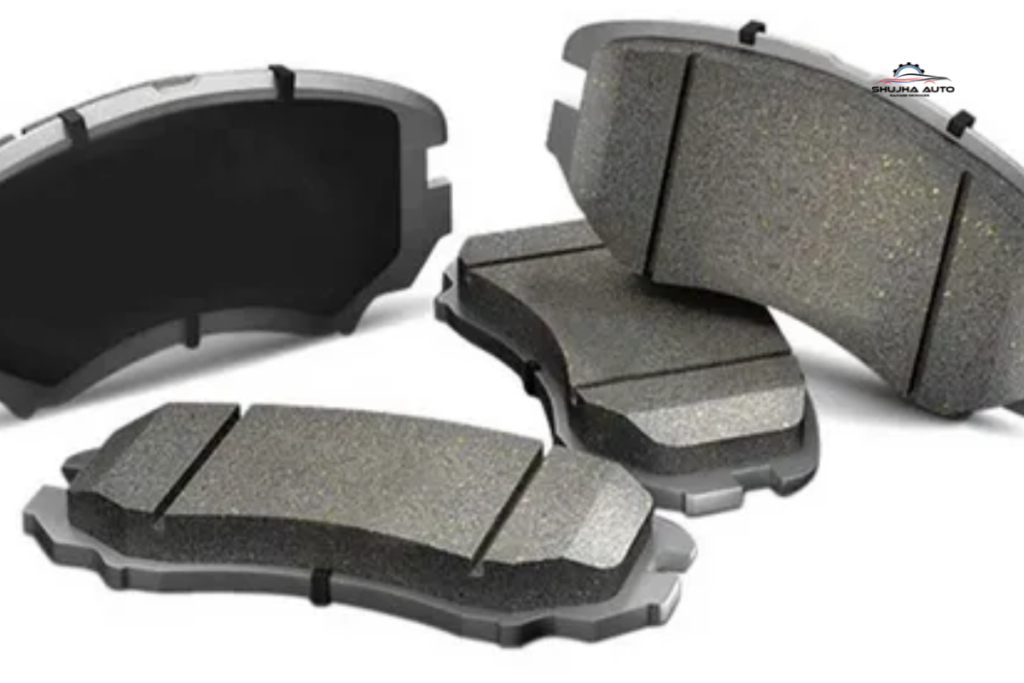
In simple terms, brake pads are the replaceable friction pads in your braking system. When you press the brake pedal, hydraulic fluid pushes a clamp (called a caliper) that squeezes these pads against a spinning metal disc (the rotor). This friction creates the resistance that slows your wheels down. It’s a brilliant, straightforward system, but with one catch: the pad material wears down a little bit with every single stop.
Think of it like an eraser on a pencil. With gentle use, it lasts a long time. But if you’re constantly erasing big, dark marks, it wears down much faster. Your brake pads are the erasers for your vehicle’s momentum.
The Big Question: Average Brake Pad Lifespan for SUVs and Trucks
Here’s the number most people search for: the average brake pad lifespan. For a typical sedan, you might hear ranges of 30,000 to 50,000 miles. But for your SUV, pickup, or larger van, you need to reset those expectations.
For most SUVs and light trucks, a realistic brake pad life expectancy is between 25,000 and 45,000 miles. For heavier vehicles like full-size pickups, three-row SUVs, or vehicles used for towing, the lower end of that range—25,000 to 35,000 miles—is more common.
Why the shorter life? It’s simple physics:
- More Weight: A heavier vehicle requires more force to stop. More force equals more friction and faster wear.
- Larger Tires: Bigger, broader tires provide more grip, which is great for stability but also puts more strain on the brakes to slow that grip down.
- Usage Patterns: Let’s be honest, our larger vehicles often do the hard work—carrying full loads of family and gear, towing trailers, or navigating stop-and-go city traffic more often than not.
Location: Please Visit Our Shujha Auto Garage
Front vs. Rear: Why Your Front Brake Pads Work Overtime
Here’s a crucial detail many drivers miss: your front brake pads lifespan is almost always shorter than your rear pads. Why? Because of weight transfer.
When you hit the brakes, the vehicle’s weight lurches forward. This means the front of the vehicle bears the majority of the stopping force—often up to 70-80%. The front brakes do the heavy lifting, while the rear brakes play more of a supporting role. Therefore, you will typically replace your front brake pads twice for every one time you replace the rear pads.
The Factors That Make Your Brake Pads Say Enough!
Your mileage is just a starting point. How you drive and where you drive are the real dictators of brake pad life.
- Driving Style (The Biggest Factor):
- The Stop-Start Commuter: If your daily drive is a congested urban crawl with constant braking, your pads will wear out significantly faster.
- The Lead Foot: Frequent high-speed driving followed by hard braking is the quickest way to burn through premium brake pad material.
- The Tower & Hauler: Regularly towing a boat, camper, or carrying max payload adds tremendous stress and heat to your braking system.
- Driving Environment:
- Mountainous Terrain: Long, steep descents mean riding the brakes, which generates extreme heat and accelerates wear.
- Coastal or Rust-Belt Living: Road salt and moisture can cause corrosion, not just on the pads but on the calipers and rotors, leading to uneven wear and noise.
- Vehicle and Parts Quality:
- Type of Brake Pad: There are generally three types: organic (softer, quieter, but wear faster), semi-metallic (good performance and longevity, but can be noisy), and ceramic (excellent longevity, very quiet, and produce less dust, but often cost more). Many SUVs come with semi-metallic from the factory.
- Vehicle Model: Some models are simply harder on brakes due to their weight distribution, powertrain, or original equipment part choice.
Listening to Your Vehicle: The Warning Signs You MUST Know
Don’t wait for a number on your odometer. Your vehicle is pretty good at telling you when it’s time for a brake service. Heed these warnings:
- The Squeal or Screech: Most brake pads have a small, built-in metal piece called a wear indicator. When the pad material gets low, this indicator contacts the rotor, creating a high-pitched squealing or screeching sound when you brake. This is your vehicle’s official schedule an appointment now alert.
- The Grinding Growl: If you ignore the squeal and all the friction material wears away, you’ll hear a harsh grinding or growling sound. This is metal (the caliper or backing plate) grinding directly on the metal rotor. This is an emergency. You are now causing expensive damage to the rotors and risking brake failure.
- The Warning Light: Many modern vehicles have a brake warning light on the dashboard. This can be for the parking brake, low fluid, or worn pads (some models have a specific Brake Pad warning).
- Longer Stopping Distance: If you feel your SUV is taking a few extra feet to come to a halt, your pads could be glazed or severely worn.
- Vibration or Pulsation: A shaking steering wheel or brake pedal pulsation when stopping usually points to warped rotors, often caused by excessively worn pads overheating the rotor.
- Pulling to One Side: If your vehicle pulls left or right when braking, it could mean a stuck caliper or uneven pad wear.
The Check-Up: What Really Happens at the Garage?
You’ve heard a noise or seen a light. You’re smart and you decide to get it checked. What’s next? At a professional garage like ours, Shujha Auto Garage Services, a brake inspection is a thorough, hands-on process. It’s not just a quick glance.
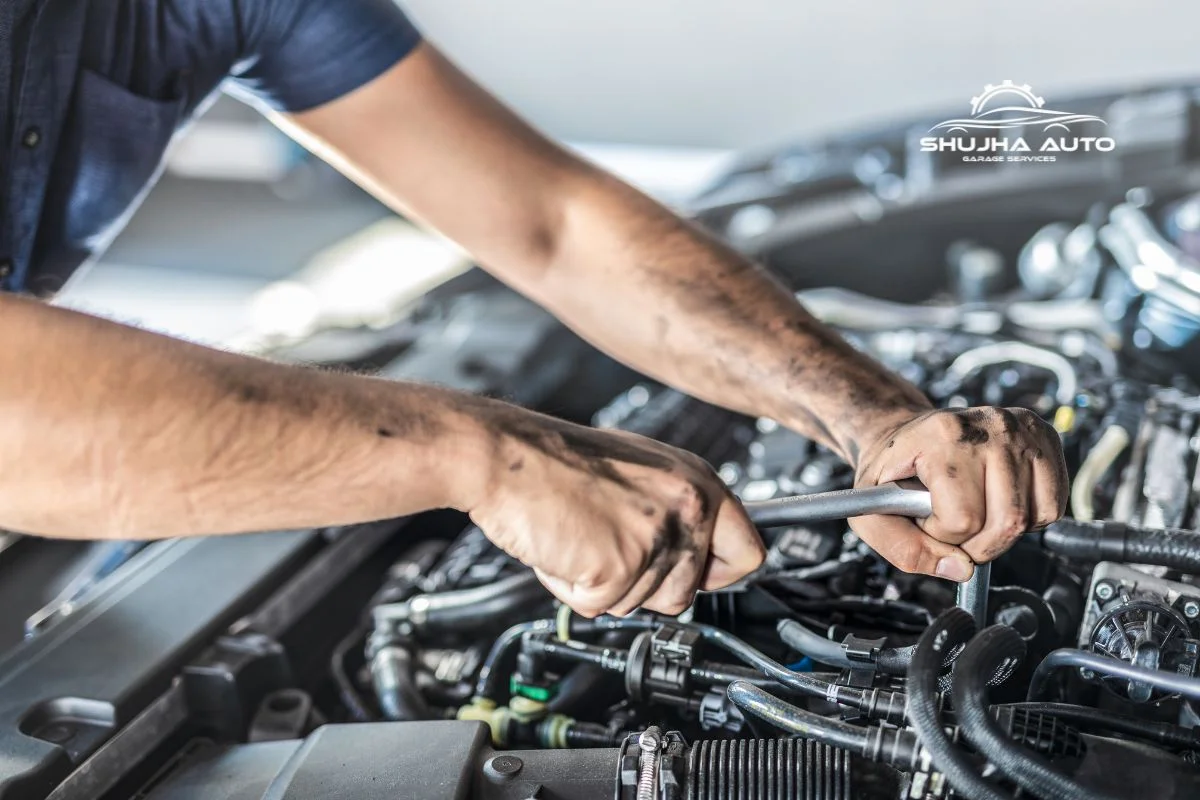
A technician will safely lift the vehicle and remove the wheels to get a full, unobstructed view of the braking system on each corner. They will:
- Measure the remaining thickness of the brake pad material (both inner and outer pads).
- Inspect the condition of the rotors for scoring, grooves, or warping.
- Check the brake calipers for proper movement and freedom from rust or seizure.
- Examine the brake lines for any leaks, cracks, or damage.
- Look at the brake fluid level and condition in the master cylinder reservoir.
This comprehensive check gives a complete picture of your braking system’s health.
Your Top Questions, Answered Honestly
When it’s time to face the music, a few common worries pop up. Let’s address them head-on.
- What happens if an issue is found?
This is the moment of truth. If an issue is found, a trustworthy garage will first show you the evidence. At Shujha Auto Garage Services, we believe in transparency. We’ll bring you to the service bay, point out the worn pads with a measuring tool, show you the rotor condition, and explain everything in plain English—no confusing jargon.
Then, we present your options. For worn pads, this usually means:
- Option A: Replace the brake pads only (if the rotors are in good condition and can be smoothed out, or “machined”).
- Option B: Replace both the brake pads and the rotors (if the rotors are too thin, deeply grooved, or warped).
We’ll explain the pros, cons, and safety implications of each choice for your specific SUV. The goal is to give you the information you need to make a confident decision. No pressure, just facts and professional advice.
- What’s included in the free diagnostic check?
Ah, the free diagnostic. It can sound too good to be true. Let’s clarify what a genuine, no-strings-attached check should cover. At our garage, our free diagnostic check for brakes includes everything listed in the inspection process above: the visual and physical inspection of pads, rotors, calipers, and fluid. We give you a clear verdict on the spot—what’s worn, what’s still good, and what your estimated remaining life is.
The free means there is no charge for the technician’s time to diagnose the problem. It’s our way of helping you make an informed decision without any upfront cost. If you approve the repair work, the cost of the diagnostic is naturally absorbed into the overall service. If you choose not to proceed, you walk away with valuable knowledge about your vehicle’s health at no charge.
- Are there any hidden fees or charges?
This is the fear that keeps many people from visiting a new garage. The answer should be a clear and resounding no.
A professional, honest service center will provide a detailed, written estimate before any work begins. This estimate should break down:
- The cost of parts (brand and type of pads, rotors, etc.).
- The cost of labor (the time to complete the job).
- Any shop supplies or disposal fees (these are usually small, standard fees and should be listed).
- The total, all-in price, including tax.
At Shujha Auto Garage Services, we stand by our estimates. We won’t start work and then discover extra problems that skyrocket the bill. If we find something unexpected and critical while performing the approved work (which is very rare with brakes), we will immediately stop, contact you, explain the new situation, and get your explicit authorization before proceeding. No surprises, no hidden fees.
Beyond the Pads: Other Parts That Wear Out
Replacing brake pads is often not a solo job. The system works as a unit, and other components wear in tandem.
- Rotors: These metal discs need to be smooth and flat. Worn pads can score them; heat can warp them. They can sometimes be machined smooth, but often, replacement is the best option for optimal performance and safety on a heavy vehicle.
- Brake Fluid: This hygroscopic fluid absorbs moisture over time, which lowers its boiling point and can lead to a soft pedal and internal corrosion. It should be flushed every 2-3 years as part of regular maintenance.
- Caliper Hardware: Slide pins, bolts, and clips ensure the caliper moves freely. These should be cleaned, lubricated, or replaced with every pad change to prevent sticking and uneven wear.
Choosing the Right Parts for Your Heavy-Duty Ride
When it’s time for replacement, you’ll have options. For your SUV or truck, choosing the right grade is key.
- Economy/Organic Pads: Generally not recommended for heavier vehicles due to faster wear and lower heat tolerance.
- Premium Semi-Metallic/OE Spec: A great balance for most drivers. They offer good stopping power, decent longevity, and are often what the vehicle originally came with.
- Ceramic Pads: An excellent upgrade. They run cleaner (less dust on your wheels), are very quiet, and provide consistent performance. While the initial cost is higher, their longer lifespan can make them cost-effective over time, especially for a vehicle you plan to keep long-term.
- Heavy-Duty/Towing Pads: Specifically formulated for high heat and stress. If you tow regularly, these are a worthwhile investment.
A good garage will discuss these options with you, aligning them with your driving habits and budget.
Pro Tips to Extend Your Brake Pad’s Life
You can be kind to your brakes! A few simple habits can help you reach—or even exceed—that average brake pad lifespan.
- Anticipate and Coast: Look far ahead in traffic. Instead of accelerating only to brake hard at the next light, ease off the gas earlier and let your vehicle coast down. This is the single most effective technique.
- Use Engine Braking: On downhill stretches, especially in mountainous areas, downshift your automatic transmission into a lower gear (like L or 3). This uses the engine to help slow the vehicle, taking the strain off the brakes.
- Lighten the Load: Regularly clean out unnecessary items from your trunk and cabin. Extra weight means extra work for your brakes.
- One-Wheel-On: When washing your vehicle, try to avoid spraying cold water directly onto hot brakes and rotors, as rapid cooling can contribute to warping.
- Stick to a Schedule: Don’t ignore minor noises. Have your brakes inspected at least once a year, or with every other oil change.
Why This All Matters: The Safety Equation
Finally, let’s remember why we’re talking about this. It’s not just about money or mileage. Your braking system is your primary safety system. On a 4,000+ pound SUV, its integrity is non-negotiable.
Worn brakes don’t just fail catastrophically one day. They degrade—increasing stopping distances, reducing control in emergencies, and putting undue stress on the rest of the vehicle. Maintaining them is an act of care for yourself, your passengers, and everyone else on the road.
Finding a Garage You Can Trust
You now know more than most SUV owners about brakes. The final piece is finding a mechanic who knows just as much, if not more, and who you can trust to do the job right.
Look for a garage that:
- Specializes in or has extensive experience with SUVs, trucks, and domestic vehicles.
- Communicates clearly and shows you the problem.
- Provides detailed, upfront estimates with no pressure.
- Uses quality parts and stands behind their work with a solid warranty.
- Has a reputation for honesty and fair dealing in your community.
At Shujha Auto Garage Services, we’ve built our business on these very principles. We understand the unique demands placed on your larger vehicle. We know that a brake job on a compact car is not the same as on a three-row family SUV. We use the right tools, the right parts, and the right expertise to ensure your vehicle stops as confidently as the day you bought it.
So, if you’re hearing a squeal, feeling a pulse, or it’s just been a while since someone took a good look, don’t wait. The peace of mind that comes with knowing your brakes are in top shape is priceless. We invite you to come in for a genuine, free diagnostic check. Let’s look at your brakes together, answer all your questions, and keep you and your family safe on every journey. Your heavy-duty ride deserves nothing less.