

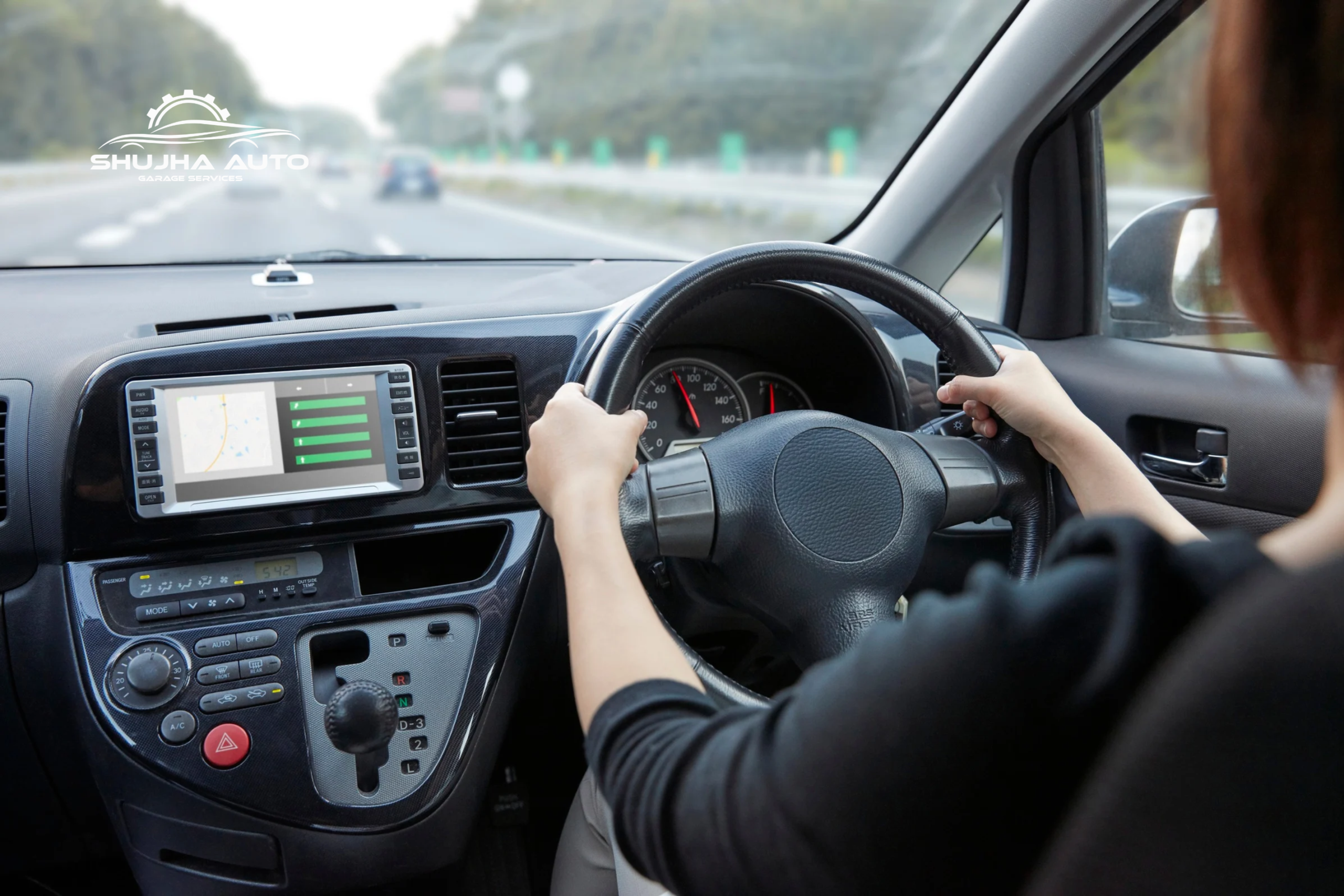
Imagine driving through Sharjah when the check engine light suddenly appears on your dashboard. Your car may still be running normally, but you are unsure what the warning means. Is it a minor sensor problem, an engine issue, or something that could lead to an expensive repair?
Sometimes, your car may show other symptoms without any warning light. You might notice rough idling, poor acceleration, unusual fuel consumption, hard starting, gearbox jerking, or electrical problems.
This is where a car diagnostic test becomes useful.
Modern vehicles contain electronic control units, sensors, and computer systems that continuously monitor different parts of the car. When these systems detect certain problems, they may store fault codes that a professional diagnostic scanner can read.
However, a diagnostic test does more than display error codes. Depending on the vehicle and equipment, it can also show live sensor readings, system performance information, and electronic faults that help technicians understand what is happening.
In this guide, we will explain what a car diagnostic test checks, which problems it can detect, how computer diagnostics work, what a scan cannot identify, and when to visit Auto Garage Services in Sharjah for professional car computer diagnostics, engine scanning, electrical diagnostics, and related car repair services.
Quick Answer: What Does a Car Diagnostic Test Check?
A car diagnostic test checks electronically monitored vehicle systems for stored fault codes, sensor readings, and abnormal operating conditions.
Depending on the vehicle and diagnostic equipment, a comprehensive scan may examine:
- Engine management system
- Transmission and gearbox electronics
- Fuel injection and ignition systems
- Engine sensors
- ABS braking system
- Airbag and safety restraint systems
- Electronic steering systems
- Battery and charging system information
- Air conditioning control electronics
- Emissions control systems
- Electronic control modules
A diagnostic scanner helps identify where a problem may exist. However, a fault code does not automatically confirm which component needs replacement.
Professional diagnosis may also require mechanical inspection, electrical testing, pressure measurements, and other checks.
What Is a Car Diagnostic Test?
A car diagnostic test is a process in which a technician connects specialized equipment to a vehicle’s electronic systems.
Most modern cars have an onboard diagnostic connector, commonly called an OBD port, usually located beneath the dashboard.
A diagnostic scanner communicates with the vehicle’s electronic control units to retrieve information about detected faults and system operation.
Modern cars use several electronic modules to control different functions. For example, the engine control unit manages combustion and engine performance, while other modules may manage the transmission, brakes, airbags, or climate control.
When a monitored system operates outside an expected range, the vehicle may store a diagnostic trouble code.
These codes provide useful information, but they are the beginning of the investigation rather than the final diagnosis.
What Systems Does a Car Diagnostic Test Check?
The systems available for scanning depend on the vehicle manufacturer, model, year, and diagnostic equipment.
A basic OBD scanner usually focuses on engine and emissions-related faults. More advanced diagnostic equipment can access additional vehicle modules where supported.
1. Engine Management System
The engine management system is one of the main areas checked during car computer diagnostics.
The engine control unit monitors many functions involved in keeping the engine running efficiently.
A diagnostic scan may reveal problems involving:
- Engine misfires
- Air-fuel mixture control
- Throttle system operation
- Engine temperature sensors
- Oxygen sensors
- Airflow and pressure sensors
- Ignition-related faults
- Engine control communication
For example, if your car shakes while idling and the check engine light is on, a scan may reveal a misfire code associated with a particular cylinder.
However, the technician must still determine whether the issue comes from a spark plug, ignition coil, injector, wiring, or mechanical engine problem.
2. Transmission and Gearbox System
Modern automatic transmissions often have electronic controls that monitor shifting and gearbox operation.
Where supported, diagnostic equipment may identify faults related to:
- Transmission speed sensors
- Shift solenoids
- Transmission fluid temperature
- Gear selection signals
- Pressure control systems
- Transmission control modules
- Electronic shifting problems
If your car jerks when changing gears or experiences delayed shifting, a transmission scan can help identify possible electronic or hydraulic control faults.
However, some mechanical gearbox problems may not generate a diagnostic code.
Transmission fluid inspection and additional testing may still be necessary.
3. Fuel Injection System
The fuel injection system delivers the required fuel to the engine.
The engine computer monitors information that helps control fuel delivery and combustion.
A diagnostic scan may show faults involving fuel mixture control, injector electrical circuits, fuel pressure sensors, or related components.
Common symptoms include poor acceleration, rough idling, difficult starting, increased fuel consumption, and engine hesitation.
A scan cannot directly confirm every fuel system problem. For example, a weak fuel pump may require a separate fuel pressure test.
4. Ignition System
The ignition system helps ignite the fuel-air mixture inside petrol engines.
Faulty spark plugs, ignition coils, wiring, or related components may cause engine misfires and poor performance.
A diagnostic scan can identify certain ignition-related fault codes and misfire information.
However, a code showing a misfire does not automatically mean the spark plug is faulty.
The technician may need to inspect ignition coils, fuel injectors, compression, and other engine components.
5. ABS Braking System
The anti-lock braking system, or ABS, helps prevent wheel lockup during hard braking.
When an ABS-related fault occurs, the ABS warning light may appear.
A compatible professional scanner may identify problems involving wheel speed sensors, ABS module communication, electrical circuits, or other monitored components.
If the ABS warning light remains illuminated, the system should be inspected promptly.
A standard engine-only code reader may not access ABS faults.
6. Airbag and Safety Systems
Modern vehicles use electronic safety systems to monitor airbags, seat belt pretensioners, and related restraint components.
A compatible scanner may identify faults involving airbag circuits, occupant detection systems, sensors, or safety module communication.
An illuminated airbag warning light should not be ignored because the restraint system may not operate as intended during an accident.
Airbag diagnosis requires appropriate professional equipment and safety procedures.
7. Electrical and Electronic Systems
Modern cars rely on electrical communication between control modules.
Depending on the vehicle, advanced diagnostic equipment may detect problems involving:
- Module communication
- Electronic switches
- Power distribution controls
- Electronic throttle controls
- Body control modules
- Charging system monitoring
- Selected lighting and accessory circuits
However, a diagnostic scan alone cannot fully test battery health, starter motor condition, alternator output, or wiring integrity.
Separate electrical measurements may be required.
8. Car AC Electronic Systems
Some modern vehicles have electronic climate control modules that can be accessed through professional diagnostic equipment.
These systems may monitor temperature sensors, air distribution actuators, compressor control signals, and other electronically controlled functions.
For example, an AC diagnostic scan may help identify a faulty sensor or control circuit.
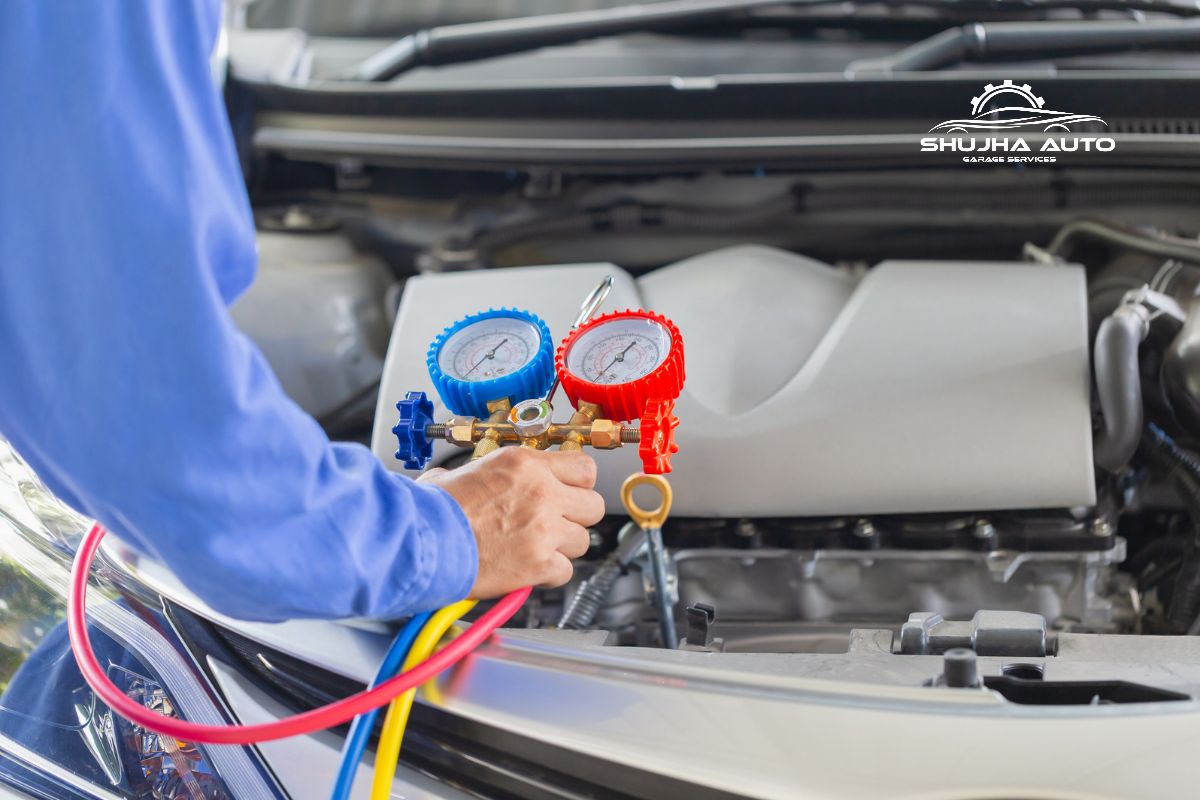
However, a computer scan cannot directly measure the refrigerant charge or locate every AC gas leak.
Weak cooling may require refrigerant pressure measurements, leak detection, airflow checks, and compressor inspection.
9. Emissions Control System
The emissions control system is one of the main functions monitored by standard OBD diagnostics.
Depending on the vehicle, diagnostic information may relate to:
- Oxygen sensors
- Catalytic converter efficiency
- Exhaust gas recirculation
- Evaporative emissions systems
- Fuel mixture control
- Engine misfires
- Other emissions-related components
Emissions faults can trigger the check engine light even when the vehicle still feels normal to drive.
What Information Does a Car Diagnostic Scanner Show?
A diagnostic scanner can provide several types of information that help technicians investigate vehicle problems.
Diagnostic Trouble Codes
Diagnostic trouble codes, commonly called DTCs, are standardized or manufacturer-specific codes stored by the vehicle’s electronic systems.
For example, a code may indicate an engine misfire, sensor circuit problem, or fuel mixture issue.
Codes point toward affected systems or monitored conditions rather than providing a guaranteed repair instruction.
Live Sensor Data
Professional diagnostic scanners may display real-time information from vehicle sensors.
Depending on the vehicle, this may include engine speed, coolant temperature, intake air readings, fuel trim information, oxygen sensor signals, and other operating values.
Live data helps technicians understand how the vehicle behaves while running.
Freeze-Frame Data
Some fault codes include freeze-frame information.
This records selected operating conditions when the fault was detected, such as engine speed, temperature, load, or vehicle speed.
Freeze-frame information can help when a problem happens only occasionally.
Pending and Stored Faults
A vehicle may record a pending fault before it becomes a confirmed problem that illuminates the check engine light.
This means a scan can sometimes reveal useful information even when no dashboard warning light is currently visible.
Readiness Monitor Status
OBD readiness monitors show whether certain emissions-related self-tests have completed.
They may display an incomplete status after fault codes are cleared or the battery has been disconnected.
Readiness information is useful during emissions-related diagnosis and inspection.
What Happens During a Professional Car Diagnostic Test?
A professional diagnostic service should follow a structured process.
Step 1: Understanding the Symptoms
The technician asks what problem you are experiencing.
For example, your car may be losing power, shaking, refusing to start, or showing a dashboard warning light.
Step 2: Connecting the Scanner
The diagnostic equipment is connected to the vehicle’s appropriate diagnostic port.
The technician selects the relevant vehicle information and establishes communication with supported control modules.
Step 3: Reading Fault Codes
The scanner retrieves available stored, pending, or other supported fault information.
The technician checks which systems reported abnormalities.
Step 4: Reviewing Live Data
Relevant sensor values and operating conditions are examined to understand the reported problem.
Step 5: Additional Inspection
Depending on the findings, the technician may inspect wiring, connectors, fluid levels, mechanical components, or electrical circuits.
Step 6: Identifying the Cause
The technician compares the diagnostic results with the actual symptoms and test findings before recommending repairs.
Step 7: Repair Verification
After repairs, relevant systems should be checked again.
A follow-up scan and suitable functional test can help confirm whether the original problem has been resolved.
Can a Diagnostic Test Detect Every Car Problem?
No. This is one of the most important things drivers should understand.
A car computer diagnostic test is powerful, but it cannot identify every mechanical problem.
Some issues may not produce any fault code.
Examples include:
- Worn brake pads without an electronic warning
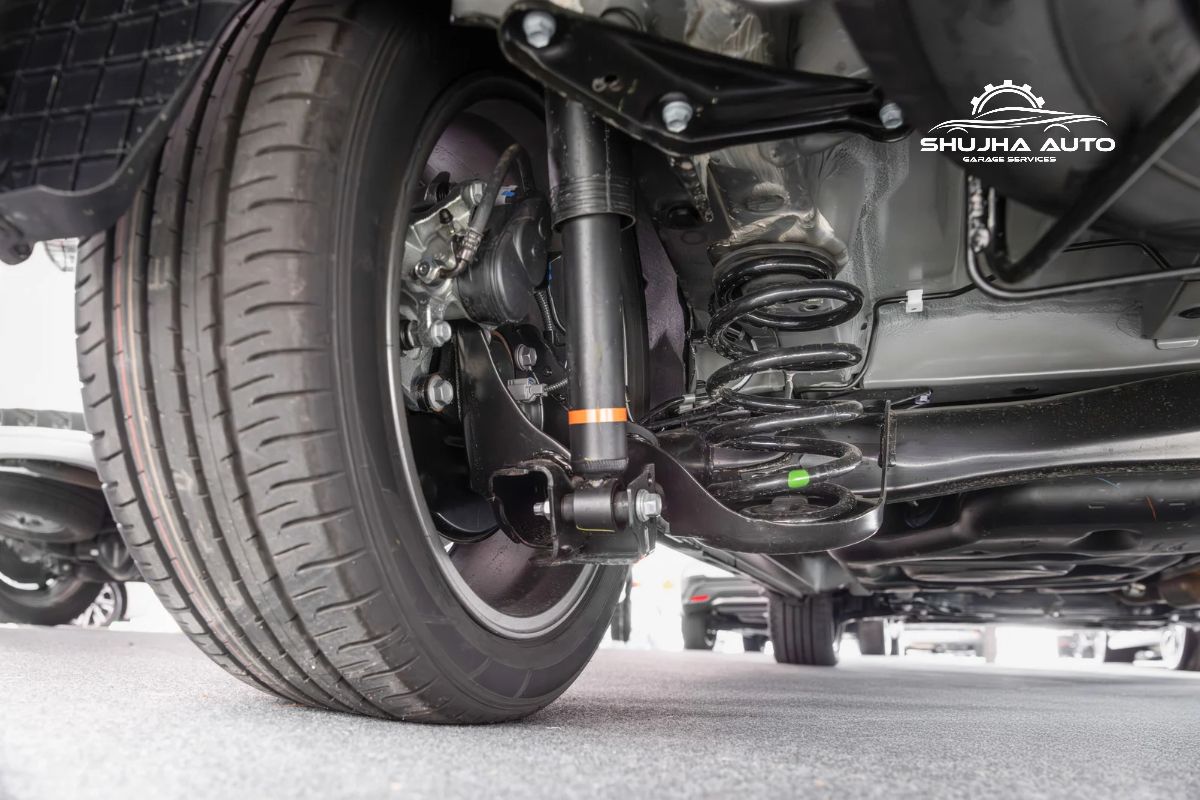
- Damaged suspension bushings
- Minor engine oil leaks
- Worn shock absorbers
- Tyre balancing problems
- Bent rims
- Some internal engine problems
- Certain gearbox wear conditions
- Small coolant leaks
- Some AC refrigerant leaks
These problems may require visual inspection, mechanical testing, pressure testing, or road testing.
A complete vehicle diagnosis combines computer scanning with appropriate physical checks.
Can a Car Diagnostic Test Detect Problems Without a Check Engine Light?
Yes, in some situations.
A vehicle may store pending or historical fault codes without displaying an active check engine warning.
Some electronic modules may also store faults that do not illuminate the engine warning light.
However, a clean scan does not prove the entire vehicle is problem-free.
Some intermittent issues may not be recorded, and mechanical problems may exist without any electronic warning.
If your car behaves abnormally, further inspection may still be necessary.
What Do Common Car Diagnostic Codes Mean?
Understanding a few examples can make the process clearer.
| Fault code | General meaning |
|---|---|
| P0300 | Random or multiple-cylinder misfire detected |
| P0301 | Cylinder 1 misfire detected |
| P0171 | Fuel system running too lean, Bank 1 |
| P0420 | Catalyst system efficiency below threshold, Bank 1 |
| P0101 | Mass airflow sensor performance or range issue |
These examples describe detected conditions.
For instance, P0420 does not automatically confirm that the catalytic converter needs replacement. Exhaust leaks, sensor problems, or other causes may require investigation.
Likewise, a misfire code does not prove a specific ignition component has failed.
This is why replacing parts based only on error codes can waste money.
Basic OBD Scan vs Full Computer Diagnostic Test
Not every diagnostic service includes the same level of investigation.
Basic OBD Scan
A basic OBD scan generally reads emissions-related powertrain codes and selected engine information.
It can be useful when the check engine light appears, but its coverage may be limited.
Full Computer Diagnostics
A broader professional scan may access supported modules such as the engine, transmission, ABS, airbags, steering, and body electronics.
The technician may also inspect live data and perform additional tests.
Actual coverage depends on the car and diagnostic equipment.
Complete Fault Diagnosis
A complete diagnosis goes beyond reading codes.
It combines electronic information with practical testing to establish the likely cause before repair work begins.
For drivers experiencing repeated problems, a complete diagnosis is generally more useful than simply clearing warning lights.
When Should You Get a Car Diagnostic Test?
You should consider a diagnostic test when your car develops an unexplained warning light or unusual performance problem.
Common situations include:
- Check engine light illuminated
- Car losing power
- Engine shaking or misfiring
- Difficult starting
- Rough idling
- Poor acceleration
- Gearbox jerking
- Transmission warning light
- ABS or airbag warning light
- Unexplained fuel consumption increase
- Intermittent electronic faults
In Sharjah’s hot driving conditions, problems involving engine temperature, electrical systems, and AC controls may also require professional investigation.
Is It Safe to Drive With the Check Engine Light On?
The answer depends on the severity of the fault.
A steady check engine light may indicate a problem that requires prompt diagnosis, even if the car still drives normally.
A flashing check engine light is more urgent and can indicate a severe misfire capable of damaging the catalytic converter.
If the engine is shaking badly, overheating, losing significant power, or displaying an oil pressure warning, stop safely and arrange assistance.
Do not continue driving a vehicle that is difficult to control or at risk of serious mechanical damage.
Should You Clear Fault Codes Without Repairing the Problem?
Clearing fault codes does not repair the underlying fault.
It may temporarily switch off a dashboard warning, but the problem can return if the cause remains.
Clearing codes may also erase useful diagnostic information and reset emissions readiness monitors.
If a technician needs to clear codes during repair verification, the original fault information should first be recorded.
Avoid clearing the check engine light simply to hide the warning.
Can a Diagnostic Test Help Before Buying a Used Car?
Yes. A computer scan can be a useful part of a pre-purchase car inspection.
It may reveal stored electronic faults, warning light issues, and incomplete readiness monitors.
For example, recently cleared codes or incomplete monitors can justify further investigation.
However, a diagnostic scan cannot establish the complete history or condition of a used vehicle.
A proper used car inspection should also include engine condition, gearbox behaviour, brakes, suspension, tyres, accident damage, AC performance, and relevant documentation.
How Long Does a Car Diagnostic Test Take?
The time required depends on the vehicle and symptoms.
Reading fault codes can be relatively quick.
However, identifying an intermittent electrical problem, engine misfire, or transmission fault may take substantially longer.
Some problems require road testing, electrical measurements, component checks, or repeated observations.
A quick scan and a complete diagnosis should not be treated as the same service.
How Much Does Car Computer Diagnostics Cost in Sharjah?
Diagnostic service costs vary depending on the vehicle model, equipment needed, number of systems checked, and complexity of the fault.
A simple fault-code scan may cost less than a detailed electrical or transmission diagnosis.
Before booking, ask whether the quoted price covers only code reading or also includes further testing and an explanation of the findings.
Auto Garage Services can assess your vehicle’s symptoms and advise what type of inspection is appropriate.
Are There Any Hidden Fees or Charges?
Before approving diagnostic work, ask what is included in the service.
You should understand whether additional electrical testing, mechanical inspection, road testing, or specialized diagnostics may be charged separately.
A clear quotation should distinguish the diagnostic service from the cost of replacement parts and repairs.
The goal of diagnosis is to help you understand the problem before authorizing further work.
Free Diagnostic Check: What Should You Ask?
Some garages may offer an initial fault-code check or promotional diagnostic inspection.
However, a free code scan and a complete professional diagnosis are not necessarily the same.
Before booking, ask whether an initial check is available, which vehicle systems can be scanned, and whether further testing carries an additional fee.
For example, a basic scan may identify a misfire code, but diagnosing the actual cause could require ignition system testing, injector checks, or compression testing.
The important thing is to understand what the service includes.
Why Choose Auto Garage Services?
Auto Garage Services in Al Sajaah, Emirates Industrial City, Sharjah, provides vehicle inspection and repair services for engine, transmission, electrical, and related performance problems.
If your car has a check engine light, unusual engine behaviour, hard starting, gearbox jerking, or an electronic warning, diagnostic testing can help identify the affected system.
The appropriate process combines available computer fault information with practical inspection and testing.
This helps avoid unnecessary component replacement and supports more informed repair decisions.
Drivers in Sharjah and nearby areas can contact Auto Garage Services for car computer diagnostic services, engine fault inspection, electrical diagnostics, gearbox diagnosis, and related vehicle maintenance.
When Should You Visit Auto Garage Services?
Arrange a vehicle inspection if your car repeatedly shows warning lights or develops unusual driving symptoms.
You should also seek assistance if you notice:
- Check engine light
- Engine hesitation
- Rough idle or misfires
- Poor acceleration
- Hard starting
- Gearbox warning messages
- Transmission jerking
- ABS warning light
- Airbag warning light
- Electrical system faults
- Unexplained engine performance problems
Early diagnosis may help identify smaller problems before they develop into more expensive repairs.
FAQs
1. What does a car diagnostic test check?
A car diagnostic test checks electronically monitored systems for fault codes, sensor readings, and abnormal conditions. Depending on the vehicle and scanner, it may cover the engine, transmission, ABS, airbags, electrical controls, and emissions-related systems.
2. Can a diagnostic test detect engine problems?
Yes. It can identify many electronically monitored engine faults, including misfires, fuel mixture problems, sensor issues, and certain ignition faults. Mechanical tests may still be needed to confirm the cause.
3. Can a car diagnostic test check the gearbox?
Yes, compatible professional equipment may access the transmission control module to retrieve gearbox fault codes and operating information. Mechanical gearbox problems may require additional testing.
4. Can a diagnostic scan detect electrical problems?
A scan can identify certain electrical circuit faults, sensor communication issues, and control module problems. However, battery tests, voltage measurements, and wiring inspections may still be necessary.
5. Does a diagnostic test tell exactly what is wrong with the car?
Not always. Diagnostic codes identify detected faults or abnormal conditions, but technicians often need additional inspection and testing to confirm the actual cause.
6. Can a diagnostic test detect problems without warning lights?
Yes, some vehicles store pending or historical faults without an active warning light. However, not every mechanical or intermittent fault produces a code.
7. Can car diagnostics detect AC problems?
Some electronic climate control faults may be detected on supported vehicles. However, refrigerant leaks, incorrect gas charge, and certain mechanical AC problems require separate inspection.
8. Should a car diagnostic test be done before buying a used car?
Yes. A diagnostic scan is a useful part of a pre-purchase inspection because it may reveal stored electronic faults. It should be combined with mechanical and body inspections.
9. Does clearing fault codes fix the problem?
No. Clearing codes removes recorded fault information but does not repair the underlying problem. The warning may return if the cause remains.
10. Is a car diagnostic test necessary when the check engine light appears?
A diagnostic test is strongly recommended because the light can indicate various engine or emissions-related problems. A flashing light accompanied by severe engine symptoms requires urgent attention.
11. How long does a car diagnostic test take?
A basic code scan may be completed quickly, while a complete diagnosis can take longer depending on the complexity of the fault and additional testing required.
12. Does Auto Garage Services provide car diagnostic services in Sharjah?
Auto Garage Services in Sharjah provides vehicle inspection and related repair services for engine, gearbox, electrical, and performance problems. Contact the garage to confirm the diagnostic equipment and specific testing available for your vehicle.
Final Words
A car diagnostic test is an important part of modern vehicle maintenance and repair. It helps technicians investigate electronically monitored problems involving the engine, transmission, emissions, ABS, airbags, sensors, and other supported control systems.
However, computer diagnostics should not be confused with an automatic repair solution.
A fault code is a starting point. Correct diagnosis may also require electrical measurements, mechanical inspection, pressure testing, and practical experience.
If your car has a check engine light, rough performance, gearbox jerking, difficult starting, or unusual electronic warning messages, early inspection can help prevent unnecessary repairs and further complications.
For car computer diagnostics, engine fault inspection, gearbox diagnostics, electrical system inspection, and related repair services, contact Auto Garage Services in Al Sajaah, Sharjah.
Book a vehicle diagnostic inspection with Auto Garage Services and identify the cause before replacing expensive parts.