
Before attempting flooded car repair, consider these 8 key factors to ensure safety, prevent further damage, and make the right decision.
Flooded cars are a nightmare for many vehicle owners. Whether your car got caught in a sudden storm, or a flash flood swept through your area, dealing with a flooded vehicle can be overwhelming. Many people panic and make hasty decisions, leading to more damage. At Shujha Auto Garage Services, we know how stressful this situation can be, and we’re here to help guide you through the necessary steps.
In this blog post, we’ll walk you through 8 important things to consider before attempting any repair on your flooded car. The damage from water can range from minor to severe, so understanding how to approach the situation is crucial. Follow our advice to protect your vehicle, your safety, and your wallet.
1. Prioritize Safety
When dealing with a flooded car, your first and most important priority should always be safety. Water and electricity don’t mix well, and flooded cars can pose serious risks.
If your car was submerged in water, especially if the water reached the engine or electrical components, it’s important to exercise extreme caution. Electrical systems in your car can still be active, even after flooding, so never try to start the engine or touch anything inside the car before assessing the situation.
If the car has been completely submerged, there may be risks of short circuits or even electrocution in extreme cases. Always prioritize safety by staying away from electrical components, and if you are unsure, contact a professional, like Shujha Auto Garage Services, who can safely handle the situation.
2. Do Not Start the Engine
One of the biggest mistakes many car owners make when their vehicle is flooded is trying to start the engine. This is a big NO-NO! Do not start the engine if your car has been submerged in water.
Water can seep into the engine, transmission, and other essential parts of your vehicle, causing extensive damage. If you attempt to start the engine, it could lead to a hydrolock—where water gets into the engine cylinders, which can ruin the engine permanently.
So, the first rule when you discover your car is flooded is to not start the engine. This step alone could save you from an expensive repair bill. Instead, follow the steps in this post to get the proper help.
Location: Please Visit Our Shujha Auto Garage
3. Document the Damage
When dealing with a flooded car, documentation is key. You should document the damage right away. This step is important for insurance claims and assessing the full scope of the damage.
Take photos and videos from different angles, showing the water level and the condition of the interior and exterior of your car. Make sure you capture the car’s VIN (Vehicle Identification Number) as well. These images can be incredibly useful when working with insurance companies, as they help show the extent of the flooding.
It’s also important to document the damage multiple times. Once immediately after the flood, then after the initial cleanup, and again after you get a professional assessment. This will provide a comprehensive view of the damage over time. At Shujha Auto Garage Services, we recommend this method to ensure everything is documented properly for future reference.
4. Get a Professional Assessment
While it might be tempting to repair the damage yourself, we cannot stress this enough: Get a professional assessment of the damage before attempting any repairs. Flooded cars can have hidden issues that are not immediately visible to the untrained eye.
Electrical components, like the car’s computer system, wiring, and sensors, can be easily damaged by water. The longer you delay getting a professional assessment, the more likely you are to suffer from long-term issues. Shujha Auto Garage Services offers expert diagnostics for flooded vehicles. We have the tools and experience to determine the extent of the damage and suggest the best course of action.
Your car may seem to work fine initially after drying out, but hidden water damage can cause serious problems later. Getting a professional assessment ensures you are not overlooking any critical areas, especially in modern cars with complex electrical systems.
5. Remove Water and Dry the Car Quickly
Once the water has receded and it’s safe to approach your vehicle, you’ll need to act fast. The longer the water sits in your car, the greater the risk of rust, mold, and further corrosion. This is why it’s crucial to dry the car as quickly as possible.
If the water level inside the car was low, start by removing any standing water using a wet/dry vacuum or towels. Afterward, allow your car to air dry, but it’s best to take your vehicle to a garage to ensure everything is dried thoroughly.
At Shujha Auto Garage Services, we can help by properly removing water from sensitive areas like the carpets, seats, and under the dashboard. Sometimes, professional drying equipment is necessary to avoid mold growth, which can develop within hours of a flood.
6. Check the Car’s Fluids
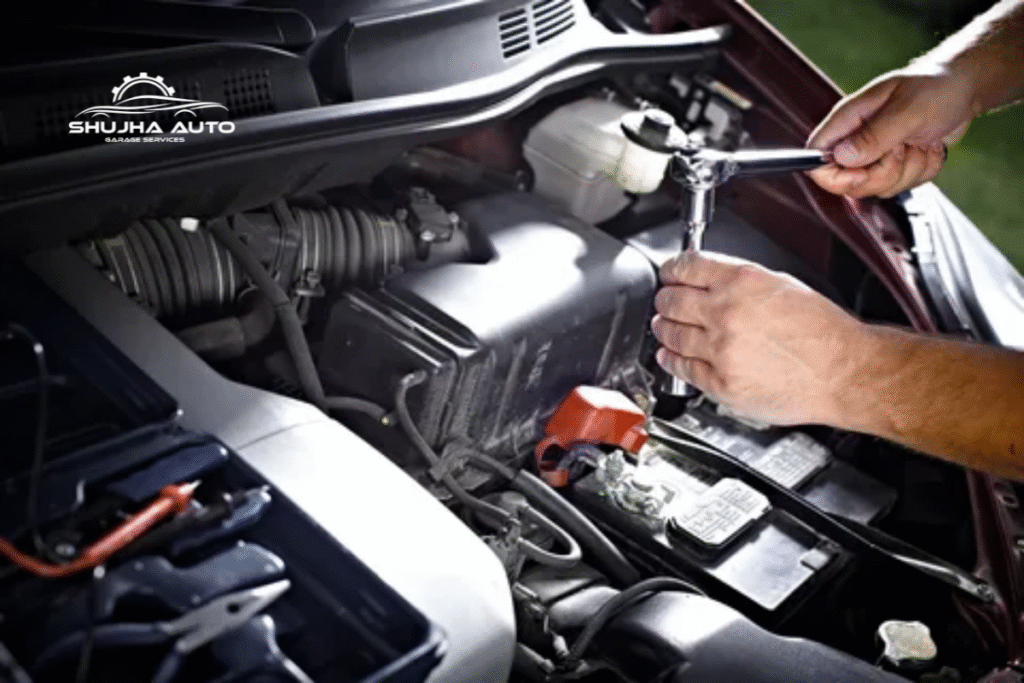
Flooded cars often face contaminated fluids, which can cause serious problems. After a flood, you need to check the car’s fluids (oil, brake fluid, transmission fluid, etc.) immediately.
If water has mixed with these fluids, the entire system could be compromised, and you may need to flush and replace all of them. This is especially true for the engine oil. Do not start the engine before checking the fluids, as running the engine with contaminated fluid could result in more damage.
It’s also essential to check the brake system and coolant system. Contaminated brake fluid can affect the performance of your brakes, and you’ll need to address it before driving the car.
7. Understand the Risks of Ignoring Flood Damage
Many people assume that once their car is dried out and the engine starts, everything is fine. However, ignoring flood damage can be a costly mistake. Even if the car runs after a flood, there may still be issues lurking beneath the surface.
Electrical systems, fuel systems, and critical engine components are often the most vulnerable to water damage. If these systems are not properly inspected, you could face ongoing repairs, poor performance, and even a vehicle that’s unsafe to drive.
At Shujha Auto Garage Services, we recommend that you do not take chances with flood damage. Get a professional assessment as soon as possible to ensure your car is safe to drive. Neglecting to address potential issues may lead to even more expensive repairs down the road.
8. Consult Your Insurance Company
Before doing anything with your flooded car, it’s essential to contact your insurance company. Depending on your policy, flood damage may be covered under comprehensive insurance. The insurance adjuster will need to assess the damage and may even send a technician to evaluate the car.
It’s crucial to document the damage thoroughly, as mentioned earlier, to provide the insurance company with the necessary information. They may also have specific guidelines for how to handle a flooded car. Your insurance company might recommend getting a professional assessment to ensure they can properly handle the claim.
Conclusion
Dealing with a flooded car can be a stressful and overwhelming experience, but with the right steps, you can prevent further damage and make informed decisions about repairs. Remember to prioritize safety, document the damage, and get a professional assessment before making any attempts at repairs.
At Shujha Auto Garage Services, we are here to help you through every step of the process. From assessing the damage to providing professional repairs, we offer expert service to ensure your car is in the best possible condition after a flood.
If your vehicle has been affected by water damage, don’t hesitate to reach out to us. Our experienced technicians are ready to help you get back on the road safely.