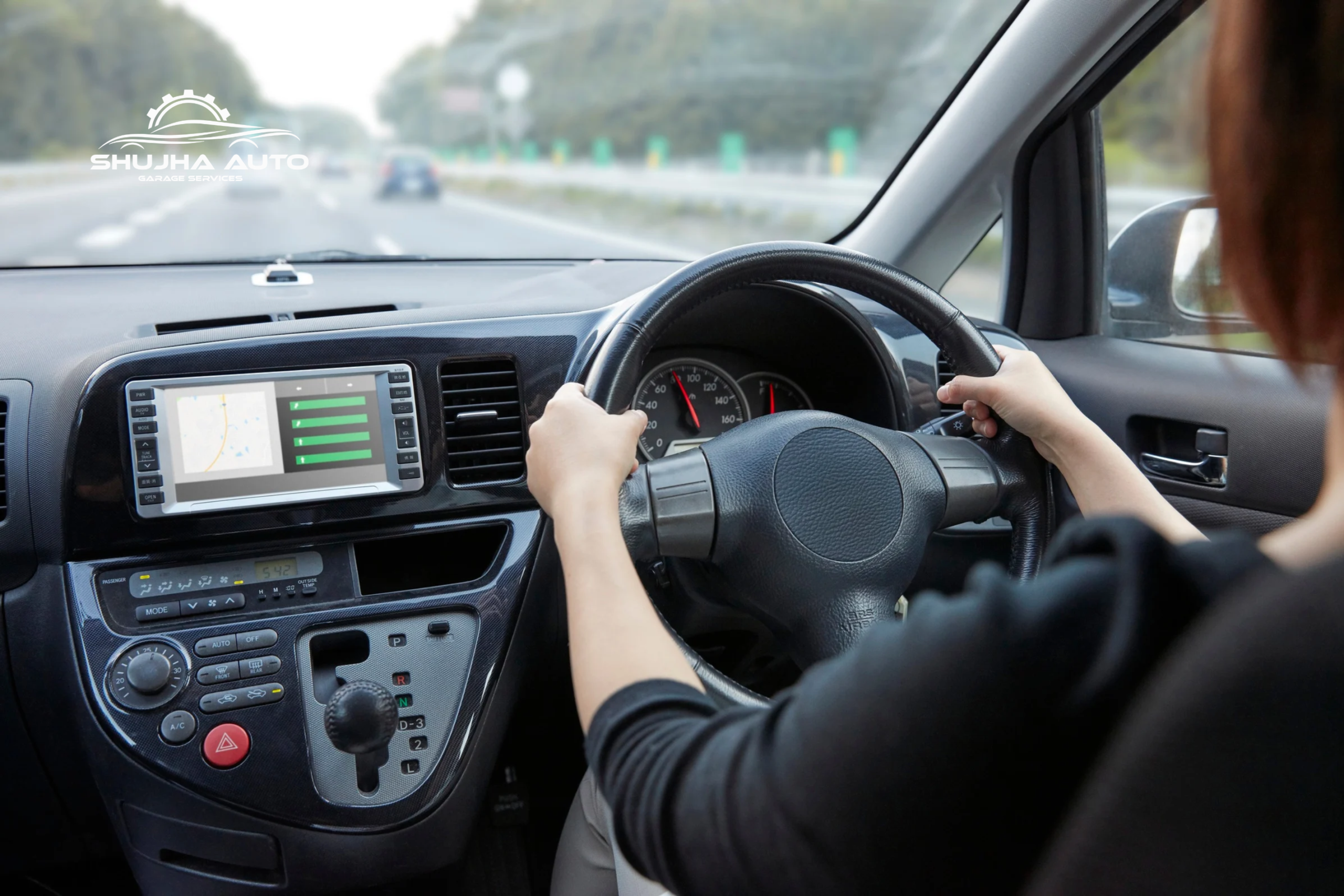
Imagine driving through Sharjah traffic when your car suddenly jerks as it changes from first to second gear. You may feel a sudden push, a hard shift, or a shaking sensation whenever the transmission changes gears. Sometimes the problem happens only in the morning, while other times it becomes worse after driving for a long period.
Car jerking when changing gears is a common driving problem that can affect automatic, manual, CVT, and dual-clutch vehicles. Although a slight change in movement may be normal during certain gear shifts, repeated jerking, banging, hesitation, or harsh shifting can indicate an underlying mechanical or electronic problem.
Many drivers immediately assume the gearbox needs replacement. However, the actual cause may be something simpler, such as low transmission fluid, worn engine mounts, faulty sensors, or a transmission control issue.
In this guide, we will explain why a car jerks when changing gears, common causes, warning signs, repair solutions, and when to visit Auto Garage Services in Sharjah for gearbox diagnostics, automatic transmission repair, transmission fluid inspection, clutch inspection, and car maintenance services.
Quick Answer: Why Does a Car Jerk When Changing Gears?
A car may jerk when changing gears because of low or contaminated transmission fluid, faulty shift solenoids, worn engine or gearbox mounts, transmission valve body problems, damaged clutch components, faulty sensors, or internal gearbox wear.
The cause often depends on the type of transmission and when the jerking occurs.
- Automatic car jerking: May indicate transmission fluid, solenoid, valve body, or torque converter problems.
- Manual car jerking: May result from clutch wear, clutch engagement problems, or engine mounts.
- CVT jerking: Can involve incorrect transmission fluid, pressure control faults, or internal transmission problems.
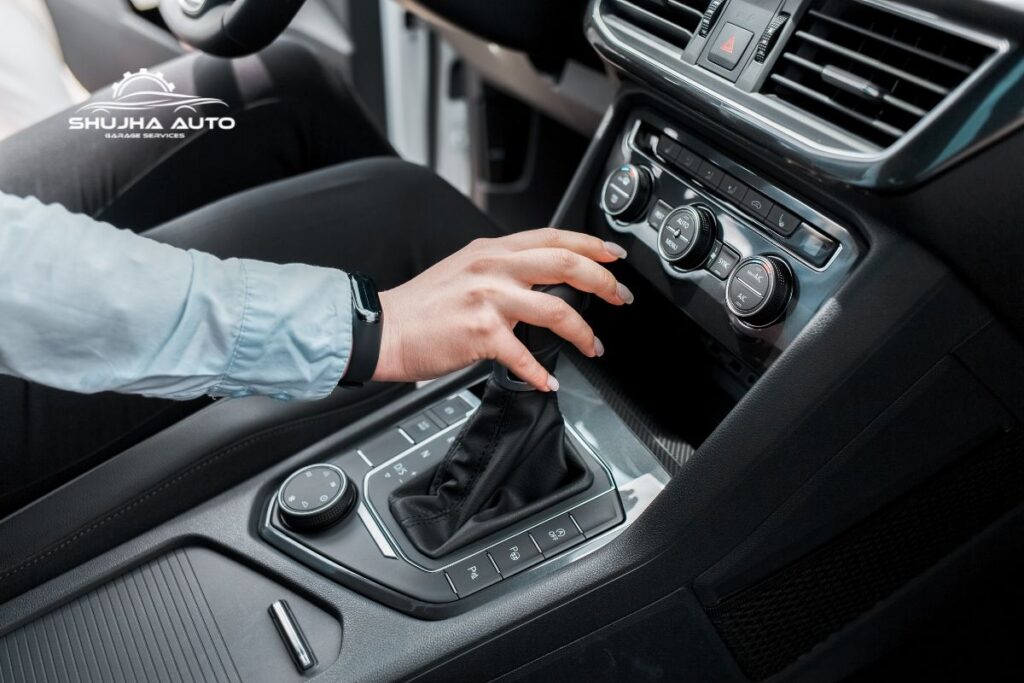
- Jerking from Park to Drive: May indicate worn mounts, delayed transmission engagement, or incorrect hydraulic pressure.
- Jerking during acceleration: Can involve transmission faults, engine misfires, or drivetrain problems.
If your car repeatedly jerks during gear changes, a professional inspection can help identify the cause before the problem becomes more expensive.
Is It Normal for a Car to Jerk When Changing Gears?
A small amount of movement during gear changes can be normal, especially in certain manual and dual-clutch vehicles.
However, a healthy transmission should engage gears predictably without excessive hesitation, banging, or repeated jolting.
Pay attention if your car:
- Jerks strongly during every gear change
- Makes a banging sound when shifting
- Hesitates before changing gears
- Shakes when accelerating
- Changes gears unexpectedly
- Slips between gears
- Shows a transmission warning light
These symptoms may indicate a problem that needs attention.
Common Causes of Car Jerking When Changing Gears
Several components work together to deliver smooth gear changes. Problems with transmission fluid, hydraulic pressure, engine performance, mechanical parts, or electronic controls can cause noticeable jerking.
1. Low Transmission Fluid
Low transmission fluid is an important cause of harsh shifting in many automatic vehicles.
Automatic transmissions rely on the correct fluid level to lubricate components, control heat, and operate hydraulic circuits.
When the fluid level becomes too low, the transmission may struggle to maintain the pressure needed for smooth gear engagement.
Common symptoms include:
- Jerking between gears
- Delayed gear engagement
- Transmission slipping
- Unusual gearbox noise
- Overheating
- Hesitation during acceleration
Low transmission fluid may result from leakage around seals, gaskets, hoses, or other transmission components.
Solution: A technician should check the fluid level using the vehicle manufacturer’s procedure, inspect for leaks, and correct the cause of fluid loss.
2. Dirty or Old Transmission Fluid
Transmission fluid deteriorates over time due to heat, friction, and normal component wear.
As fluid ages, its lubrication and friction characteristics can change.
This may affect shift quality and cause harsh or delayed gear changes.
Signs of deteriorated transmission fluid can include rough shifting, unusual transmission behaviour, overheating, and burnt-smelling fluid.
However, fluid colour alone cannot reliably determine its condition.
Solution: Check the manufacturer’s transmission service requirements. A suitable transmission fluid service may help if fluid condition is responsible, but it will not repair damaged internal parts.
3. Faulty Shift Solenoids
Shift solenoids are electronically controlled valves used in many automatic transmissions.
They regulate hydraulic pressure and help control how the transmission changes gears.
If a solenoid becomes faulty or its electrical circuit develops a problem, the gearbox may shift too harshly, hesitate, or fail to engage the expected gear.
Possible symptoms include:
- Hard gear shifts
- Delayed shifting
- Transmission warning light
- Gear shifting at unusual speeds
- Limp mode
- Inconsistent transmission operation
Solution: Transmission diagnostic scanning and electrical testing can help identify faulty solenoids or related wiring problems.
4. Transmission Valve Body Problems
The valve body directs transmission fluid through hydraulic passages to control gear engagement in many automatic transmissions.
When valves stick, wear, or fail to regulate pressure correctly, shifting can become rough.
You may notice strong jerking between specific gears, delayed engagement, or inconsistent shifting.
A valve body fault may sometimes feel similar to a transmission fluid problem.
Solution: A specialist should inspect transmission fault codes, pressure control behaviour, and relevant hydraulic components before recommending repair.
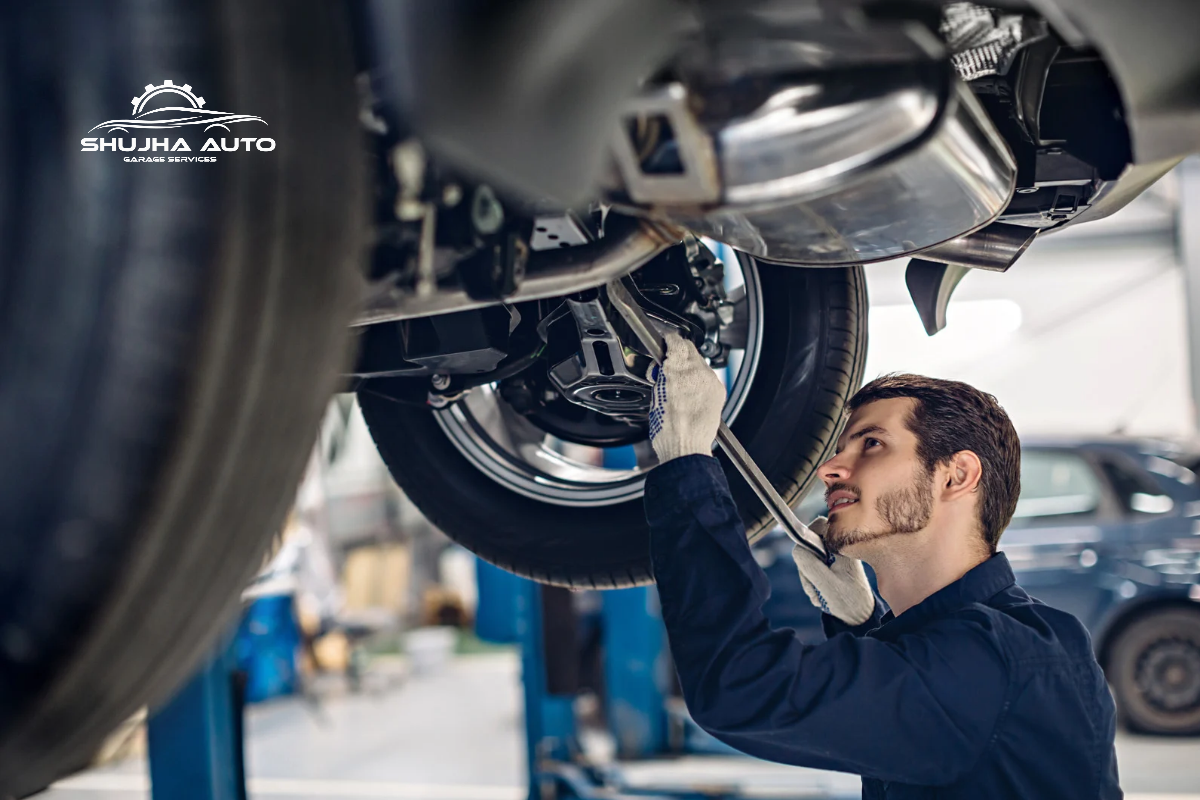
5. Worn Engine Mounts
Engine mounts keep the engine securely positioned while reducing vibration.
When mounts wear out, the engine can move excessively during acceleration or gear changes.
This movement may create a noticeable jerk or clunk, even when the gearbox itself is functioning correctly.
Common signs include:
- Jerking when selecting Drive
- Clunking sounds
- Excessive engine movement
- Cabin vibration
- Shaking during acceleration
Solution: Worn or damaged engine mounts should be inspected and replaced when necessary.
6. Damaged Gearbox Mounts
Gearbox mounts support the transmission and help control drivetrain movement.
A worn gearbox mount can allow excessive movement when torque changes during shifting.
This may cause a sudden jolt, vibration, or banging sensation.
The problem can become more noticeable when changing between Park, Reverse, and Drive.
Solution: Inspect the engine and transmission mounts together to identify the damaged component.
7. Torque Converter Problems
A torque converter is used in many conventional automatic transmissions to transfer power from the engine to the gearbox.
If the torque converter or its lock-up clutch develops a problem, the car may experience shuddering, vibration, or unusual transmission behaviour.
Possible symptoms include:
- Shuddering at certain speeds
- Jerking during acceleration
- Vibration during lock-up engagement
- Transmission slipping
- Unusual noise
Not every automatic transmission uses a torque converter, so the vehicle’s gearbox type must be identified first.
Solution: Transmission diagnostics can help distinguish torque converter faults from fluid, engine, or other gearbox problems.
8. Faulty Transmission Sensors
Modern transmissions use sensors to monitor vehicle speed, shaft speed, fluid temperature, gear position, and other operating conditions.
If a sensor sends incorrect information, the transmission control system may make inappropriate shifting decisions.
Possible symptoms include delayed shifts, harsh engagement, incorrect gear selection, and transmission warning lights.
Solution: A diagnostic scan can help identify relevant sensor or wiring faults. Components should be tested before replacement.
9. Worn Clutch Components
In manual cars, the clutch connects and disconnects engine power from the gearbox.
If clutch components become worn or damaged, engagement may become uneven.
This can cause jerking when moving off or changing gears.
Common clutch-related causes include:
- Worn clutch friction disc
- Damaged pressure plate
- Contaminated clutch surface
- Clutch hydraulic problems
- Uneven clutch engagement
- Flywheel problems
Solution: A clutch inspection can determine whether adjustment, hydraulic repair, or component replacement is required.
10. Engine Misfires
Sometimes the problem feels like a gearbox fault but actually comes from the engine.
An engine misfire can interrupt power delivery, creating a jerking sensation during acceleration or around gear changes.
Possible causes include faulty spark plugs, ignition coils, fuel injectors, or engine sensors.
Other symptoms may include rough idle, weak acceleration, increased fuel consumption, and a check engine light.
Solution: Engine diagnostic testing can help distinguish an engine performance problem from an actual transmission fault.
Why Does an Automatic Car Jerk When Changing Gears?
Automatic transmissions are designed to change gears without the driver operating a clutch pedal.
When an automatic car begins jerking, the first step is to identify the shifting pattern.
For example, does the jerk happen when changing from first to second gear, when selecting Drive, or when slowing down?
Common causes include low or incorrect transmission fluid, faulty solenoids, valve body wear, pressure control problems, damaged mounts, or internal clutch wear.
Some vehicles may also develop control-system or transmission adaptation problems.
A diagnostic scan is useful, but not every gearbox problem produces a fault code. A technician may also need to inspect fluid condition, analyse live data, and road-test the vehicle when safe.
Why Does a Manual Car Jerk When Changing Gears?
Manual cars can jerk because of clutch operation, but repeated jerking may also indicate worn mechanical components.
If the car shakes when releasing the clutch, the problem may be related to clutch engagement.
If gears are difficult to select or produce grinding sounds, the issue may involve clutch disengagement, gearbox synchronizers, or transmission wear.
Possible causes include worn clutch parts, faulty engine mounts, clutch hydraulic problems, or incorrect gear-changing technique.
If the problem gradually becomes worse, a professional clutch and gearbox inspection is recommended.
Why Does a CVT Car Jerk When Accelerating?
A continuously variable transmission, or CVT, operates differently from a conventional automatic gearbox.
Instead of using a traditional series of fixed gear ratios, most CVTs adjust their effective ratio continuously.
A CVT may develop jerking, juddering, or hesitation because of fluid problems, incorrect hydraulic pressure, control faults, or internal wear.
Some CVT vehicles also have a launch clutch or torque converter that can contribute to shuddering.
Important: CVT fluid specifications are particularly important. Using ordinary automatic transmission fluid in a CVT that requires specialized fluid can cause serious problems.
A CVT should be serviced according to its manufacturer’s requirements.
Why Does a Dual-Clutch Gearbox Jerk?
Dual-clutch transmissions use electronically controlled clutches to change gears.
They are often found in modern passenger vehicles and may be described as DCT, DSG, or another manufacturer-specific name.
A small amount of low-speed shift sensation can be normal in some dual-clutch vehicles.
However, strong or worsening jerking may indicate clutch wear, overheating, mechatronic faults, or control-system problems.
Common symptoms include shuddering in traffic, harsh shifts, hesitation when moving from a stop, or transmission warning messages.
A professional diagnosis should distinguish normal operating characteristics from mechanical faults.
Car Jerking When Shifting From First to Second Gear
Jerking between first and second gear is a common complaint.
This gear change occurs frequently during city driving, so any roughness becomes noticeable.
Possible causes include:
- Incorrect transmission fluid level
- Deteriorated transmission fluid
- Faulty shift solenoid
- Valve body pressure problems
- Worn clutch components
- Damaged engine mounts
- Engine hesitation
If the car jerks every time it shifts from first to second, the technician should investigate that specific shift rather than assume the entire gearbox is damaged.
Car Jerking From Park to Drive
A noticeable jolt when shifting from Park to Drive can occur for several reasons.
One possibility is a worn engine or transmission mount.
Other possibilities include delayed hydraulic engagement, incorrect transmission fluid level, or internal gearbox problems.
If the vehicle is parked on a steep slope without properly applying the parking brake, load on the parking mechanism may also make shifting out of Park more difficult.
Always bring the vehicle to a complete stop before selecting Drive or Reverse, and use the parking brake correctly.
If the car bangs strongly whenever a gear is selected, arrange an inspection.
Car Jerking When Changing Gears at Low Speed
Low-speed jerking is especially noticeable in city traffic.
Frequent stopping, accelerating, and shifting can reveal problems with clutch engagement, transmission controls, or engine mounts.
Some dual-clutch gearboxes naturally feel different from conventional automatics at crawling speeds, but repeated violent jerking is not normal.
If the problem happens mainly in heavy traffic, describe the driving conditions to the technician.
This information can help identify the affected system.
Car Jerking When Changing Gears After Warming Up
If the car shifts smoothly when cold but begins jerking after driving for some time, temperature-related transmission problems may be involved.
Possible causes include deteriorated fluid, pressure control faults, internal wear, or transmission overheating.
Heat can change fluid behaviour and reveal weaknesses that are less noticeable when the system is cold.
A technician may need to compare transmission operation at different temperatures to find the cause.
Why Does the Car Jerk When Downshifting?
Jerking during downshifting can occur when the gearbox changes to a lower gear as the car slows down.
Potential causes include transmission control problems, hydraulic pressure faults, valve body wear, or worn mounts.
In manual vehicles, abrupt clutch engagement can also produce a sudden jolt.
A moderate engine-braking sensation can be normal, but hard banging or repeated harsh downshifts should be investigated.
Signs of a Serious Transmission Problem
Not every rough shift means the gearbox requires major repair.
However, certain symptoms should be treated as important warning signs.
These include:
- Strong banging when shifting
- Gear slipping
- RPM rising without matching acceleration
- Delayed engagement
- Burning transmission smell
- Visible transmission fluid leakage
- Transmission overheating warning
- Vehicle struggling to move
- Gearbox entering limp mode
- Failure to engage Drive or Reverse
If the car loses drive, slips severely, overheats, or becomes difficult to control, stop safely and arrange professional recovery.
Continuing to drive with severe transmission problems can increase damage.
Can Low Transmission Fluid Damage the Gearbox?
Yes. Low transmission fluid can create serious problems in transmissions that depend on hydraulic fluid for shifting and lubrication.
Insufficient fluid may lead to poor hydraulic pressure, overheating, clutch damage, and increased internal wear.
However, adding transmission fluid without confirming the correct level and specification is not recommended.
Some modern vehicles do not have a traditional transmission dipstick and require a particular temperature-controlled filling procedure.
Overfilling can also cause problems.
The safest approach is to have the fluid level checked according to manufacturer specifications.
Should Transmission Fluid Be Changed if the Car Jerks?
Transmission fluid service may help if the jerking results from incorrect or deteriorated fluid.
However, it is not a guaranteed solution.
If the transmission has worn clutch packs, a damaged valve body, faulty solenoids, or internal mechanical damage, changing the fluid alone may not solve the problem.
An indiscriminate transmission flush is also not appropriate for every vehicle.
The technician should check the transmission type, maintenance history, fluid specification, and fault symptoms before recommending a fluid change or other service.
What Happens During Gearbox Diagnosis?
A proper inspection helps determine whether the jerking comes from the gearbox, engine, drivetrain, or electronic controls.
At Auto Garage Services in Sharjah, a relevant gearbox diagnosis may involve:
- Checking transmission-related fault codes
- Inspecting transmission fluid condition
- Checking fluid level where applicable
- Inspecting for transmission leaks
- Evaluating shift solenoids
- Checking transmission sensor data
- Inspecting engine and gearbox mounts
- Assessing clutch operation
- Testing engine performance
- Inspecting drivetrain components
- Checking transmission temperature
- Road-testing the vehicle when safe
The findings help determine whether the problem requires routine servicing, electrical repair, clutch replacement, or more extensive gearbox work.
Common Fixes for Car Jerking When Changing Gears
The correct repair depends on the diagnosis.
Transmission Fluid Service
If the fluid is unsuitable, contaminated, or overdue according to the service schedule, the appropriate fluid service may improve shifting.
Transmission Leak Repair
If fluid is leaking, the damaged seals, gaskets, or affected components should be repaired.
Shift Solenoid Repair
A faulty solenoid or related wiring may require repair or replacement.
Valve Body Repair
If the valve body is responsible for pressure-control problems, specialist repair or replacement may be needed.
Engine or Gearbox Mount Replacement
Damaged mounts can create jerking and clunking during changes in engine load.
Clutch Repair
Manual and dual-clutch vehicles may require clutch-related repairs if worn or damaged components cause shuddering.
Sensor or Electrical Repair
Faulty transmission sensors, wiring, or control systems should be tested and repaired.
Internal Gearbox Repair
If the transmission has significant internal wear, gearbox repair or rebuilding may be necessary.
Major gearbox replacement should generally be considered only after an appropriate diagnosis confirms the need.
Is It Safe to Drive a Car That Jerks When Changing Gears?
Mild occasional rough shifting does not always indicate immediate failure, but repeated or worsening jerking deserves attention.
Driving with a transmission problem can become unsafe if the car suddenly loses acceleration, slips out of gear, or responds unpredictably.
Avoid continued driving if the vehicle experiences severe banging, overheating, loss of drive, strong burning smells, or dangerous hesitation.
If the car cannot be driven safely, arrange towing instead of risking further damage.
How to Prevent Jerking During Gear Changes
Regular maintenance and careful driving can reduce the risk of some transmission problems.
Follow the Transmission Service Schedule
Use the manufacturer’s recommended inspection and fluid replacement intervals.
Use the Correct Transmission Fluid
Different transmissions require specific fluid formulations. Always follow the vehicle manufacturer’s specifications.
Repair Leaks Early
Do not ignore transmission fluid leakage.
Avoid Abrupt Gear Selection
Bring the car to a complete stop before shifting between Drive and Reverse.
Avoid Unnecessary Gearbox Overheating
Heavy loads, harsh driving, and prolonged overheating can accelerate wear.
Inspect Engine and Gearbox Mounts
Worn mounts can cause jerking even when the transmission is healthy.
Address Warning Lights
Transmission and engine warning lights should be diagnosed early.
Why Jerking Can Become Worse in UAE Traffic
Heavy traffic in Sharjah and Dubai can make transmission problems more noticeable.
Frequent stopping and starting means the transmission repeatedly changes gear or engages and disengages clutches.
High ambient temperatures can also place additional demands on the cooling system and transmission.
However, UAE weather does not automatically mean a gearbox should jerk.
If rough shifting occurs regularly, especially after long periods in traffic, it is better to inspect the vehicle than assume the behaviour is normal.
Is Gearbox Jerking Repair Expensive?
The repair cost depends on the fault and vehicle model.
A transmission fluid service, mount replacement, or accessible electrical repair may be less expensive than internal gearbox work.
Problems involving valve bodies, torque converters, dual-clutch systems, or worn internal components can require more labour and specialized parts.
A correct diagnosis is important because replacing a complete gearbox unnecessarily can be expensive.
Are There Any Hidden Fees or Charges?
Before authorizing repair, ask the garage what is included in the diagnosis and quotation.
Confirm whether the price includes transmission fluid, filters, electrical testing, replacement parts, programming, labour, and post-repair testing.
If additional faults are discovered during inspection, ask for a revised quotation before approving extra work.
Clear communication helps avoid unexpected repair costs.
Why Choose Auto Garage Services?
Auto Garage Services in Al Sajaah, Emirates Industrial City, Sharjah, provides vehicle diagnostic and repair services for transmission and drivetrain problems.
If your car jerks when changing gears, a proper inspection can help identify whether the cause involves transmission fluid, electronic controls, clutch components, engine mounts, or internal gearbox wear.
Instead of replacing expensive parts based on guesswork, the goal is to identify the actual fault and recommend suitable repairs.
Auto Garage Services can assist drivers experiencing automatic transmission problems, gearbox jerking, transmission slipping, delayed shifting, and related vehicle performance issues.
When Should You Visit Auto Garage Services?
Arrange a gearbox inspection if your car repeatedly jerks during gear changes or begins showing new transmission symptoms.
You should also seek inspection if you notice:
- Hard shifting between gears
- Jerking from Park to Drive
- Delayed transmission engagement
- Transmission slipping
- Shuddering at low speed
- Banging during downshifts
- Transmission warning light
- Gearbox overheating
- Unusual transmission noise
- Burning smell during driving
Early diagnosis can help identify repairable problems before they develop into larger transmission failures.
FAQs
1. Why does a car jerk when changing gears?
A car may jerk when changing gears because of low or contaminated transmission fluid, faulty shift solenoids, valve body problems, worn mounts, damaged clutch components, transmission sensors, or internal gearbox wear.
2. Why does an automatic car jerk when shifting gears?
Automatic transmission jerking may result from fluid pressure problems, faulty shift solenoids, worn valve body components, transmission control faults, engine mounts, or internal clutch wear. Proper diagnosis is needed to confirm the cause.
3. Can low transmission fluid cause jerking?
Yes. Low transmission fluid can affect hydraulic pressure and lubrication in many automatic transmissions, causing harsh shifting, hesitation, slipping, or overheating.
4. Why does a car jerk from first to second gear?
Jerking between first and second gear can result from transmission fluid issues, solenoid faults, valve body problems, engine mounts, or clutch-related wear, depending on the transmission type.
5. Why does a car jerk when shifting into Drive?
A jolt when selecting Drive may be caused by worn engine or gearbox mounts, delayed hydraulic engagement, pressure control problems, or internal transmission faults.
6. Can bad engine mounts cause jerking during gear changes?
Yes. Worn engine mounts may allow excessive engine movement when torque changes, creating a clunk or jerking sensation during shifting.
7. Why does a CVT car jerk while accelerating?
CVT jerking may involve incorrect transmission fluid, hydraulic pressure problems, control-system faults, or internal transmission wear. The exact cause varies by model and transmission design.
8. Will changing transmission fluid stop jerking?
It may help if the problem is related to deteriorated or incorrect fluid. However, changing fluid will not repair worn internal components, faulty solenoids, damaged mounts, or other mechanical problems.
9. Is it safe to drive when the gearbox jerks?
Mild rough shifting should be inspected, while severe jerking, slipping, overheating, loss of drive, or strong burning smells may require stopping immediately and arranging vehicle recovery.
10. Can a faulty sensor cause transmission jerking?
Yes. Faulty speed sensors, temperature sensors, or related electrical systems can affect transmission control and produce harsh or delayed shifting.
11. Does car jerking always mean gearbox replacement?
No. Jerking can result from relatively simple faults involving fluid, mounts, sensors, or solenoids. A gearbox should not be replaced without confirming that major internal damage exists.
12. Does Auto Garage Services inspect gearbox jerking problems?
Yes. Auto Garage Services in Sharjah provides diagnostic and repair services for gearbox problems, including rough shifting, jerking, delayed engagement, transmission slipping, and related drivetrain issues.
Final Words
Car jerking when changing gears is a warning sign that should not be ignored, especially when the problem becomes frequent or severe.
Common causes include low transmission fluid, worn or unsuitable fluid, faulty solenoids, valve body problems, damaged engine mounts, clutch wear, sensor faults, and internal transmission damage.
However, not every jerking problem means the gearbox needs replacement. Some issues can be resolved through proper servicing or targeted repairs.
The most important step is to identify the actual cause rather than replacing parts based on assumptions.
If your car jerks between gears, shifts harshly, hesitates during acceleration, or makes banging sounds when selecting Drive or Reverse, visit Auto Garage Services in Sharjah for gearbox diagnostics, automatic transmission inspection, transmission fluid service, clutch inspection, and related car repair services.
Book a gearbox inspection with Auto Garage Services before a minor shifting problem becomes an expensive transmission repair.