
Engine oil is one of the most important fluids in your car. It keeps the engine smooth, reduces friction, controls heat, and protects internal parts from damage. But engine oil does not last forever. Over time, it becomes dirty, weak, and less effective. If you delay oil change service for too long, your engine may start making noise, overheating, losing performance, or even suffering serious internal damage.
Many drivers ask the same question: how often should you change car oil? The answer depends on your car model, oil type, driving style, engine condition, mileage, and driving environment. A car driven daily in hot weather and traffic may need oil changes sooner than a car used lightly on open roads.
In this guide, we will explain how often you should change your car oil, signs your engine oil needs replacement, what happens if you delay oil change, different oil types, UAE driving conditions, and when to visit Auto Garage Services for oil change service, engine oil inspection, engine diagnostic service, or car maintenance service.
Quick Answer: How Often Should You Change Car Oil?
Most cars need an oil change every 5,000 to 10,000 kilometers or every 6 months, depending on the car model, oil type, and driving conditions. If your car uses conventional oil, the interval may be shorter. If your car uses high-quality synthetic oil, it may last longer, but it still depends on how and where you drive.
In hot weather, heavy traffic, dusty areas, short trips, and daily city driving, engine oil can become dirty faster. For many UAE drivers, changing oil every 5,000 to 7,000 kilometers is a safe routine, especially for older cars, turbo engines, and vehicles used daily.
Why Engine Oil Is Important
Engine oil works like protection for the engine. Inside the engine, many metal parts move very fast. These parts create heat and friction. Without proper oil, the engine parts can rub against each other and wear out quickly.
Engine oil helps your car by:
- Lubricating moving parts
- Reducing engine friction
- Controlling engine heat
- Cleaning dirt and small particles
- Protecting metal parts from rust
- Helping the engine run smoothly
- Reducing wear and tear
- Improving long-term engine life
When oil becomes old or dirty, it cannot protect the engine properly. This is why regular oil change service is important for every car owner.
Why Oil Change Timing Matters
Oil change timing matters because old oil slowly loses its ability to protect the engine. It becomes darker, thicker, and contaminated with dirt, fuel residue, carbon, and small metal particles.
If you continue driving with old oil, the engine may face:
- More friction
- Higher heat
- Poor performance
- Low fuel efficiency
- Engine sludge
- Oil pressure problems
- Rough engine sound
- Expensive engine repair
Changing oil on time is much cheaper than repairing engine damage. It is one of the simplest ways to protect your car.
Oil Change by Mileage or Time: Which One Matters More?
Many drivers only look at mileage, but time is also important. The best rule is to change oil when either the mileage limit or time limit comes first.
For example, if your oil change interval is 10,000 kilometers or 6 months, you should change the oil at 10,000 kilometers even if 6 months have not passed. If you drive less and 6 months pass before reaching the mileage, you should still change the oil.
Mileage-Based Oil Change
Mileage-based oil change depends on how far the car has been driven. This is important because oil works harder as the engine runs. The more you drive, the more oil collects dirt and loses quality.
Time-Based Oil Change
Even if you do not drive much, engine oil can still age. Moisture, temperature changes, and short engine runs can affect oil condition. This is why low-mileage cars also need oil change based on time.
Different Types of Engine Oil
The oil change interval also depends on the type of oil used in your car. Not every oil performs the same way.
Conventional Engine Oil
Conventional oil is the basic type of engine oil. It is usually cheaper, but it may need replacement sooner. It is more common in older vehicles or basic service packages.
Cars using conventional oil may need oil change around 5,000 kilometers, depending on vehicle condition and usage.
Semi-Synthetic Engine Oil
Semi-synthetic oil is a mix of conventional and synthetic oil. It gives better protection than conventional oil and may last longer.
This can be a good option for some daily-use cars, but the correct oil grade should always be based on the manufacturer’s recommendation.
Fully Synthetic Engine Oil
Fully synthetic oil offers better performance, heat protection, and engine cleanliness. Many modern cars require synthetic oil.
Synthetic oil may last longer, but that does not mean you should ignore service. In hot weather, traffic, dusty roads, and turbo engines, synthetic oil can still become dirty faster than expected.
How UAE Driving Conditions Affect Oil Change
Driving conditions in UAE can be harder on engine oil. Heat, dust, traffic, and frequent AC use put extra pressure on the engine.
You may need earlier oil changes if you drive in:
- Heavy city traffic
- Hot summer weather
- Dusty or sandy areas
- Industrial zones
- Short stop-and-go trips
- Long highway routes
- Daily work commutes
- Turbocharged vehicles
- Older engines
- Cars used for delivery or business
In these conditions, waiting too long for oil change can increase engine wear. For many drivers, a 5,000 to 7,000 kilometer oil change routine is a safer option.
Signs Your Car Needs an Oil Change
Sometimes your car may need oil change before the scheduled interval. If you notice these signs, do not ignore them.
Dark or Dirty Oil
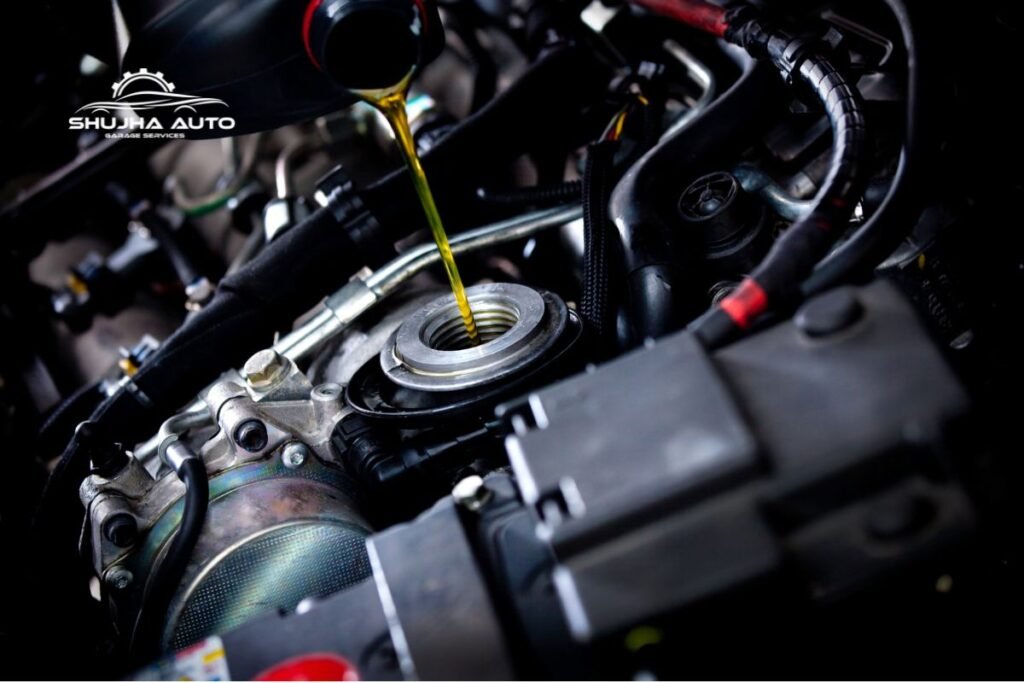
Fresh engine oil is usually golden or light brown. As it gets old, it becomes dark and dirty. Dark oil does not always mean immediate danger, but very dirty or thick oil means it is time for service.
Engine Noise
If the engine sounds louder than usual, oil may not be lubricating properly. You may hear ticking, knocking, or rough running sounds.
Oil Warning Light
If the oil warning light appears, stop safely and check the oil level. This can mean low oil level or low oil pressure. Do not continue driving if the warning stays on.
Burning Oil Smell
A burning oil smell may mean oil is leaking onto hot engine parts or the engine oil is overheating. This should be checked quickly.
Poor Fuel Economy
Old oil can make the engine work harder. If your car is using more fuel than usual, oil condition may be one of the reasons.
Exhaust Smoke
Blue smoke may mean the engine is burning oil. This is not a normal oil change issue only. It needs inspection because it may point to engine wear or seal problems.
Low Oil Level
If the oil level keeps dropping, there may be an oil leak or the engine may be consuming oil. Topping up oil again and again is not a proper solution. The cause should be inspected.
What Happens If You Delay Oil Change?
Delaying oil change can slowly damage your engine. At first, you may not notice any big problem. But inside the engine, old oil may be creating sludge and reducing protection.
If you delay oil change for too long, you may face:
- Engine sludge buildup
- Blocked oil passages
- Low oil pressure
- Increased engine wear
- Overheating
- Poor acceleration
- Higher fuel consumption
- Engine knocking
- Turbocharger damage
- Expensive engine repair
An oil change is a basic service, but skipping it can lead to major repair costs.
What Is Engine Sludge?
Engine sludge is thick, dirty buildup that forms when oil becomes old and contaminated. It can block oil passages and stop oil from reaching important engine parts.
Sludge can cause serious problems such as poor lubrication, overheating, oil pressure warning, and internal engine damage.
Cars that miss oil changes regularly are more likely to develop sludge. This is why timely oil change service is important for engine health.
Should You Change Oil Earlier in Older Cars?
Yes, older cars may need oil changes sooner. As engines age, seals, gaskets, piston rings, and internal parts may wear. Older engines may also burn or leak oil.
If your car has high mileage, you should check oil level more often and avoid delaying oil change. A shorter interval can help protect the engine better.
Older cars should also be inspected for:
- Oil leaks
- Burning oil smell
- Blue smoke
- Low oil pressure
- Engine noise
- Oil consumption
- Dirty oil condition
Auto Garage Services can inspect older vehicles and recommend a practical oil change interval based on engine condition.
Do Turbo Engines Need Earlier Oil Changes?
Turbo engines often need more attention because turbochargers run at very high speed and temperature. The turbo depends on clean engine oil for lubrication and cooling.
If oil is old, dirty, or low, the turbocharger can suffer damage. This may lead to turbo noise, smoke, power loss, and expensive repair.
For turbocharged cars, timely oil change is very important. Using the correct oil grade is also necessary because turbo engines require strong heat protection.
What Happens During an Oil Change Service?
A proper oil change service should not be only draining old oil and adding new oil. The technician should also check related parts to make sure the engine is safe.
At Auto Garage Services, oil change service may include:
- Draining old engine oil
- Replacing the oil filter
- Adding the correct oil grade
- Checking oil level properly
- Inspecting for oil leaks
- Checking engine sound
- Checking dashboard warning lights
- Inspecting other fluid levels
- Basic visual engine inspection
- Advising if further service is needed
This helps make sure your car gets the right oil and the engine is checked for early warning signs.
Why Oil Filter Replacement Is Important
The oil filter removes dirt, metal particles, and contaminants from engine oil. If the oil filter is old or blocked, clean oil cannot circulate properly.
The oil filter should usually be replaced during every oil change. Reusing an old oil filter can reduce the benefit of new oil.
A proper oil change service should include both engine oil and oil filter replacement.
Can You Only Top Up Oil Instead of Changing It?
No, topping up oil is not the same as changing oil. If your oil level is low, topping up can help temporarily, but it does not remove dirty old oil or replace the oil filter.
Oil change means removing old oil, replacing the filter, and adding fresh oil. Topping up only adds more oil to the existing dirty oil.
If your car regularly needs oil top-up, there may be a leak or oil consumption problem. This should be inspected.
How to Check Engine Oil Level
You can check your oil level at home if your car has a dipstick. Always park on a flat surface and let the engine cool for a few minutes.
Basic steps:
- Park the car on level ground
- Turn off the engine
- Wait a few minutes
- Pull out the dipstick
- Wipe it clean
- Insert it again fully
- Pull it out and check the level
- Make sure oil is between minimum and maximum marks
Do not overfill engine oil. Too much oil can also create pressure problems and cause leaks or smoke.
What Oil Grade Should You Use?
You should always use the oil grade recommended by your car manufacturer. The correct oil grade depends on engine design, temperature conditions, mileage, and performance requirements.
Using the wrong oil can cause poor lubrication, increased wear, oil consumption, engine noise, or reduced fuel economy.
If you are not sure which oil your car needs, Auto Garage Services can check the vehicle requirement and recommend the correct oil grade.
Is Oil Change Service Expensive?
Oil change service is usually one of the most affordable maintenance services compared to engine repair. The cost depends on the car model, oil type, oil quantity, filter type, and whether any additional inspection is required.
Synthetic oil usually costs more than conventional oil, but it may offer better protection for many modern engines.
A timely oil change is always cheaper than repairing damage caused by old oil, low oil level, or engine sludge.
Are There Any Hidden Fees or Charges?
A trusted garage should explain what is included before starting oil change service. You should know the oil type, oil quantity, filter replacement, inspection items, and any extra recommended repair.
Auto Garage Services focuses on clear service guidance and honest inspection. If the technician finds an oil leak, low fluid level, warning light, or engine issue, it should be explained clearly before any extra work is done.
Free Diagnostic Check During Oil Change
An oil change is a good time to check other early warning signs. Many engine problems can be noticed during routine service.
During oil change service, Auto Garage Services can inspect oil leaks, engine sound, warning lights, fluid levels, filter condition, and basic engine health.
This is useful if your car has:
- Oil leak spots
- Burning oil smell
- Engine noise
- Oil warning light
- Smoke from exhaust
- Low oil level
- Poor fuel economy
- Rough performance
A quick inspection can help prevent bigger engine problems.
How to Make Engine Oil Last Longer
You can protect your engine oil and engine health with good driving and maintenance habits.
Service on Time
Do not delay oil change beyond the recommended interval.
Use Correct Oil
Always use the correct oil grade and quality for your car.
Replace Oil Filter
Change the oil filter with every oil change.
Check Oil Level
Check oil level regularly, especially before long drives.
Fix Oil Leaks
Do not ignore oil spots under the car.
Avoid Hard Driving on Cold Start
Let the engine warm up slightly before heavy acceleration.
Keep Engine Maintained
Regular car maintenance helps keep the engine clean and efficient.
Why Choose Auto Garage Services?
Auto Garage Services provides oil change service, engine oil inspection, engine diagnostic service, oil leak inspection, filter replacement, and car maintenance service for drivers who want reliable vehicle care.
If your car needs an oil change or you are not sure which oil is suitable, the team can inspect the vehicle, use the correct oil grade, replace the oil filter, and check for early warning signs.
Drivers choose Auto Garage Services because of experienced technicians, proper service process, clear communication, practical maintenance advice, and customer-focused service.
When Should You Visit Auto Garage Services?
You should visit Auto Garage Services when your car reaches the recommended oil change mileage, when 6 months have passed since the last oil change, or when you notice any oil-related warning signs.
You should also visit if your car has:
- Oil warning light
- Engine noise
- Burning oil smell
- Oil leak spots
- Low oil level
- Dirty oil
- Poor fuel economy
- Smoke from exhaust
- Rough engine performance
- High mileage or turbo engine
Early oil change service can protect your engine and reduce future repair costs.
FAQs
1. How often should you change car oil?
Most cars need an oil change every 5,000 to 10,000 kilometers or every 6 months, depending on the car model, oil type, driving conditions, and manufacturer recommendation. In hot, dusty, or heavy traffic conditions, earlier oil changes may be better.
2. Should I change oil by mileage or time?
You should follow whichever comes first. If your car reaches the oil change mileage, change the oil. If you drive less but 6 months have passed, oil change is still recommended because oil can age over time.
3. How often should synthetic oil be changed?
Synthetic oil can usually last longer than conventional oil, but the exact interval depends on the car model, oil quality, and driving conditions. In hot weather or heavy traffic, synthetic oil may still need earlier replacement.
4. What are the signs that my car needs an oil change?
Common signs include dark or dirty oil, engine noise, oil warning light, burning oil smell, poor fuel economy, low oil level, rough engine performance, or smoke from the exhaust.
5. Can I just top up oil instead of changing it?
No, topping up oil is not the same as changing oil. Topping up only adds oil to the old dirty oil. A proper oil change removes old oil, replaces the oil filter, and adds fresh oil.
6. What happens if I delay oil change?
Delaying oil change can cause engine sludge, low oil pressure, overheating, poor performance, increased engine wear, turbo damage, and expensive engine repair.
7. Is oil filter replacement necessary with every oil change?
Yes, the oil filter should usually be replaced with every oil change. A dirty or blocked oil filter can reduce oil flow and affect engine protection.
8. Why does my engine oil become dark quickly?
Engine oil becomes dark because it collects dirt, carbon, heat residue, and small particles while protecting the engine. If it becomes very dirty quickly, the engine may need inspection.
9. Can wrong engine oil damage my car?
Yes, using the wrong oil grade can affect lubrication, fuel economy, engine performance, oil pressure, and long-term engine health. Always use the oil recommended for your vehicle.
10. Does Auto Garage Services provide oil change service?
Yes, Auto Garage Services provides oil change service, engine oil inspection, oil filter replacement, oil leak inspection, engine diagnostic service, and car maintenance service.
Final Words
Changing your car oil on time is one of the easiest ways to protect your engine. Most cars need oil change every 5,000 to 10,000 kilometers or every 6 months, depending on the oil type, vehicle condition, and driving environment.
In UAE conditions, heat, traffic, dust, and frequent AC use can make engine oil work harder. That is why many drivers benefit from shorter oil change intervals, especially for older cars, turbo engines, and daily-use vehicles.
If your car is due for oil change or showing signs like engine noise, oil warning light, burning oil smell, low oil level, oil leaks, smoke, or poor performance, visit Auto Garage Services for oil change service, engine oil inspection, oil leak inspection, engine diagnostic service, and car maintenance service.