


Learn how to repair car battery safely with step-by-step DIY methods. Clean terminals, recondition cells, and restore performance.
Let’s talk about your car’s battery. It’s that unassuming box hiding in your engine bay, often forgotten until the dreaded day your car refuses to start. A weak battery doesn’t just leave you stranded; it can strain your alternator, cause flickering lights, and lead to poor overall vehicle performance. But what if you could squeeze more life and power out of it? The good news is, with the right knowledge and care, you can often improve car battery performance and extend its life significantly.
Understanding Your Car Battery: The Heart of Your Vehicle’s Electrical System
Think of your car battery as the heart of your car’s electrical system. It doesn’t just start the engine; it stabilizes the voltage to keep your engine running and powers everything from your headlights and radio to your central locking and dashboard computers when the engine is off. Most cars use lead-acid batteries, which are reliable and, importantly, often maintainable.
A standard 12-volt car battery has six cells. Each cell produces about 2.1 volts, combining for the total 12.6 volts when fully charged. Inside each cell, lead plates are submerged in an electrolyte solution (a mix of sulfuric acid and water). A chemical reaction between the plates and the electrolyte creates electricity. Over time, this reaction can cause wear and tear, sulfation (a buildup of lead sulfate crystals), and water evaporation, which are the main culprits behind a battery’s decline.
The Golden Rule: Safety First!
Before we touch anything, safety is non-negotiable. A car battery contains acid and can produce explosive gases. Always:
- Wear Safety Gear: Use gloves and safety glasses.
- Work in a Ventilated Area: Never work in a closed garage.
- Remove Jewelry: A metal ring touching the terminals can cause a severe short circuit.
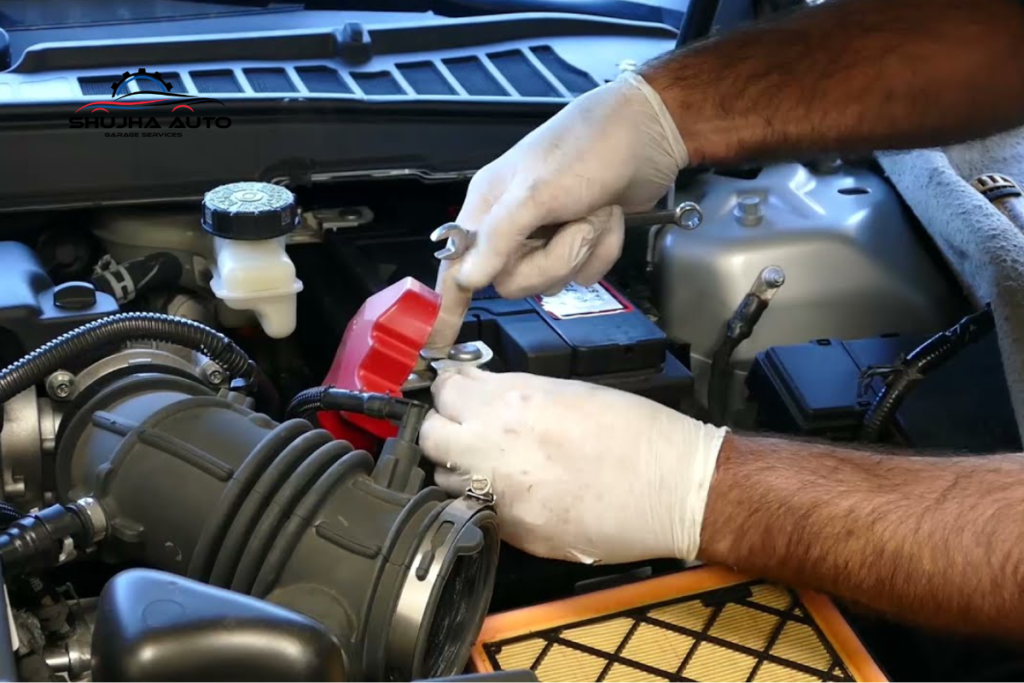
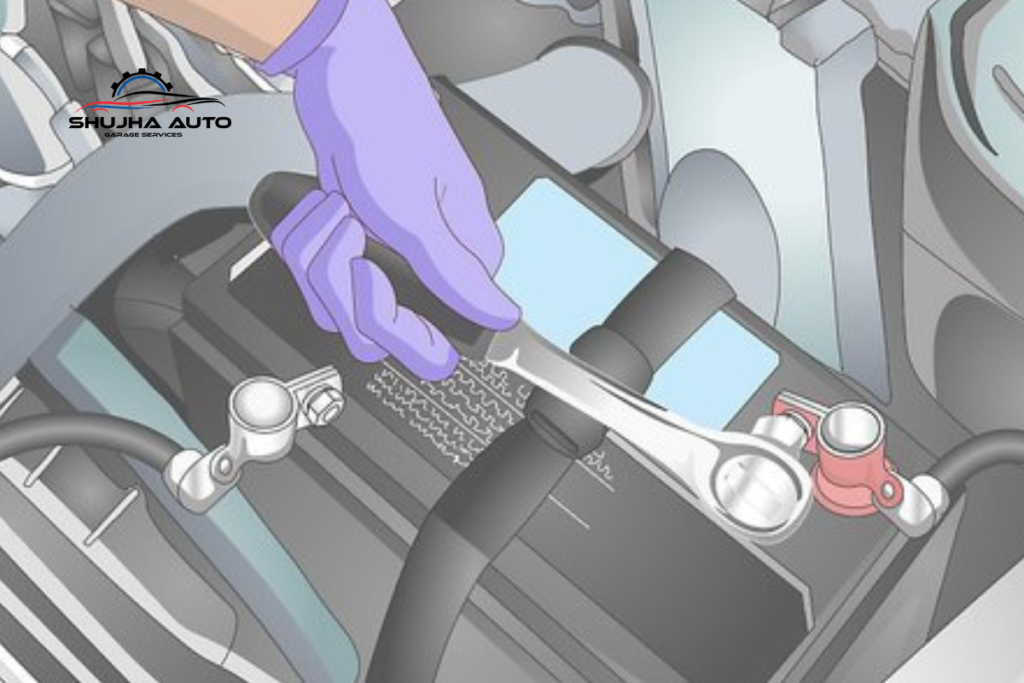
- Disconnect Correctly: Always disconnect the NEGATIVE (black, -) terminal first, then the
- POSITIVE (red, +). When reconnecting, do the POSITIVE first, then the NEGATIVE.
Location: Please Visit Our Shujha Auto Garage
DIY Steps to Improve Car Battery Performance
For many common issues, a little car battery maintenance can restore performance. Let’s start with what you can do at home.
Step 1: The Visual and Terminal Inspection
Start with a simple look. Is the battery case cracked or bulging? Is there a white, blue, or green crusty substance on the terminals? That’s corrosion, and it’s a major resistance point that hinders performance.
Cleaning Corrosion:
- Disconnect the battery (negative first!).
- Make a paste from baking soda and water or use a dedicated battery terminal cleaner.
- Apply it to the corroded terminals and cable connectors using an old toothbrush. You’ll see it fizz as it neutralizes the acid.
- Scrub until the metal is shiny.
- Rinse thoroughly with a little water and dry completely with a clean cloth.
- Before reconnecting, apply a small amount of petroleum jelly or anti-corrosion spray to the terminals to prevent future buildup.
This simple act alone can often solve sluggishness, as it ensures a clean, strong connection for power to flow.
Step 2: Checking and Topping Up Electrolyte Levels (For Serviceable Batteries)
Many modern batteries are “maintenance-free,” meaning they’re sealed. But if your battery has removable caps, you can check the electrolyte level.
- Carefully pry off the caps.
- Look inside each cell. The electrolyte should cover the lead plates. If you see plates exposed, they need to be covered.
- Only use distilled water to top up the cells. Never use tap water, as minerals can damage the battery. Fill just until the plates are covered, or to the indicator line if present.
- Replace the caps securely.
Low electrolyte levels expose plates to air, causing rapid sulfation and reducing the battery’s capacity.
Step 3: Testing Battery Voltage and Charge
You’ll need a basic multimeter for this.
- Set your multimeter to DC Volts (20V range).
- Touch the red probe to the positive terminal and the black probe to the negative terminal.
- Read the voltage:
- 12.6V or higher: Fully charged.
- 12.4V: About 75% charged.
- 12.0V or below: 50% or less charged – needs charging.
A battery that reads below 12.4V after a full charge might be failing.
Step 4: The Magic of a Proper Battery Charge
If your battery is low, a slow, controlled charge is the best medicine. A “trickle charger” or “smart charger” is ideal. These devices charge the battery slowly and safely, and smart chargers can even help break down minor sulfation.
- Connect the charger to the battery (usually red to positive, black to negative).
- Plug in the charger and let it run. A smart charger will shut off automatically. A basic trickle charger may need monitoring.
A full, slow charge can often revive a battery that seems dead, especially if it was drained by leaving lights on.
When DIY Isn’t Enough: The Case for Professional Car Battery Repair
Sometimes, home care isn’t enough. Deep sulfation, internal shorts, or a failed cell require professional intervention. This is where understanding true **car battery repair** comes in.
Professional repair might involve:
- Desulfation: Using high-frequency pulse chargers to break down hardened sulfate crystals on the plates. This is a specialized process not possible with standard chargers.
- Cell Balancing: Addressing individual weak cells to bring the whole battery back to harmony.
- Load Testing: Applying a heavy load to the battery to see if it can hold voltage under real-world starting conditions. This is the true test of health.
This leads to some common questions we hear every day at Shujha Auto Garage Services:
What happens if an issue is found during a check?
This is the most important part! At our garage, we believe in transparency. If our diagnostic check finds an issue—be it a dying battery, a faulty alternator not charging it, or parasitic drain from an electrical component—we don’t just tell you. We show you. We’ll explain the readings, what they mean for your car, and present all your options. For a battery, this could be: 1) A simple recharge and retest, 2) A professional repair attempt if viable, or 3) A recommendation for replacement if it’s beyond economical repair. The choice is always yours, with no pressure.
What’s included in the free diagnostic check?
At Shujha Auto Garage Services, our free battery diagnostic check isn’t just a quick voltage look. It includes:
- Visual Inspection: Checking for corrosion, leaks, and physical damage.
- Voltage Test: Measuring resting voltage to assess state of charge.
- Load Test: Putting the battery under simulated starting load to check for weakness under pressure.
- Alternator Test: Ensuring your charging system is properly replenishing the battery when the engine runs.
- Starter Draw Test: Checking if the starter motor is overworking and draining the battery excessively.
We give you a clear printout of the results, so you see exactly what we see.
Are there any hidden fees or charges?
Absolutely not. We operate on honesty and trust. The diagnostic check is free. If we find an issue and you approve the work, we will provide a written, itemized estimate before any wrench is turned. You will know the cost of parts (if any, like new terminals or a replacement battery) and labor upfront. There are no surprises when you come to collect your car.
Proactive Car Battery Maintenance for Long-Term Health
Prevention is always cheaper than a cure. Here’s how to keep your battery in top shape:
- Drive Regularly and for Longer Durations: Short trips (under 20 minutes) don’t allow the alternator enough time to fully recharge the battery used to start the car. Take a weekly longer drive to keep it topped up.
- Keep it Tight and Clean: Periodically check that the battery hold-down clamp is secure. A vibrating battery can short-circuit internally. Check terminals for early signs of corrosion.
- Minimize “Parasitic Drain”: Modern cars always have a small drain for clocks, alarms, etc. But if you’re parking for weeks, consider a “battery tender” trickle charger. Ensure interior lights, trunk lights, or aftermarket accessories are fully off.
- Extreme Weather Care: Heat accelerates chemical reactions and water loss. Cold thickens oil and makes engines harder to start, demanding more from the battery. In extreme seasons, be extra vigilant with checks.
When to Call the Professionals at Shujha Auto Garage Services
Knowing when to stop DIY and call in experts is a sign of a smart car owner. Contact us if:
- Your battery is consistently low even after a full charge and drive.
- You see a swollen or cracked battery case.
- There’s a rotten egg (sulfur) smell, indicating a leak or internal damage.
- Your headlights are dramatically dim when idling but brighten when you rev the engine.
- You’ve done the cleaning and charging, but the car still starts sluggishly.
- You just want the peace of mind that comes from a professional assessment.
At Shujha Auto Garage Services, we view car battery repair and maintenance as essential medicine for your vehicle. Our goal isn’t just to fix a problem; it’s to improve car battery performance for reliability you can count on. We combine honest advice, transparent pricing, and skilled workmanship to ensure you’re never left in the dark.
Conclusion: Empowerment Through Knowledge
Your car battery isn’t a mysterious black box. With some basic tools and this knowledge, you can perform vital car battery maintenance to extend its life and improve car battery performance. Start with the simple steps: keep it clean, keep it charged, and keep an eye on it. Remember that professional help, like the kind we offer at Shujha Auto Garage Services, is there for the tougher jobs, providing free diagnostics and clear, honest solutions. By taking care of this crucial component, you’re ensuring your car is ready to go whenever you are, saving you money, and avoiding the frustration of an unexpected no-start. Drive smart, maintain proactively, and never underestimate the power of a healthy battery.