
Learn the 7 signs that indicate it’s time to replace your Jeep brake pads to ensure safety and optimal braking performance.
Keep your Jeep safe, quiet, and smooth with timely brake care.
Why Brake Pads Matter for Your Jeep
If you drive a Jeep—whether it’s a rugged Wrangler, a smooth Grand Cherokee, or a practical Compass—you already know how important safety is. Your brakes play a critical role in keeping you and your passengers safe, especially on Dubai’s busy roads, off-road tracks, or even in slow-moving traffic.
But how do you know when your brake pads need replacing? Many Jeep owners wait too long, ignoring the early signs until it becomes a serious problem. Brake pads don’t last forever. They wear out over time and can lead to dangerous driving conditions if not replaced.
Let’s dive in!
1. Grinding Noise While Braking
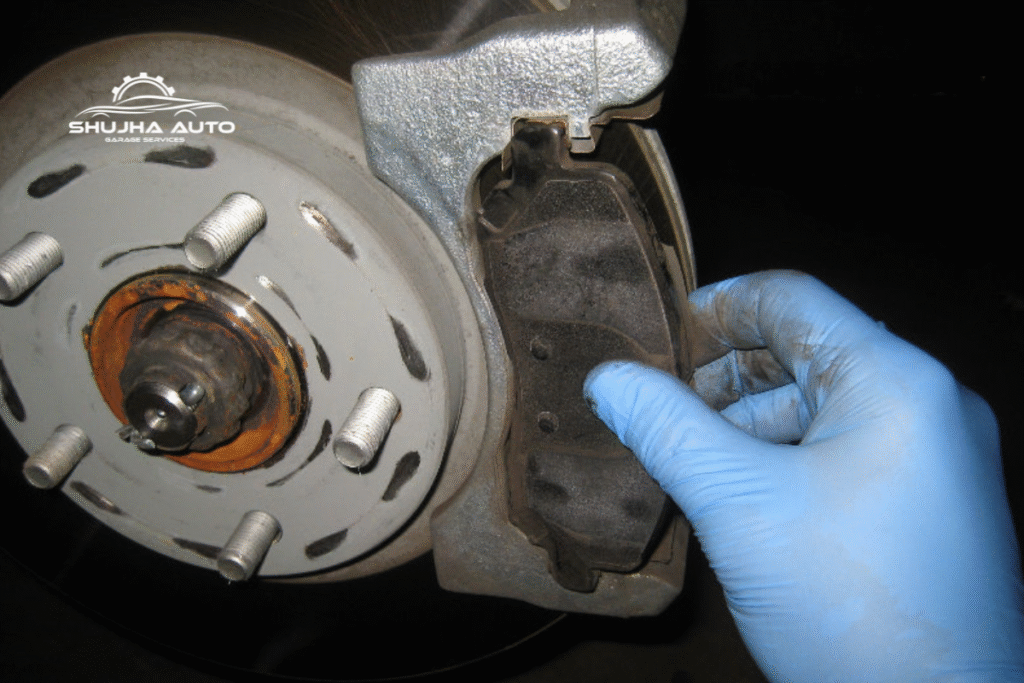
One of the most obvious signs something’s wrong with your brake pads is a grinding noise. If you hear this sound when you press the brake pedal, it usually means your brake pads are completely worn out.
What’s Happening?
- Brake pads are designed with a layer of friction material that helps stop your car.
- Over time, this material wears away.
- Once it’s gone, metal starts rubbing against metal.
- That’s the grinding noise you hear—and it’s not good.
Why You Shouldn’t Ignore It:
- A grinding noise means your brakes are no longer working properly.
- It can damage the brake rotors, which are more expensive to replace.
- Your stopping distance increases, putting you at risk.
Shujha Auto Garage Services offers quick inspections. If we hear a grinding noise, we’ll replace your brake pads on the spot and check your rotors too.
Important: If you ever hear a grinding noise, do not delay. Get it checked immediately.
2. Vibration or Pulsation When Braking
Another warning sign you shouldn’t ignore is vibration or pulsation in the brake pedal or steering wheel when you apply the brakes.
What Causes It?
- Uneven brake pad wear.
- Warped brake rotors.
- Dirt, rust, or debris caught between the pads and rotors.
What It Feels Like:
- You press the brakes, and the pedal shakes.
- The steering wheel might feel like it’s wobbling.
- The Jeep doesn’t slow down smoothly.
This vibration or pulsation is not just annoying—it’s a safety issue. It affects your control, especially when braking suddenly or going downhill.
At Shujha Auto Garage Services, we carefully inspect for vibration or pulsation and smooth everything out so your Jeep stops safely and comfortably.
Location: Please Visit Our Shujha Auto Garage
3. Brake Warning Light Is On
Most modern Jeeps have a brake warning light on the dashboard. This light tells you something in your braking system needs attention.
Why It Comes On:
- Your brake pads are worn down.
- The brake fluid is low.
- There’s a problem with the brake sensors.
What To Do:
- Don’t ignore the brake warning light.
- Visit a trusted garage like Shujha Auto Garage Services for a full brake system check.
Even if you don’t feel any problems while driving, the brake warning light means your car knows something you don’t. It’s always better to be safe than sorry.
4. Squealing or Screeching Sounds
Not all strange brake noises are grinding. Sometimes, you might hear a high-pitched squeal or screech when you hit the brakes.
What It Means:
- Most brake pads have a small metal indicator.
- When the pads are getting low, this metal touches the rotor.
- It makes a squealing sound to alert you.
What To Do:
- If the squealing stops after a while, you still need to get the brakes checked.
- If it happens every time you brake, it’s time for new brake pads.
This is your Jeep’s way of saying, “Hey, I need a little love.” At Shujha Auto Garage Services, we’ll replace your pads before things get worse (and more expensive).
5. It Takes Longer to Stop the Car
Have you noticed that your Jeep doesn’t stop as quickly as it used to? This could be a big red flag.
What’s Going On:
- Worn brake pads don’t have enough friction.
- That means your stopping distance increases.
- On busy roads, this can lead to accidents.
If you’re pressing harder than usual on the pedal or rolling further after braking, your brake pads might be on their last leg.
Shujha Auto Garage Services can measure the exact thickness of your brake pads and replace them if they’re too thin. We’ll make sure your stopping power is as strong as ever.
6. Pulling to One Side When Braking
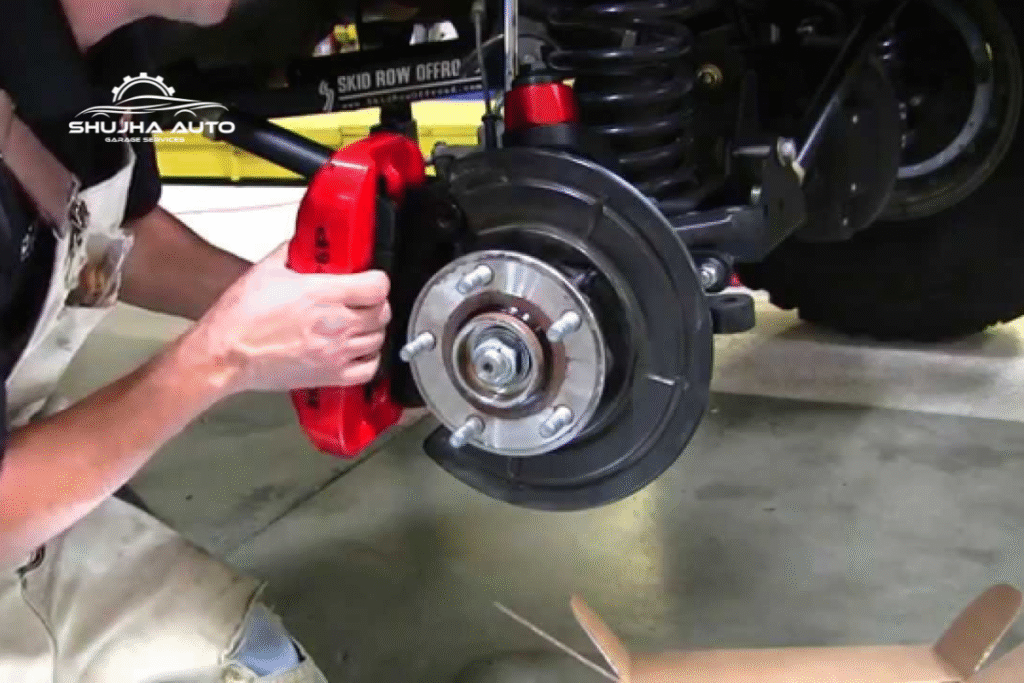
If your Jeep pulls to the left or right when you brake, it might be a problem with your brake pads or calipers.
Causes:
- Uneven brake pad wear.
- Stuck calipers.
- Dirty brake fluid.
When one side of your braking system works harder than the other, your Jeep will naturally pull in that direction. This makes driving uncomfortable and dangerous.
We see this a lot at Shujha Auto Garage Services, especially on older Jeep models. We check both sides of your braking system and ensure your brake pads are balanced and evenly installed.
7. Grinding Noise Even After Pad Replacement
Let’s say you recently had your brake pads changed, but you’re still hearing a grinding noise. What gives?
Possible Reasons:
- Low-quality brake pads were used.
- The rotors weren’t resurfaced or replaced.
- There’s debris or rust stuck between the pads and rotor.
If you went to a cheap service center, they might have skipped important steps. That’s why it’s critical to get your brake work done by experienced professionals.
At Shujha Auto Garage Services, we never cut corners. If you’re still hearing a grinding noise, we’ll recheck the installation and replace any faulty parts.
Remember: A grinding noise after pad replacement isn’t normal. Come see us and we’ll make it right.
How Long Do Brake Pads Usually Last?
On average, Jeep brake pads last between 40,000 to 70,000 kilometers, depending on:
- Driving habits.
- Road conditions.
- Brake pad quality.
If you drive a lot in the city with frequent stops, they may wear out sooner. That’s why it’s important to have your brakes checked every 10,000 kilometers during routine service.
The Risks of Ignoring Brake Pad Wear
Delaying brake pad replacement may seem harmless—until something goes wrong. Here’s what could happen:
| Problem | What It Leads To |
|---|---|
| Grinding Noise | Damaged rotors (more expensive to fix) |
| Vibration or Pulsation | Loss of control, risky braking |
| Brake Warning Light | System failure, unsafe driving |
| Longer Stopping Distance | Rear-end accidents |
| Pulling to One Side | Uneven tire wear, handling problems |
Brake safety is not just about your car—it’s about protecting yourself, your passengers, and everyone else on the road.
Why Choose Shujha Auto Garage Services for Brake Pad Replacement?
When it comes to your brakes, trust matters. At Shujha Auto Garage Services, we offer:
Expert technicians trained in Jeep models
High-quality brake pads with warranty
Complete rotor inspection and resurfacing
Transparent pricing—no hidden costs
Same-day brake service (in most cases)
Plus, we explain every step so you understand what’s being done and why.
Whether it’s your first grinding noise or a sudden brake warning light, our team is here to keep your Jeep safe and ready for anything.
Conclusion: Listen to Your Jeep Before It’s Too Late
Your Jeep is smart—it gives you signals when something’s wrong. Whether it’s a grinding noise, vibration, or pulsation, or a flashing brake warning light, you should never ignore the signs.
To recap, here are the 7 signs it’s time to replace your brake pads:
- Grinding Noise while braking
- Vibration or Pulsation in the pedal or steering wheel
- Brake Warning Light turns on
- Squealing or screeching sounds
- It takes longer to stop
- Pulling to one side
- Grinding noise even after replacing pads
If you notice any of these signs, don’t wait. Come to Shujha Auto Garage Services, where we treat every customer like family—and every car like our own.