



7 signs you need Ford radiator repair now, including overheating, leaks, or low coolant levels. Act fast to avoid serious engine damage.
Why Radiator Health Is Crucial for Your Ford
If you drive a Ford, you know how important reliability and performance are. However, even the toughest engines can encounter serious trouble if a key component fails—the radiator. Your Ford’s radiator is the heart of the cooling system, keeping the engine from getting too hot during everyday drives and long road trips.
Without a working radiator, your engine could overheat, suffer internal damage, or even fail. That’s why recognizing early warning signs is critical. In this guide, we’ll walk you through the 7 most common signs that your Ford needs radiator repair immediately—from obvious leaks to hidden radiator sludge problems.
At Shujha Auto Garage Services, we help Ford drivers every day with cooling issues—from a simple flush to full radiator replacements. So let’s dive in and help you protect your engine before the damage becomes too expensive to fix.
1. Ford Engine Overheating Frequently
The most obvious—and most dangerous—sign that your radiator needs help is if your Ford engine is overheating. Your engine runs at high temperatures, and the radiator’s job is to keep it cool by circulating coolant and releasing heat through the radiator fins. If that system fails, you’ll see your temperature gauge spike—or worse, steam coming from under the hood.
How the Radiator Prevents Engine Heat Damage
Your Ford’s radiator is connected to the thermostat, water pump, hoses, and coolant reservoir. Together, they move coolant through the engine block, absorb heat, and bring it back to the radiator where it cools off. When this cycle is interrupted—due to a clog, a Ford coolant leak, or radiator sludge, Ford buildup—your engine heats up quickly.
If left unchecked, Ford engine overheating can cause:
- Blown head gaskets
- Cracked cylinder heads
- Warped pistons
- Complete engine failure
Warning Signs of Ford Engine Overheating
- The temperature gauge is rising into the red zone
- Dashboard warning lights
- Loss of power or knocking noises
- Steam from the hood
- Sweet-smelling steam or a coolant smell inside the cabin
If your Ford’s engine temperature starts to rise—even occasionally—don’t ignore it. Come to Shujha Auto Garage Services for a full cooling system check before permanent damage occurs.
2. Coolant Puddles Under Your Car (Ford Coolant Leak)
Seeing a small puddle of fluid under your parked Ford is never a good sign. If it’s green, yellow, pink, or orange, you’re likely looking at a Ford coolant leak, and that usually points to a radiator problem.
What Causes a Ford Coolant Leak
Coolant can leak from many places, but the most common include:
- Cracked radiator tanks
- Damaged or rotted radiator hoses
- Loose hose clamps
- Faulty radiator cap
- Corrosion in the radiator core
- Old gaskets or seals
Over time, constant heating and cooling cycles can wear out these parts, especially in Dubai’s extreme climate. Even small leaks can turn into big issues if left untreated.
At Shujha Auto Garage Services, we use pressure testing and UV dye tracing to locate your Ford coolant leak quickly and accurately.
Where to Look for Leaks
- Under the radiator itself
- Around the front bumper area
- Near the lower hose connections
- Below the coolant reservoir
- Around the thermostat housing
If your coolant level keeps dropping, or your car overheats but no steam is visible, it’s time to check for leaks. Don’t wait until the engine seizes—bring it in for a fast fix.
3. Rusty or Discolored Coolant (Radiator Sludge Ford)
Clean coolant is usually bright-colored and see-through. But if your Ford’s coolant looks brown, muddy, or thick, it’s a sure sign of radiator sludge Ford a common but dangerous problem.
What Is Radiator Sludge, Ford, and Why Does It Form
Radiator sludge, Ford refers to a buildup of rust, dirt, oil, and old coolant that thickens into a sticky, brown mess inside the radiator and cooling system. It’s caused by:
- Neglecting regular coolant flushes
- Mixing incompatible coolant types
- Rust from internal metal corrosion
- Oil is leaking into the cooling system due to a head gasket issue
When this sludge builds up, it blocks the radiator passages, clogs the thermostat, and slows coolant flow—all of which lead to the Ford engine overheating.
Damage It Causes Inside the Cooling System
- Clogged radiator fins
- Ineffective coolant circulation
- Broken heater core (causing a Ford heater issue)
- Increased pressure and hose damage
- Engine components overheating unevenly
We often see radiator sludge Ford often at our garage. If caught early, we can flush it out and save your system. But if it’s left for too long, you may need a full radiator or heater core replacement.
At Shujha Auto Garage Services, we offer chemical flushes that dissolve sludge safely, inspect for leaks or cracks, and restore your Ford’s cooling system to full health.
Location: Please Visit Our Shujha Auto Garage
4. Weak or No Heat from Cabin Heater (Ford Heater Issue)
Have you ever turned on your car’s heater on a chilly morning, only to feel cool air blowing out? If your cabin heater isn’t warming up like it used to, you might be facing a Ford heater issue—and your radiator could be the hidden cause.
Why Radiator Flow Affects Cabin Heating
Your Ford’s heating system relies on hot engine coolant flowing through a small device called the heater core, which is like a mini-radiator tucked inside your dashboard. As coolant circulates through it, a fan blows warm air into your cabin. But when the radiator or coolant system fails—due to radiator sludge, air bubbles, or blockages—the flow is interrupted.
This results in:
- Warm air is turning cold
- Inconsistent temperature in the cabin
- No heat at all, even when the engine is hot
Signs of a Ford Heater Issue Due to Radiator Trouble
- Cold air from heater vents, especially when idling
- The heater works only while driving
- Gurgling or bubbling noises from the dashboard
- Fogged-up windows that don’t clear properly
- A sweet smell inside the cabin (a sign of a coolant leak)
If you’re experiencing these issues, it’s a sign that your heating system—and likely your radiator—isn’t functioning properly. A quick check at Shujha Auto Garage Services can confirm whether it’s a clog, a leak, or sludge buildup.
Ignoring a Ford heater issue doesn’t just affect your comfort—it’s often the first sign of bigger radiator problems.
5. Rising Temperature Gauge Without Warning
Sometimes your Ford’s temperature gauge plays tricks. One minute it’s normal, and the next, it jumps toward hot, then back down again. This kind of inconsistent reading might not seem urgent, but it’s a serious sign that something is wrong with your cooling system.
What a Fluctuating Temp Gauge Means
Your temperature gauge is a window into your engine’s cooling system. When it behaves erratically, it could mean:
- Air pockets in the coolant lines
- A stuck thermostat
- Clogged radiator passages from radiator sludge, Ford
- A failing water pump
- Coolant circulation problems caused by a partially blocked radiator
One of the most common causes of these symptoms is old or contaminated coolant, especially in vehicles that haven’t had a flush in a long time.
How Radiator Clogging or Air Pockets Cause It
Sludge and rust in the radiator can block the flow of coolant. When hot coolant can’t circulate properly, the engine overheats in specific areas, sending false signals to the temperature sensor.
Air bubbles can also collect in the radiator or hoses, especially if coolant was added without bleeding the system. These pockets interrupt the coolant flow, leading to incorrect readings.
At Shujha Auto Garage Services, we run a full coolant pressure and flow test to detect these issues. If your gauge has been acting up, don’t assume it’s just the sensor—get your radiator checked.
6. Steam from Hood While Driving
If you notice wisps of steam escaping from under your hood while driving or after turning off the engine, your Ford might be dangerously close to overheating. While it may look like a small issue, it usually signals a major radiator failure or a Ford coolant leak.
What Causes Visible Steam
Steam from the hood often comes from:
- Coolant boiling inside the radiator or hoses
- A leak spraying coolant onto a hot engine part
- A ruptured hose releasing high-pressure steam
- A cracked radiator cap that can’t hold pressure
In all these cases, the engine is running hotter than it should. The cooling system is pressurized, so any failure releases steam your warning that something inside is failing fast.
When Steam Means Radiator Damage
- Consistent steam = likely a major coolant system failure
- Occasional puffs of steam = possible small leak or loose connection
- Accompanied by a sweet smell = leaking antifreeze
- With the temp gauge rising = classic Ford engine overheating symptom
Do not keep driving if you see steam. Pull over, let the engine cool, and contact Shujha Auto Garage Services immediately. Continuing to drive could damage the engine, warp components, or cause a fire.
We’ll perform an emergency inspection, find the source of the leak or blockage, and provide a fast repair—whether it’s the radiator, hoses, or a thermostat problem.
7. Visible Corrosion or Damage to Radiator
Sometimes, the most obvious signs of radiator trouble can be seen at a glance under the hood. If you spot rust, greenish buildup, or physical cracks on your radiator, it’s time to act fast.
External Signs to Check Under the Hood
- White or green crusty residue on the radiator or hose joints
- Rust stains or bubbling paint on the radiator surface
- Bent or damaged radiator fins
- Cracked plastic tanks or damaged seams
- Coolant staining around the radiator cap or overflow tank
All of these signs point to a weakened radiator that could soon fail. Over time, radiator sludge and acidic coolant can eat away at the metal and plastic parts of the system. Once the radiator starts corroding, the damage spreads fast.
When It’s Time to Replace the Radiator
While minor external damage can sometimes be cleaned or sealed, the following are signs that a full replacement is needed:
- Multiple leaks from seams or welds
- Heavy internal radiator sludge, Ford
- Repeated Ford engine overheating
- A history of Ford coolant leaks that don’t stay fixed
At Shujha Auto Garage Services, we’ll assess whether your radiator can be cleaned and flushed or if it’s safer to replace it entirely. We use only high-quality parts and provide warranties on all radiator installations.
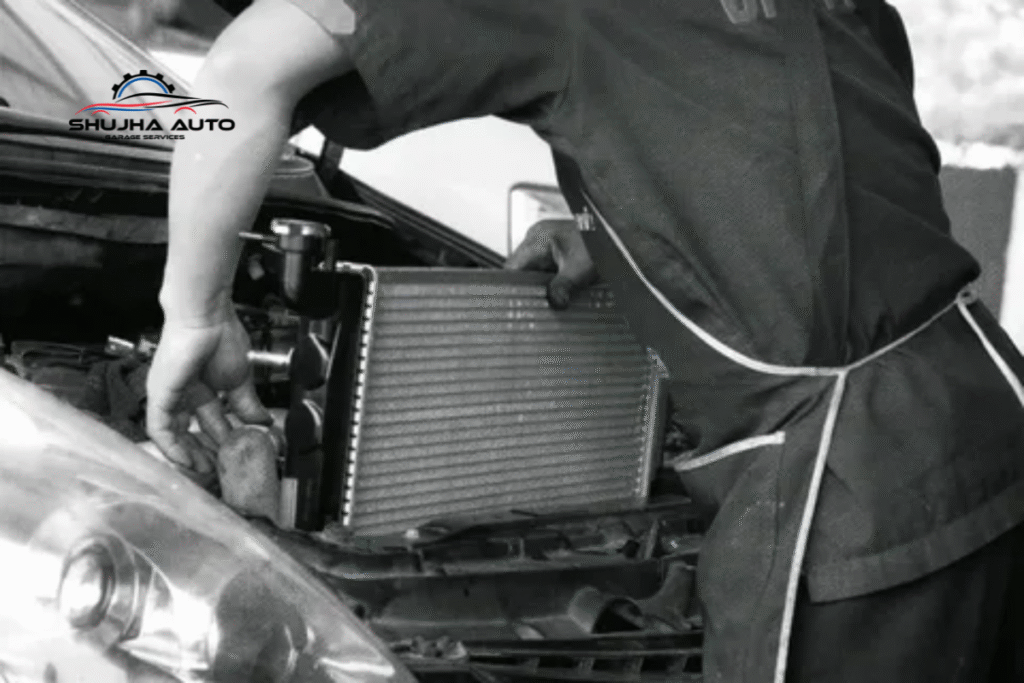
The Dangers of Ignoring Radiator Problems
It’s tempting to delay radiator repairs, especially if your car still seems drivable. But every time you overlook a warning sign, like a Ford engine overheating or a small Ford coolant leak, you increase the risk of catastrophic damage.
Ford Engine Overheating and Engine Failure Risks
When your radiator fails, your engine heats up quickly. That heat can:
- Warp the cylinder head
- Damage the pistons
- Blow head gaskets
- Cause the engine oil breaks down
All of these can lead to complete engine failure, which could cost thousands to replace.
We’ve seen many Fords at Shujha Auto Garage Services that could’ve avoided major repairs if radiator issues were addressed earlier. Don’t let something as preventable as radiator sludge prevent Ford ruin your entire engine.
Costly Repair Chain Reaction
A neglected radiator can also damage:
- The water pump
- The heater core (causing a persistent Ford heater issue)
- The thermostat
- Cooling fans and sensors
These issues often come in chains, where one failure causes another. Fixing everything at once becomes much more expensive than catching the issue early.
How Shujha Auto Garage Diagnoses Radiator Issues
At Shujha Auto Garage Services, we’ve fine-tuned our radiator diagnostics to be fast, affordable, and accurate. Whether you’re dealing with radiator sludge, a Ford coolant leak, or unexplained Ford engine overheating, we find the root cause quickly.
Tools, Pressure Tests, and Coolant Analysis
We use:
- Radiator pressure testers to check for leaks under load
- Thermal imaging to detect hot and cold spots
- Flow sensors to measure circulation efficiency
- Coolant chemical tests to check for contamination or oil mixing
- Borescopes to inspect inside the radiator and hoses
This allows us to assess both visible and hidden problems, like internal rust or coolant-to-oil mixing.
Identifying Ford Coolant Leak and Radiator Sludge Ford
If we detect:
- Discolored coolant
- Slow circulation
- Thick fluid consistency
- Air bubbles in coolant lines
We’ll immediately suspect radiator sludge, Ford, or a leaking system.
Once identified, we’ll advise you on the best course of action—whether it’s a coolant flush, radiator cleaning, or a complete radiator replacement.
Why Choose Shujha Auto Garage for Ford Radiator Repairs
When radiator trouble strikes, don’t leave your Ford with just any workshop. Choose one that understands Ford cooling systems inside out—Shujha Auto Garage Services.
Expert Cooling System Technicians
Our trained technicians:
- Have years of experience with Ford models
- Know the common signs of a Ford heater issue and a Ford coolant leak
- Use manufacturer-approved parts and service procedures
- Explain issues in simple terms without confusing jargon
We treat every vehicle like it’s our own, ensuring long-term reliability and safety.
Fast Service and Genuine Parts
We keep most Ford radiator parts in stock, so there’s no long wait. Our team offers:
- Same-day diagnostics
- Transparent quotes
- OEM or high-quality aftermarket parts
- Warranties on both parts and labor
Whether it’s minor sludge cleaning or fixing a Ford engine overheating, we’ll get you back on the road quickly, with confidence.
Preventive Tips to Avoid Ford Heater Issues or Radiator Damage
You don’t need to wait for a warning sign to take care of your radiator. Preventive care is the best way to avoid costly breakdowns and sudden Ford engine overheating.
How to Keep Coolant Clean
- Change coolant every 2 years or 40,000 km
- Use the correct coolant type for your Ford model
- Never mix old and new coolant types
- Avoid topping off coolant without flushing periodically
- Check the coolant level monthly, especially in summer
We offer coolant system inspections as part of our routine service package at Shujha Auto Garage Services.
When to Flush and Refill
You should flush your radiator if:
- You see dirty, rusty, or thick coolant
- You’ve had a Ford coolant leak
- You’ve recently replaced parts in the cooling system
- You’ve experienced a Ford heater issue or inconsistent temperatures
Our team uses powerful flushing machines and safe chemicals to thoroughly remove radiator sludge from Ford, restoring your system’s performance.
Ford Radiator Repair Cost in Dubai
Worried about the price of radiator repairs? Don’t be. At Shujha Auto Garage Services, we keep our pricing clear and competitive.
Price Range Based on Damage
| Service | Price Range (AED) |
|---|---|
| Radiator Pressure Test | 80 – 120 |
| Coolant Flush & Refill | 150 – 300 |
| Minor Radiator Repair | 200 – 500 |
| Full Radiator Replacement | 500 – 1200 |
| Diagnosis of Ford Heater Issue | 100 – 200 |
Note: Prices depend on your Ford’s model, year, and condition.
What’s Included in Our Repair Service
- Complete inspection of cooling system
- Leak detection and pressure testing
- Cleaning or replacement of affected parts
- Coolant refill and bleed
- Final test drive to confirm repairs
- Warranty and follow-up support
We also help you prevent future issues with maintenance reminders and personalized care tips.
Conclusion: Don’t Wait for Overheating to Get Help
Your Ford’s radiator is more than just a part—it’s protection for your engine. The longer you ignore signs like radiator sludge, coolant leak, or a Ford engine overheating, the higher the repair bill grows.
By catching issues early, you can save thousands and avoid breakdowns. Whether you need diagnostics, a coolant flush, or a full radiator replacement, trust the pros at Shujha Auto Garage Services.
We’re here to keep your Ford cool, powerful, and road-ready—365 days a year.
FAQs
1. How often should I flush my Ford radiator?
Every 2 years or 40,000 km. Dirty coolant can lead to radiator sludge Ford, overheating, and poor heater performance.
2. Can radiator sludge be cleaned out?
Yes, if caught early. We use safe chemical flushes to remove radiator sludge from Ford and restore coolant flow.
3. What’s the danger of driving with a coolant leak?
A Ford coolant leak can cause overheating, engine damage, and even engine failure if not repaired quickly.
4. How do I know it’s the radiator, not the water pump?
We use pressure tests and thermal diagnostics to pinpoint the problem—whether it’s a clogged radiator, a bad pump, or both.
5. Does Shujha Auto Garage offer emergency cooling repair?
Yes! Call us anytime and we’ll inspect your Ford’s cooling system the same day, often with same-day repair options.